

New transport solutions thanks to e-bikes?
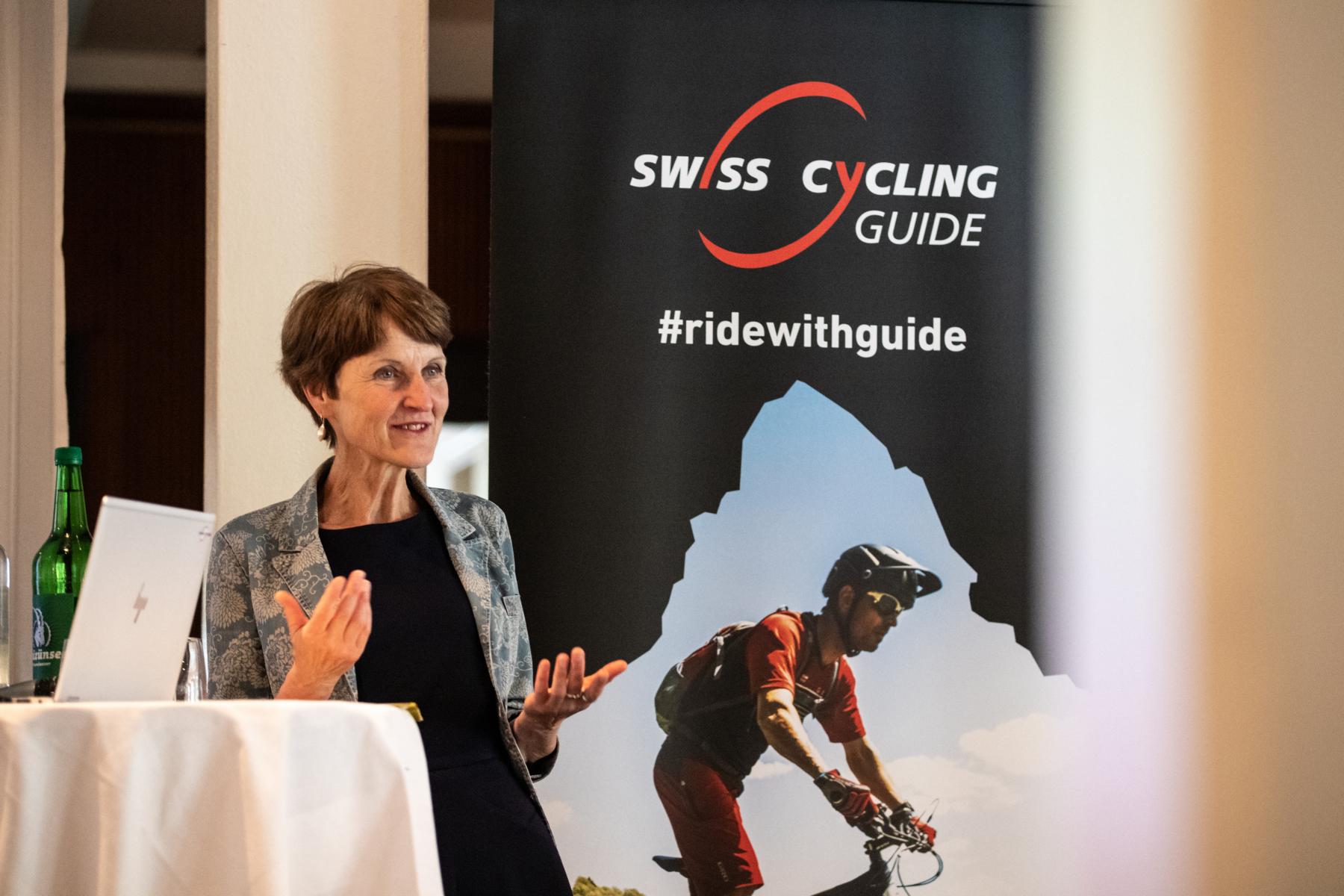
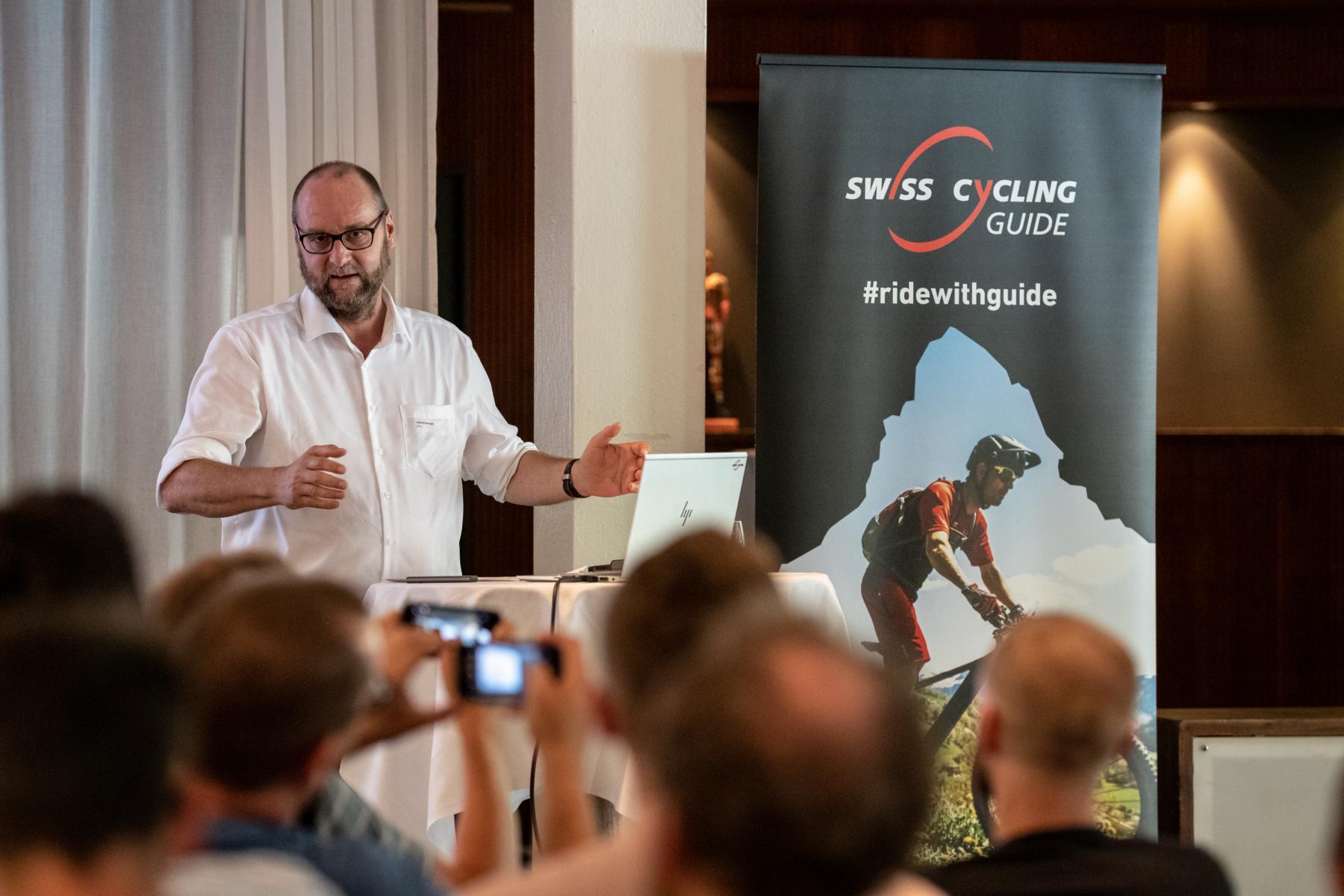
The role of e-bikes in transportation is growing at a rapid pace. At Swiss Cycling's first national e-bike conference, Jürg Röthlisberger emphasized the need to adapt the infrastructure to this development with reference to the Federal Cycling Decree. The FEDRO Director stated that the Confederation and cantons must jointly pursue the core objective of bringing cycle paths up to the level of national roads in terms of quality and safety.
Franziska Teuscher got straight to the heart of the matter in her welcoming speech. She was riding a "normal" bike, the municipal councillor of the city of Bern noted at the first national e-bike conference in Bern's Schwellenmätteli. In the following sentence, the sports director of the federal city raised the idea that e-bikes might soon be referred to as "normal" bikes.Karin Bächli, Head of Mobility and Transport Planning at Ernst Basler & Partner AG, spoke about the increasingly mobile "climate generation", which has the potential to significantly increase the ever-growing number of e-bike users. Jürg Röthlisberger mentioned the fact that today 66 percent of all car journeys and 96 percent of all bus and streetcar journeys are shorter than 10 kilometers. "These are distances that can be comfortably covered by e-bike," said the Director of the Federal Roads Office (FEDRO). Röthlisberger referred to infrastructural measures that need to be initiated to reduce mixed traffic solutions to a minimum in order to ensure the safety of cyclists. "The federal decree on bicycles puts cycle paths on an equal footing with footpaths and hiking trails in the constitution. The common goal of the federal government and the cantons must now be to make cycle paths as good and as safe as the national roads." In this context, Röthlisberger envisages initiating a "lighthouse project" in the form of a 20-kilometre-long cycle highway.
The issue of safety is key, as e-bike accidents usually have more serious consequences than those involving conventional bikes. Stefan Siegrist, Director of the Swiss Council for Accident Prevention (BfU), argues that accident statistics should not be dramatized, but should be analysed in detail. The fact is that accident figures are rising in proportion to sales figures. It is now also clear that the faster the e-bike rider is riding, the more the car driver underestimates the speed of the e-bike rider. The task now is to draw the right conclusions from these findings.Ariane Ehrat, tourism expert at Lenzerheide Bergbahnen, described the e-bike as a "huge opportunity" for Alpine vacation destinations because it significantly increases the number of potential guests. Ehrat noted that it is extremely important for those responsible to be aware of the need to invest in unbundling. For example, the municipality of Vaz/Obervaz, on whose land Lenzerheide is located, has spent one million Swiss francs in recent years on the removal of barriers for hikers and mountain bikers.Markus Pfisterer, Managing Director of Swiss Cycling, appealed to the need for tolerance on the part of road users in his closing remarks and spoke about the fundamental idea of coexistence. Pfisterer described the conference as a "complete success", asked the participants to intensify the mutual exchange and promised that Swiss Cycling would hold another national e-bike conference in 2020.
Source: Press releaseNote: This content has been automatically translated from German. Please report any incorrect translations.