

A single trail network is being created in the canton of Zug
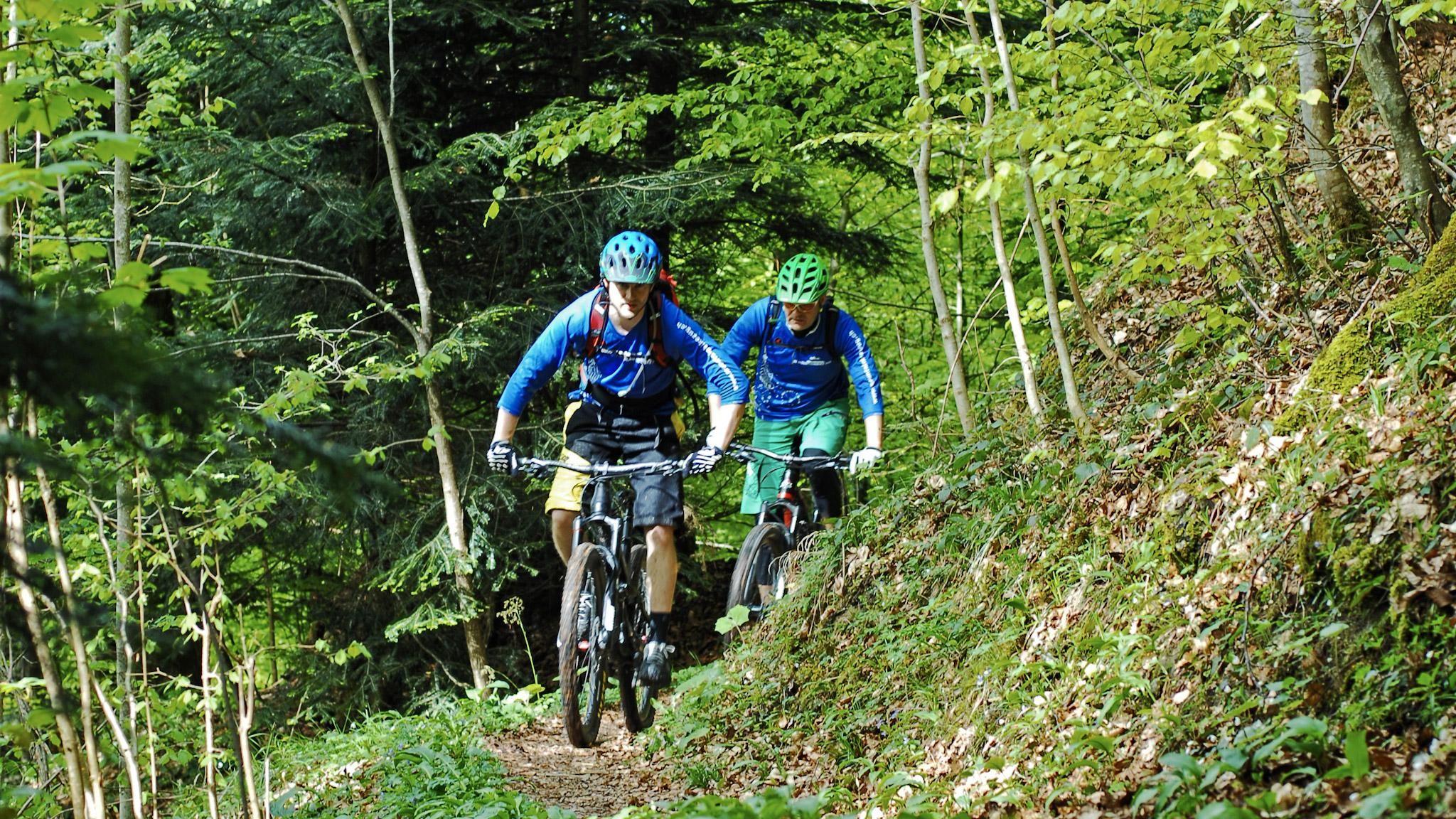
The canton of Zug is revising its forest law. The proposed amendment that mountain bikers are most interested in is § 9 para. 3: "Cycling and the use of other vehicles is only permitted on forest roads and on specially designated routes." That doesn't sound very promising at first. However, an interesting development has been initiated: "Specially designated routes" should also be able to be existing forest paths and by no means just created bike trails.
The IG Mountainbike Zug is now working on mapping all the trails in the canton of Zug that are used by mountain bikers. Christoph Jans explains: "Around 100 people responded to our survey, providing feedback on 300 trail segments. We entered a total of 18,000 details on a map. This allows us to show which trails are important to mountain bikers and how important they are." IG Mountainbike Zug was founded ten years ago to represent the interests of bikers in the canton of Zug, as a point of contact for authorities and landowners and to help design and operate the official bike trail on the Zugerberg.
The mountain bike trail network project was not initiated by the bikers themselves, but by the canton of Zug. Martin Ziegler, Head of the Amt für Wald und Wild confirms: "We held a major event with all stakeholder groups. The aim is for the forest owners and bikers to agree on a route network. This will then be anchored in the cantonal structure plan."
Forest owners want to clarify the legal situation
Around 75 percent of the forest in the canton of Zug is owned by public forest owners such as corporations, forest cooperatives and the canton. These owners are organized with some private forest owners in the association WaldZug. Its managing director, Ruedi Bachmann, explains why the owners are participating in the process: "The aim is to clarify which user groups are tolerated on which paths. Mountain bikers are generally allowed to ride on forest roads and the route network that has yet to be defined." The process is running rather slowly, but constructively, he adds, "The willingness of those involved to talk is high."
The map drawn up by IG Mountainbike also includes trails and paths built by the company itself that have long been established with bikers. "Now we are looking with the owners region by region at the trails on which they tolerate mountain biking," says Jans, describing the procedure. Of course, there are owners who only want to open up a single trail or even just the forest roads. "However, it is clear to everyone that it only works if mountain bikers have an attractive and sufficiently dense network at their disposal. Otherwise, people will just carry on riding as before and there will only be losers."
Bachmann from WaldZug says on behalf of the landowners: "We have been dealing with this issue for a long time now. It would therefore be welcome if we could now find a solution." The other parties involved are also interested in moving forward. But of course the devil is in the detail and it is foreseeable that a viable compromise will require concessions on both sides.
Some mountain bikers have bad memories of the regulations on the Zugerberg. After an official route was built there, riding bans followed all around. For Bachmann from WaldZug, this is a sensible approach: "We have given the bike scene great added value and in return we want to close trails that are damaged by bikes and require a lot of maintenance." At the time, IG Mountainbike was criticized by the bike community. Jans defends himself: "At the time, there was also a de facto ban on bikes on the entire Zugerberg as part of the development model. We prevented that."
Many, but not all bikers are on board
While owners and bikers negotiate a less restrictive solution for the entire canton, life in the forest goes on, and not always in the spirit of the process. Recently, unknown persons sprayed over existing prohibition signs and transformed them, not unskillfully, into signs for mutual respect on the trail. For WaldZug, this is an affront, as are the trails that have recently been dug up by people on their own initiative: "This causes us frustration, as it is small groups or individuals who do not take part in the current discussions and disregard any rules." Jans would also like to see more involvement from the bike community. "Many bikers have taken part in the process and provided input. But even more have not realized that now is the time to get involved in order to put mountain biking on a legal footing in the canton of Zug. There is a lot to gain."
The project in the canton of Zug could also benefit mountain bikers in other regions. If an official network of trails is actually created in this way that is attractive to bikers and that forest owners feel safeguards their interests, it could become a model for others. It would be the middle way between Graubünden and Appenzell Innerrhoden, or between the liberal solution that biking is allowed practically everywhere and the opposite rule, according to which it is only permitted on a few defined routes. Perhaps a model for cantons in which the two camps find it difficult to approach each other.
The consultation on the Forest Act ends in August. Based on the suggestions received, a commission will draw up the version that will ultimately be voted on by the cantonal council. The new law is about much more than just regulating cycling in the forest. It will therefore be months before the new forest law comes into force. At the same time, work is continuing on the bike network, which will be included in the structure plan at the end of 2023 in the best-case scenario, explains Martin Ziegler.
Further content on this article


Note: This content has been automatically translated from German. Please report any incorrect translations.