

Enduro Seeks Its Future and Finds Two
Back to Enduro's Roots with Crankworx
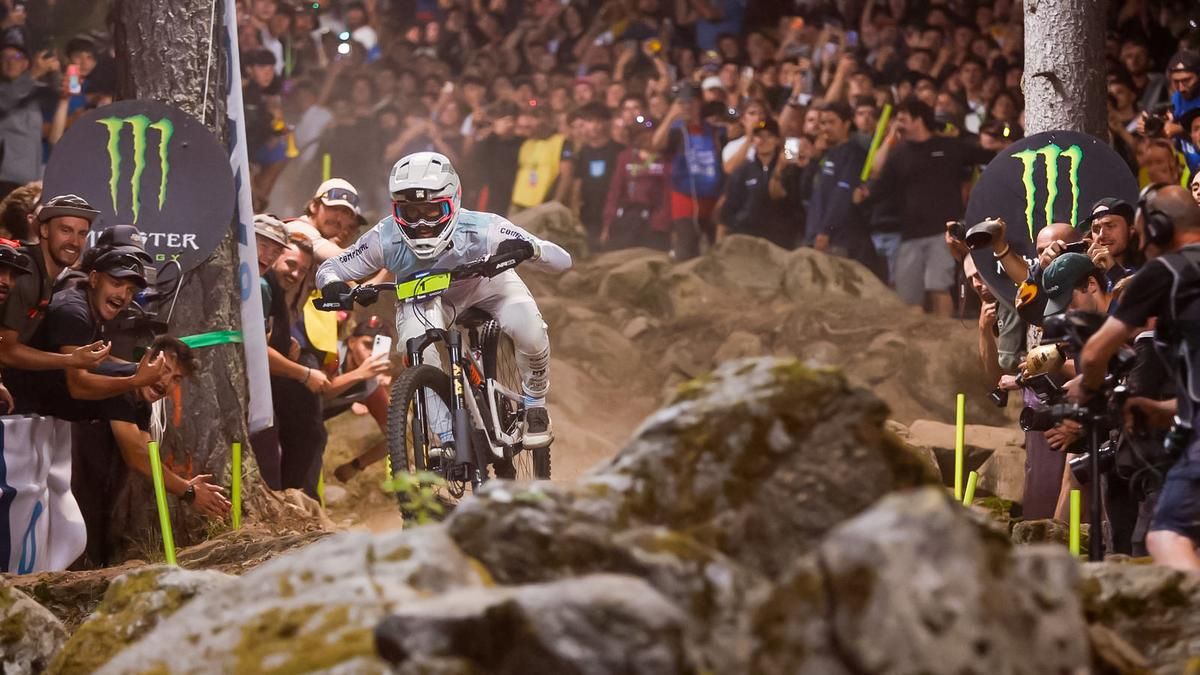
Less than 24 hours after the announcement that Warner Bros. Discovery (WBD) would be discontinuing the Enduro World Cup after the 2026 season, Crankworx unveiled its plans for a new global enduro racing series. Starting in 2027, the “Global Enduro Race Series” aims to realign the sport more closely with its original values: adventure, community, exciting trails, and races in which both pros and recreational riders can participate.
Crankworx certainly doesn’t lack experience. The organizer has been hosting international gravity festivals for decades and features a renowned race on its calendar: the Canadian Open Enduro in Whistler. This race is also set to be part of the new series in 2027. Crankworx CEO Darren Kinnaird is also very familiar with the history of international enduro racing. He was one of the four founding board members of the original Enduro World Series (EWS).
The sudden announcement was not a spontaneous decision. Speaking to the French trade publication FullAttack, Kinnaird explained that Crankworx already has a long history in enduro racing. However, the end of the World Cup has increased the urgency to chart a course for the future. For Kinnaird, economic viability is the top priority: “The biggest challenge is bringing all of this together into an economically resilient model.” After all, an attractive race requires not only an organizer who can finance it, but also riders who can afford to participate.
Apart from Whistler, Crankworx has not yet named any specific venues. However, discussions are underway with 35 organizers from 25 countries across five continents. Riders, teams, and the International Cycling Union (UCI) are also involved in the discussions. An athlete representative group will ensure that the needs of the riders are taken into account during the development process. No plans have been announced to directly take over the existing World Cup. Instead, Crankworx is working on an independent international racing series.
Enduro United Brings a Second World Series into Play
But Crankworx is not alone. On October 14, the newly founded organization Enduro United presented its vision for an “Enduro MTB World Tour.” Behind the project are Enrico Guala, Ludovic Henry, Alex Balaud, and Adrian Greiner—all seasoned figures in the world of enduro racing.
With Greiner on board, the Swiss event company Bikemedia is also involved; among other things, it has already organized EWS races, Enduro World Cups, and Enduro World Championships in Switzerland and is responsible for the Swiss Enduro Series as well as the multi-day trail adventure Aventyr. Guala’s involvement, however, is particularly noteworthy. The Italian is considered one of the pioneers of modern enduro racing and, like Kinnaird, was among the founders of the original Enduro World Series.
“Enduro is the racing form of mountain biking that most people actually do,” explains Guala. In doing so, he sums up one of the discipline’s greatest strengths: its connection to everyday mountain biking. Since the announcement that the World Cup was ending, numerous discussions have been held with the biking community, the industry, athletes, and organizers to develop a sustainable long-term structure.
Enduro United is pursuing a more comprehensive approach than a World Series alone. The organization aims to establish an international racing system that connects regional and national competitions, as well as multi-day races, with the world’s top riders. Ideally, this will also result in an official qualification pathway to the Enduro World Championships. According to its own statements, Enduro United is currently engaged in positive discussions with the UCI regarding this.
Races are planned for 2027 in Europe and North America. However, a concrete calendar is still lacking here as well. Six advisory groups are set to represent the interests of athletes, venues, the industry, the community, the media, and national race series in the future.
Different Visions for the Future
The fact that two organizations are now planning an international enduro race series was not originally intended. As Adrian Greiner explains, Enduro United knew about the impending end of the World Cup just as early as Crankworx did. However, their own plans were more long-term and were not intended to be made public until a later date. They wanted to act, not react.
“With the prospect of a global racing series, Crankworx quickly brought reassurance to the paddock just 20 hours after the bad news—essentially providing a roof over our heads. We at Enduro United planned to build a concept over the next few years that offers significantly more than just a world series. But this must be built up over the next few years and consolidated with the stakeholders,” explains Greiner.
The announcement by Crankworx prompted Enduro United to present its own plans ahead of schedule. The fact that this has once again created uncertainty is not ideal. Enduro United had also held discussions with Kinnaird and, according to Greiner, had been open to integrating the Crankworx series into Enduro United’s global system. However, Crankworx sees itself as an independent series, and therefore a collaboration is not currently being actively pursued. “Enduro United does not view the Crankworx series as competition per se, but rather as another addition to enduro racing, as is common in other mountain bike disciplines (such as Crankworx downhill races).”
“Our goal is to build a foundation that is broadly supported by regional events, national races, and multi-day races—where recreational athletes can find their place and young riders can develop their skills to later qualify for the World Series or World Cup and, in turn, earn points toward World Championship qualification,” explains Greiner.
Enduro United also aims to create additional opportunities that offer added value to riders and organizers, including a say in decision-making for riders and all stakeholders involved. Greiner speaks of a “solid structure built to last for decades, not just a roof to shelter us for the next few years.”
It’s clear that the two concepts differ. While Crankworx initially aims to establish an international racing platform, Enduro United is pursuing the development of a broader structure. Greiner deliberately leaves open which approach will prevail in the long term: “Of course, we see our project as a more sustainable structure for promoting enduro culture. But in the end, riders, destinations, and the market should decide which world series suits them best.”
Enduro Needs a World Cup with a Sense of Proportion
Enduro is considered one of the most comprehensive mountain bike disciplines. Riding technique, endurance, tactics, and versatility determine success. At the same time, enduro is a discipline that’s distinctly rider-focused. The races take place on attractive trails and allow even recreational riders to compete against the world’s best. The potential for high participant numbers is correspondingly great.
Media marketing, however, is more challenging. The races span large areas, are accessible to spectators only in certain locations, and can hardly be broadcast live at a reasonable cost. Commercial growth opportunities are therefore limited and likely did not align with WBD Sports’ ambitious expectations.
However, this does not mean that an international World Cup cannot be economically viable. The Marathon World Cup, organized by Hero, demonstrates how it could work. It relies on established events, existing structures, and a manageable number of races. A similar approach could also make sense for enduro. The key is that the organizational and financial effort must be commensurate with the discipline’s economic significance.
Two world series share a limited market
Financing is likely to be one of the biggest challenges. In enduro racing, available funds have been limited for years. Many teams have modest budgets, and numerous riders finance their race entries, at least in part, themselves. Organizers, too, rely on sponsors, entry fees, and support from tourist destinations.
These economic constraints were a key factor in the Enduro World Cup never being able to live up to WBD Sports’ growth and marketing plans. Now a trend is emerging that, at least in part, echoes the same problem. Instead of a single large organization, two organizers may be aiming to build and market international enduro racing. Both require financial resources that have been in short supply up to now.
While Crankworx and Enduro United are taking different approaches than WBD Sports and could be more financially successful with leaner structures, the question remains whether the market offers enough potential for two international racing series. Will they succeed in attracting new partners and additional funding? Or will the limited sponsorship budgets be split between two platforms in the future, or will sponsors jointly focus on a single racing series?
For riders and teams, two international racing calendars could mean additional travel, higher costs, and greater organizational effort. Added to this is the competitive aspect: Which series will be the leading international racing platform in the future? Where will the world’s elite compete? Which events offer riders and sponsors the most visibility? And what role will the series play in qualifying for the World Championship?
Making the Most of Economic Strengths
The economic significance of enduro extends far beyond racing itself. Events with large fields of participants generate overnight stays, boost local tourism, and raise the international profile of biking destinations. This benefits hotels, restaurants, mountain railways, and other tourism providers.
However, these benefits do not automatically flow back to the organizers, who bear the costs for courses, safety, timing, and organization. A race series that is sustainable in the long term must therefore also take the interests of tourism destinations into account.
The fact that Crankworx announced plans for a new international race series immediately after the World Cup’s end was undoubtedly an important signal for the sport. Instead of leaving riders, teams, and sponsors facing an uncertain future, the experienced organizer quickly offered a vision for the future. In doing so, Crankworx likely played a major role in calming the turbulent enduro scene.
Enduro United, on the other hand, is pursuing a more comprehensive, long-term approach. It remains to be seen whether this will ultimately prove more sustainable or whether the two concepts might even complement each other. It is also unclear whether the market offers sufficient resources for two international racing series.
The key factor will be whether economically viable structures emerge that meet the needs of riders, organizers, and sponsors. After all, enduro doesn’t necessarily need the largest possible World Cup, but rather an international racing system built on the discipline’s actual strengths and potential.
Further content on this article



Note: This content has been automatically translated from German. Please report any incorrect translations.