

First the teams, then the World Cup: Can enduro racing still be saved?
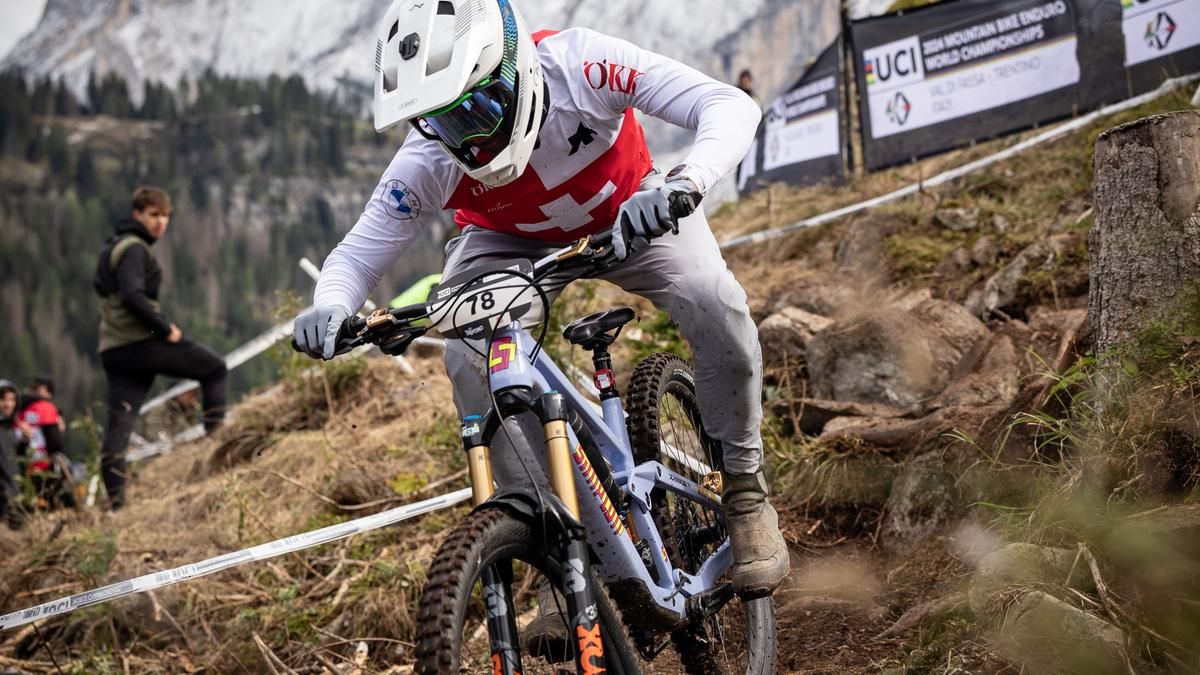
“Mountain biking? Oh, cross-country.” No, the other kind. “Then downhill.” Not that either. “Enduro? You mean motocross?” That’s how his conversations with potential sponsors went, or something like that, says Knut Büngen. “If I have to explain to a sponsor which sport I’m talking about right off the bat, the conversation is already over,” he says.
Büngen was team manager and owner of a Swiss enduro team for four years, first under the name Giant Swiss Enduro Team, and later as the Simplon Trailblazers. In 2025, he served on the board of team managers for the Enduro World Cup. In addition to his work in project management, he spent 40 to 60 percent of his time seeking funding from outside the cycling industry. He says an enduro team is feasible with a budget of 100,000 to 150,000 euros per year. Realistically, though, it would require 200,000 to 250,000. He approached small and medium-sized enterprises (SMEs) as well as companies like Victorinox, Kärcher, and Würth.
Wanted: A Fanatic with Money
The rejections were all the same, says Büngen. A contractor from the canton of Schwyz preferred to support the village soccer club because he got something in return there. Victorinox turned him down, saying they only get involved in skiing, if at all. At an IT company, he made it all the way to the boss. He’d approached UMB because its logo was on the helmet of Olympic ski cross champion Ryan Regez. The CEO had his marketing director assess the team’s reach. After that, Büngen never heard from them again. Regez was worth the money to UMB; Enduro was not.
One time, a meeting did take place—with a manufacturer of electric delivery vans. The trips to the World Cups and team camps were supposed to be electric and effective for advertising. But when it became clear how many vehicles and kilometers the team needed, the company turned them down.
External funding in Enduro is only available if an entrepreneur knows someone on the team—a child, a relative. Or if he himself is a fanatic who finds this niche sport exciting. No one buys measurable advertising impact there. Anyone who finds a sponsor is, above all, just lucky. Among Büngen’s roughly 200 inquiries, there was no such stroke of luck that could have sustained the team. According to the official UCI list, only five registered teams will field enduro riders in 2026; in 2025, there were still twelve.
In 2021, Büngen’s team lined up at the start of the Enduro World Series for the first time in Scotland’s Tweed Valley. “It was like a soccer World Cup for all of us,” he says. He credits Chris Ball, the series’ co-founder, for this. If you talk to Ball for ten minutes, he’ll convince you of anything. With this talent, Ball has even gotten people outside the industry excited about enduro—including Discovery. That same year, the media conglomerate invested in Ball’s company. Büngen, on the other hand, found only one partner from outside the industry: a sports nutrition company.
Hanging on the Bike Brand
“If the brand falters, the team is gone,” says Büngen. For him, it was Simplon. More than half of the budget came from the bike brand. In September 2024, Simplon filed for bankruptcy. An enduro team no longer fit into the new owners’ strategy.
Even within the industry, he found little support. In the fall of 2025, the newly crowned enduro world champion had given him her word with a handshake. He called a component manufacturer whose gear she was already using and asked if they would now increase their sponsorship, as he recounts. There was silence on the line. Then came the counter-question: “Who?” The rider had become world champion using the manufacturer’s equipment, supplied by one of its own subsidiaries. They hadn’t known anything about it, let alone sought to promote it. Was there any interest at all? “Zero,” says Büngen. He couldn’t find a replacement for the main sponsor and disbanded the team.
Heart Over Reach
On the road, the top teams bear the names of retailers, beverage manufacturers, and construction suppliers—such as Lidl-Trek, Red Bull-Bora-Hansgrohe, or Soudal Quick-Step. In mountain biking, this is the exception—even in cross-country and downhill. Of the 20 teams each with a guaranteed spot in the 2026 World Cup, the vast majority bear the name of a bike or component brand. Büngen cites the few others as role models, such as Ford with Decathlon’s cross-country team. “That’s modern; it’s a new horizon,” he says.
At the very top of his list is a Swiss cross-country team: Thömus-Maxon, led by Ralph Näf. As early as 2018, the consulting firm KPMG was one of its main partners. But even Näf’s model didn’t start with a feasibility study. Through a longtime friend, Thömus stepped in, intended as a stopgap for a year or two. So it all began with exactly what Büngen describes as the only way in enduro: someone who’s willing.
Cécile Ravanel won the overall Enduro World Series title in 2016 and 2017. Today, she runs her own team with Cédric Ravanel—he as manager, she as coach. The two drew a different conclusion than Büngen. Cédric once told Büngen that he didn’t want any other job. To secure their future, the two focused on downhill. In 2022, they also registered their team as an official UCI downhill team. Former Swiss enduro champion Lisa Baumann also switched disciplines. Today, she rides only downhill.
In August 2026, Warner Bros. Discovery and the UCI announced the end of the Enduro World Cup. They explained that the discipline would be better served by a more targeted approach. When asked for the reasons, the UCI referred to this announcement. Less than a day after the cancellation, Crankworx announced its own global enduro series starting in 2027. The schedule and format are still to be determined. Büngen wonders who will pay for the riders’ travel expenses.
Further content on this article


About the author: Men Danuser
Note: This content has been automatically translated from German. Please report any incorrect translations.