

Will the World Cup team soon become a reality show?
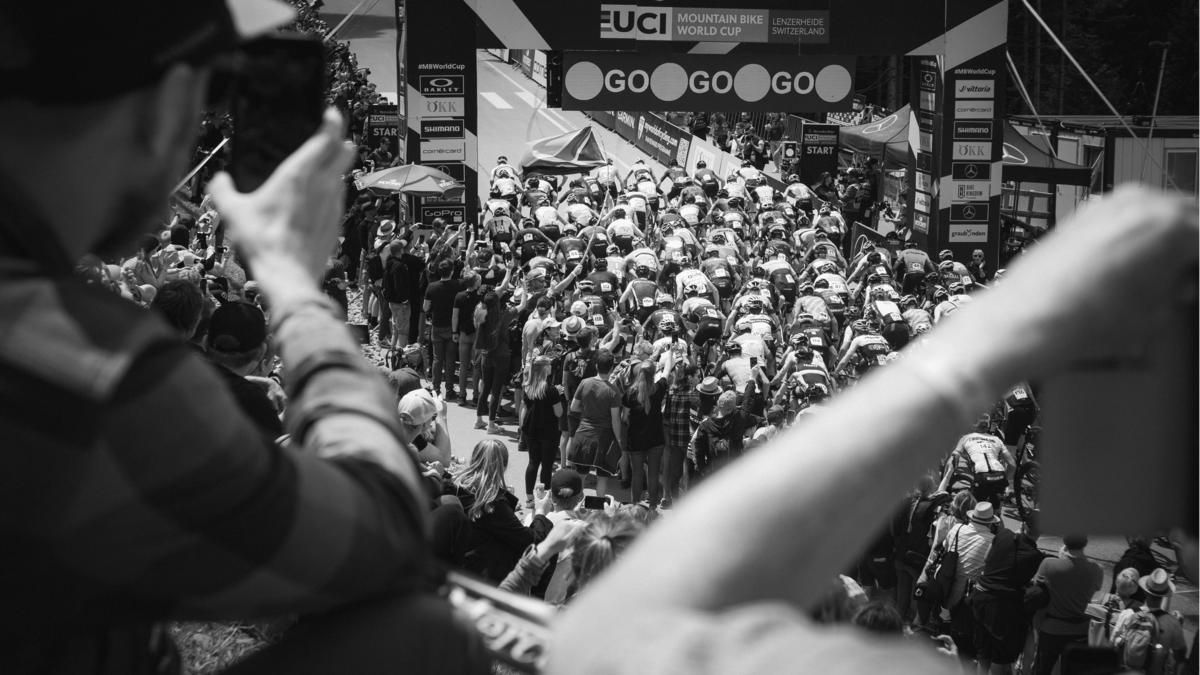
After more than 30 years on the World Cup circuit, Cannondale disbanded its Factory Racing Team at the end of June 2026, three days after one of its riders won in Lenzerheide and took the lead in the World Cup overall standings. Starting in 2027, a program called Cannondale Rogues will take its place, featuring not only racers but also content creators and community leaders. Is a racer there still an athlete, or has he long since become an actor with a fixed role? And can a good story ultimately make up for what a victory no longer delivers?
The equation that no longer adds up
Putting together a World Cup team costs a lot of money. Scott-SRAM, for example, estimates a seven-figure budget for a World Cup season. Julian Wagner, who heads the brand’s bike marketing, says there isn’t much room for increasing brand awareness around the races, and that it isn’t guaranteed.
Adam Morka, owner and team manager of the Canadian Canyon MTB Racing Team, calculated in January 2026 what this looks like on a company’s balance sheet. A bicycle brand with $20 million in revenue spends about ten percent on marketing—that is, $2 million a year—for everything combined. A World Cup program costs one to three million. On paper, Morka writes, the numbers add up; in practice, however, the model barely holds up. What looks good on the track doesn’t translate into revenue at the end of the year. That’s where the model fails—not the racing itself.
And the racing team isn’t even the only drain on the budget. Many brands placed orders years in advance during the pandemic and have been sitting on full warehouses ever since. They’re lowering prices to clear them out, thereby squeezing the margin that was ultimately supposed to finance the racing team.
While many brands are forced to cut costs, the sport itself is driving up prices. Former World Cup rider Wyn Masters has calculated that the team fee for a Downhill World Cup team will rise from 11,000 to 44,000 euros by 2025. A race win brings 3,750 euros in prize money. So a team would have to win twelve races just to pay the entry fee. There are ten races in the season. Anyone who wins them all still ends up paying out of pocket.
Instead of cutting the team, many brands are restructuring it. The rider stays on, but he no longer rides just for the podium—he also rides for the camera. Morkas’s advice is not to cut the racing team but to combine it with something that can be clearly measured—targeted online advertising, for example. Cannondale is pursuing the same basic idea with Rogues, though not through paid advertising but through content creators who are meant to help expand reach. Not a replacement, but a supplement: the racers stay, and content is added. Whether this will pay off in the end remains to be seen.
Who’s Telling the Story
Pinkbike already ran this experiment between 2020 and 2022. In the reality show *Pinkbike Academy*, ten up-and-coming riders competed at Big White for a pro contract with Orbea and $30,000. Filming took place around the clock. Two episodes of the third season are titled “Content Is King”: The riders are given a GoPro and very little time to film and edit a video about themselves and their sponsors, and a professional freerider evaluates the result. Afterward, two are eliminated. One viewer wrote in the comments section that the show should just move entirely to Instagram, find someone who looks good, and then teach them how to ride a bike.
For the athletes themselves, this dual role can become a burden or a kind of safety net. Laurie Greenland, a Downhill World Cup rider with the Santa Cruz Syndicate, says it’s getting harder to find a balance because his job is both a hobby and a passion. Mixing the two can go pretty wrong. His team has drawn a practical conclusion from this: During race week, the Syndicate takes over its riders’ social media accounts. Greenland calls this a huge relief; he can then focus purely on riding.
The reach remains valuable to him nonetheless; it’s a second source of income that doesn’t depend on his next result. But it demands his attention precisely when he can least spare it. Anyone who tries to do both at the same time ends up doing both half-heartedly. So someone else takes over the storytelling. The rider rides, the team films, and the story is crafted from the footage later. That’s how reality TV works: The contestants aren’t supposed to play a role; they’re just supposed to live their lives. The drama is edited together on a computer afterward.
You don’t even need a victory for the story. A Temple University study of 30 elite athletes shows that failure, injury, and botched races are also expected. Someone who only wins comes across as inauthentic. For a racing team with content creators, that’s reassuring news. A loss isn’t worth much in the standings, but it is in a story.
Jolanda Neff won her last World Cup race in the summer of 2022. Four years without a win, yet her 482,000 Instagram followers have stayed with her. Victories must be earned anew every season; an audience does not. A team that signs a rider therefore gets two things: an uncertain prospect of results and an audience that the rider already brings with them. Bringing content creators into the team buys the team security. Reach is still there even when podium finishes are lacking.
So the racer doesn’t become an actor. He doesn’t have to act; the drama unfolds later when the footage is edited together. It’s just that he no longer tells his own story. Others do that for him, and he can focus on the race. That said, it’s not certain whether this strategy will save the teams from extinction. A content creator doesn’t lower the entry fee or the budget. The plan only pays off if more bikes are sold in the end. That won’t become clear for at least a few seasons.
Further content on this article


About the author: Men Danuser
Note: This content has been automatically translated from German. Please report any incorrect translations.