

MTB is racing toward its next disaster with 32-inch wheels
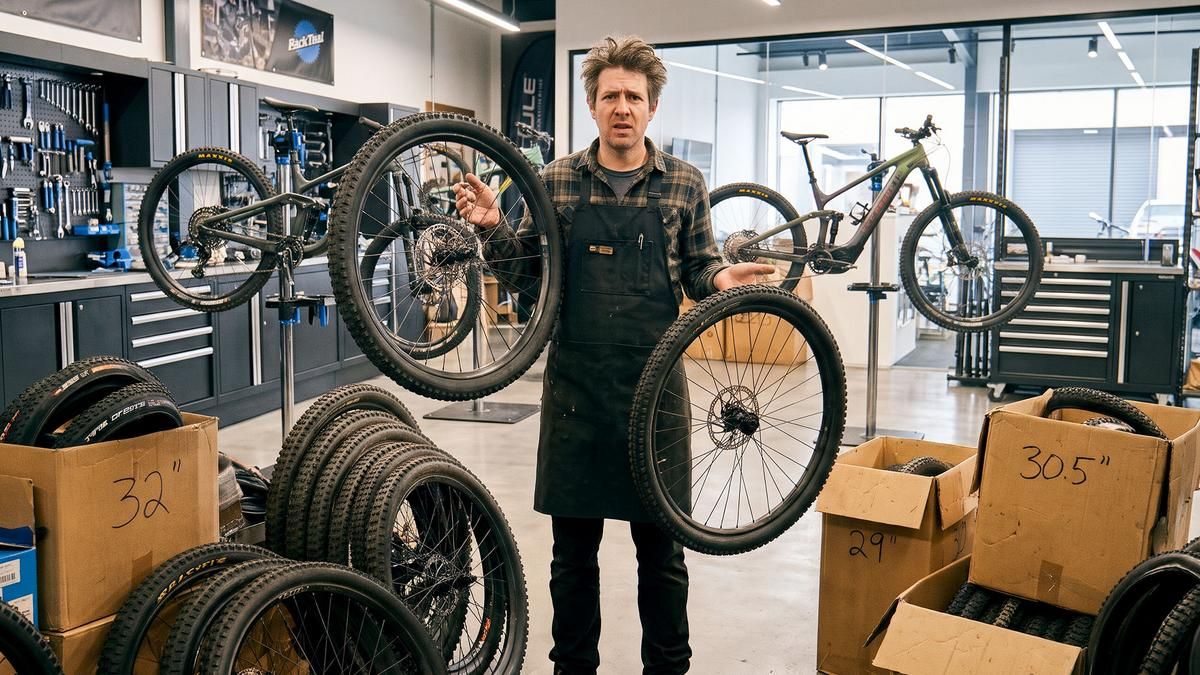
This condition is called “Fear of Missing Out,” or FOMO for short. It refers to the fear of missing out on something. Many of us are familiar with this from everyday life. For the bicycle industry, however, it was precisely this phenomenon that was the main reason for the catastrophe that followed the COVID-19 pandemic. During this unprecedented boom, no one wanted to cede even one per mille of their market share to the competition. The result? Almost all manufacturers rushed headlong into overproduction and, as a result, collectively sent a rock-solid industry into a tailspin. That is the toxic side of “fear of missing out.”
A new standard at the worst possible time
Back to the new wheel size. For the bike industry, there’s hardly anything more labor-intensive and expensive than establishing a new standard. It requires new production facilities and molds. Previous compatibility standards are thrown out the window. Development errors lead to warranty costs. Spare parts and components must be kept in duplicate stock. And so on and so forth.
In short: A new standard devours an enormous amount of money. And in the case of the bicycle industry, this scenario comes at the worst possible time—namely, just as the industry is recovering from the economic turmoil of recent years. The reason for this collective misstep is, once again, “fear of missing out.” Companies are blindly following suit just to avoid giving away market share. Just don’t let others take the lead with the new wheel sizes! From a business perspective, this is actually utter nonsense—and no other industry has learned this the hard way more than the bicycle industry, which is thoughtlessly making the same mistake a second time and following each other like lemmings.
The ripple effect for us bikers
A new wheel size, however, isn’t just a problem for the industry. It will affect the daily lives of us mountain bikers much more significantly—and more unpleasantly—than we’d currently like. The practical consequences are far-reaching:
- Transportation chaos: Bike racks on public transportation or at bike hotels simply won’t fit anymore.
- Cars and RVs: Many expensive bike racks on cars or RVs are suddenly no longer compatible.
- Bike shuttles: The trailers used by local shuttle companies, which were painstakingly optimized for 27.5- and 29-inch wheels, will largely need to be modified or completely redesigned.
- Travel: Expensive transport bags for air or train travel are too small for 32-inch bikes and are therefore unusable.
- Local retailers: Specialty retailers will have to significantly expand their inventory (tires, forks, rims, spokes, and complete bikes) once again. This ties up urgently needed capital, which is in short supply everywhere, especially in the current market situation.
It may well be that the new wheels offer better roll-over performance and a more solid riding feel. It may be that they offer significantly greater safety on rocky trails, especially for less experienced riders. And it may also be that the 32-inch wheels provide crucial tenths of a second in professional racing. But please, not now!
Pneumonia in the Bicycle Industry
The introduction of these wheels is like mountain biking shooting itself in the foot. It’s as if someone with severe pneumonia were in the hospital and, at the same time, trying to complete a grueling daily interval training session. You don’t have to be a doctor to realize: That won’t end well.
And that’s exactly what’s happening to mountain biking right now. The industry is clearly suffering from economic “Long COVID,” yet with the new 32-inch wheels, it’s needlessly subjecting itself to its own dangerous form of interval training. The driving force behind all of this has a name: fear of missing out. And as if that weren’t enough, mountain bike engineers have recently introduced 30.5-inch wheels into the mix. It’s the fifth wheel size for mountain bikes.
Further content on this article



About the author: Thomas Giger
Note: This content has been automatically translated from German. Please report any incorrect translations.