

Is the decline of racing teams now beginning?
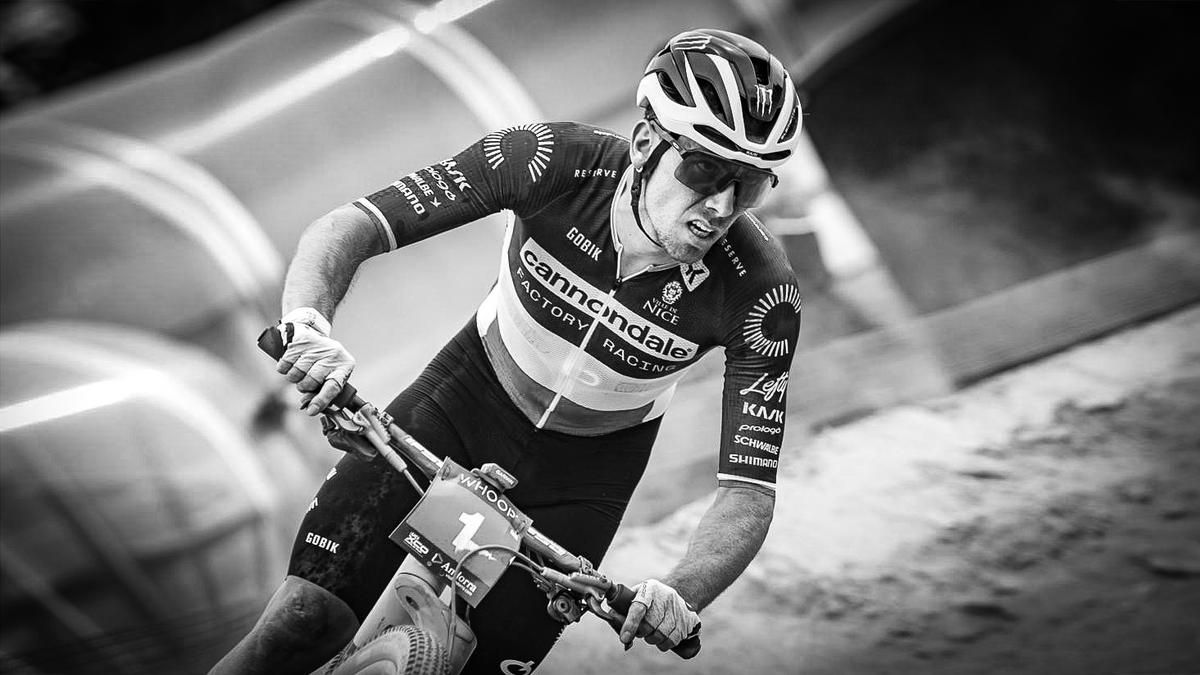
Cannondale Voluntarily Pulls the Plug
Lapierre Has Run Out of Money. At Cannondale, it seems the company simply lacks the conviction that traditional racing is still the right investment. The result is the same: two prominent teams are disappearing from the Cross-Country World Cup.
Cannondale’s decision, in particular, is raising eyebrows. After more than three decades, the American brand will end its factory racing program at the end of 2026. And this is by no means after years of sporting irrelevance. Cannondale still describes its own team as one of the most dynamic and popular forces in cross-country. Luca Martin won the World Cup in Lenzerheide this season, and Charlie Aldridge became European champion in both short track and cross-country. The roster also includes riders like Jolanda Neff, Cole Punchard, and Ana Santos, who all delivered impressive performances at the World Cup and World Championships despite the bad news.
The team is a success. Yet it’s coming to an end.
Starting in 2027, “Cannondale Rogues” is set to take its place—a program designed to bring together professional riders with content creators, community leaders, and other personalities. The brand hopes to reach new target audiences and tell stories beyond the traditional racecourse.
That sounds like modern marketing. To put it a little less politely: Attention is shifting from the results sheet to the smartphone screen.
When Likes Count More Than World Cup Victories
Of course, Cannondale is right about one thing: bike brands need to reach their customers where they spend their time. And today, that’s very often on Instagram, YouTube, or TikTok. A charismatic content creator can reach hundreds of thousands of people without ever pinning on a race number.
The only question is whether reach alone is the right currency for a performance brand. After all, racing doesn’t just sell visibility—it sells credibility. A scalpel is a race bike. Its image is also shaped by the fact that the world’s best riders race on it, test prototypes, push components beyond their limits, and—ideally—win World Cups. That can’t be fully replaced by beautiful videos, adventures, and community events.
Other sports tend to follow the opposite path. In Formula 1, social media, streaming, and content are practically exploding. Nevertheless, hardly any automotive, technology, or luxury conglomerate would think of giving up the racetrack because of this. Anyone who wants to demonstrate sporting expertise and global relevance there wants to be present on the car, through the driver, or even as their own team. Content does not replace elite sports. It simply makes them more marketable.
That is precisely where the crucial difference lies: The racetrack provides the raw material; social media tells the story that goes with it. If you reverse this relationship, you’ll eventually be left with a lot of content but less and less substance from which it can be derived.
Sports are more than an Excel spreadsheet
The problem likely begins in the marketing departments. Digital reach is wonderfully easy to measure. Views, likes, clicks, interactions, and sales are neatly recorded in spreadsheets. A World Cup victory is more complicated. What is its monetary value? How many scalpels does Jolanda Neff sell with a podium finish? What value does a mechanic bring who, together with the engineers, discovers a weak point? And how much is it worth when a brand is associated with the highest level of its sport for decades?
There’s no simple number to answer that. That’s precisely why motorsports risks falling behind in an increasingly data-driven marketing world. Anything that can’t be measured immediately is increasingly required to justify its value.
Yet it’s often overlooked that brand value is built over the long term. Ferrari wouldn’t be Ferrari without motorsports. Red Bull didn’t become one of the world’s strongest sports brands simply by photographing influencers with beverage cans. The brand consistently invested in athletes, teams, and events—and in turn, produced content from those investments.
Mountain bike brands also thrive on such imagery—world champion jerseys, legendary victories, technical innovations, and riders associated with specific bikes. This isn’t short-term reach; it’s cultural capital.
For Lapierre, it’s a matter of survival
The Lapierre case is different and therefore far less open to criticism. The long-established French brand isn’t disbanding its PXR Racing Team because it considers influencers more efficient. It simply can’t afford the team anymore.
The parent company, Accell Group—which also owns Haibike, Ghost, Winora, and Raleigh, among others—ran into massive financial difficulties after years of high debt, full warehouses, and a faltering bicycle market. Insolvency proceedings were initiated in August. Lapierre is now undergoing court-supervised restructuring in France and is seeking a new investor.
One of the immediate consequences affects racing. Lapierre can no longer finance its PXR Racing Team. Nicole Koller, Anne Terpstra, Caroline Bohé, Anton Cooper, and Tobias Lillelund are thus losing their longtime racing home in the middle of the season.
The situation is particularly bitter for Koller. Shortly after the problems became public, the Swiss rider won bronze in cross-country at the World Championships in Val di Sole. So, from a sporting perspective, the team also has a strong case for its existence. Financially, however, that’s not enough at the moment.
Lapierre’s priorities are understandable. When jobs, the dealer network, and the very survival of a company are at stake, a costly World Cup team inevitably becomes a secondary concern.
No team withdrawals yet, but a warning sign
This is precisely why Cannondale and Lapierre are two completely different cases. One manufacturer apparently can’t keep going, while the other no longer wants to. For the sport of racing, however, the result is the same. And that’s exactly what makes this development concerning.
It would still be an exaggeration to speak of a mass wave of team closures. But Cannondale’s decision could have far-reaching consequences compared to Lapierre’s. After all, economic crises come and go. Marketing strategies, on the other hand, get copied when they work. If Cannondale manages to sell a similar number of bikes by focusing less on traditional racing and more on creators, community, and digital reach, other manufacturers will take a close look. Then what started as an isolated case might become a model.
That would be dangerous for the sport of mountain biking. After all, without professional teams, there are fewer spots for riders, fewer opportunities for up-and-coming talent, less development work under race conditions, and ultimately fewer brands supporting the World Cup. Content creators are therefore not the problem. They have long been part of modern marketing and can reach people whom the World Cup would never reach. The problem arises when they are expected to replace rather than complement elite sports.
After all, a performance brand needs more than just reach. It needs credibility. And anyone who has claimed for decades that their bikes are built for the racetrack should think carefully about whether they want to voluntarily leave that very racetrack.
Further content on this article


Note: This content has been automatically translated from German. Please report any incorrect translations.