

Test: Marin Wolf Ridge 9 - The soft eye-catcher with a forgiving character
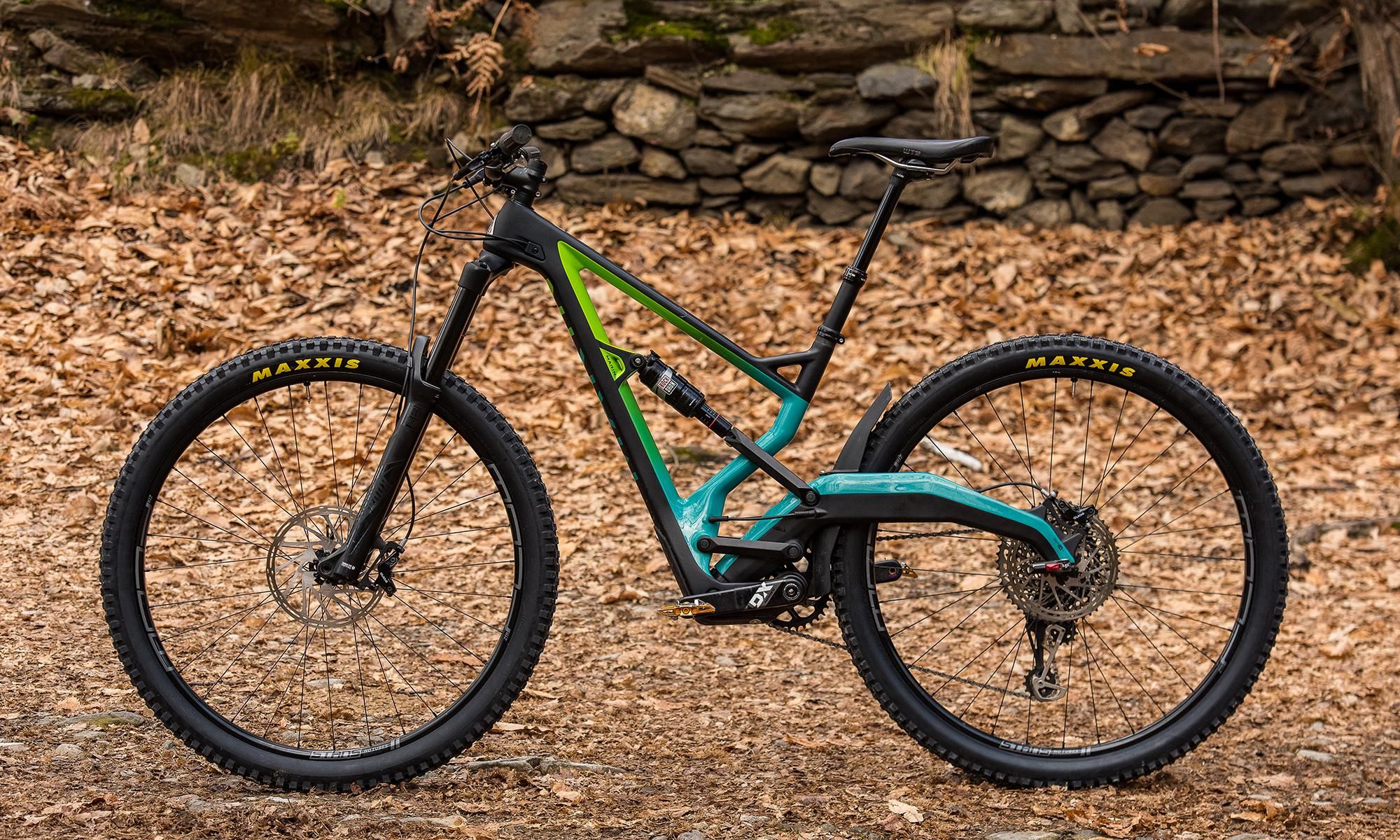
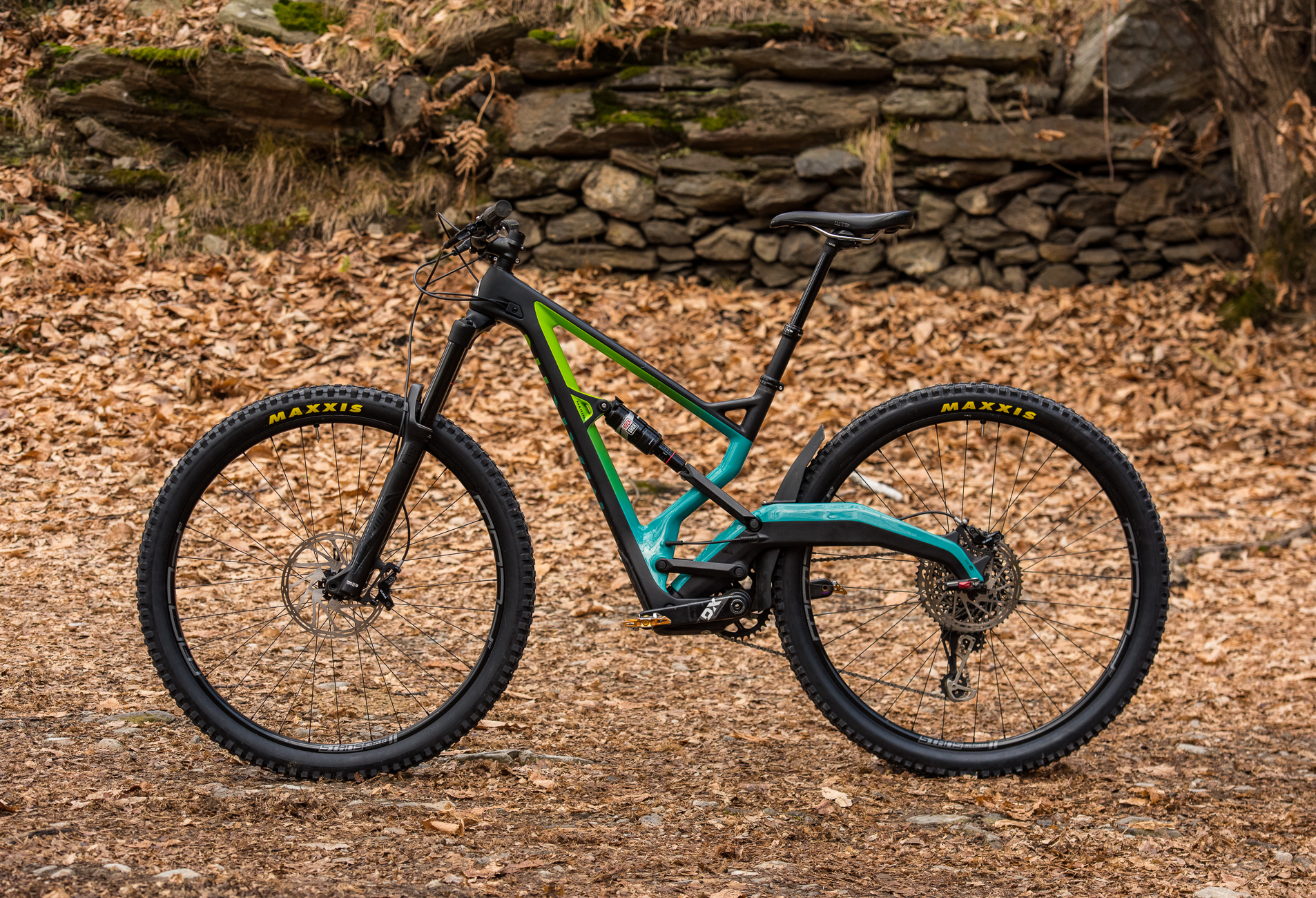
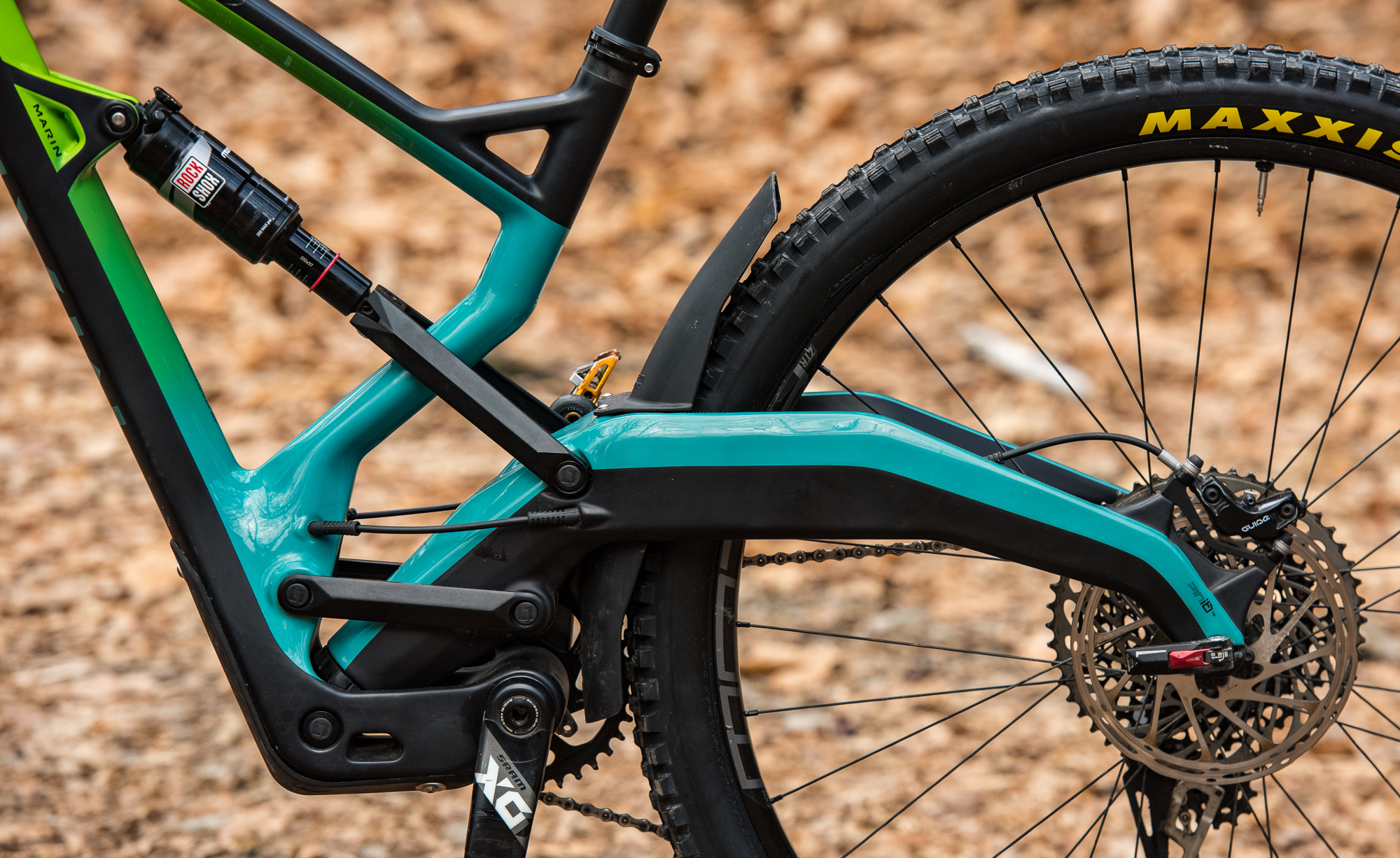
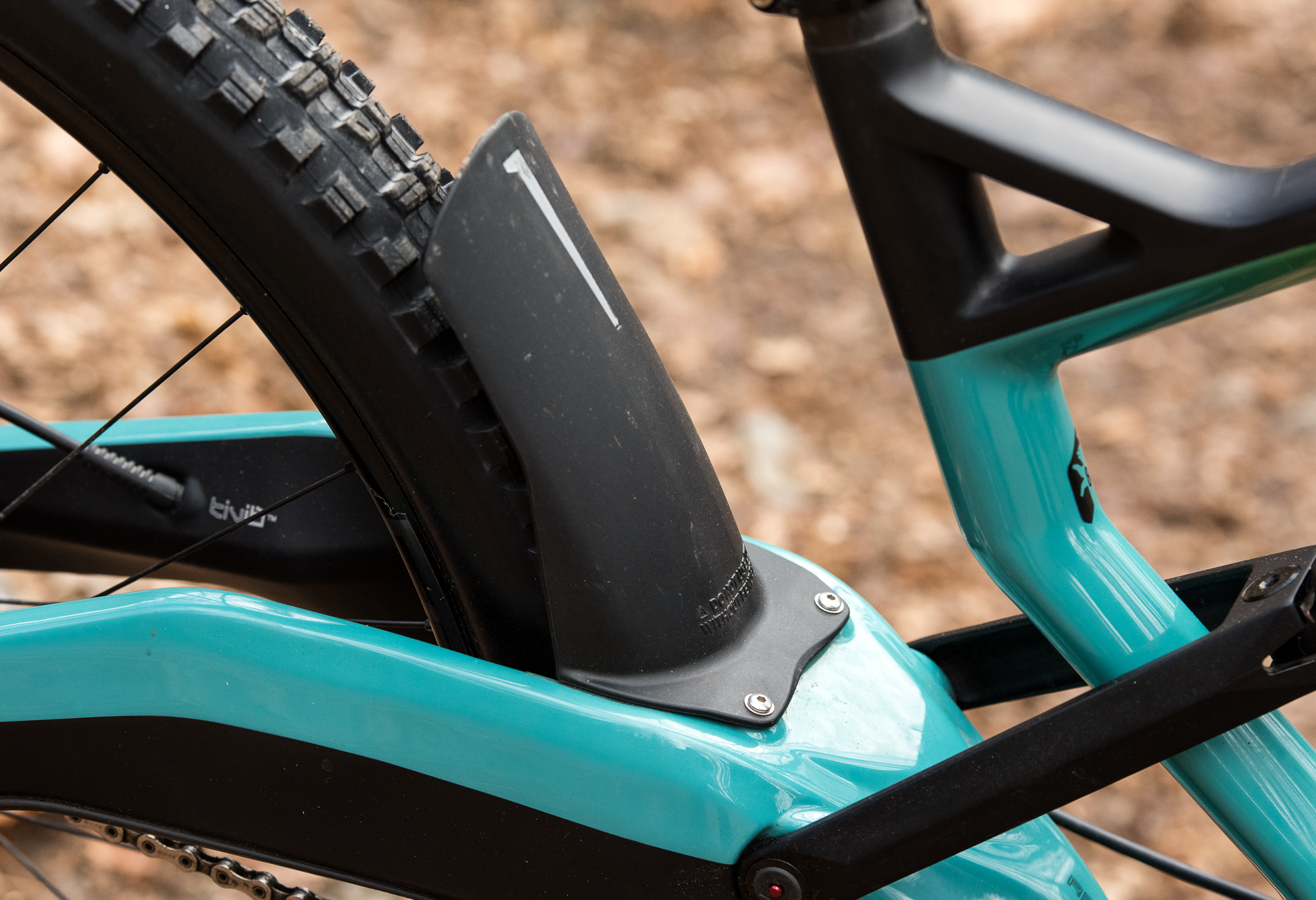
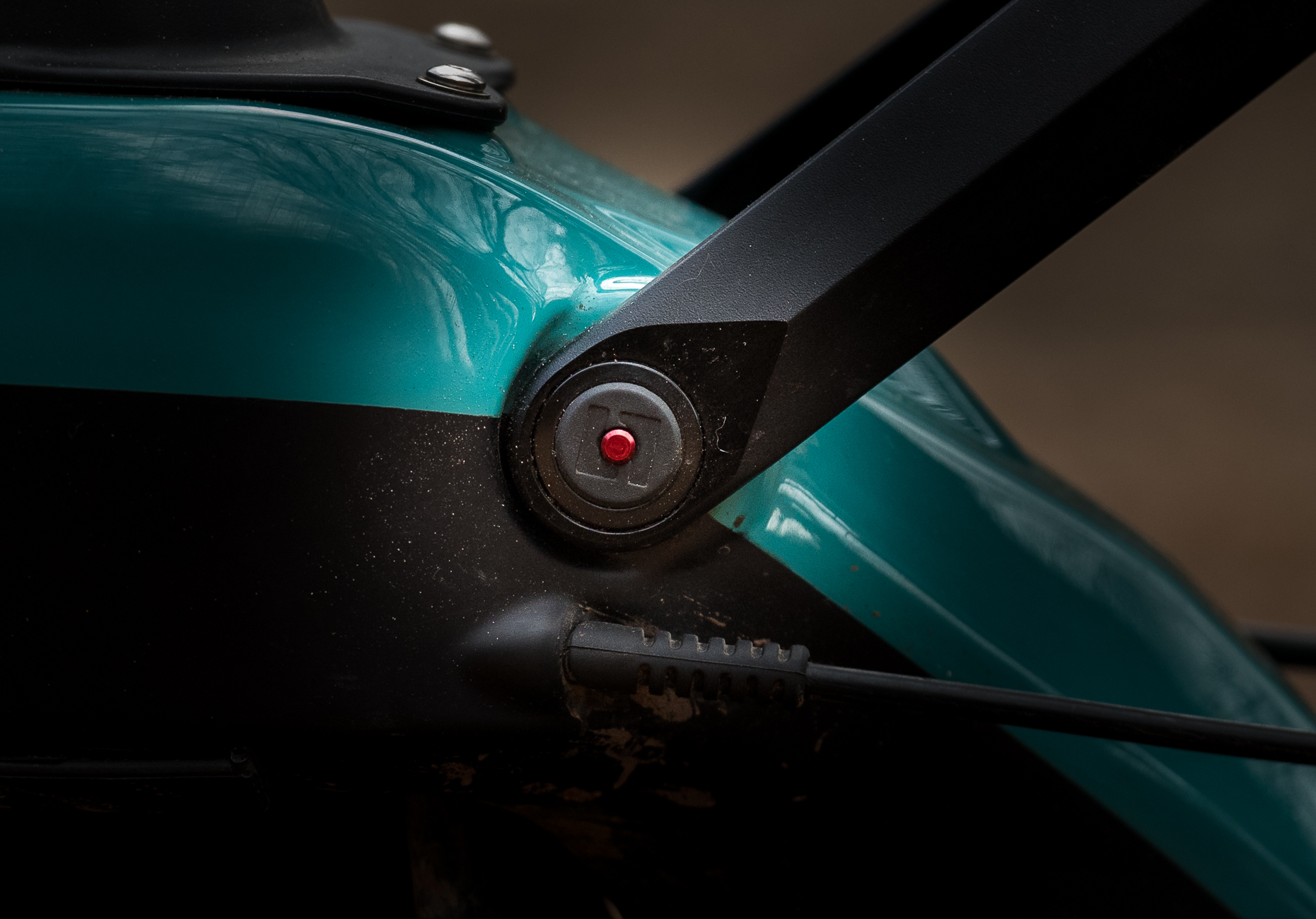
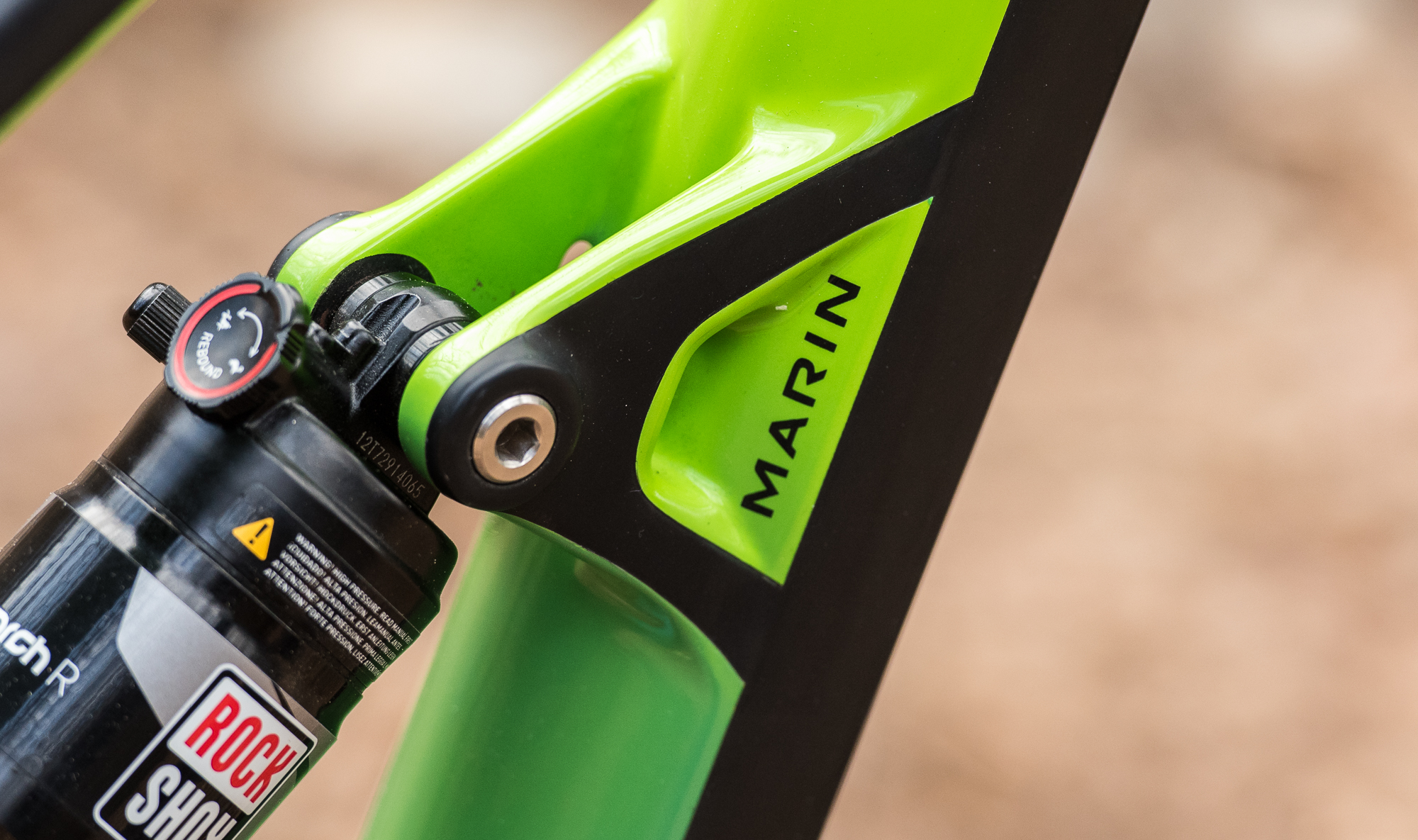
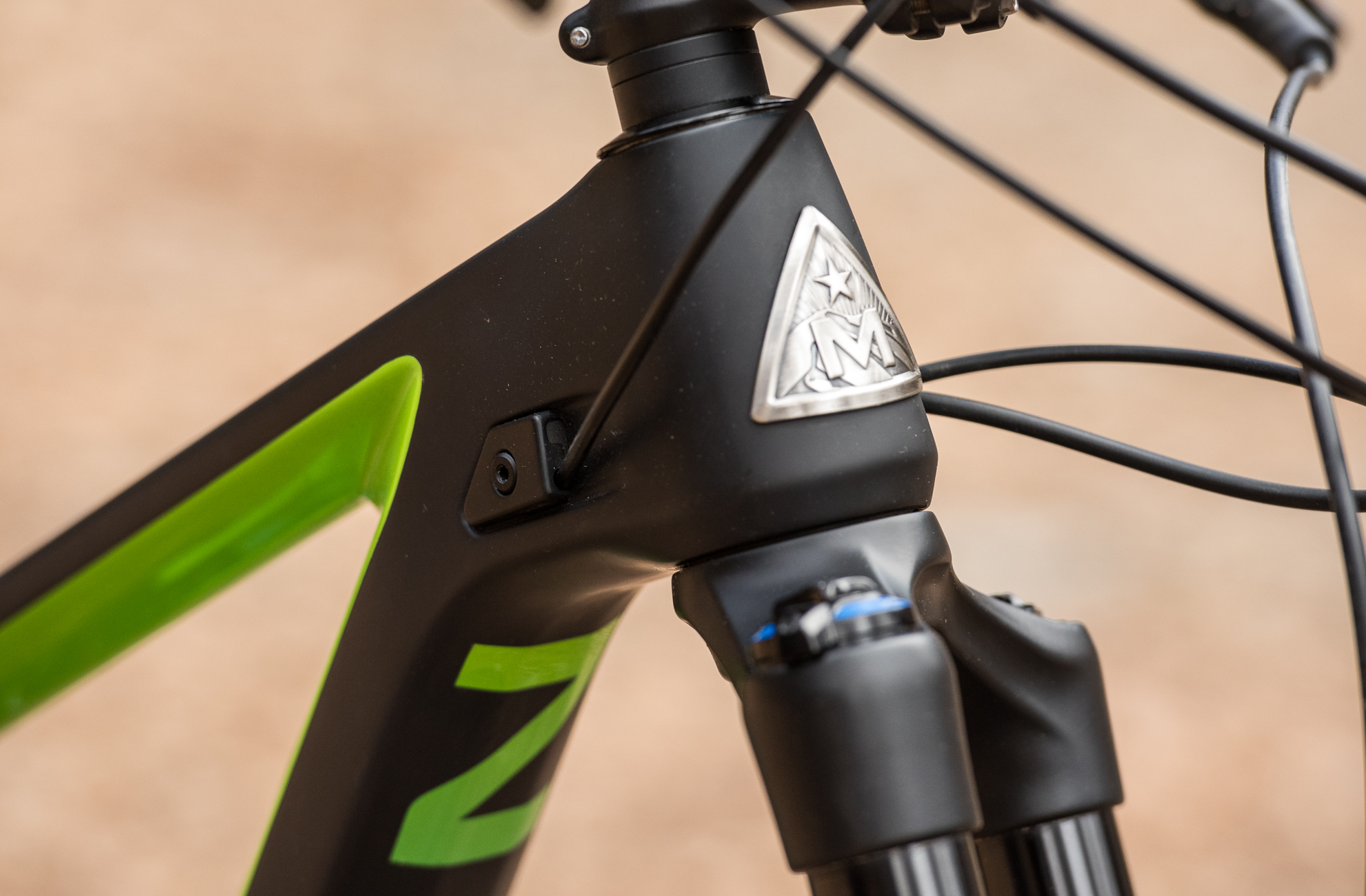
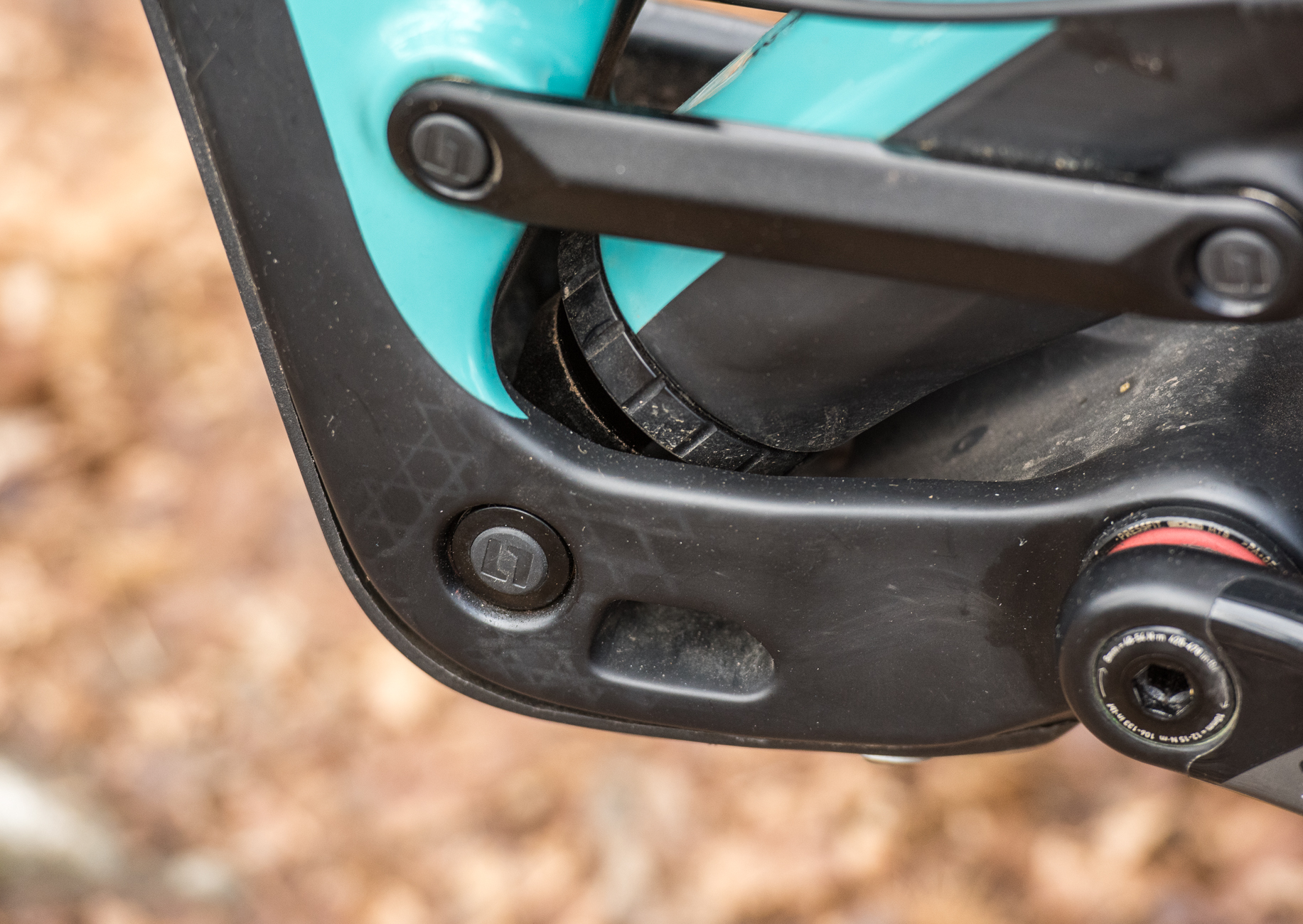
You can like the Wolf Ridge or not, but it is undoubtedly an eye-catcher because of its rear triangle. The frame of the Twentyniner is made of carbon, with the exception of the shock linkage, the lower link and the slider. The latter has a decompression button at the upper pivot point so that any excess pressure does not impair its function. The elaborate rear triangle construction puts some pressure on the overall weight, adding xx kilograms to the scales. That's not a problem downhill, but uphill? The geometry of the Marin sets it apart from the competition. At 73.5 degrees, its seat angle is not very steep and its steering angle of 66.5 degrees is not super slack either. On the other hand, it has a low center of gravity: the bottom bracket is 37 millimeters below the wheel axles, which suggests that it runs very smoothly.
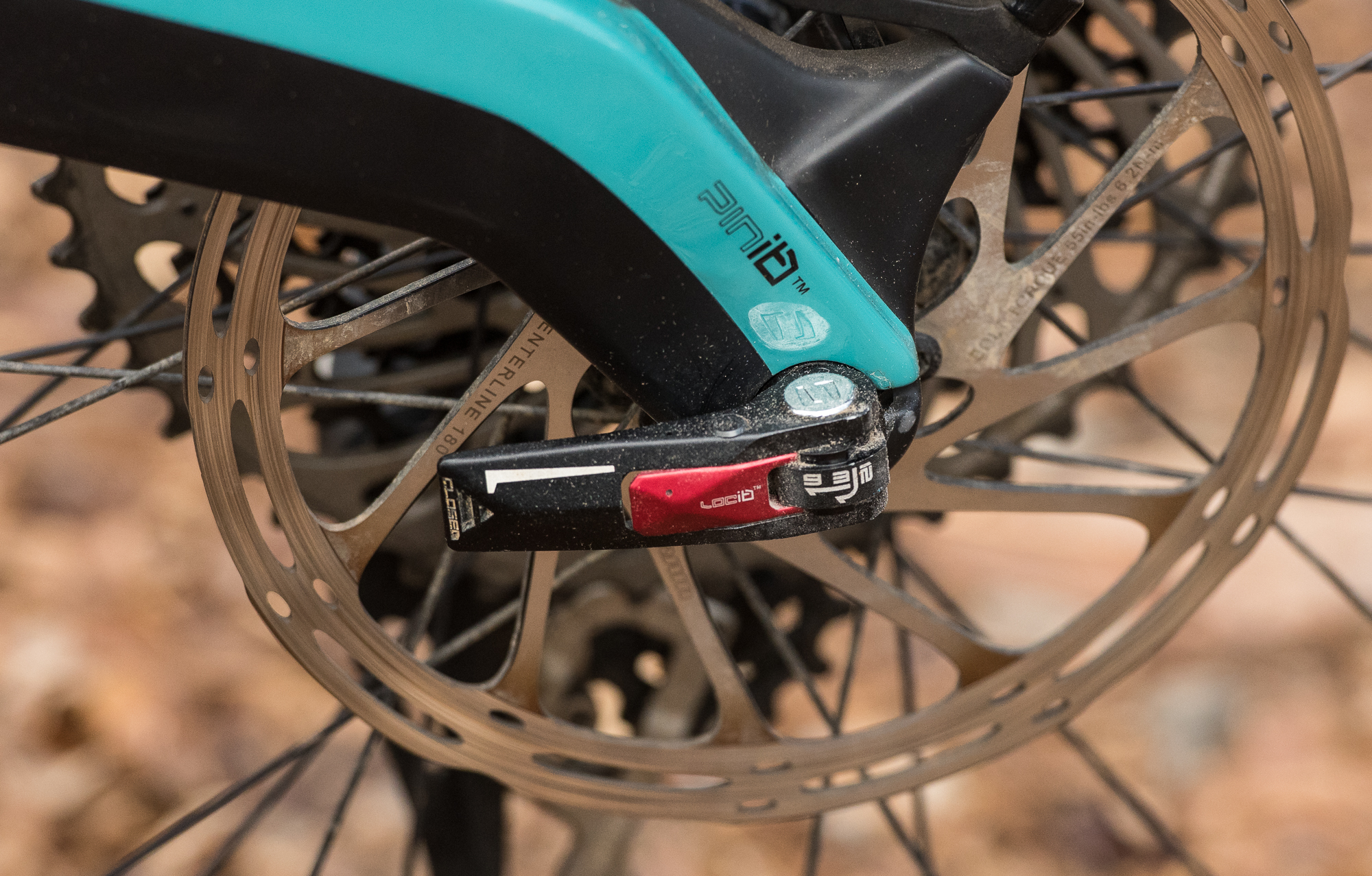
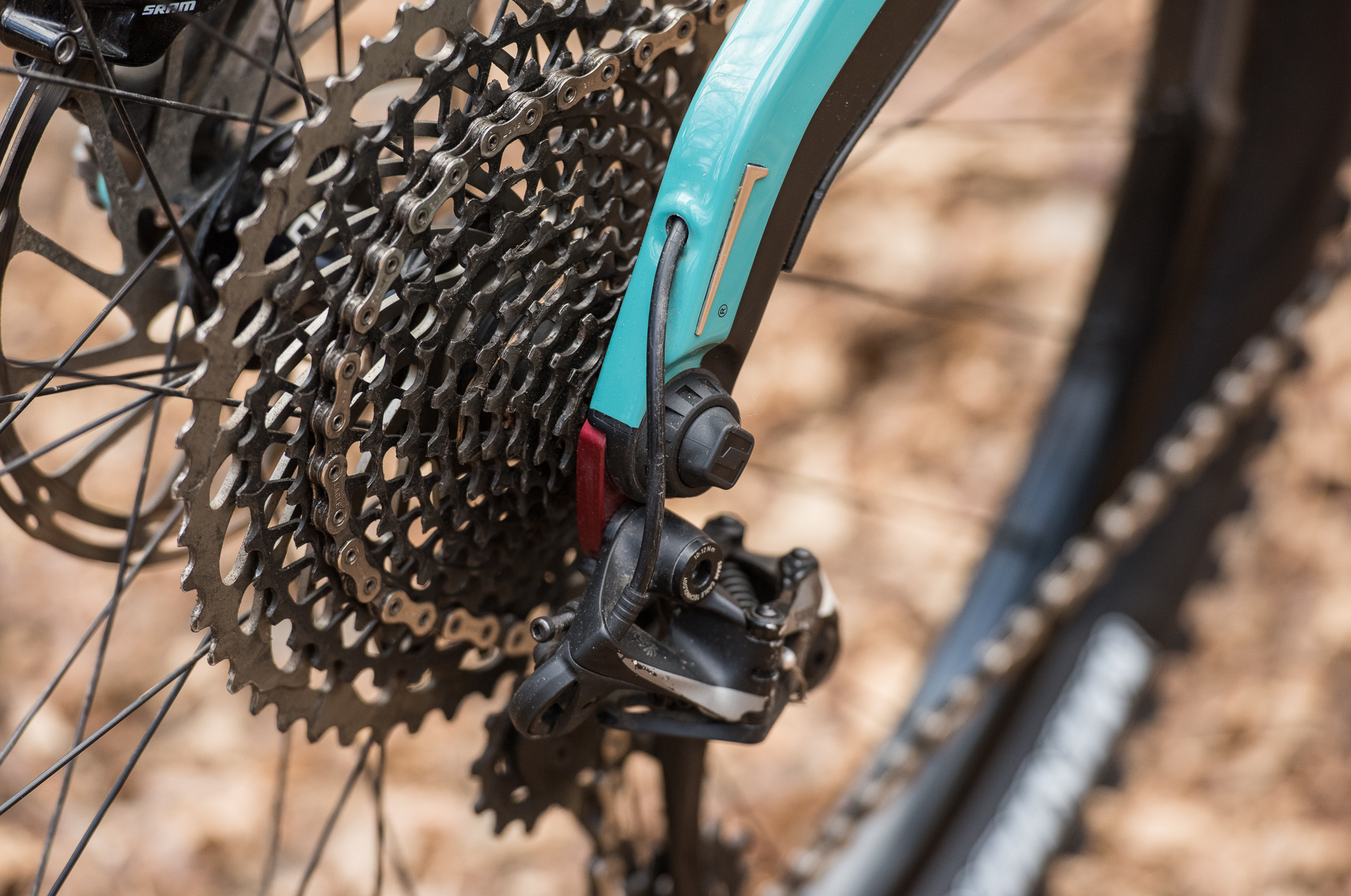
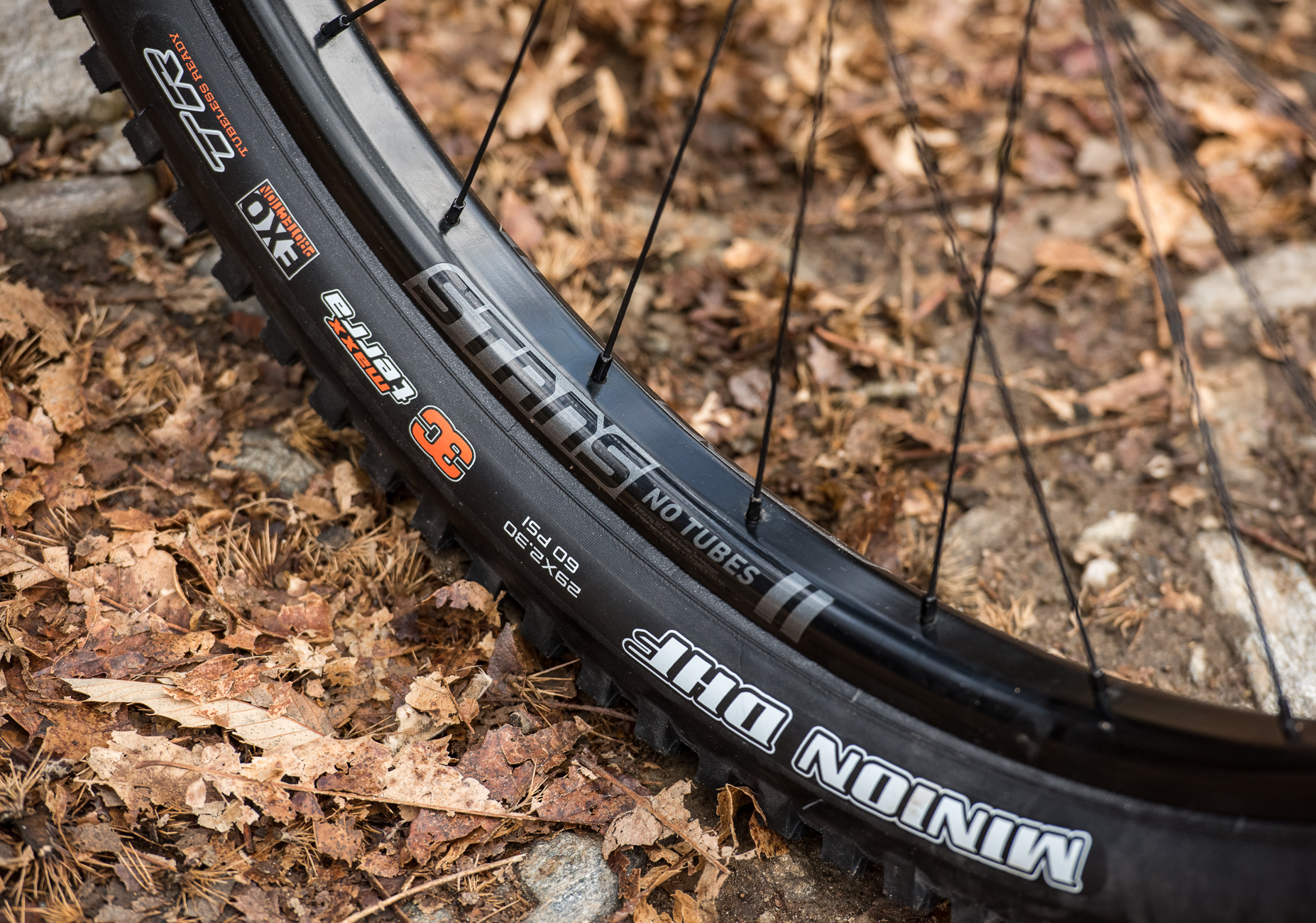
The Wolf Ridge 9 is equipped with the Rock Shox suspension elements "Lyrik RCT3 29 160" and "Monarch R Debonair HV". These offer a full 160 millimetres of travel at the front and rear. The rolling stock comes from No Tubes - a combination of Neo Boost hubs, Sapim Force spokes and the 29 millimeter wide Flow MK3 rims. Twelve gears are shifted using the X01 Eagle groupset from Sram, which is also the source of the Guide RS brakes. Your hands are well supported on the Deity Blacklabel handlebars. At 800 millimetres, there is plenty of room for broad shoulders, and if you like the handlebars narrower, you can simply shorten them. The rear wheel axle conceals an exciting detail in its lever. Thanks to a pawl, it cannot open unintentionally.
Mounted up! The Wolf Ridge feels quite good on the first few meters - not very nimble but comfortable. For the fact that the seat angle is not particularly steep, the power transfer is surprisingly good. However, the saddle had to be moved forward a little to get the usual position. On the climbs, when reaching for the lockout, it is noticeable that this lever is completely missing. With the Naild suspension system, this should also be a thing of the past. In fact, the rear suspension is practically free of pedal influence, even at higher cadences. The shock sags into the negative travel, but then the system is quiet. However, it is not completely bob-free when pedaling. It is also noticeable that the bike is very torsionally stiff. The shock mount moves visibly sideways in relation to the seat tube, but only when pedaling. This also means that the frame is somewhat susceptible to noise around the pivot points if the bearings have been poorly maintained or mounted dry.
Nevertheless, the Marin cuts a surprisingly good figure on uphill terrain. It trumps with good traction and good maneuverability in difficult passages. When things get really steep, the body's center of gravity has to be moved forward a little more than usual so that the front wheel doesn't lose traction.
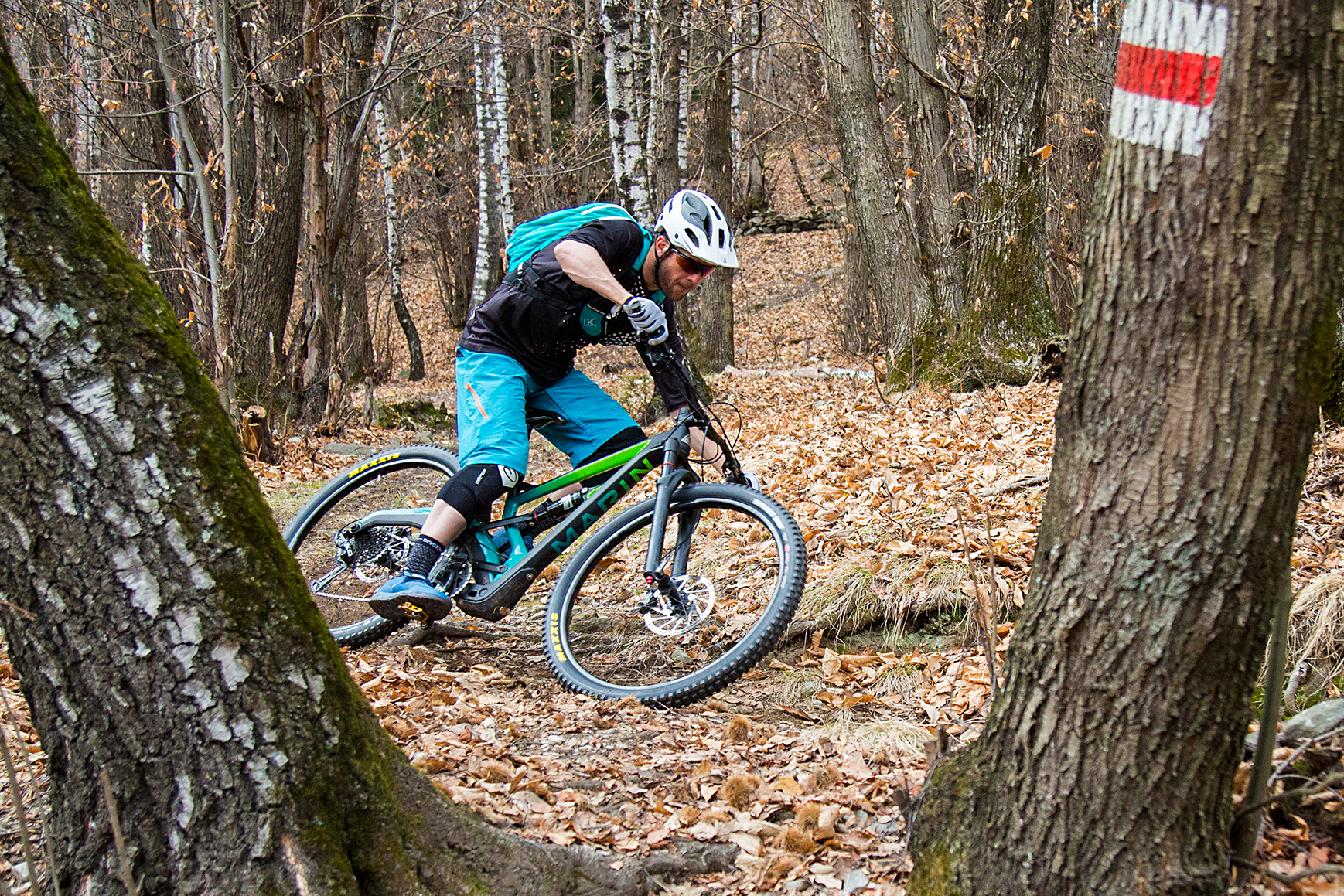
Downhill, however, should be the Wolf Ridge's preferred direction of travel. It conveys a safe riding feeling on fast descents. The suspension sensitively absorbs fast and subtle bumps, but is also able to handle rough impacts well. With 25 percent on the fork and 25 to 27 percent negative travel on the shock, the 160 millimeters of travel can be used well. The progression of the rear suspension kicks in relatively early and feels very defined, as is often the case with other bikes.
The fact that the lateral stiffness of the bike is not very high in the area of the rocker link should not be seen as a general negative. On loose ground or bumpy trails, this flex also forgives an imprecise line choice. However, if you have an aggressive riding style, you will miss the defined feedback from the rear wheel. When cornering, however, the range between grip and smearing is much wider and the bike is also easier to catch.
As mentioned at the beginning, the bike is not very lively. Despite this, the Wolf Ridge is easy to maneuver. It's only a little sluggish when changing direction quickly, but it's strong on rough and steep trails. In tight hairpin bends, it is average.
Conclusion
The Marin Wolf Ridge 9 is not only eye-catching, it also rides well. The Naild suspension system can keep up with the better ones, but it is by no means better. Because of its soft rear end, the Wolf Ridge is perfect for passive riders looking for a forgiving bike for downhill-oriented tours.
Specifications
| Frame material: | Carbon |
| Price: | CHF 7'249.00, (from CHF 5'669.00) |
| Weight: | 14.2 kg (size L, with pedals) |
| Suspension travel: | 160 mm front / 160 mm rear |
| Fork: | Rock Shox Lyrik RCT3 Solo Air |
| Suspension strut: | Rock Shox Monarch R Debonair |
| Shift: | Sram XO1 Eagle |
| Brakes: | Sram Guide RS 180mm |
| Crankset: | Truvativ Descendant Carbon 34T |
| Rims: | Stan's NoTubes Flow MK3, 29mm |
| Hubs: | Stan's NoTubes Neo Hub |
| Tires: | Maxxis Minion DHRII EXO TLR 29x2.3 , Minion DHF EXO TLR 29x2.3 |
| Saddle: | SDG Duster RL w/Norco Design |
| Saddle post: | KS LEV SIO 150mm |
| Handles: | Marin Locking |
| Front end: |
Deity Copperhead Stem, 35mm |
| handlebars: | Deity Blacklabel, 800mm Width, 25mm Rise |
Manufacturer: www.marinbikes.com
Test report published in issue 02/2018 of Ride Magazine
.
Note: This content has been automatically translated from German. Please report any incorrect translations.