

Test: Rose Pikes Peak - The enduro bike that transforms in the 'blink of an eye'
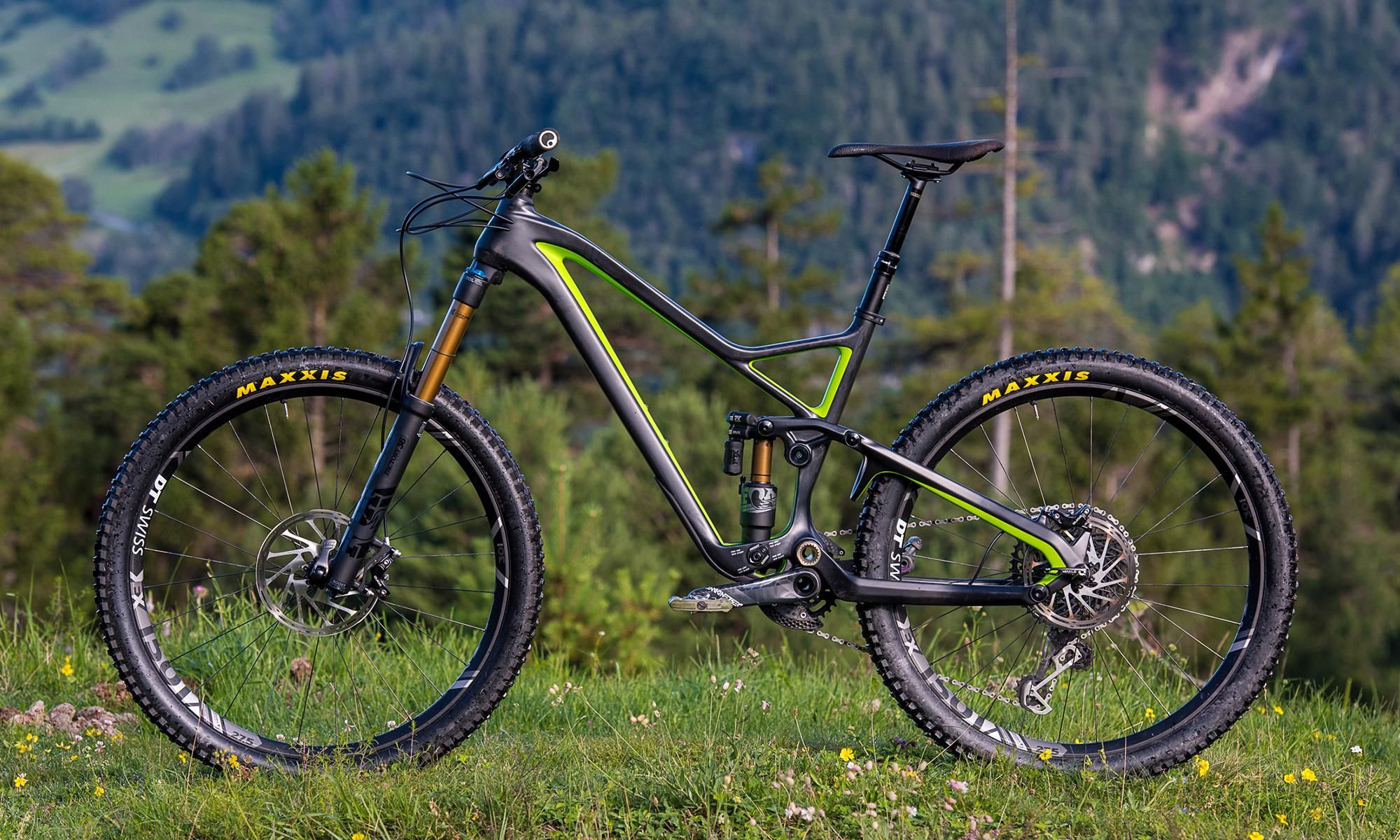
Rose Pikes Peak - a first overview
With its matt black carbon frame and the poison green design elements, the Pikes Peak is visually impressive from the very first second. Furthermore, the 30 millimeter wide rims of the DT Swiss wheels "EX 1501 Spline One Boost" immediately catch the eye. Our test bike is fitted with Maxxis tires (Minion DHR II), although it rolls to customers with Magic Mary and Hans Dampf tires from Schwalbe as standard. The suspension of our top enduro model comes from Fox. A "36 Float FIT RC2 Factory" fork works at the front and a "Float X2 Factory" shock at the rear. This results in 160 millimeters of travel at the front and 165 at the rear. Sram rides through the 12-speed menu with its X01 Eagle groupset. Other highlights include the Rock Shox "Reverb 1x Stealth" dropper post, the E13 chain guide, Ergon grips and RaceFace handlebars, stem and cranks. It is not possible to fit a front derailleur to the Pikes Peak.
The geometry
"Long and slack" are not just attributes of unhealthy supermodels, but the magic words of modern bike geometry. Our test bike in size M has a reach of 455 millimetres. This corresponds to a size L frame with "normal" geometry. In fact, the M frame is relatively large. To counteract this somewhat, a stem with a length of 35 millimetres was installed, which ensures a comfortable, not too stretched out riding position and direct steering response.
ProGeo - geometry adjustment "on the fly"
Okay, geometry adjustments on the rear triangle of full-suspension bikes are not really new. But Rose has taken the system to a new level. It is simple and easy to use and can be carried out in no time at all. A six millimeter Allen key is all you need. The procedure is very simple: loosen the screw as far as it will go, push it in to expose the FlipChips, turn it clockwise to the desired position, tighten the screw again - done. The whole procedure takes barely a minute and is therefore very user-friendly and easy to do on the move.
The seat and steering angle changes by around one degree from the steepest to the flattest position, and the bottom bracket is raised by around twelve millimetres. The final progression of the shock is around four percent higher in the steep setting (steep) compared to the slack position.
Rose Pikes Peak on the uphill
Let's get going! In keeping with the bike's name, we start our test ride with a decent uphill. We set the ProGeo system to "High/Steep" beforehand. We climb the first few meters of altitude on a forest road with a moderate gradient. Despite pedaling as smoothly as possible and sitting in the saddle, the rear suspension always bobs a little, so we close the shock. A complete lockout is not possible, but also not necessary. With this setting (firm), pedaling up the mountain is pleasant. The 13.59 kilograms of the bike (frame size M, including pedals) are somewhat noticeable in the thighs and calves on longer rides, but you don't have to be a muscle man to take the bike on a longer tour. Steep sections do require a bit of physical effort to keep the front wheel from coming up, but for a potent enduro bike, the Pikes Peak climbs surprisingly well.
Where it feels most comfortable
On reaching the top, we use the short breather to pull out the multitool and set the ProGeo system to downhill. As the trail is very fast and rough at times, but also has some steps, rock gardens and hairpin bends, we opt for a medium progression and the long suspension, i.e. slack/mid. Incidentally, we ride the fork with 20 percent negative suspension travel and the shock with 25 percent.
We are glad of the long wheelbase on the first larger off-road steps. The Pikes Peak negotiates the steps with ease and the fork doesn't plunge into seemingly infinite depths, so we always felt very secure. Downhill hairpins require a little more work on the handlebars to steer the Pikes Peak around the bends. However, thanks not least to the grippy tires, it also masters these with ease. Flying over stone fields and root carpets is a real pleasure. This is where the fork and rear triangle really come into their own. A glance at the SAG rings tells us that we were able to make good use of the available suspension travel, but still have some reserves.
Conclusion: Rose Pikes Peak
The Pikes Peak is without a doubt a successful enduro bike with great fun potential. Its ProGeo system impresses with its easy handling and the difference between high/steep and low/slack is easy to feel. On the other hand, there is hardly any difference between the intermediate positions. It also scores top marks for workmanship, features and price.
Specifications
| Frame material: | Carbon |
| Price: | CHF 4'799.00, (from CHF 3'399.00) |
| Weight: | 13.59 kg (size M, with pedals) |
| Suspension travel: | 160 mm front / 165 mm rear |
| Fork: | Fox 36 Float FIT RC2 Factory, Boost |
| Suspension: | Fox Float X2 Factory |
| Shift: | Sram XO1 Eagle |
| Brakes: | Sram Guide RSC 200 mm / 180 mm |
| Crankset: | Truvativ Descendant Carbon 34T, Boost |
| Rims: | DT Swiss "EX 1501 Spline One", Boost, 27.5 |
| Hubs: | DT Swiss Spline One |
| Tires: | Schwalbe Magic Mary Addix Soft 27.5x2.35 vo./ Hans Dampf Addix Speed 2.35 |
| Saddle: | SDG Circuit MTN |
| Saddle post: | Rock Shox Reverb Stealth 1x |
| Grips: | Ergon GE1 |
| Front end: | Race Face Turbine 35mm / 35 mm Ø |
| handlebars: | Race Face Next Carbon, 800mm, 20mm rise, 35 mm Ø |
Manufacturer: www.rosebikes.de
Test report published in issue 04/2017 of Ride Magazine
.


Further content on this article
Note: This content has been automatically translated from German. Please report any incorrect translations.