

The full-face helmet for road bike and cross-country riders

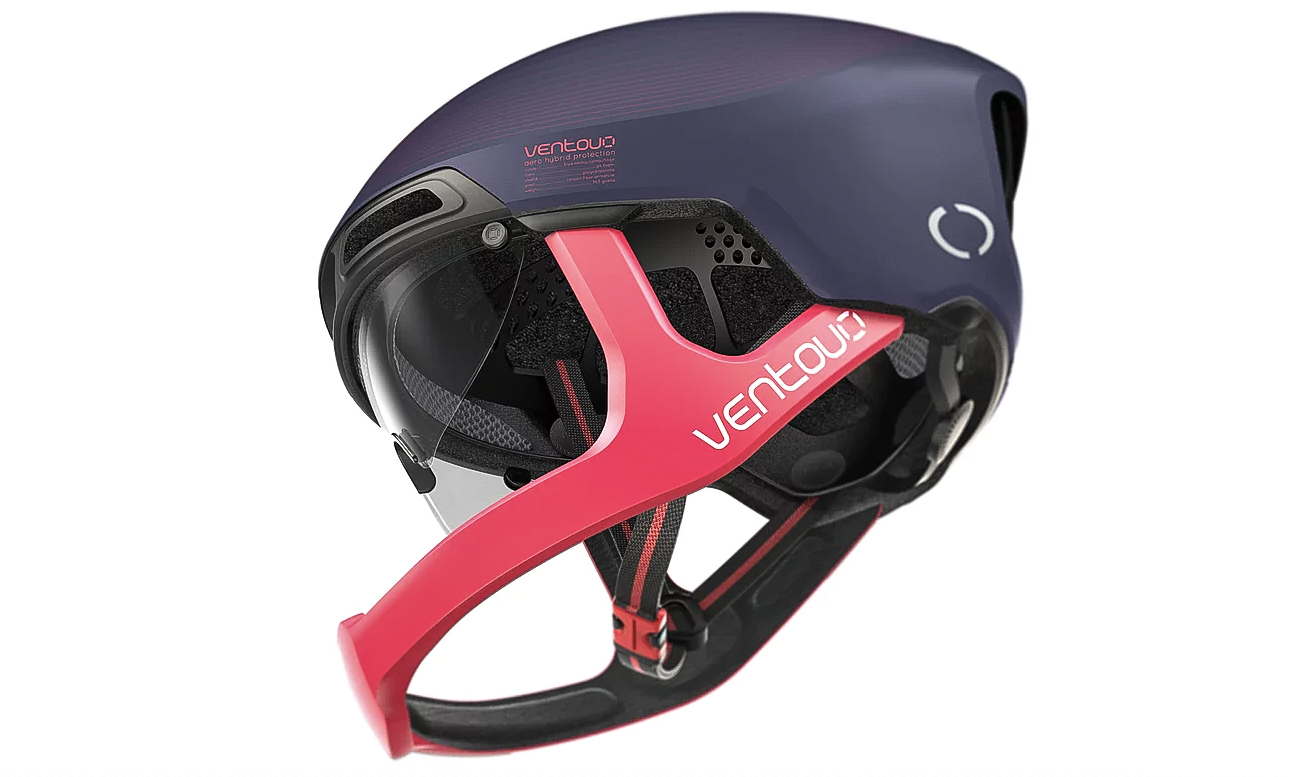
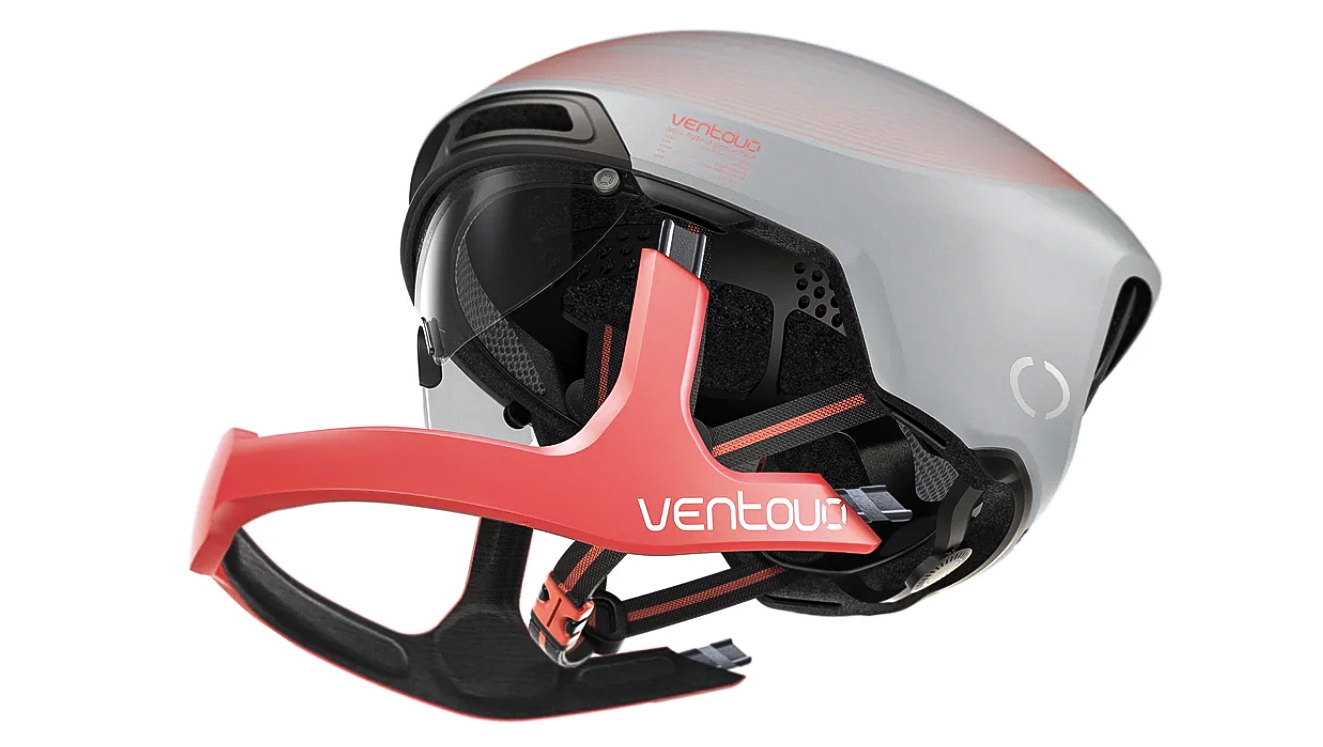

It looks a little out of place on a bike, and is more reminiscent of a ski helmet - the next slalom helmet for Ramon Zenhäusern and co. In reality, however, it is a bicycle helmet. The Ventoux combines the best of both worlds - that of the half-shell and that of the downhill helmet. The target group: from children to professional cyclists.
The idea came from French designer Jean-Baptiste Petricoul, from the Marseille-based design and innovation studio "Studio Accent". Petricoul asked himself how the protection of cyclists could be improved, taking into account a wide range of needs. The Ventoux hybrid helmet was developed to offer even better protection in a lightweight and compact form. The helmet is designed to fit every type of cyclist, from professionals and commuters to children learning to ride a bike.
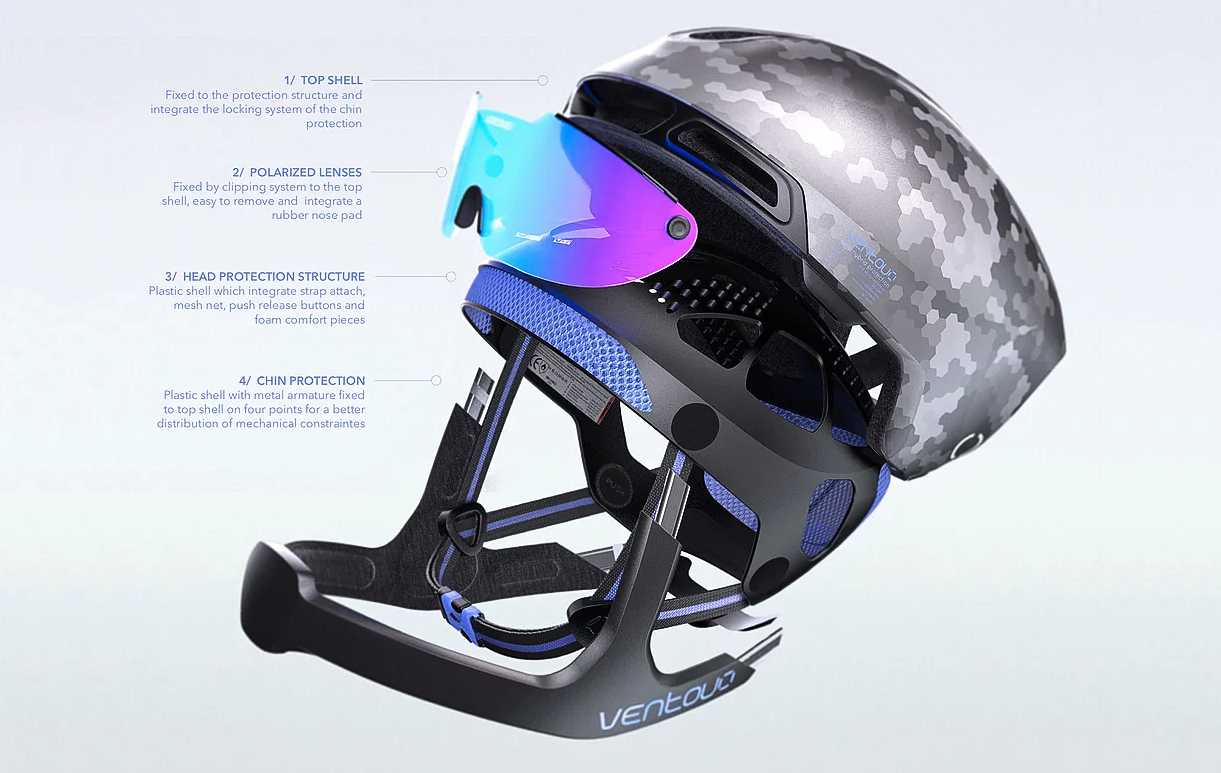
At the heart of the Ventoux Aerodynamic Helmet is a multi-layer construction and a lightweight, removable chin guard. As with some modern enduro full-face helmets, this can also be attached at four points in the polycarbonate shell.
Petricoul's design is based on a rigid chin bar made from a carbon fiber composite construction. The design is much more open than conventional full-face helmets. This results in better ventilation, a larger field of vision and the ability to eat or drink easily even with the helmet on. The Ventoux hybrid helmet also has a sophisticated ventilation system and a clip-on lens.
Of central importance is the inner shell of the Ventoux, which moves like a MIPS liner on impact so that the low chin guard can rotate upwards in the event of an impact. This should keep the jaw, cheekbone and nose protected in any position and the rotation could also prevent neck injuries.
At almost 370 grams, the helmet weighs a bit much for a racing driver. Nevertheless, its weight is in the range of the usual half-shell trail helmets, i.e. the same weight as the Montaro Mips helmet from Giro.
Even if it is currently unthinkable that professional cross-country or road riders will ever compete with such a helmet, this helmet project is certainly interesting. Not least because its creator thought outside the box of the cycling industry. He has given the Ventoux his own personal design language instead of putting a familiar "bike stamp" on it.
Further content on this article

Note: This content has been automatically translated from German. Please report any incorrect translations.