

Today, mountain bikers are at the mercy of the gamekeepers.
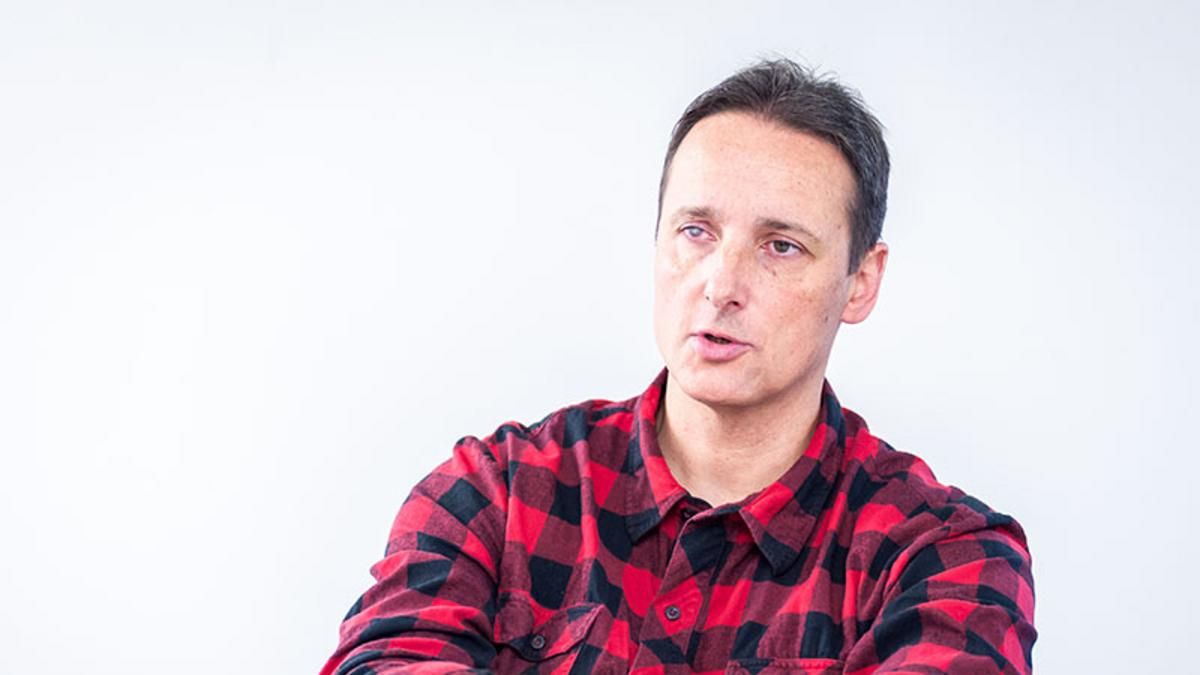
How did the idea of hiring a project manager for grassroots mountain biking at Swiss Cycling come about?
Pfisterer: For 15 years, Swiss Cycling has enshrined in its mission statement that it is not only a promoter of competitive sport, but that grassroots sport is just as important. Due to the association's financial difficulties, we had to focus on basic functions until recently. We have been debt-free since the beginning of 2014 and, in line with our mission statement, we want to focus more on grassroots sport again.
Montgomery: There is no clear dividing line between these athletes. The basis of competitive sport is grassroots sport. A top athlete uses the same terrain in training as a normal biker at the weekend, so they have similar interests. When trails are closed, it affects both of them.
Pfisterer: We have been promoting cycling in schools for two years. We don't want to breed competitive athletes there, but simply educate them and convey the joy of cycling.
Stutz: When Swiss Cycling was founded 130 years ago, it was not about top-class sport but about being able to practise cycling throughout Switzerland without major obstacles. Every biker is initially a normal athlete, you are not born as a top athlete, that then takes a natural course.
Despite this, isn't the individual, flexible and non-bindingly organized mountain biker at odds with the athlete who is committed to the association?
Montgomery: This biker has to think about it: Why can he ride his trails? Can he still use the forest in the future? If he tries to commit to this as an individual, he will most likely fail. It's our job to convince mountain bikers that we can achieve more together.
Pfisterer: If the individual is not interested in getting involved, then perhaps the level of suffering is not high enough. If no one is willing to get involved with us, then we have to ask ourselves whether this is the right way forward. If we don't have broad support, then there's no point in all the political work.
Pfisterer: As soon as we have taken stock of the most important partners, we want to involve these clubs and associations. We will make an appeal in spring 2015 and everyone is welcome and invited to get involved. We want to create an open system and everyone should be able to get involved; these organizations can help write our specifications. We also expect participation, because we don't want it to be the case that only we say where and what needs to be done. After all, we see ourselves as a service provider and our work should bring benefits.How does Swiss Cycling plan to involve the small, regional and politically active bike clubs?
Pfisterer: We want to address them with our open structures. We can't sit down with local authorities ourselves, we don't have enough resources. If the bike clubs do not reach the national connections, we can help. And: we can provide the right tools for those active at a local level.
Stutz: In order for amateur athletes to be able to use a public trail built with taxpayers' money, guidelines are needed. The authorities need to know whether a trail is too extreme or justifiable; they expect a certain degree of legal certainty. This requires experts, and in Zurich, the Advisory Center for Accident Prevention was consulted for the implementation of the trail on the Uetliberg. This resulted in the guidelines for trail and facility construction, which Swiss Cycling also contributed to. This is exactly what we mean by "providing tools". This also includes good practice examples or tips so that you don't keep repeating the same mistakes.
Pfisterer: Bikers often encounter the same problems, so it can be a great benefit if we show how an association has solved a specific problem. If not everyone has to start from scratch, a lot has already been achieved.
Stutz: I would like to emphasize once again that we first need to establish contact and clarify needs. Does this association need our help, does it want our support? We don't get involved at a local level if it's already working there. However, in our work we will discover a pattern of recurring questions that we can use as a basis for all associations. I would like to give you a concrete example: In the past, damage to the forest caused by soil compaction was an important issue, but today the focus is more on wildlife protection. At a local level, it is difficult for many mountain bikers to enter the discussion competently. If all gamekeepers say that mountain bikers are harmful to game, then nothing can be done about it. We are working at the highest level to create specialist knowledge and contacts. We are currently working on a study on the stress of urban use on game. This will allow us to draw conclusions about the actual impact of mountain biking on game. This is exactly the kind of information we want to make available to our members.All members of a registered bike club are automatically passive members of the association. Swiss Cycling charges ten francs for this passive membership. How are these funds used?
Pfisterer: We give this net income from passive membership back to the clubs that have a Y+S program, for example. The grassroots should benefit from this income. In other words, those who ensure that cycling is still practiced in Switzerland tomorrow and the day after tomorrow. The clubs that do not offer junior programs make a contribution to the active clubs, which is a kind of financial equalization in the promotion of young talent. Our delegates have introduced passive membership because it is extremely important for us, particularly at a political level, to be able to report more membership figures. It makes a difference whether you have 15,000 or 30,000 members.Pete Stutz is involved with a 40 percent workload. What about the remaining 60 percent of the position for the promotion of mountain biking as a popular sport?
Pfisterer: Originally, we wanted to divide the 100 percent of the position between one person. With the survey by Züritrails and Swiss Cycling, it became clear that the range of tasks is so broad that one person alone cannot shoulder it. This spectrum ranges from political work to school programs. We have hired Pete Stutz for 40 percent of the job. At the same time, Theo Stauffer, head of events for the school program, will increase his workload and thus relieve Sven Montgomery, who will be more involved in popular mountain biking. At the same time, I will be handing over some tasks internally so that I can also devote myself to the subject. I am assuming a workload of up to 30 percent. This means that we have divided the promotion of popular mountain biking between around four people - that's more than 100 percent of the job.
Pete Stutz, you ride a bike store in Zurich, work for Swiss Cycling and run a company that builds pump tracks. How do you manage to juggle all of this?
Stutz: I've been doing this for 25 years, still have my family and do other things besides the Pizza Cup. Everything in my life revolves around two wheels.
Is Pete Stutz the right person for the job? He didn't just make friends in Zurich with the bike park project on Allmend.
Pfisterer: It is clear to us that the appointment of Pete Stutz is polarizing in Zurich. At the end of the day, it was a question of weighing up who brings what to the table and where we have the greatest benefit for the whole idea. We have good contact with Züritrails and the appointment was discussed with them. You also have to say that the whole scene is much bigger than just Zurich. And no matter what we decided, everyone would have been offended at some point. In the Swiss cycling scene, everyone knows everyone.
Stutz: It is now 2014 and we are planning the phase from 2015 to 2020. The distribution of roles over the past eight years will be different over the next few years. It's brilliant that positions are emerging and developing that didn't even exist before. The people involved have to find their positions and so it's a natural process how something comes about and everyone has found their role.
Pfisterer: It's not Pete Stutz who dictates our approach. We deliberately want to create an open system where everyone can get involved. The open system should allow those involved to tell us which direction it should take.
Pfisterer: We want to communicate openly from the outset what Pete's commitments will look like and have discussed this in advance. We know that we have to keep an eye on potential conflicts of interest.How does Swiss Cycling ensure that the concerns of mountain bikers are heard at a political level?
Stutz: Swiss Cycling is networked at the highest level with all institutions. At national level, these include the Federal Offices for Transport, Energy, the Environment, Spatial Planning and Sport. We are on board with national and international associations, such as the UCI, Schweiz Mobil and ProVelo.
Pfisterer: There are various working groups within these offices and other associations that meet regularly. I'm talking about working groups on the topics of non-motorized traffic, the environment and sport, which we are always involved in. I am also on the Board of Trustees of Switzerland Mobility.
What goals do you want to achieve at a political level?
Pfisterer: We want to manage to be perceived as representatives of individual athletes and to use this to lobby for their interests at a political level.
What plans are there for infrastructure for mountain bikers in public spaces outside of tourism?
Stutz: We are waiting for the interviews to clarify the needs. From my experience in Zurich, I know that the potential for conflict increases when an area is densely populated. Then mountain bikers can no longer do anything for themselves in secret, you have to take the official and sustainable route. This official route makes it easier for two-wheelers to maintain an attractive infrastructure.
Where do you see the hurdles in promoting popular mountain biking, where do you see the hurdles in getting authorities and clubs on board?
Stutz: Cycling is one of the three most popular leisure activities in Switzerland. Authorities are often happy to have a contact person in this area.
Pfisterer: We have a good standing with the authorities. The biggest hurdle is the associations and the individual members. I see the involvement of those directly affected as the biggest challenge for us. Communicating the benefits of their involvement is very demanding.


Note: This content has been automatically translated from German. Please report any incorrect translations.