

1749 grams! Scott presents the new Spark with record weight
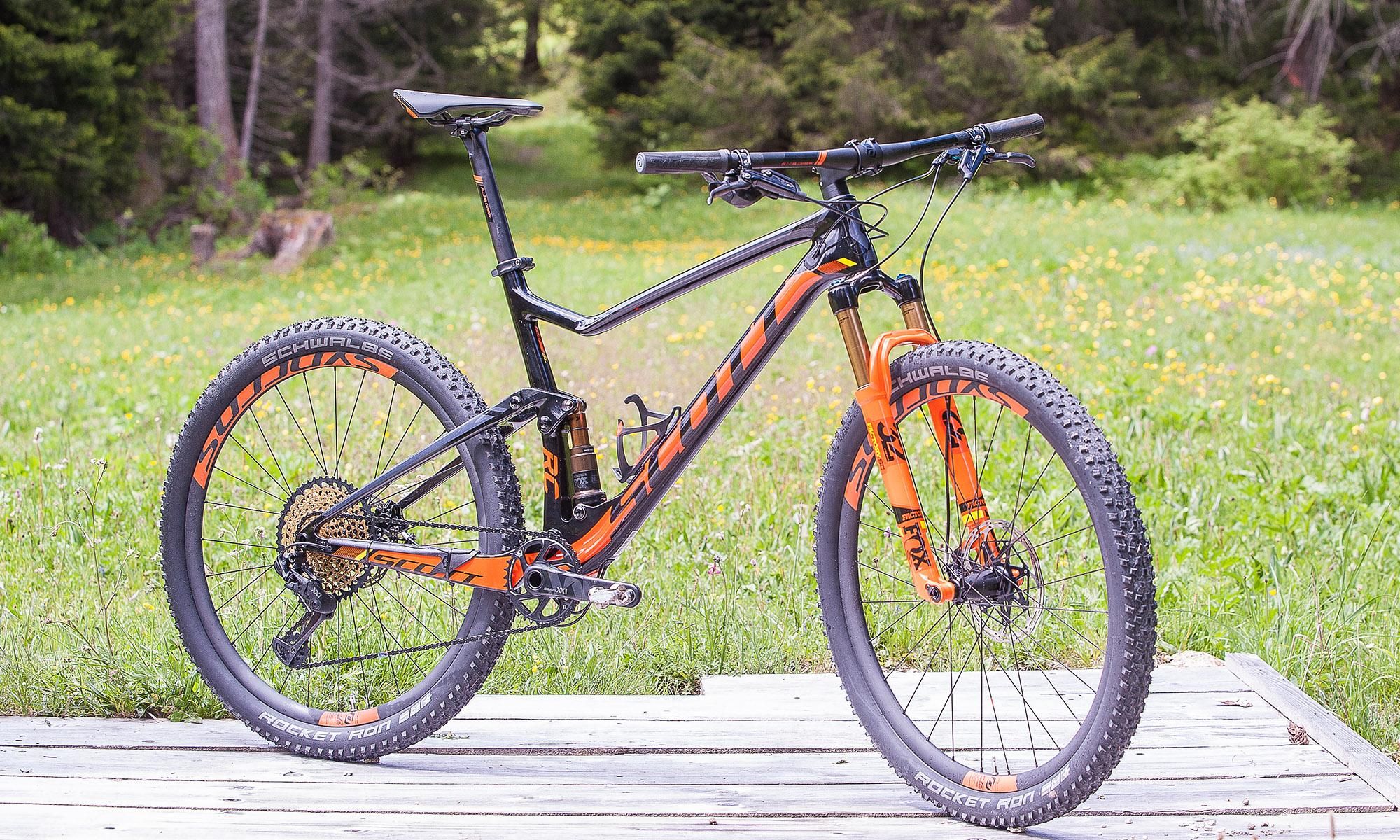
The Spark has already been seen in action at the World Cup - now Scott is not only presenting Nino Schurter's new work tool, but also a versatile Spark line with two suspension travel options and three different wheel sizes. In addition to the new shock position, the Spark frame has a new geometry, significantly more lateral stiffness and weighs just 1749 grams including the shock.
Nino Schurter's "Spark RC" racing machine already caused a stir at the World Cup in La Bresse, but details were hard to come by. The presentation of the new bike makes it clear: the new Spark offers far more than previously assumed. The stated weight of the carbon frame of 1749 grams (size M, including shock) for the 27.5-inch version and 1779 grams for the Twentyniner is striking. This is a weight saving of over 200 grams compared to the previous model.
To make the new Spark frame the lightest production frame in the world, the Scott engineers had to make significant changes to the previous model. Visually, the positioning of the rear shock is the most obvious change. The Fox Nude shock moved from the top tube to the down tube, where it is broadly supported in front of the bottom bracket. This not only saved material, but also significantly increased stiffness. The latter is partly thanks to the new Trunnion Mount, but also to the entire bottom bracket area, which is supported much wider.
A significant weight saving has also been achieved in the rear triangle. The new rear triangle consists of significantly fewer individual parts and is around 130 grams lighter than the old Spark. In addition, it now has no pivot points above the dropouts. These are designed in such a way that the flexible material follows the movements during compression and rebound. The advantage of this is not only the lower weight, but also the higher rigidity and lower maintenance costs.
Cleaner shapes and improved suspension and geometry
The new Spark frame is beautifully designed, tidy and also appears significantly quieter than its predecessor. Cables and lines are routed internally, and there is also space for the lowerable seat post cable and the corresponding entry and exit points.
Another new feature of the Spark is the geometry, which has been optimized to meet the requirements of today's World Cup courses. The steering angle has become slacker at 68.5 degrees, which brings smoothness to the handling. The chainstays are short at 425 millimetres (435 millimetres on the 29-inch bike) and provide the necessary amount of manoeuvrability. At 73.5 and 73.8 degrees respectively, the seat angle of the Spark is slightly slacker than is usual for cross-country bikes.
Where the "old" Spark had a more linear suspension curve and was not quite as sensitive at the beginning of the compression, the new Spark is exactly the opposite. The suspension works finely over the first 30 millimeters or so, but should become significantly more progressive over the next 70 millimeters. This spring characteristic offers the rider better support when riding powerfully. The damper and fork are still operated using twinlock levers, albeit with a new design. There is still a choice of three damping levels: "Descend", "Traction" with a little less than half the platform and "Climb", which locks the suspension almost completely.
Extensive range with a "plus"
The new Spark range is more extensive and versatile than ever before. In addition to the racing-oriented RC version with 100 millimetres of travel, Scott also offers the Spark with 120 millimetres. This is more trail-oriented and has an even slacker steering angle of 67 and 67.2 degrees (27.5 and 29 inches). These versions are not consistently trimmed for racing, but serve a much greater purpose.
Scott is entering a niche with the Spark Plus. Where Plus bikes are usually located in the higher suspension travel classes, the Spark Plus comes with 120 millimeters of rear suspension travel and 130 travel at the front. With its 2.8-inch wide tires, it offers even more reserves and appeals to sporty trail riders as well as touring bikers. The Spark Plus is currently the lightest full-suspension plus bike on the market and has the same advantages as the Spark RC - just with more suspension travel and comfort.
As usual with Scott, Contessa versions of the Spark, Spark RC and Spark Plus platforms are also available for women.
www.scott-sports.com


Suitable Ride Brandguides
Further content on this article

Note: This content has been automatically translated from German. Please report any incorrect translations.