

Mountain Biking with a Prosthesis: He Lost His Leg on His First Ride
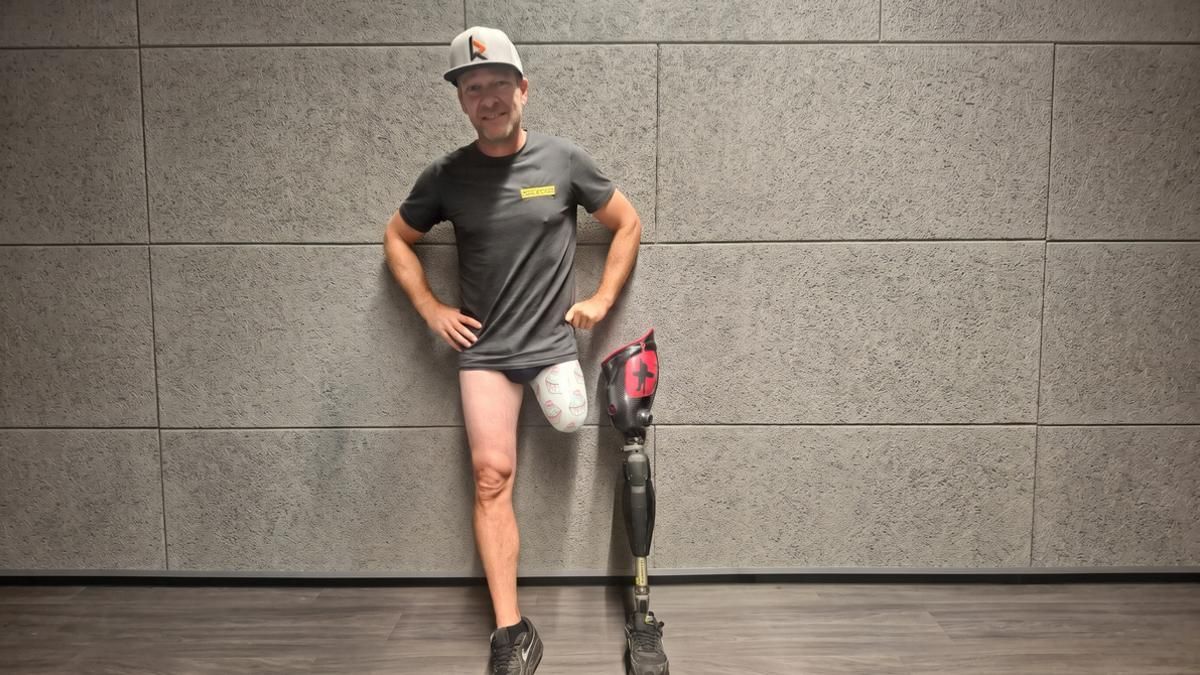
Filip Pockelé, 44, is Belgian and has been living in Switzerland for six years with his wife Tanja, a Swiss national, and their three children in the Fricktal region of Aargau. He works 80 percent of full time as a rehabilitation technician with wheelchair patients. His left leg was amputated above the knee. After a kitesurfing accident, doctors spent four and a half years trying to save his leg. Hospital, home, back to the hospital. In 2016, he decided to have it amputated. About 200 days after the surgery, he was back on his snowboard. Things didn’t go so well at first on the mountain bike: during his first ride, the prosthesis kept coming loose from his stump. But he could tell that physically, he was up to it, he says. It was just that the prosthesis wasn’t quite right yet. Is he proud of his artificial leg? “Not necessarily of the leg itself. But of everything we’ve achieved.”

Filip Pockelé with his current wife, Tanja, at the hospital before the amputation. Photo: Filip Pockelé
The Same Leg for Work and Trail Riding
When riding his mountain bike, Pockelé wears his everyday leg—the same prosthesis he uses for work and shopping: a Genium X3 from Ottobock, for which he serves as a brand ambassador. The computer-controlled knee joint can be adjusted for various activities. He had to make only a few adjustments to the bike itself, mainly to the saddle and seat height. For trail riding, he clips his prosthetic foot into a clipless pedal, which secures the shoe via a plate on the sole, much like a ski binding.
Because he lacks his own knee, the power has to come from his thigh stump, which is short. Without a motor, he’d quickly reach his limit going uphill, which is why he rides an e-mountain bike. Going downhill, he feels just how much strength it takes to control the bike. What the leg lacks, his hips and back make up for.
"As far as I'm concerned, I'm
not disabled when I'm on my mountain bike."
Pockelé wears his stump in a socket—a carbon-fiber sleeve that connects it to his knee joint. When he takes it off or the season changes, the stump’s volume shifts, and the socket no longer fits properly. As a result, the socket must be adjusted at least two or three times a year. After a long run, the stump is swollen and has pressure marks. Carbon doesn’t breathe, the skin underneath sweats, and everything rubs. He compares it to ski boots that are too small. Anyone who’s ridden in them for a day is still back on the slopes the next morning, and so he, too, rides for several days in a row.
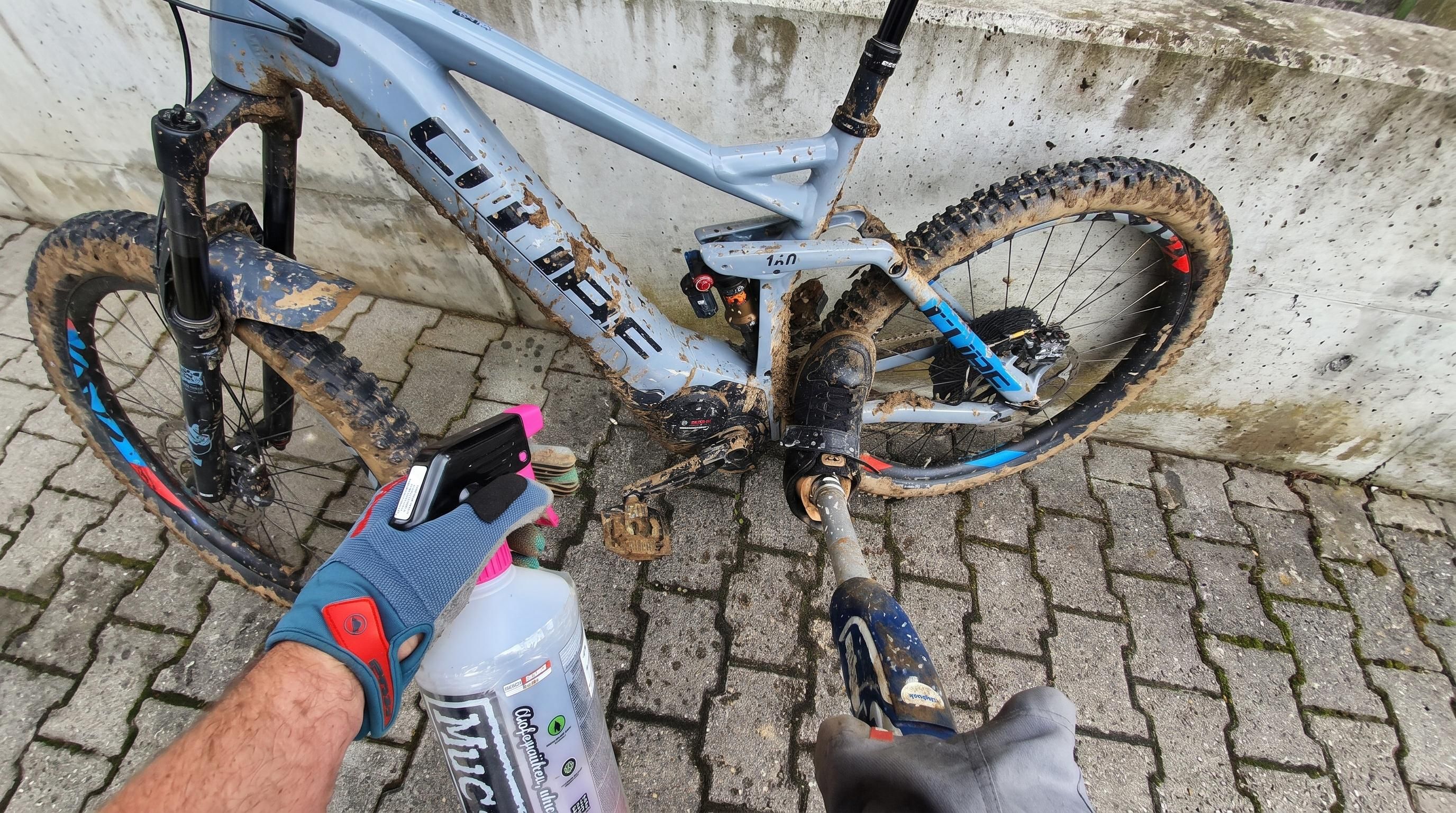
After the ride, both the bike and the prosthesis are just as dirty. Photo: Filip Pockelé
Other riders often underestimate him, he says. Some rush to get a head start so they don’t have to brake and wait behind him. After 300 meters, he’s passed them. “In my eyes, I’m not disabled on a mountain bike,” he says. But his strength doesn’t last forever: After half a day, his control starts to slip, and his stump gets tired. Then he can’t release his foot from the clipless pedal as quickly. “It might take half a second longer. But in half a second, an accident can happen.”
The brain registers the missing leg
He doesn’t experience phantom pain—that is, pain in a body part that isn’t there—while riding his mountain bike. He rarely experiences it otherwise, either. That’s not a given. About six out of ten amputees suffer from phantom pain.
For Pockelé, it’s clear where it comes from: “It has nothing to do with the leg. The leg isn’t there anymore. It’s simply the brain saying, ‘Something’s not right here.’” Even people who have never had a limb can experience phantom sensations. In 2000, Zurich-based neuropsychologist Peter Brugger described a woman who was born without legs or forearms. Nevertheless, she could feel all four limbs and, according to her own perception, was able to move them.
"If I stayed home for three weeks, the pain
would go away on its own."
Researchers explain why a missing leg can cause pain as follows: The brain constantly compares what it commands a body part to do with what the body reports back. If the two don’t match, it sounds the alarm. When an amputee tries to move the toes of the missing foot, the command is sent, but nothing comes back from the foot. Even in people without amputations, such a discrepancy can trigger abnormal sensations. In one experiment, participants moved their arms and legs while a mirror made them believe they were performing a different movement. Many felt tingling or numbness, and some even felt pain. No one was injured. Seen this way, pain is less a signal from the body than a judgment made by the brain.
Nevertheless, this explanation does not fully account for the phenomenon. When researchers repeated the experiment on a larger scale, the pain was almost entirely absent. And while all amputees lack this feedback, only six out of ten experience phantom pain. Pockelé is among those who hardly ever feel it. He has his own explanation for this: “I have the feeling it’s because I’m on the go a lot. If I stayed home for three weeks, the pain would come on its own.”
Think Twice
A high-risk sport cost him his leg. Why would he take up another one? He needs it, says Pockelé; he’s been seeking a little adrenaline his whole life. Mountain biking isn’t a major risk for him, as long as he isn’t riding the Red Bull Rampage. The alternative—spending his whole life sitting on the couch watching Netflix—doesn’t make him happy. That wouldn’t be risk-free either: According to the World Health Organization, people who don’t get enough exercise have a 20 to 30 percent higher risk of death. As early as 1849, the Danish philosopher Søren Kierkegaard wrote that the world considers taking risks dangerous and not taking risks wise. Those who take no risks, on the other hand, easily lose themselves.
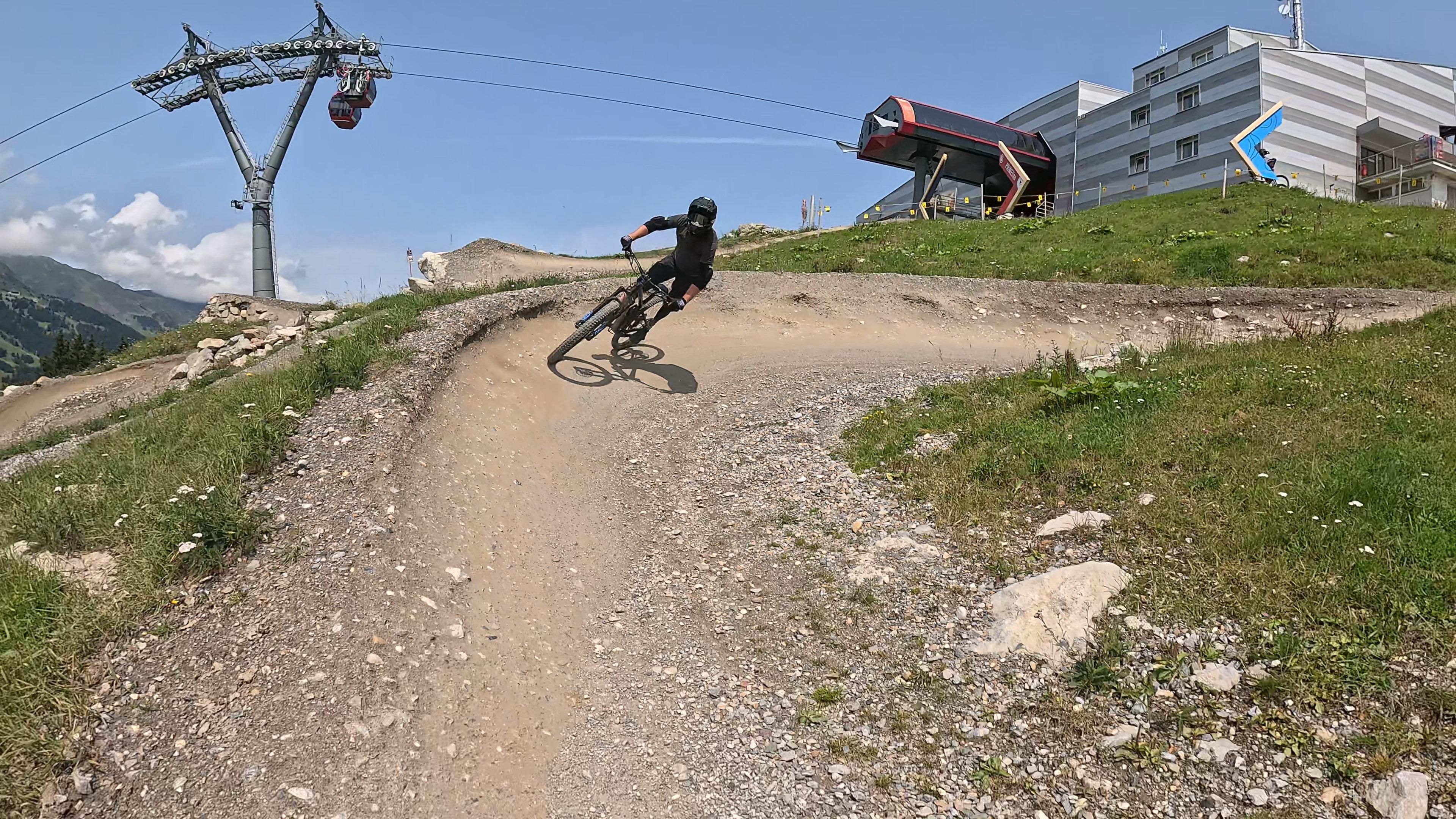
"Fear is too strong a word," says Pockelé. But he thinks twice.
His doctors aren’t on the same page. His family doctor rides a bike himself and thinks it’s a good idea. Others have told him it’s not the best idea. Pockelé calls this a gray area. “There are risks, of course. But we’re here to live. That’s my attitude.” That doesn’t mean he rides everything. “Fear” might be too strong a word, but he does think twice. On one of his favorite trails, there’s a short section where the path drops six to eight meters down into a ravine on the left. With two legs, he’d ride it without hesitation. Today, he takes the detour. He can’t get his foot on the ground fast enough, and it’s not worth the risk of making a mistake there. He knows exactly what could go wrong. “The prosthesis can be replaced. If something happens to the stump, I’ve got a problem.”
Leg or Bike
His e-bike is seven years old and heavy. His leg is an all-rounder: the same prosthesis for everyday life and the trail. There are better options for both. “Others just buy a new e-bike. I have to decide: bike or leg.”
If his everyday prosthesis breaks on the trail, he either pays for the repair himself, depending on the damage, or it’s covered by Swiss Disability Insurance (IV). He doesn’t want to place an unnecessary burden on the IV, he says. It would be better to have a separate prosthesis just for mountain biking, with a built-in shock absorber that cushions the body from impacts. According to Pockelé, such sports prostheses cost between 7,000 and 10,000 francs. He plans to finance it through crowdfunding. He and his wife are still figuring out how that will work. Until then, he’ll keep riding with the leg he also needs for work.
I Can’t Do It Alone
He and his current wife [Name] had only been together for a year when the kitesurfing accident happened. She had just moved to Belgium and stayed. “We went through the worst thing we could have gone through, and we made it through,” says Pockelé. After that, there was only one path forward for the two of them: forward.

Filip Pockelé and his wife, Tanja, are a team.
But even he has days when he wonders why he does all this. He only half agrees with the idea that you can simply choose to focus on the positive. You can’t get out of a slump like that on your own—you need people who are pulling in the same direction. It starts right there on the bike. “Who has fun with a disabled person?” His family has fun with him. If he has to readjust his prosthesis during a ride, they don’t say, “Dad needs another break.” Instead, they all just have a drink.
If you ask him how others can support him, money isn’t the first thing he mentions. They should treat him just like everyone else on the ride. Then he’ll stay positive, too. “I’m part of the team.”
Instagram @filippockele
Further content on this article


About the author: Men Danuser
Note: This content has been automatically translated from German. Please report any incorrect translations.