

Who is to blame for Transalpes' bankruptcy?
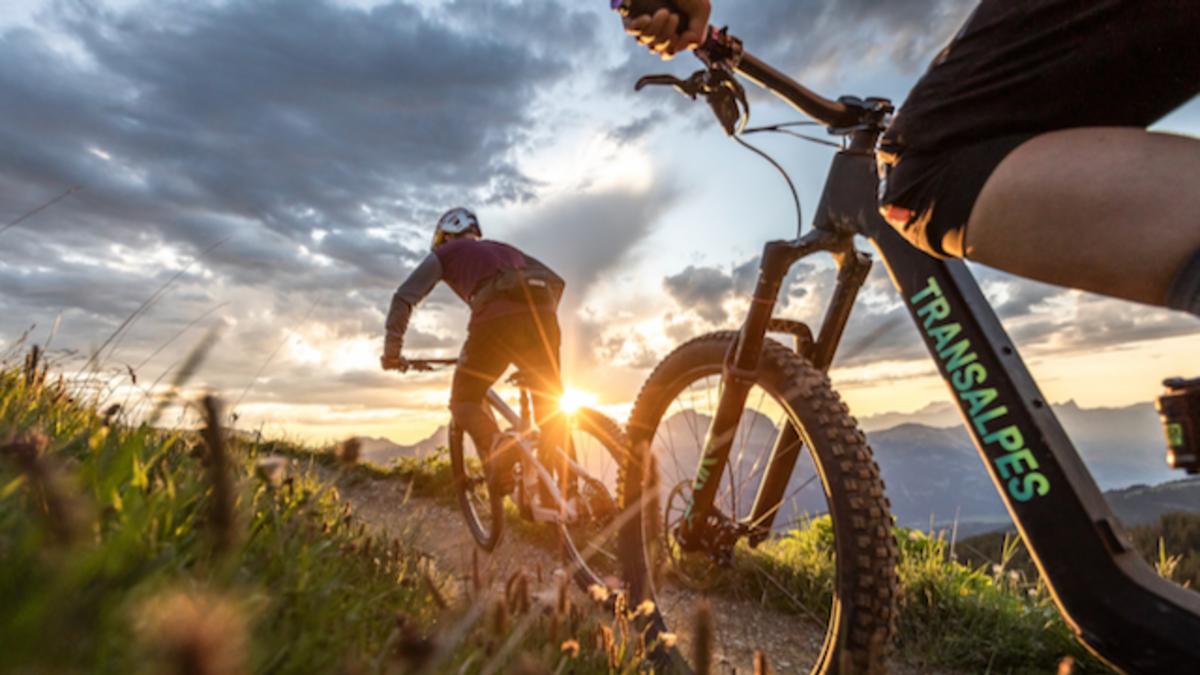
Who is to blame for Transalpes’ bankruptcy? This question has been discussed frequently in recent months. Many have an opinion, but few know the details. Two people are particularly certain that they know who is to blame: the protagonists of this story—Transalpes’ majority owner, Michel Juhasz, and the company’s last CEO, Thomas Steger. Although their paths to this conclusion were very different, they arrive at the same statement, which can be simplified to the phrase: “It was him.”
The author of this article spoke not only with these two individuals but also with six others: business partners, investors, and customers. And he had access to financial figures that had been presented to the shareholders.
The Backstory—Michel Juhasz Takes Over Transalpes
For many years, the Transalpes brand was part of the company Trail Supply. Every few years, a new model was released, which some die-hard Transalpes riders bought immediately. “There’s more to this brand,” thought entrepreneur and former advertising executive Michel Juhasz, so he founded The Bike Company, to which Trail Supply transferred the marketing of Transalpes. Juhasz moved Transalpes into prestigious office space in the canton of Zug, professionalized the brand’s image, expanded the workforce, and deepened the collaboration with motor manufacturer Maxon. The lightest full-power e-mountain bike was the boutique brand’s latest promise.
Officially, The Bike Company AG is the owner of the Transalpes brand. It is also this company that filed for bankruptcy in September. When Transalpes, the company, is mentioned in the following, The Bike Company AG is meant.
Michel Juhasz admits to Ride that it was a constant challenge to steer the company through the crisis in the bike industry following the COVID-19 boom. “In 2023, things got tight after our main bank slashed our credit line. We were illiquid [insolvent, Ed.] for three months during that time. Thanks to understanding creditors, we were able to settle the wages and rent we owed, as well as outstanding invoices, within six months,” says Juhasz, summarizing this difficult phase.
Taking the bull by the horns: Share capital increase through crowd investing
In the fall of 2025, Transalpes made headlines by issuing new shares. The offer on the Oomnium platform sounded too good to be true; even Ride was skeptical. Here is an excerpt from the interview on October 31, 2025:
Ride: The campaign description states that you’re expecting a 5 percent dividend for shareholders. That’s a bold claim given the state of the bike industry.
Michel Juhasz: “In the fall of 2024, interest in our bikes increased noticeably. The reasons for this are, first, our consistent focus on lightweight construction—my Bike to Work e-MTB weighs just 14.3 kg—and second, our customizable options. Ninety percent of all Transalpes bikes are built to customer specifications. Our 3,500 or so athletic customers invest in a durable piece of sports equipment at Transalpes—handmade in Switzerland.”
Transalpes also held out the prospect that the company’s shares would increase in value, a point Juhasz likewise noted in an interview with Ride in October 2025. The stock offering was successful: 57 investors contributed a total of 585,000 Swiss francs to the company. Juhasz also noted at the time that the funds would make the production of the latest E3 model possible.
In reality, however, the company was already in financial distress during those months. It was only because employees forgave two months’ worth of wages that a balanced annual financial statement was possible. Nevertheless, this statement shows considerable debt; short-term and long-term debt total well over one million Swiss francs, and the loss for 2025 was approximately 550,000 Swiss francs.
Investor Funds and Debt Service
Only those directly involved know exactly what was done with the investor funds. Juhasz says the additional capital was primarily used to finance the frames, motors, and components for the new frame platform—the C3 and E3 models—as well as day-to-day operations. He does not deny that the cash injection was used to pay outstanding wages and settle unpaid invoices.
A look at the commercial register data shows that the share capital increased from 110,500 to 126,094 francs through the issuance of new shares—for which investors paid a total of 585,000 francs. The remainder was agio, or premium, as this entirely legal accounting entry is called. Even after the capital increase, Juhasz still owned about 90 percent of the shares.
In 2026, Transalpes continued to struggle to deliver its latest bike to customers. According to Michel Juhasz, the company was once again short on frames and motors needed to assemble and sell bikes, which is why it also lacked liquidity. Yet by the end of 2025, the books already showed more than 300,000 Swiss francs in customer down payments that had to be settled in the form of bikes—without any additional money having flowed into Transalpes’ coffers. At least one substantial liability item would then have disappeared from the balance sheet.
The Successor Who Walked Away
The second protagonist in the Transalpes drama is Thomas Steger. For years, he served as product manager for the Maxon Bikedrive Air, working for Transalpes’ motor supplier. In the summer of 2025, he moved to Transalpes. Michel Juhasz believed he had found his successor in Steger, and Steger himself wanted to take over the company. On February 1, 2026, he became interim CEO; Juhasz stepped back from day-to-day operations but remained the sole member of Transalpes’ board of directors and thus Steger’s superior.
Juhasz describes the atmosphere within the team as good, “even though there were tough negotiations regarding the details of the succession plan.” Others describe how the owner and the managing director found it increasingly difficult to work together. Part of the succession plan was for Juhasz to step down from the board of directors and sell his majority stake to employees—specifically Thomas Steger—or to investors. That doesn’t sound like harmony between management and the board of directors.
Business continued to struggle; Transalpes was only able to deliver bikes based on the old frame platforms. However, Juhasz emphasizes that anyone who had ordered a C3 or E3 was kept up to date at all times. “Day-to-day operations continued as usual; customers could configure their dream Transalpes bike themselves and place a binding order with a down payment.” Later, it was precisely this—the acceptance of down payments—that would draw criticism as Transalpes’ crisis worsened. Juhasz emphasizes that Transalpes builds every bike to the customer’s specifications, which would not be possible without a down payment. Customers told Ride and Radio SRF’s consumer affairs program Espresso that they would have received discounts if they had transferred the full purchase price. Customers paid between 8,000 and 12,000 francs in advance; Juhasz estimates that the number of customers who ultimately did not receive their bikes ranges from twenty to thirty.
Meanwhile, the majority shareholder and the interim managing director reached a succession agreement that both could accept. For Juhasz, this constitutes a legally valid contract. Steger says he signed a letter of intent. He adds: “I was aware of the strained financial situation, but the financial obligations were presented to me differently and incompletely than they actually were. This is also the reason why I distanced myself from the originally planned succession. Alternative proposals on my part were rejected by Michel.”
Steger does not go into detail. The succession agreement states that Steger would have had to assume 185,000 Swiss francs in shareholder loans from Juhasz—that is, additional debts he would have had to settle as the owner. In addition, he would have had to acquire the majority of the shares at face value; Juhasz cites a price of 65,000 Swiss francs for 60 percent of the shares. He is also certain that, as managing director, Steger had access to all figures and accounts and could therefore have formed a realistic picture of the financial situation. His alleged successor, on the other hand, claims that he only gradually learned what Transalpes’ actual financial condition was. It is therefore one person’s word against another’s.
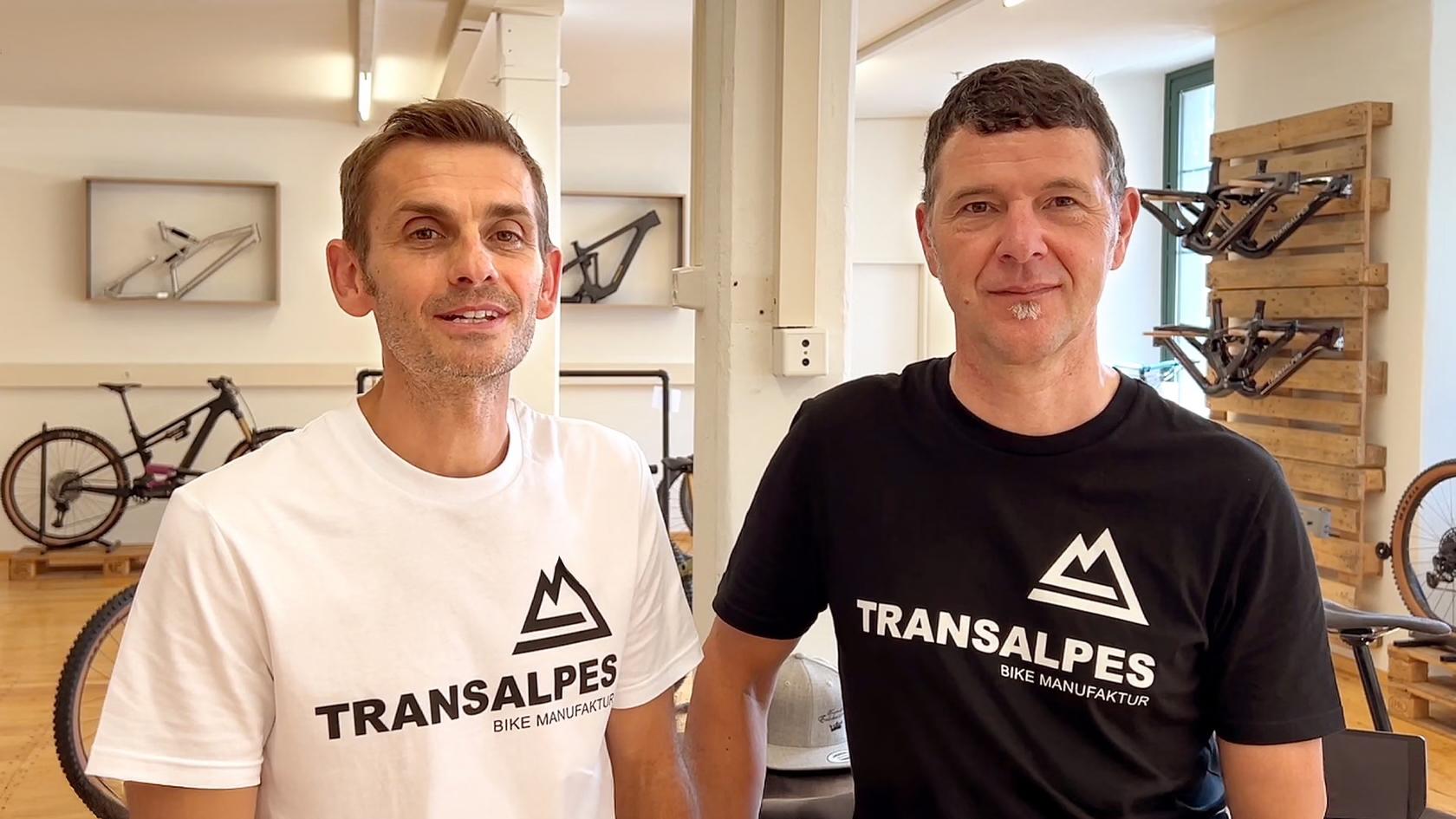
This is how Thomas Steger (left) and Michel Juhasz presented themselves on the crowd-investing platform Oomnium.
Commission or repayment?
Michel Juhasz states that he has invested more than 500,000 Swiss francs in Transalpes since joining the company, “as a shareholder, lender, and managing director”—as is customary for an entrepreneur. “As a co-owner, I was often the lender of last resort,” he emphasizes, meaning he was always the one who injected additional capital when liquidity became tight. “Time and again, I granted short-term loans to bridge liquidity gaps and long-term loans to further the company’s development, or deferred salary payments to a later date. The payments in question should be understood as agreed-upon milestone payments in this context.”
These involve two payments of 50,000 Swiss francs each, one at the end of 2025 and one at the beginning of 2026. Steger and new shareholders of Transalpes view these payments as commissions that the CEO awarded himself while the company was struggling. Steger explains that the two commission payments to Juhasz at the end of 2025 and the beginning of 2026 further exacerbated the situation.
These payments also greatly upset investor Timo Huber. “I’m an entrepreneur myself and have a principle: The owner is always the last one to take money out.” In fact, employees forgave their salaries at the end of 2025, and not all salaries were paid in 2026 either. “These commissions must be repaid,” says Huber, who, however, has little hope of recovering the low five-figure amount he invested in any form. Another investor Ride spoke with lost 150,000 francs.
Why shut down operations right away just because the CEO is leaving?
Michel Juhasz is convinced that Transalpes was still financially stable and economically viable as of June 2026. It was only the successor’s departure—or, as he puts it, his refusal to fulfill his part of the succession agreement—that pulled the rug out from under the company. When asked why he didn’t take over day-to-day operations himself if everything was under control, he says: “I hadn’t been involved in day-to-day operations since February. This was also for health reasons; I had been on sick leave since then. I couldn’t—and didn’t want to—come back six months later.”
It should be added that Michel Juhasz remained on the board of directors of Transalpes—or rather, The Bike Company—until the very end and, as such, held the company’s highest management and supervisory role. He ultimately bore responsibility, even though he was no longer involved in day-to-day operations.
The consequence of Steger’s departure was that Transalpes ceased operations in August 2026. At that point, it was still unclear what would happen to the brand and the company. During that time, Juhasz once again searched for a buyer for the company, as he had done repeatedly for years. Without success. “No white knight ever showed up,” he explains. In early September, he finally filed for bankruptcy. Juhasz laments: “As a shareholder, lender, designated board member, former employee, and passionate Transalpes rider, the abrupt end of Transalpes has shaken me to the core. I am angry because the bankruptcy was self-inflicted. And with this bankruptcy, not only investors and business partners, but above all long-standing and new customers who placed their trust in us may suffer losses. I apologize from the bottom of my heart for this breach of trust and any resulting damages.”
In liquidation proceedings, the remaining funds will first be used, as far as possible, to pay outstanding wages and social security contributions, followed by settling unpaid invoices. Customers come last, and it’s unlikely anyone will receive the bike they paid for in advance.
What Happens Next
Michel Juhasz states that he is taking legal action against Thomas Steger and will sue to enforce the signed succession agreements. “The obligations under the management buyout agreements dated May 16, 2026, will be enforced through legal action. In addition, aggrieved parties are considering further lawsuits against Thomas Steger.” Among the aggrieved parties with whom the author of this article spoke, no one is aware of any legal action being taken against Thomas Steger.
What Remains Unclear and Gives Cause for Thought
The crux of the matter seems to be when Steger, as the designated successor and future majority shareholder, had access to information regarding the company’s financial situation. It is clear that at some point, the situation became too risky—or too costly—for him.
Another question that remains unanswered is why the frames and motors weren’t delivered as early as 2025, so that Transalpes could sell bikes, make money, and pay down its debts. The owner of Bikelab, the company that manufactured the frames for Transalpes in Taiwan, explains to Ride that Transalpes had repeatedly fallen behind on payments since its acquisition by Juhasz—shortly before the COVID-19 bubble in the bike market burst. And what if Transalpes had been able to meet the demand for the E3 model starting in late 2025 or early 2026? Would the company have returned to profitability then? At the very least, various customers would have received their bikes.
Since this was not the case and Transalpes became increasingly strapped for cash over the course of 2026, the question arises as to how appropriate it was to continue accepting customer payments in that situation. Shouldn’t they have been warned, the Transalpes customers who came away empty-handed are now understandably asking. As long as a company’s leaders act in good faith—believing they can deliver the services promised, in Transalpes’ case, the bikes that were ordered—they are permitted to accept such payments. It is understandable that management and staff would fight for the survival of their business right up until the very last day. If a company stops accepting customer orders because it fears it can no longer provide the corresponding service, it has, in principle, given up and sealed its own fate.
From the customer’s perspective, another question arises that goes beyond the present case: How much of a down payment makes sense, given the turbulence that continues to rock the bike market? Is the request for a down payment a red flag that should raise suspicion?
One buyer told Ride that he had written off the money he’d paid for his Transalpes and bought an e-mountain bike from Rose instead. While the bike isn’t as good as the Transalpes he’d test-ridden, he received it in the store in exchange for cash—and that’s what ultimately convinced him.
Further content on this article


About the author: Stefan Michel
Note: This content has been automatically translated from German. Please report any incorrect translations.