

Rubber from Clear-Cutting: Soon to Be Banned in Tires, but Not on Bikes
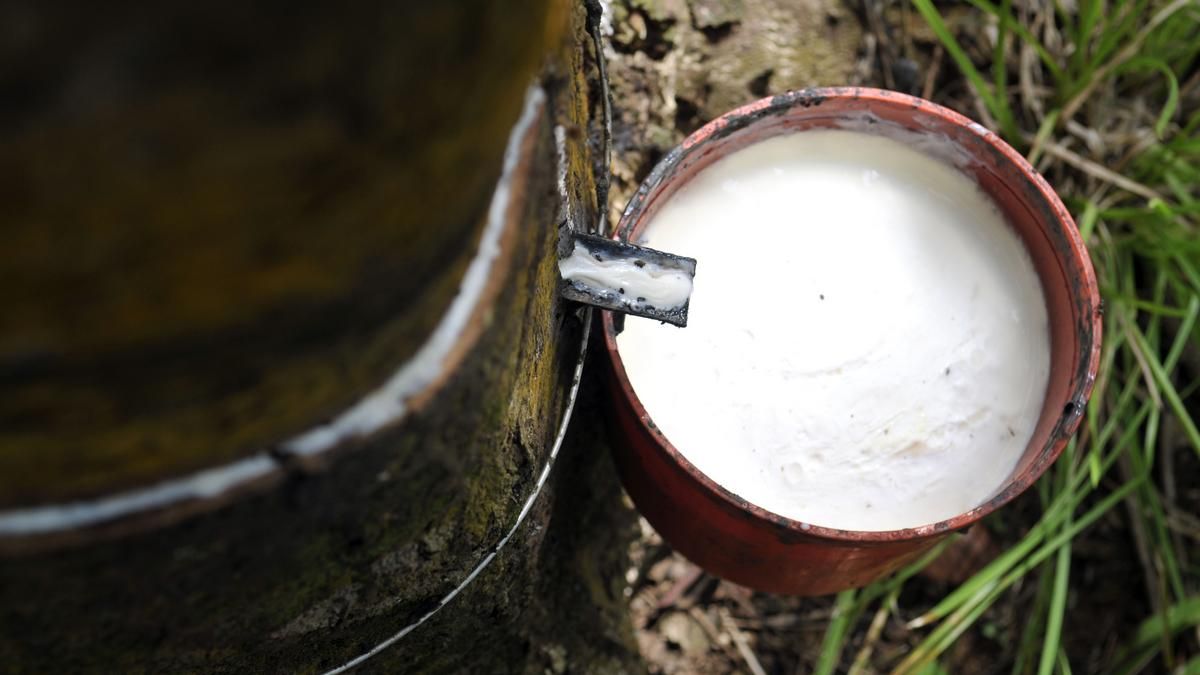
The main component of a bicycle tire’s rubber compound is rubber, along with fillers such as carbon black, as well as oils and sulfur. According to Schwalbe, depending on the compound, synthetic and natural rubber together account for 40 to 60 percent of the total. The compound must combine properties that are sometimes contradictory, such as smooth rolling and good traction in wet conditions. Synthetic rubber is usually made from petroleum and can be specifically tailored to such properties. Natural rubber is extracted from the latex of the rubber tree. It makes the compound firm, absorbs impacts, and withstands constant deformation over the long term. The tree grows primarily in Southeast Asia and the Ivory Coast, mostly on small plots of land owned by farming families.
A great deal of forest has been lost to rubber plantations, especially in Southeast Asia. According to the French agricultural research center CIRAD, there is hardly any forest left there that is suitable for new plantations. A certain risk exists elsewhere, particularly in Central Africa and Latin America. The EU Deforestation Regulation is aimed at addressing this issue. Rubber from areas cleared after 2020 may no longer be shipped to the EU as of December 30, 2026—not even in a tire. If the tire is already mounted on a bike from Asia, the ban does not apply.
Complete bicycles are not on the list
The EU specifies which goods require proof in a list. This list also includes new bicycle tires made with natural rubber. The first party to sell them in the EU—usually the importer—must provide proof of the origin of the rubber. A fair trade seal does not replace this proof. Schwalbe sources a good third of its natural rubber in accordance with the rules of Fair Rubber, an association for fair rubber trade, writes Schwalbe spokesperson Steffen Jüngst. These are two separate systems with different goals. The Deforestation Regulation is intended to prevent forests from being cleared for rubber. Fair Rubber aims to ensure that rubber farmers receive a premium and fair working conditions.
Bicycles and e-bikes are not on the EU’s list, and therefore neither are the tires mounted on them. Imported bikes are not covered by the regulation, “regardless of the tires mounted on them,” writes Barbara Moitz, spokesperson for the Federal Office for Agriculture and Food, which monitors compliance with the regulation in Germany. The same applies to an imported wheel with a tire mounted on it.
As a result, millions of tires enter the EU on imported bikes, and even in the future, no one will be required to prove that no forests were cleared to produce the rubber used in them. According to Eurostat, there were approximately 3.3 million bicycles and 600,000 e-bikes in 2025. That amounts to just under eight million tires. Schwalbe and Maxxis state that they use rubber of verified origin for every bicycle tire: for replacement tires, as required by the regulation, and also for tires on bikes that do not require proof. Processing rubber with and without proof of origin separately would be too costly, writes Maxxis sales manager Mike Hörner. As things stand today, Schwalbe does not expect any additional costs for customers.
The regulation calls for a general review in 2030. At that time, the European Commission will also assess which goods should be included on the list. As long as bicycles are not on the list, it is up to the tire manufacturers to determine whether the origin of the rubber on new bikes is documented.
Further content on this article


About the author: Men Danuser
Note: This content has been automatically translated from German. Please report any incorrect translations.