

Alone through Mangystau or who will find the most unknown place in the world?
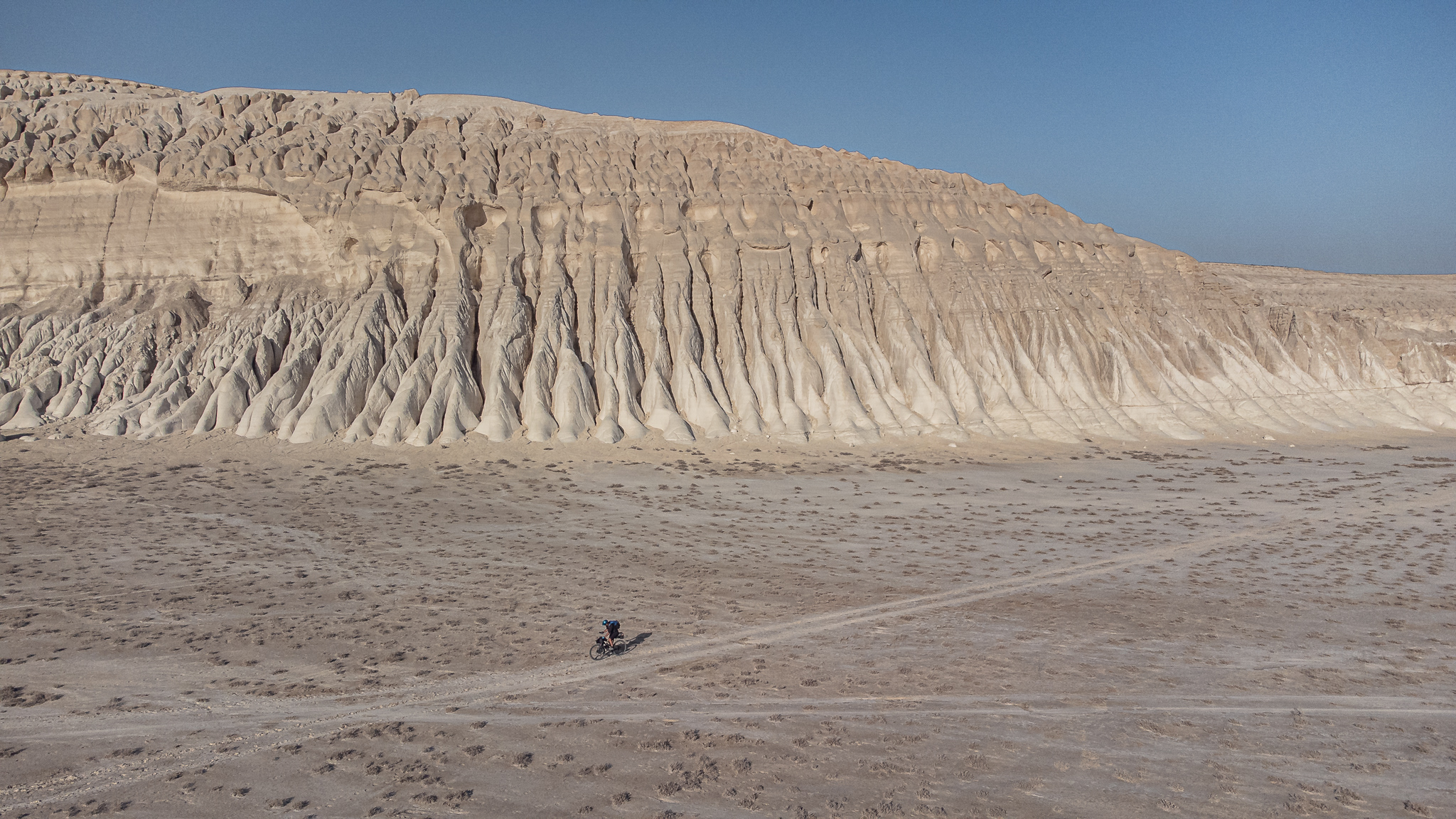
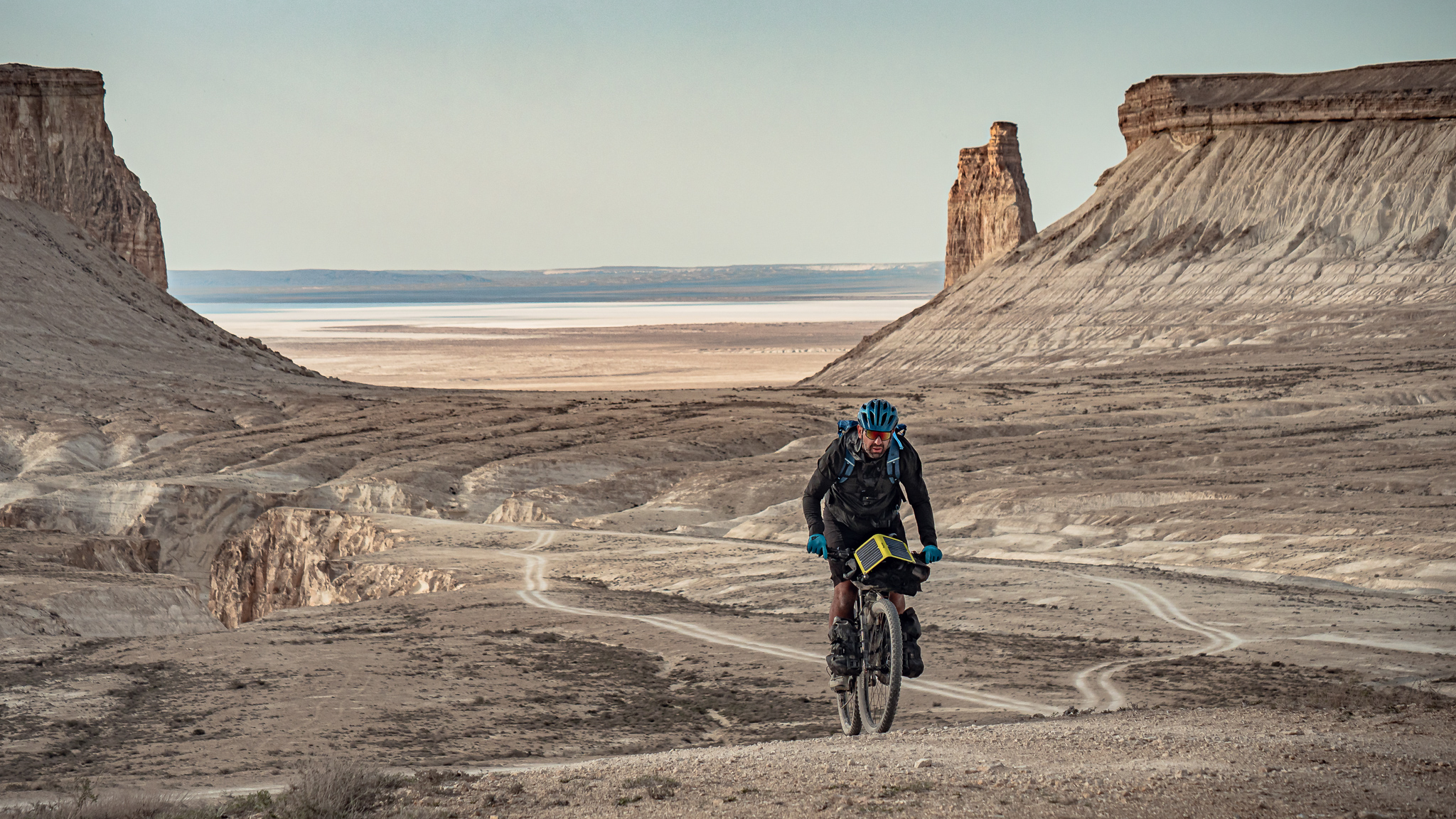
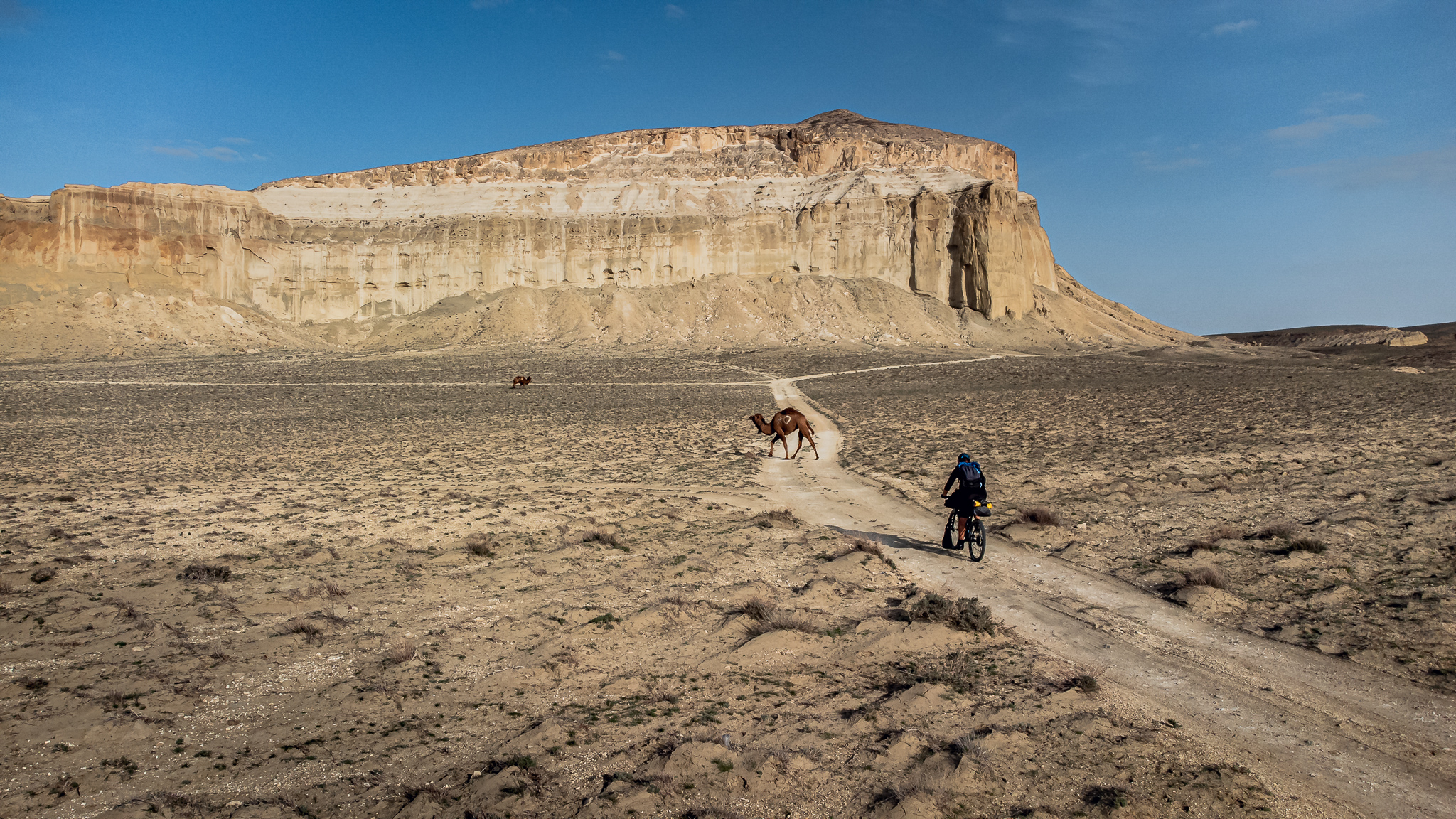
There is an unspoken competition among travel journalists to report on a place that as few people as possible know. Mangystau is likely to come out on top. The region is located on the eastern shore of the Caspian Sea, belongs to Kazakhstan and consists largely of desert. Ideal for riding a mountain bike for a few days, according to French adventurer Cédric Tassan.
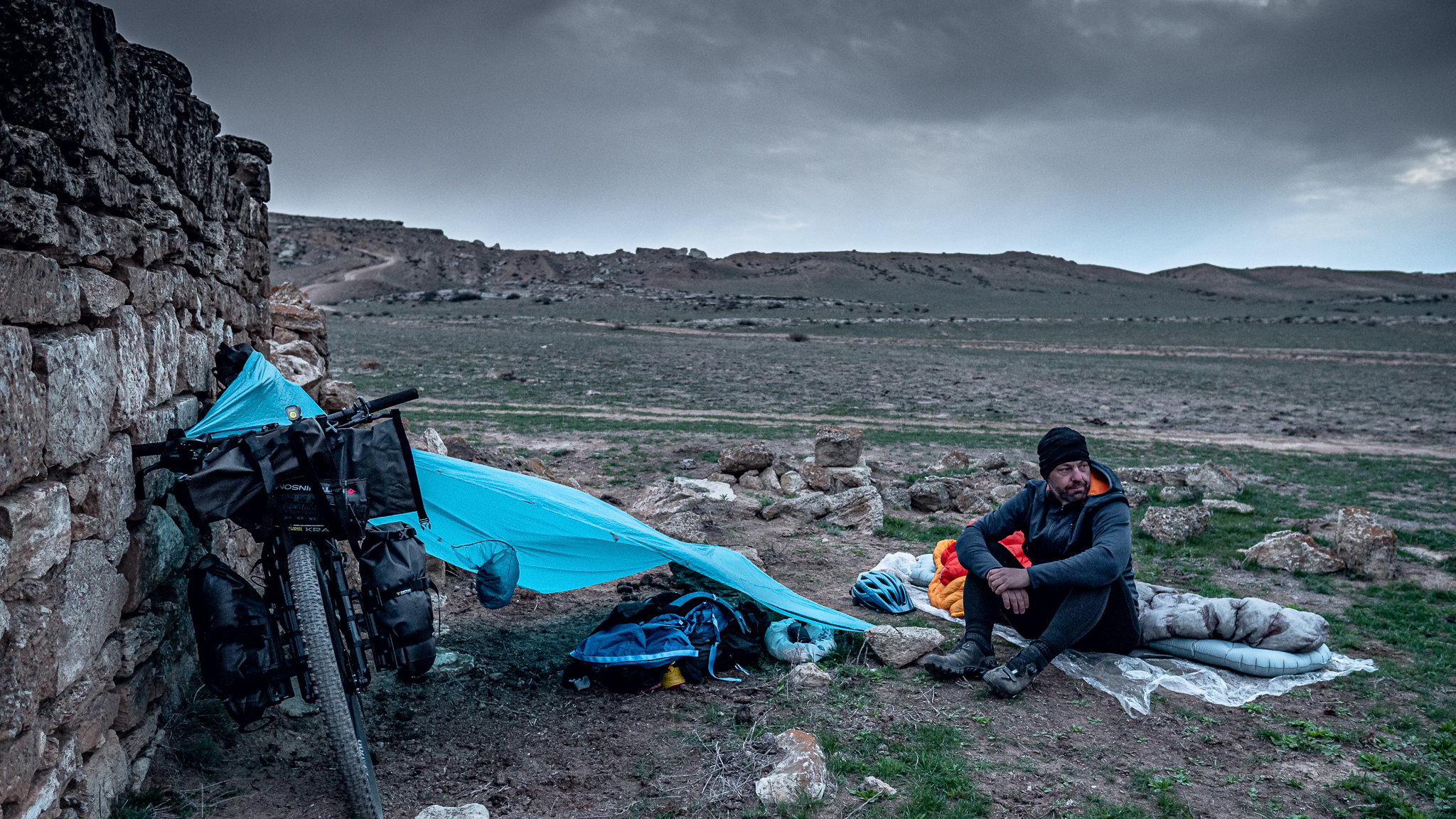
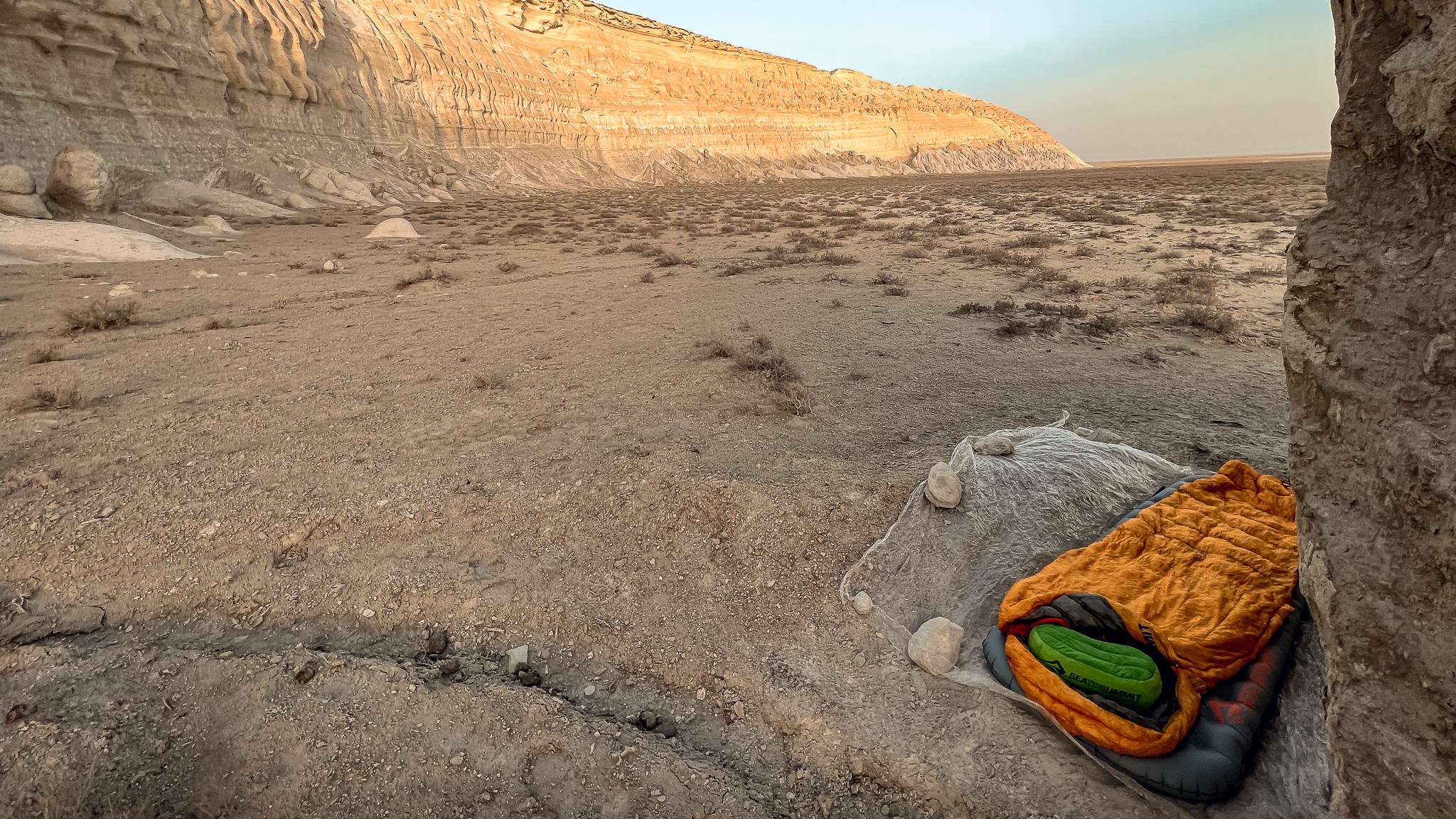
Aktau is the main town in the region and, according to Tassan, the only town in the world that meets its drinking water needs entirely by desalinating seawater. Unsurprisingly, water is a rare commodity, but not non-existent. It rains on the first night in the desert. Cédric didn't pack a tent because he assumed that this would hardly be the case. At least he has a rain poncho with him, which now keeps him halfway dry. Shivering, he falls asleep again.
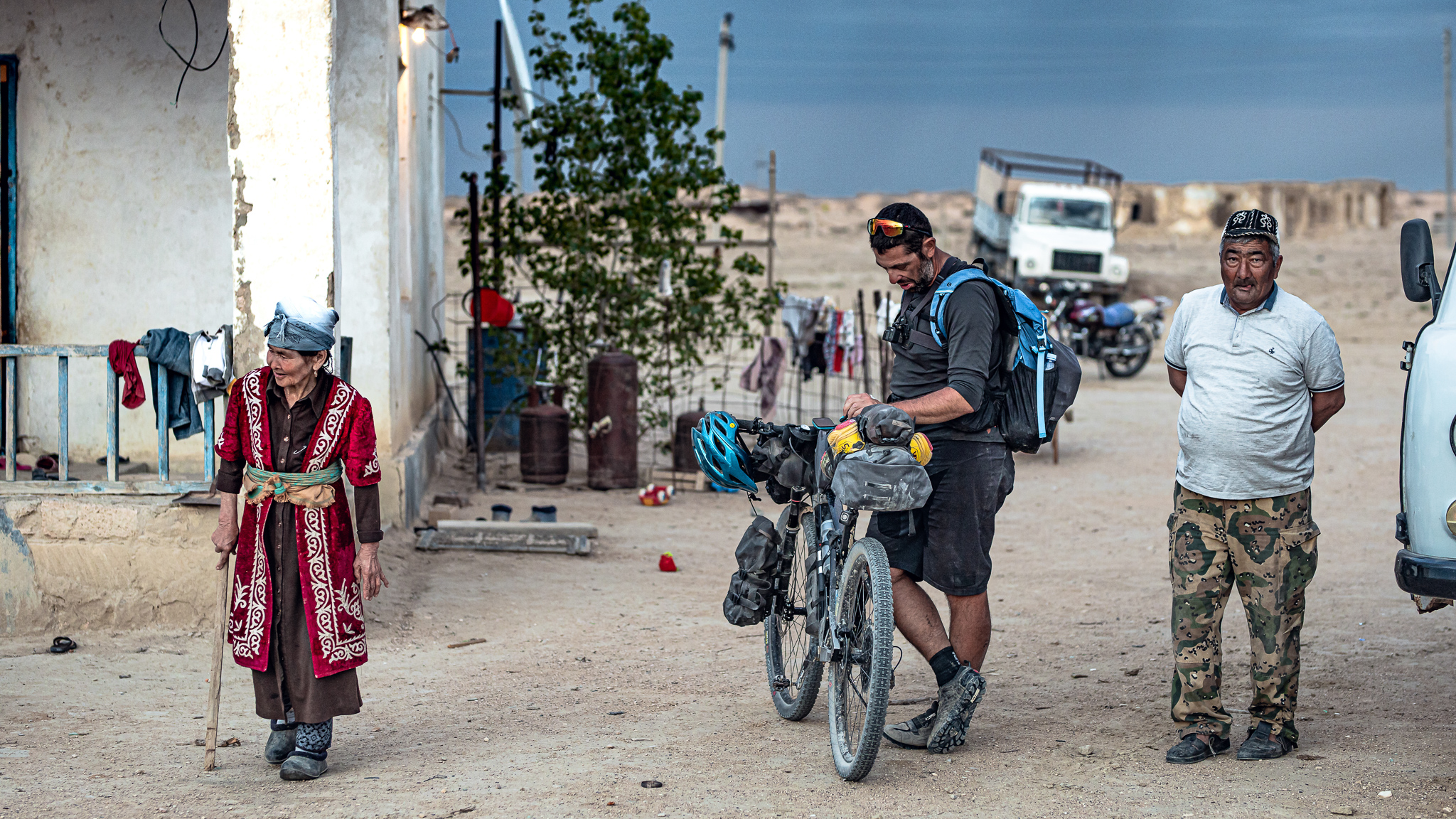
On the second day in the desert, Cédric Tassan meets four fishermen, their catch already sizzling on the barbecue as he greets them. So that also happens. However, the fact that he meets the men is no coincidence, but an appointment. With the help of a local, he has organized meetings with residents along his route who give him supplies of food and water. So the total solitude is interrupted again and again.
What is the fish bone doing in the desert?
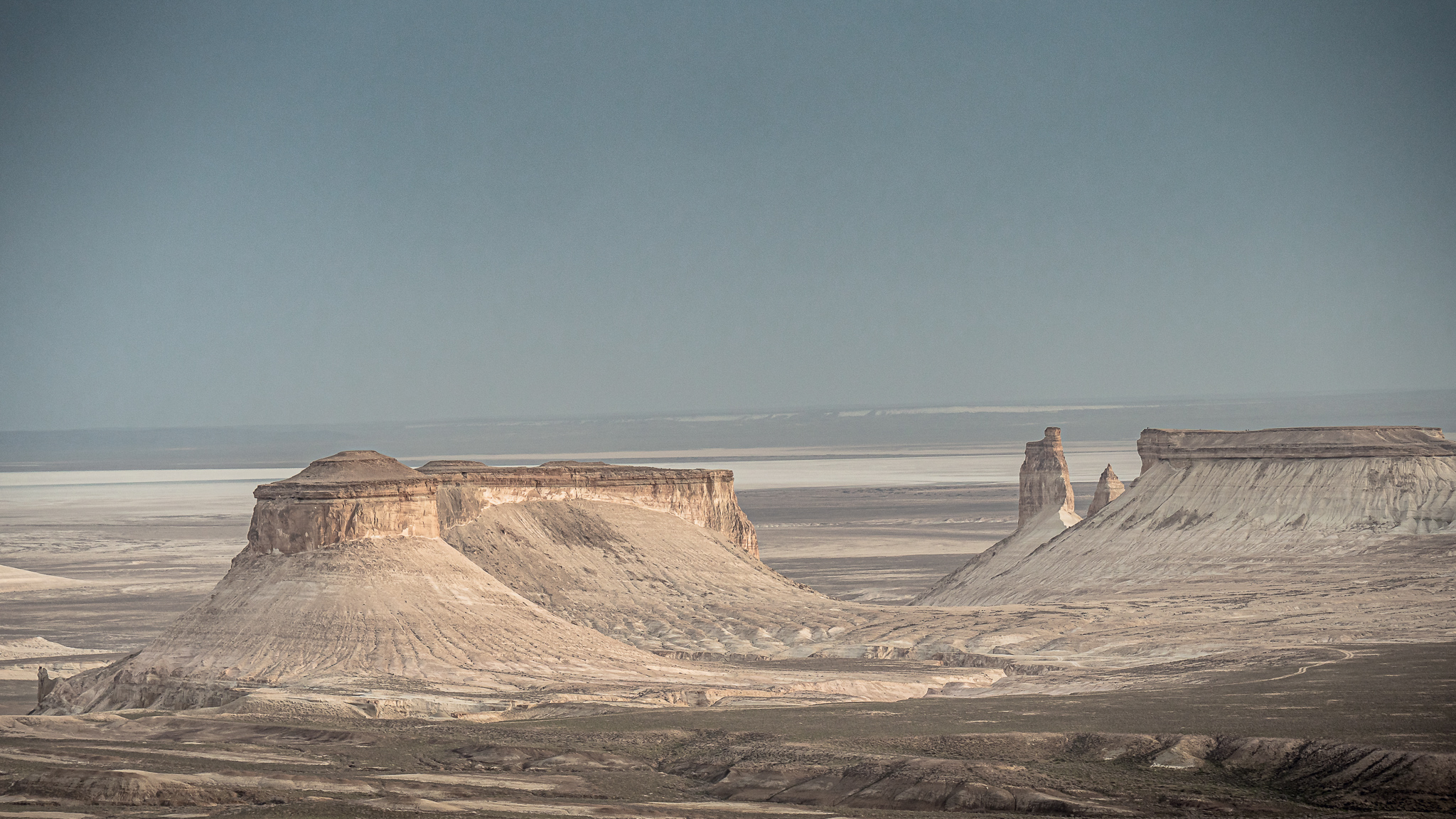
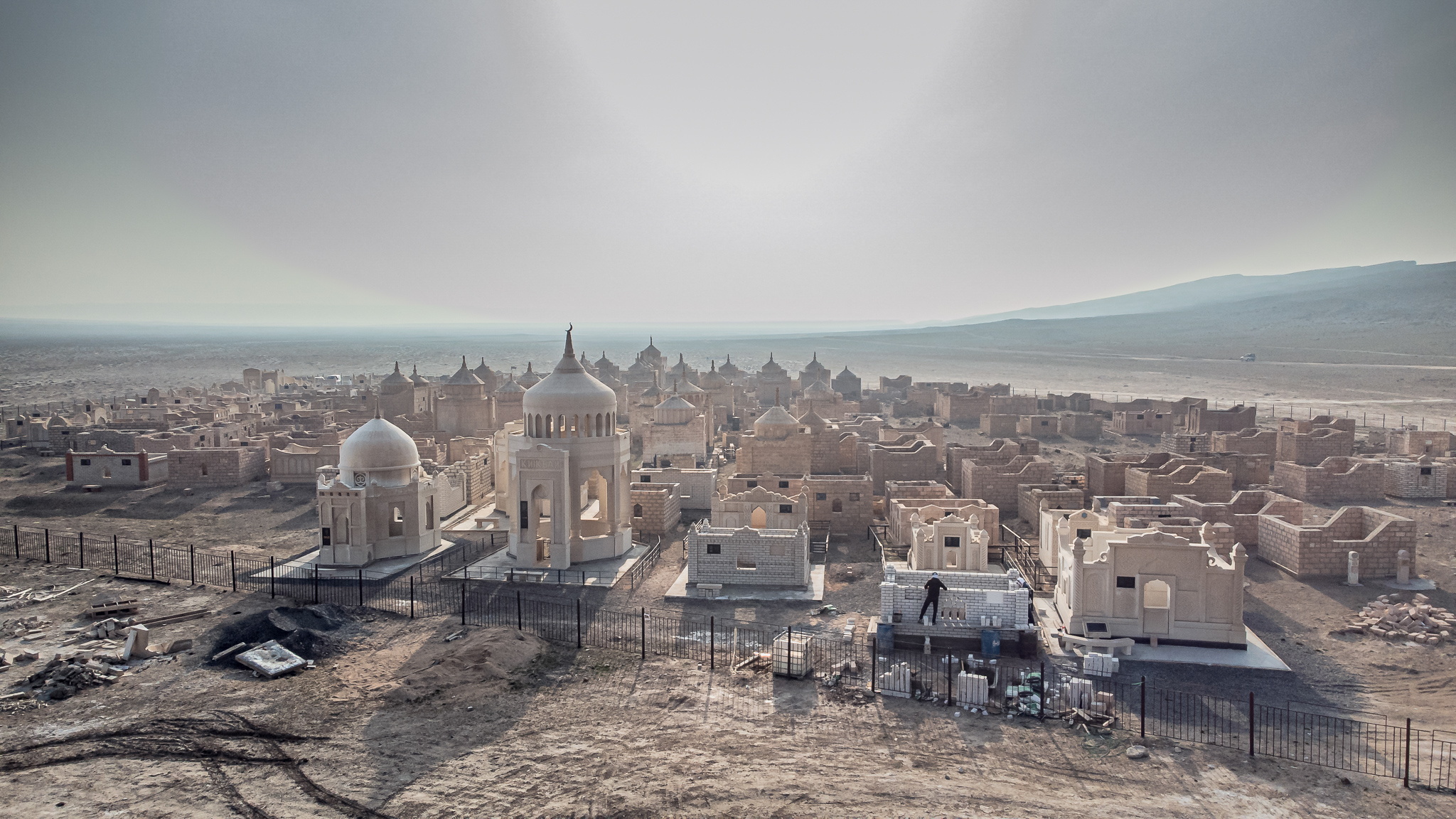
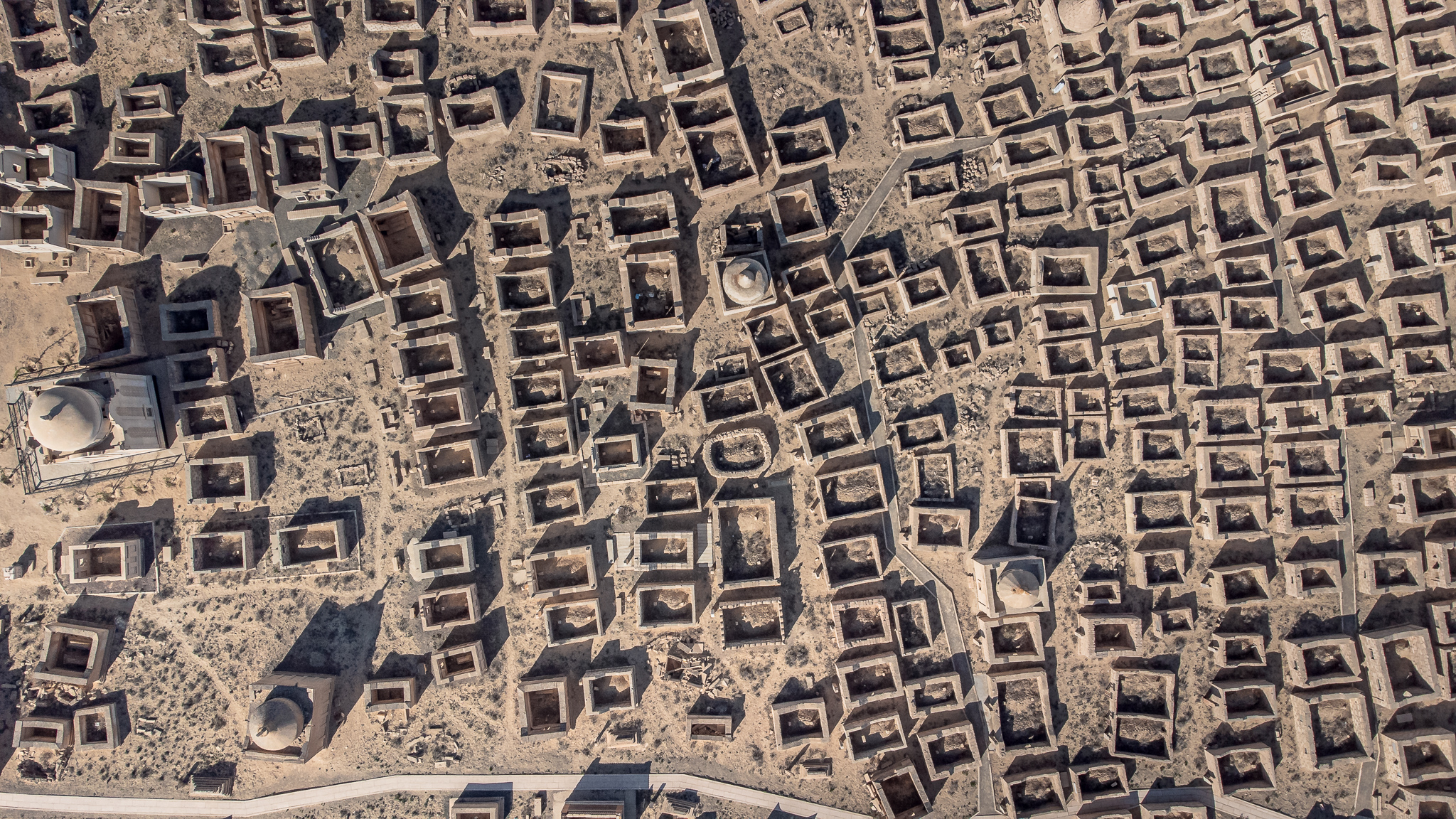
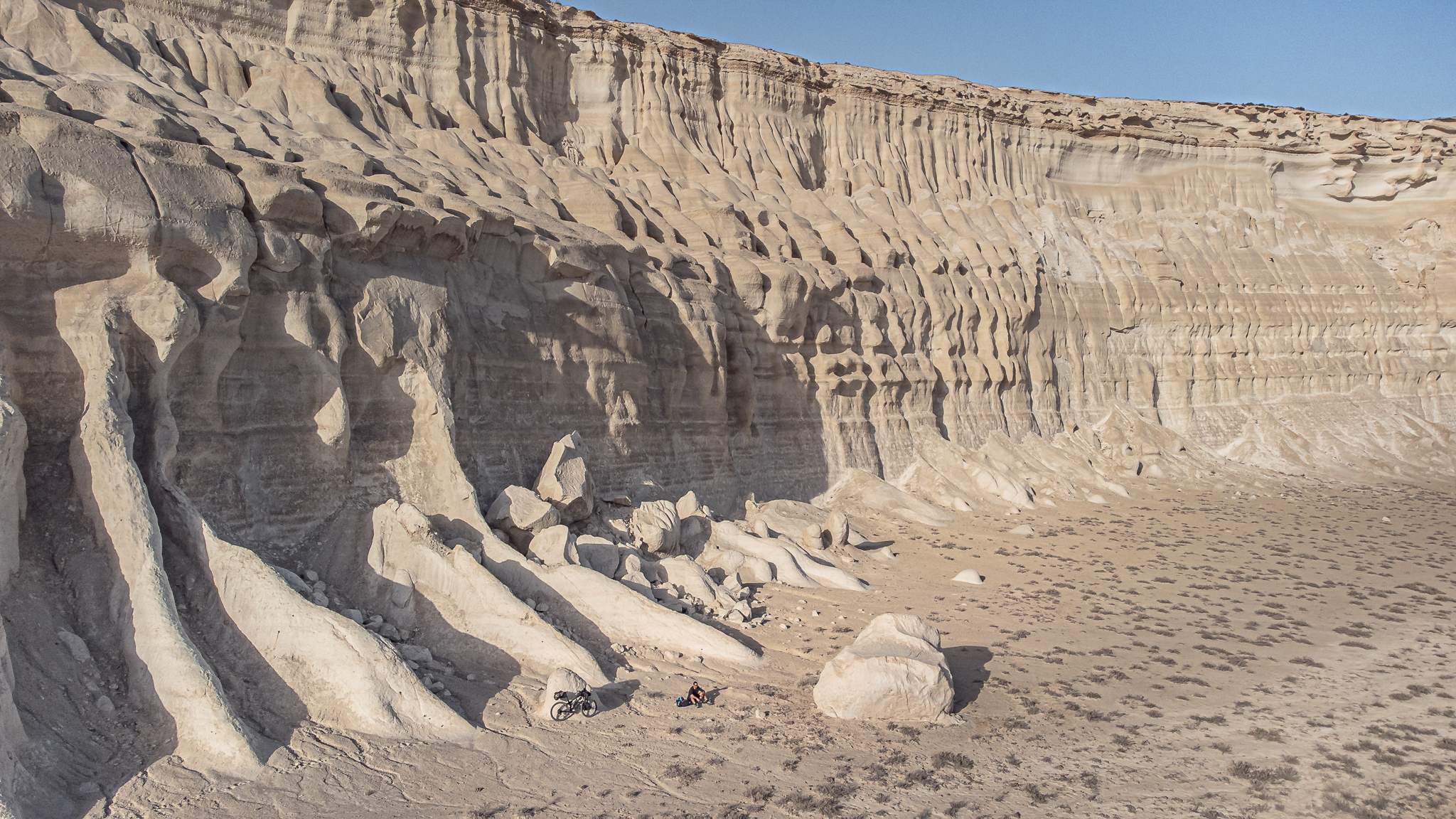
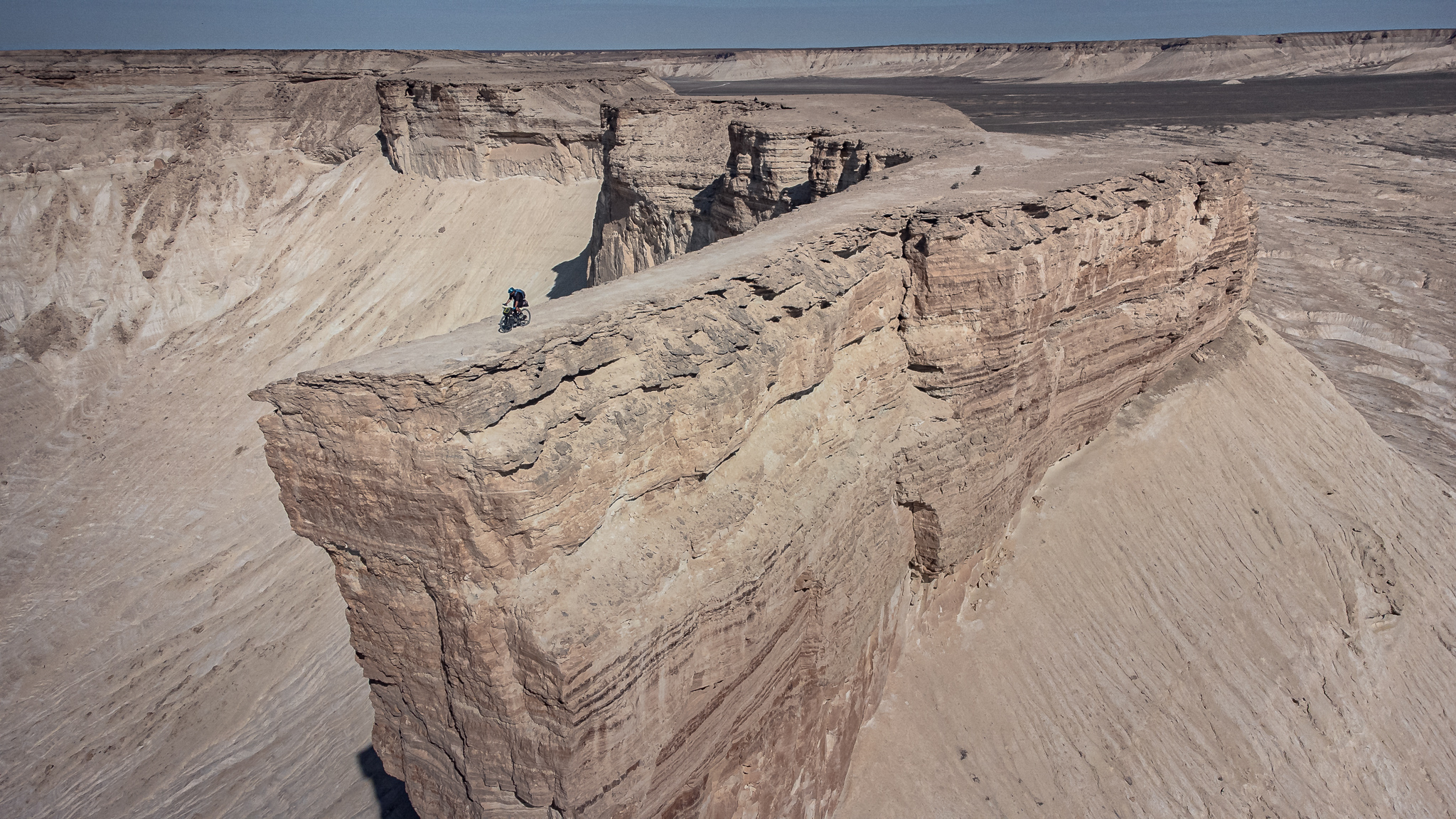
Cities of the dead - cemeteries whose graves are small houses - bear witness to the fact that people lived in this region, which is extremely remote from a European perspective, 1000 years ago. Tassan admires them as well as the rock mosque of Shakpak Ata from the same era. The rock formations made of sedimentary rock are at least as impressive. Tassan finds shells, teeth and fish bones. 150 million years ago, Manggystau was the bottom of the sea. Today, the region is up to 100 meters below sea level in some areas.
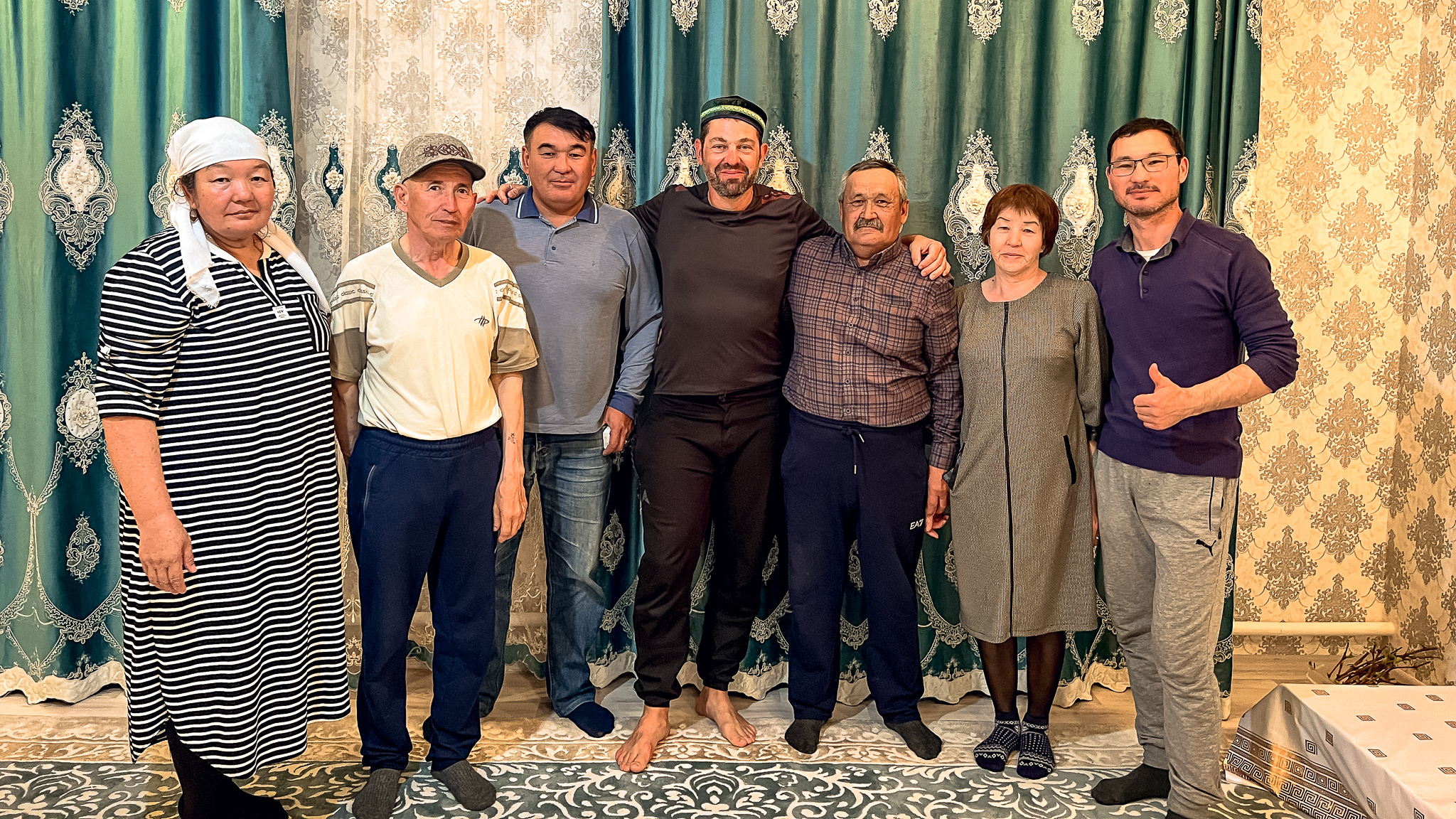
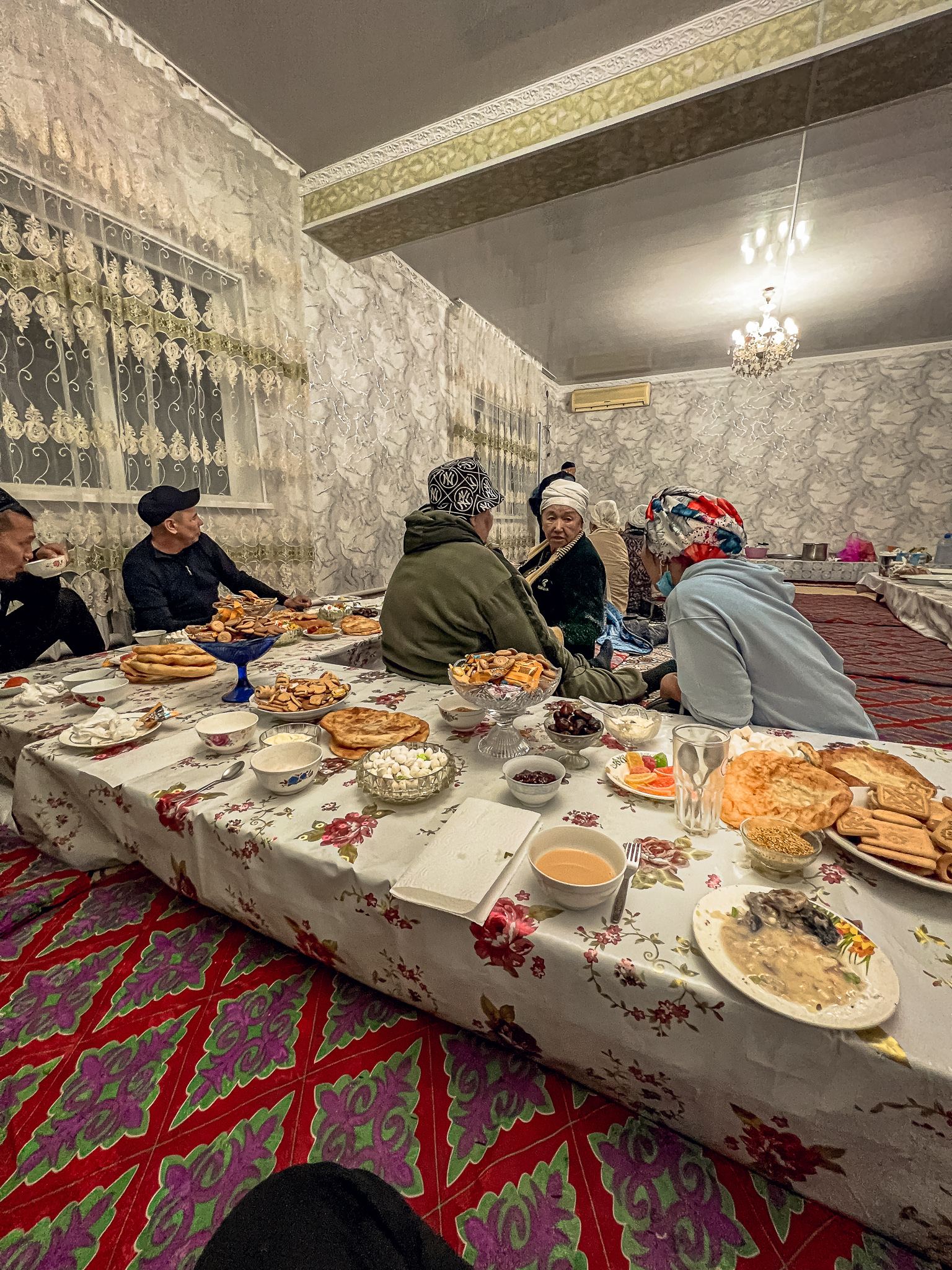
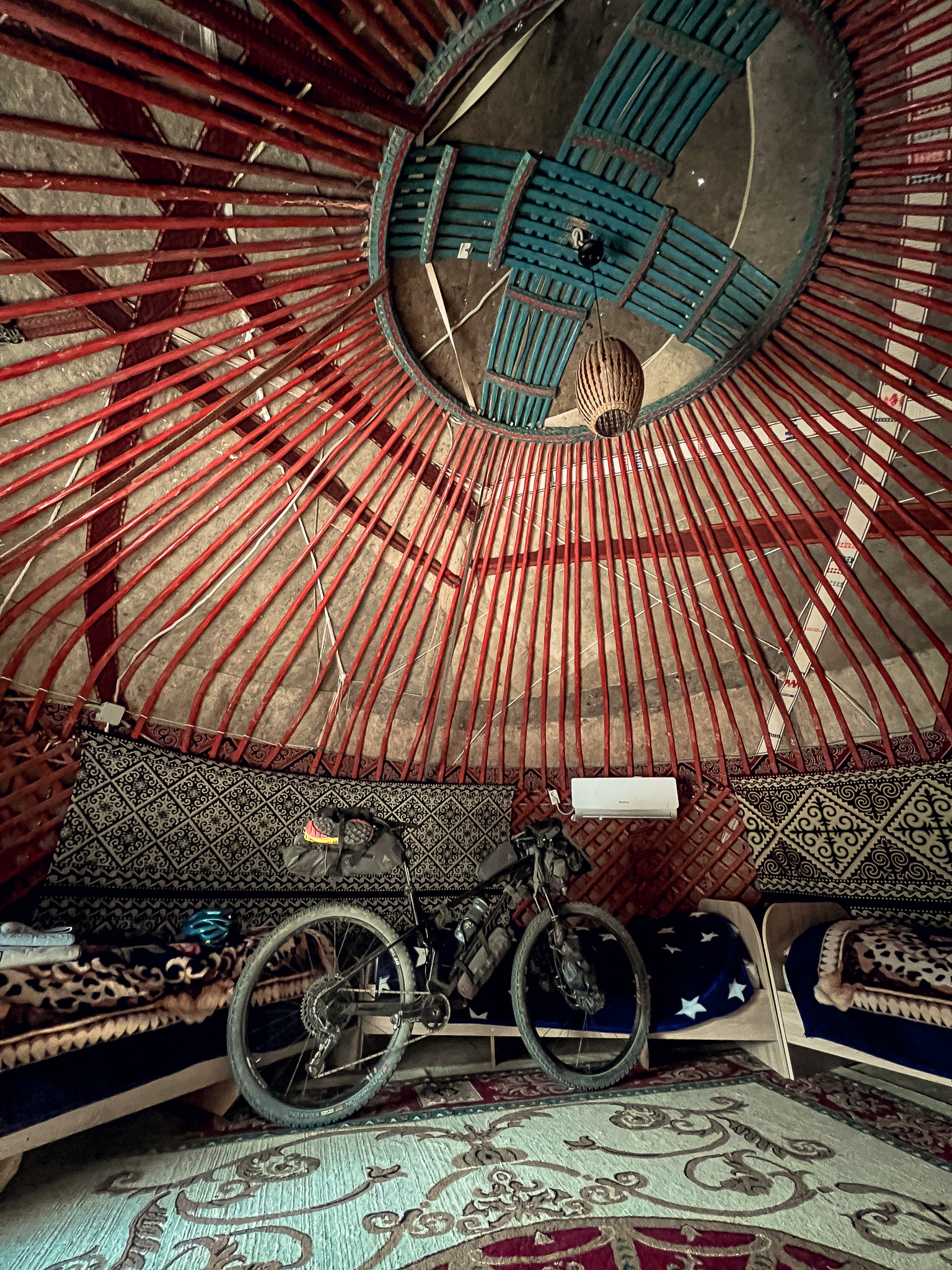
The Frenchman spends most nights in local people's houses or yurts. "There is plenty of food," he reports afterwards. It is Ramadan when he travels the region. This means that during the day there is nothing for the Muslims, but after dark the table is richly laid. A pleasant contrast to the barrenness of the desert. He is also traveling with a minimum of luggage. The hospitality provided by the inhabitants is essential for survival.
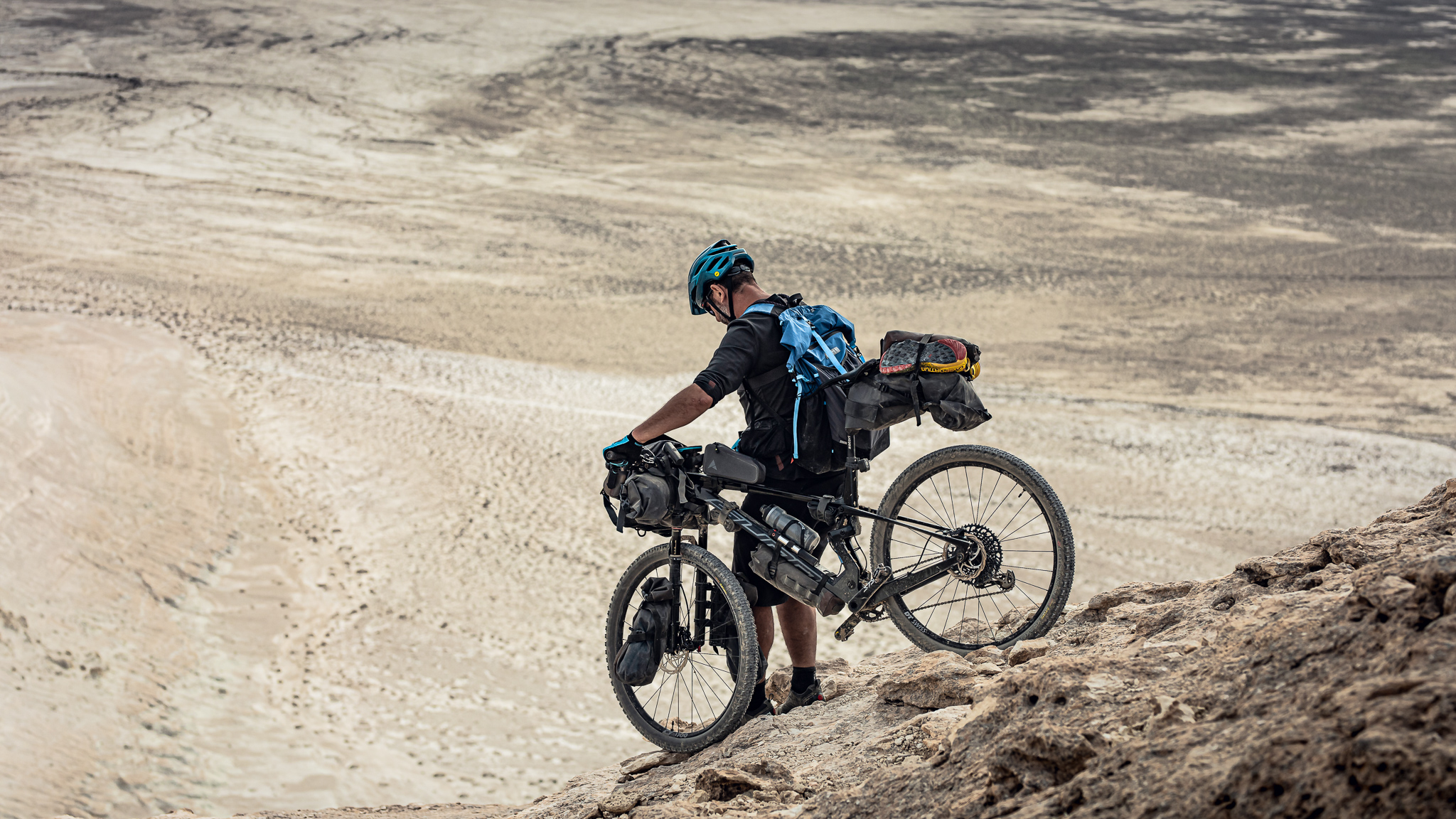
A chalk rock plateau next to a salt lake is another natural work of art that Cédric Tassan passes. Unfortunately, he finds himself on the plateau first and has to somehow descend through the rock face. "The locals had assured me that there was a way down. All I saw was a 100-metre-high vertical wall." Turning back is not an option either, because: "The plateau is 100 kilometers long. Riding back to the other end would have meant a detour of at least a day. But I only had as much food and water with me as I needed to get to the next settlement."
Tassan finally finds an extremely exposed narrow path through the rock, which he crosses on foot in a three-hour trek. Riding would be far too dangerous. The path is so steep that he dismantles the bags to carry his bike and luggage down one by one in several passes. He describes the following night at the foot of the rock face as one of the most beautiful he has ever spent outdoors.
A place for a rampage
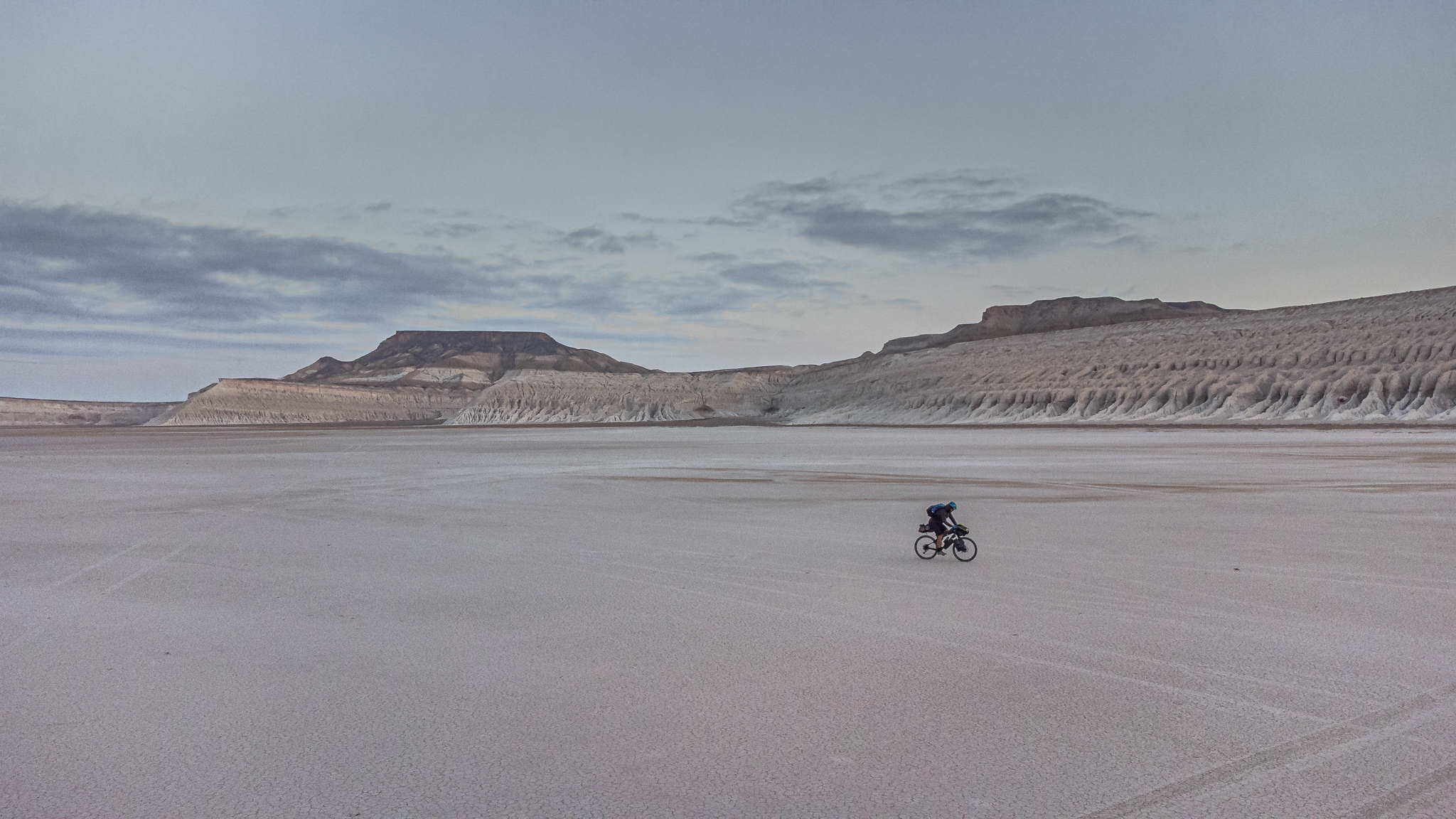
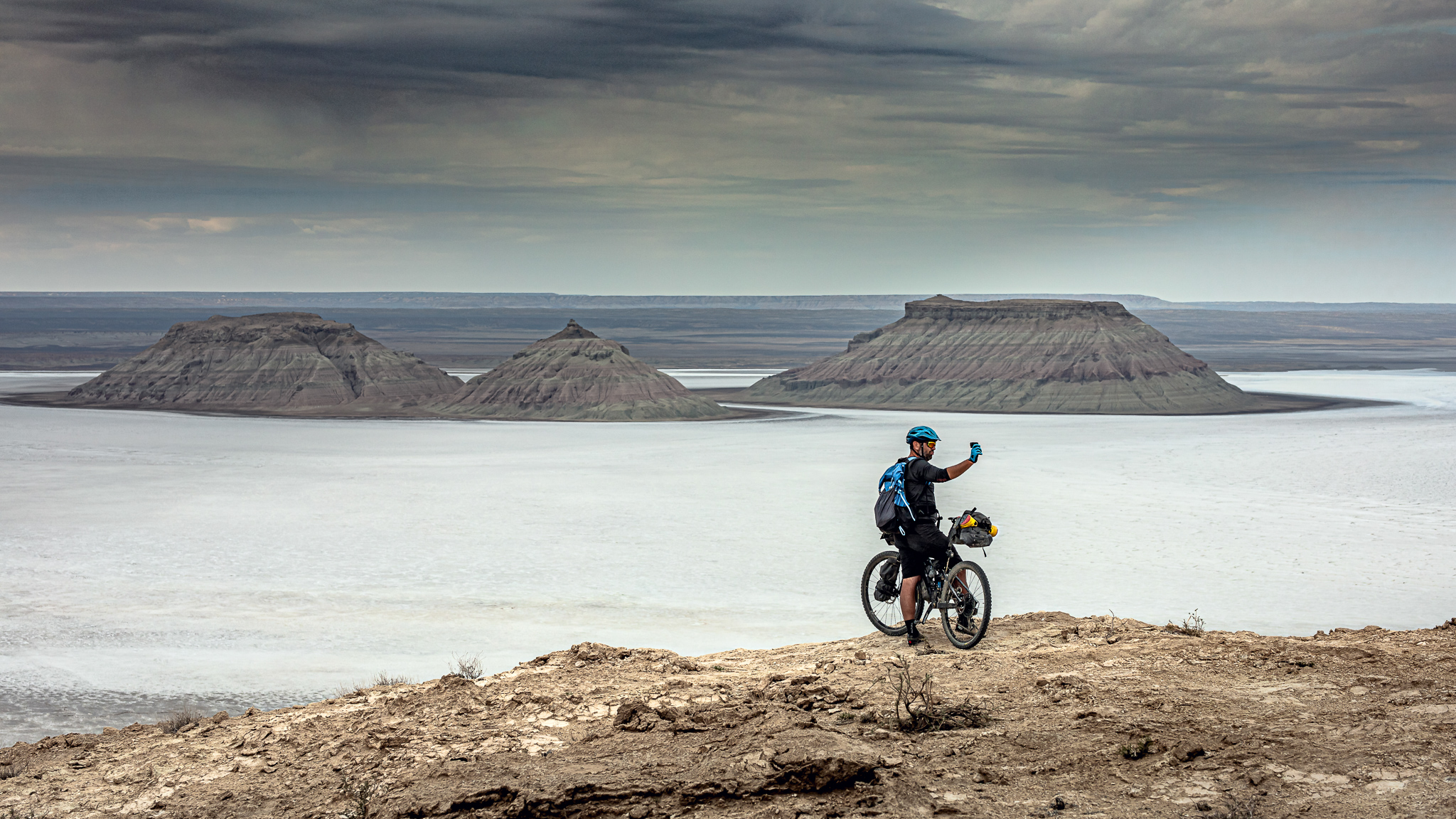
The next section rides over a huge salt lake. At some point, the white surface begins to crack. "The closer I got to the middle of the lake, the more cracks appeared under my cleats. I feared getting stuck in the swamp below and was ready to turn off immediately if necessary." He covered 40 kilometers on the salt lake, then another 80 kilometers on a desert pass before reaching a pilgrimage site, again with a necropolis and cave mosque.
"The rest of the journey was a real rush", says Cédric Tassan about the last section of his desert crossing, "this is the most beautiful landscape I have ever seen", he writes weeks later, still overwhelmed by the spectacular rock formations that tectonics and erosion have left behind at this end of the world. Some might even get the idea of organizing a Red Bull Rampage offshoot here at the sight of the rock ribs. However, the geographical location is not practical. Instead, these sculptures of nature will probably remain as untouched forever as they are today.
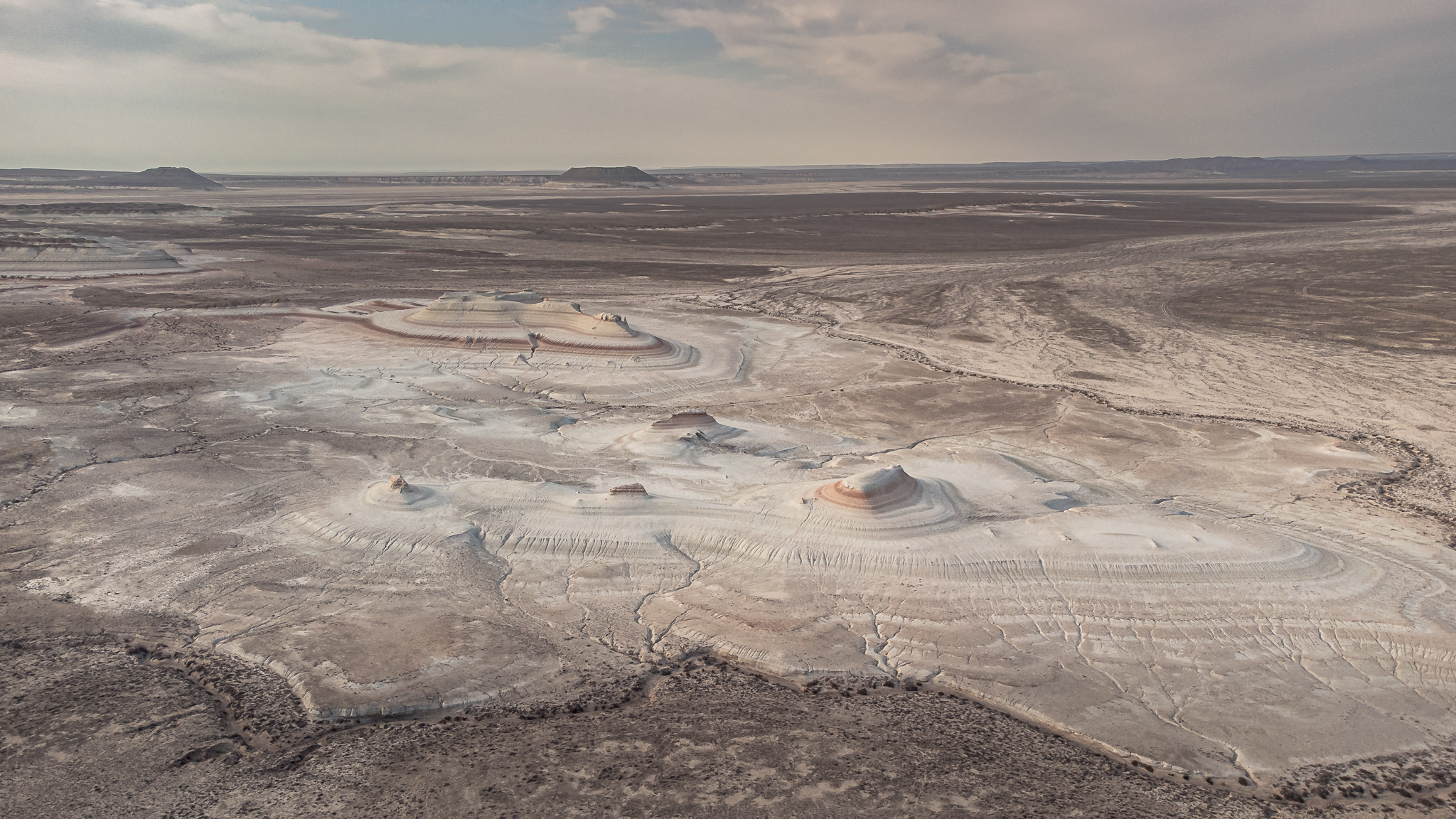
Tassan reaches a village. "No one could ever remember seeing a person arrive here on a bike." The next day, he struggles through the sand and against the wind towards his final destination near the border with Turkmenistan. Once again, Mangystau shows its most spectacular side with a small lake, rock formations that seem to grow out of the ground like mushrooms or turtle shells. Surrounding them is a salt lake. "I will remember this image forever," the adventurer concludes his report.
If you now feel like paying a visit to Mangystau: The city of Aktau is around 3500 kilometers from Switzerland as the crow flies and can be reached in around 15 hours by plane via Istanbul and the Kazakh capital Nursultan (formerly Astana). Another factor to consider is that the westernmost tip of Kazakhstan, to the north of Mangystau, is only separated from eastern Ukraine by a 300-kilometre-wide strip of land belonging to Russia.
Further content on this article

Note: This content has been automatically translated from German. Please report any incorrect translations.