

Bern authorities and property owners halt MTB trial operations
It’s no secret that hardly any canton allocates as little space to mountain bikers as Bern does. There have also been some positive signs, such as a commitment to coexistence in Bern’s Road Traffic Act as part of a 2023 revision. In 2025, Bernese forest owners caused a stir with exorbitant compensation claims for bike trails and routes.
However, the Canton of Bern must also implement the Bicycle Paths Act and therefore submit its plan for a recreational route network by the end of 2027. The situation surrounding the Bike Region Voralpen project shows that the road ahead will be a rocky one.
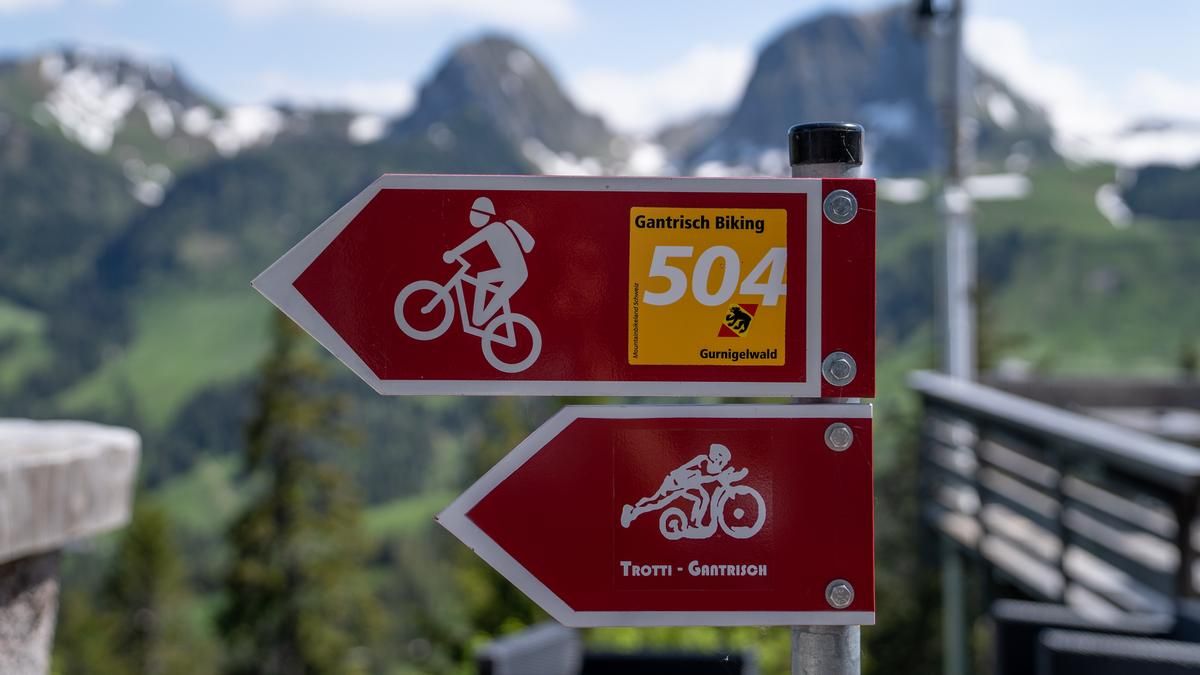
While some mountain bike routes with single-track sections have been marked in the Gantrisch region, there is a lack of feeder routes. The Bike Region Voralpen association has therefore been working for some time to establish a route from Bern to Riggisberg and from Köniz to Schwarzenburg. “Municipalities, the nature park, the canton, the Bern-Mittelland Regional Conference, BEBike, as well as regional and local associations were involved in the project’s development,” the association writes in its press release. At four public participation events, landowners were able to voice their concerns and possible solutions were discussed.
At the same time, the association has applied to the cantonal civil engineering office for permission to conduct a trial operation.
New Conditions Instead of Approval
As of October 2026, it is now clear that the project’s initiators are facing insurmountable resistance on both fronts. According to the press release, landowners’ primary concerns include “fears of conflicts and accidents involving farmers, hikers, or animals; negative experiences with mountain bikers; and concerns about increased traffic on existing trails.”
While a trial run might have been conceivable on at least certain sections of the two routes, the responses from six cantonal agencies put a stop to the attempt for the time being. Suddenly, one of these agencies demanded the written consent of every single landowner—a requirement that had never been mentioned before. “In any case, we couldn’t and wouldn’t want to do anything against the will of the landowners,” explains Manuela Huber of the Bikeregion Voralpen association.
The canton explained to the Berner Zeitung that questions regarding wildlife corridors and protected areas remain unresolved. Various conservation interests have made the process complex, the canton adds. Manuela Huber adds that some agencies are demanding that only “sufficiently solid” trails be included in the pilot program. On the one hand, it is unclear exactly what this means; on the other hand, this requirement suggests that it would be difficult to include attractive singletrack trails, according to the representative from Bike Region Voralpen.
While it’s common sense that an unattractive network won’t draw mountain bikers, this apparently doesn’t register with the Canton of Bern. “Coexistence is generally viewed critically, and separation is to be promoted,” says Manuela Huber, citing another objection that further complicates the search for an attractive route.
At least the municipalities support the pilot program, as it promises to channel mountain bikers who are out on the trails anyway.
Will the Canton of Bern be able to present a mountain biking network by the end of 2027?
Is the stalemate between Bern and the Gantrisch region a sign that mountain biking network planning is stalling across the entire canton? The head of the Department of Construction and Transportation for the Canton of Bern stated upon inquiry that the plans will be made public next spring, and the cantonal government is expected to adopt the sectoral plan for the bicycle network in December 2027—that is, on schedule.
Béatrice Brand of the organization BEBike explains that the major challenge is not the planning, but the implementation. “The creation of mountain bike routes on existing trails in particular highlights just how challenging it can be to reconcile differing interests. The procedures are complex, the responsibilities aren’t always clear, and the requirements for the projects sometimes vary. As a result, even projects that are well underway can stall, as the example of Bike Region Voralpen shows.”
Further content on this article


About the author: Stefan Michel
Note: This content has been automatically translated from German. Please report any incorrect translations.