

32 inches: A standstill would be a disaster
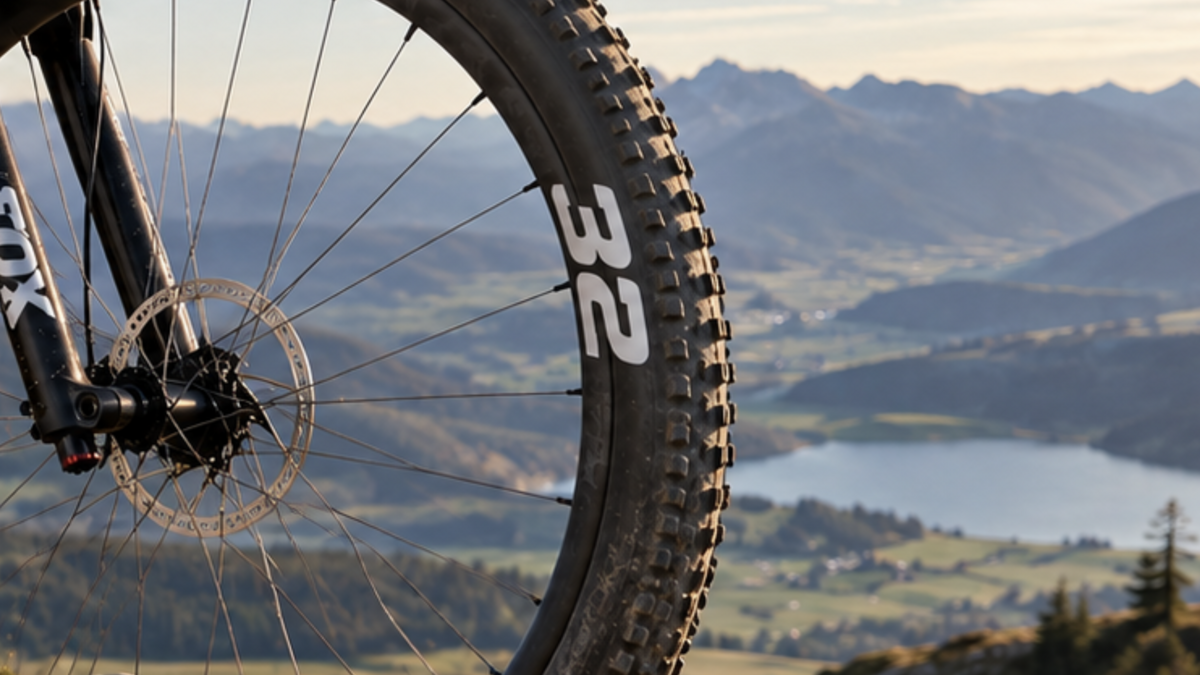
In his blog post “MTB Racing Is Heading for the Next Disaster with 32-Inch Tires,” Thomas Giger diagnoses a dangerous ailment plaguing the bicycle industry: “Fear of Missing Out,” or FOMO for short. Out of fear of missing the next trend, manufacturers are blindly investing in new products. It was precisely this fear that led to massive overproduction during the COVID-19 pandemic and subsequently to a major hangover. His fear: History will repeat itself with 32-inch wheels.
In fact, another wheel size means additional complexity, new production tools, higher development costs, and even more spare parts—across all stages of the supply chain. As a bike shop owner, I can fully understand Thomi’s concerns. Even more tires, rims, and spokes in inventory? That’s really the last thing I was hoping for.
But what do customers actually want?
Thomi also lists the drawbacks for mountain bikers: bike racks, transport bags, shuttle trailers, and suspension systems that no longer fit. He’s absolutely right. But in his list, the most important question gets pushed into the background for me: What does the new wheel size offer the people who ride them?
Products and services should be geared first and foremost toward the needs of customers—not toward what’s most convenient for manufacturers and retailers.
And from a customer’s perspective, 32 inches can make a hell of a lot of sense. Better roll-over performance, a smoother ride, and possibly more traction. Not for everyone, not on every trail. But for many riders, that could be a real benefit. And more riding fun is a pretty compelling argument in mountain biking.
Where are the lemmings?
Thomi paints a picture of an industry where everyone is running after the trend like lemmings out of fear of losing market share. What surprises me, however, is the opposite: Why aren’t bike shops already full of 32-inch bikes?
Of course, developing new products takes time. But given the attention that 32-inch bikes are already receiving, progress is moving at a surprisingly leisurely pace.
I suspect that, based on the experiences of recent years, warning lights have gone off in some key areas. That this time around, calculations are being made more carefully, investments are being made more cautiously, and production isn’t just happening blindly.
Perhaps the industry has actually learned a lesson. After all, the COVID-19 crisis wasn’t the result of technical innovation, but primarily of massive misjudgments of demand and production that got out of hand. That’s a crucial difference.
Maybe the 32-inch trend will really take off with gravel bikes
And one more thing: We’re discussing 32-inch wheels almost exclusively from the perspective of mountain biking. But the big breakthrough could happen somewhere else entirely. I suspect that the real 32-inch boom might happen in the gravel bike scene
. There, the improved roll-over performance, smooth ride, and speed on varied terrain could be particularly appealing. And the reduced maneuverability is likely to be less of a hindrance on many gravel routes than on narrow singletrack trails.
So perhaps 32-inch wheels won’t be the big MTB revolution after all, but rather the next evolutionary step for gravel bikes.
Innovation isn’t the problem
Thomi compares the struggling bicycle industry to a patient who, despite severe pneumonia, is pushing through a grueling interval training session. A fitting analogy. But perhaps 32 inches isn’t life-threatening interval training at all, but exactly the kind of exercise that will get the patient back on his feet.
Of course, it would be disastrous if manufacturers were to once again produce massive quantities on a hunch. But it would be just as wrong to forgo promising developments out of fear of additional standards.
Whether 32 inches becomes a success or a disaster will ultimately be decided by the customers. Perhaps it will catch on widely; perhaps only in certain disciplines. Perhaps it will remain a niche product. None of that would be a disaster. A disaster would be a bicycle industry that stops daring to innovate out of fear of the next mistake. Because we build bicycles for the people who ride them—not for those who produce or sell them.
Note: This content has been automatically translated from German. Please report any incorrect translations.