

How the bicycle turns out to be systemically relevant
On March 16, the Federal Council classified the situation as "extraordinary" and took far-reaching measures. The federal government also decided: In order to ensure supplies for the entire population, workshops can and should remain open for bicycle repairs.
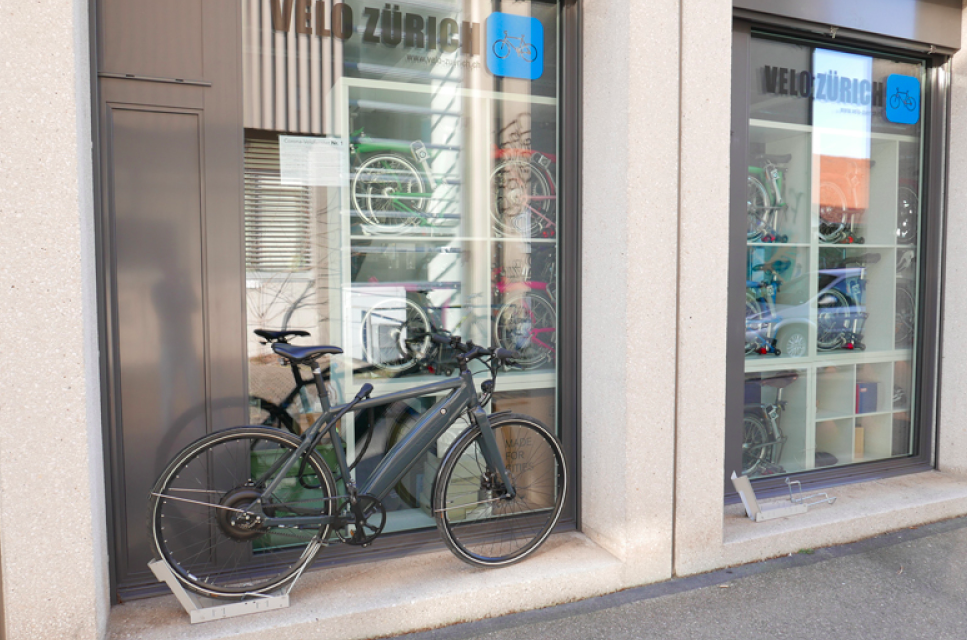
Velosuisse, the association of Swiss bicycle importers, has asked specialist bicycle dealers and they are well equipped to combat the coronavirus. "This is also urgently needed," says Martin Platter, Managing Director and Head of the Velosuisse media office. "Because people don't want to expose themselves to the risk of infection, they prefer to ride their bikes instead of using public transport. This increases the need for service and repair work, spare parts and bicycles," continues Platter.Posts on Facebook, newsletters from specialist retailers and a tour of the Basel area speak for themselves: Swiss specialist bicycle retailers have reacted to the new situation with lightning speed. The salesrooms are closed and reorganized in such a way that the bike store functions as a repair-only business and the safety distances between mechanics are even greater than prescribed by the Federal Office of Public Health. Customers are also given the uncomplicated option of registering repairs by phone or email, while pick-up and delivery services ensure that bike repairs are carried out completely contact-free and that the coronavirus has no chance of spreading further.Thomas Ernst from Velo Zürich reacted particularly quickly to the new situation. Just a few hours after the new measures were announced on March 16, 2020, he geared his business towards combating the coronavirus: With so-called Corona Velofenstern, customers can deposit bicycles and pick them up after repair and appointments can be registered online 24/7 and processed contactlessly. With a hotline for free information and assistance for any home repairs, Velo Zürich is expanding its range of services and showing how bicycle repair shops are becoming a system-relevant basic provider.
In contrast to other SMEs, most bike stores in Switzerland are organized as micro-enterprises with an average of two to three employees and are able to maintain some of their activities. Nevertheless, bike stores work under difficult conditions: It is more costly to carry out repairs in contactless mode. However, the fact that bike sales no longer take place face-to-face in the store is much more serious. Instead, as with the big online stores, they have to be made by phone, chat, email, online store or via social media. This is a transformation process that many stores are unlikely to be able to understand so quickly. Swiss bicycle manufacturers are therefore already making preparations to expand their online presences with chat functions in order to make it possible to provide advice in this way. The extent to which bicycle sales will be affected by the new regime is not yet foreseeable.Another complicating factor is the threat of supply bottlenecks: Velosuisse importers are currently still confident that they will be able to meet demand. However, if the supply chain from China and South-East Asia and, more recently, occasionally from Europe does not restart soon, there could be supply bottlenecks from May onwards. According to Platter, popular bike models are already difficult to obtain.Further content on this article


Note: This content has been automatically translated from German. Please report any incorrect translations.