

Take care of it: Your thumb is your anchor on the handlebars
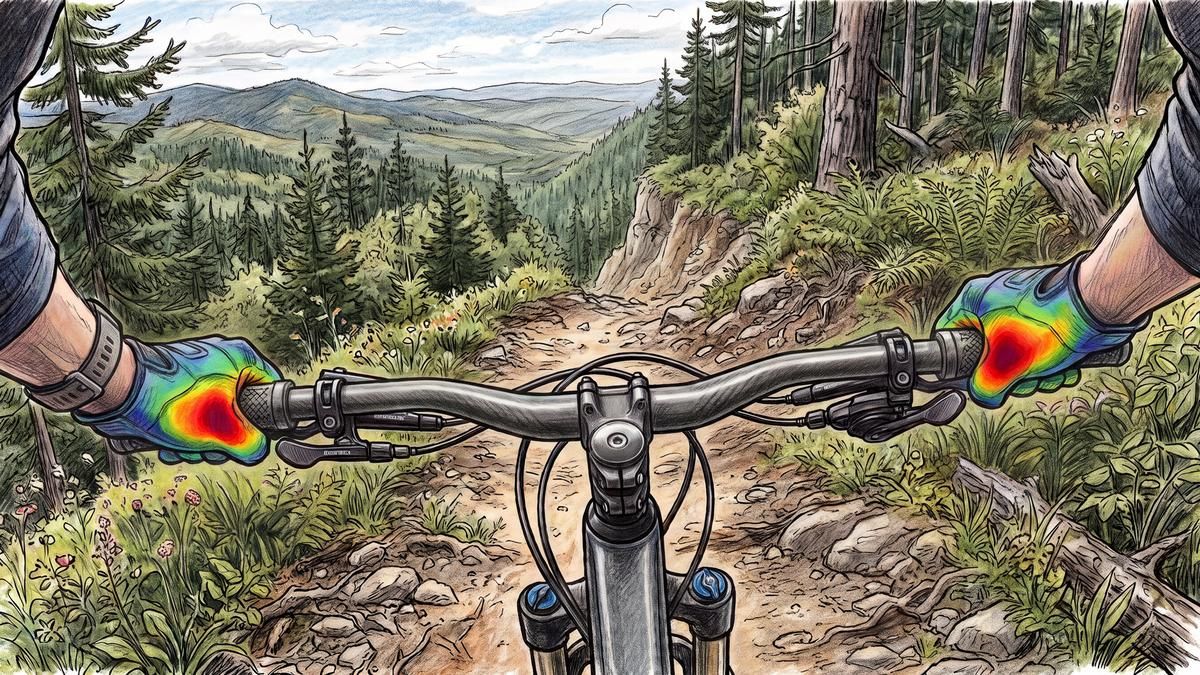
Which parts of the body are especially important for mountain biking? Depending on your perspective, a different area takes center stage. The feet keep us on the pedals, the hands on the handlebars, and the arms absorb the shocks that the bike’s suspension doesn’t absorb; the back and core are essential for maintaining balance and a stable position overall. Others will argue that the most important muscle is the brain, which sends crucial commands to the body based on the images captured by the eyes and signals from the vestibular system.
An accident led me to learn more about a body part I hadn’t really studied much before: the thumb. Anyone who has seriously injured it knows that without it, it’s difficult to grip things properly—for example, the handlebars on rough descents.
“The thumb essentially turns the hand into a clamp,” explains Patrik Noack, team doctor for Swiss Cycling and a sports physician at the Swiss Olympic Medical Center. And as strong as the thickest finger on a hand may seem, when things go wrong, it can’t withstand the strain—which then results in a prolonged break from biking. Is the thumb the underrated body part for female mountain bikers—the Achilles’ heel of gravity enthusiasts?
Suva, which insures work-related and recreational accidents in Switzerland, has the statistics. Wrists, hands, and fingers are frequently affected when mountain bikers get injured, though not as often as upper arms and shoulders. Between the wrist and the fingertips, the thumb accounts for more than half of all injuries.
So should we specifically strengthen our thumbs? What can we do to prevent thumb injuries? And are we at risk of developing osteoarthritis in old age given the strain our thumbs endure on the handlebars? Patrik Noack answers the most important questions.
What is the role of the thumbs when biking, especially downhill on rough trails?
The thumb essentially turns the hand into a clamp. The four fingers pull on one side of the handlebars, while the thumb provides support on the other side. This creates a closed grip. This is especially crucial when riding downhill. The rider must control braking forces, impacts, and torque on the handlebars while simultaneously braking with the index or middle finger. The thumb therefore contributes significantly to the stability of the grip, even if the actual gripping force doesn’t come solely from the thumb.
A good rider tries to hold the handlebars only as tightly as necessary. Too much grip tension tires the forearms and hands and impairs fine motor skills. Technically skilled riders absorb a large portion of the impacts through their arms, shoulders, legs, and the bike’s movement, rather than holding everything in place with their hands.
Are thumbs naturally strong enough for this, or do professionals train them specifically?
For a healthy person, the thumb is fundamentally very well designed for this task. Its strength lies less in a single, particularly powerful muscle than in the interaction of numerous muscles and stabilizing ligaments, as well as its ability to oppose the other fingers—that is, to position itself opposite them.
To my knowledge, isolated “thumb training” is not part of the standard training regimen for MTB pros. Instead, they focus on grip strength, forearm muscles, wrist stability, and the entire upper extremity. This automatically trains the thumb as well.
How much stress is placed on the thumb’s tendons, joints, and bones—can you provide a clear comparison?
During normal riding, the thumb grips an object that is constantly vibrating and subject to repeated jerky movements. This is a prolonged, repetitive strain. In the event of a fall, the situation changes abruptly. If the thumb gets caught on the handlebars or is forcibly splayed apart, forces can occur within a fraction of a second that the joint and ligaments are not designed to withstand. This triggers the classic mechanism of an injury to the ulnar collateral ligament at the base of the thumb, colloquially known as “skier’s thumb.” With higher impact forces, bones or joint surfaces may also be injured instead of or in addition to the ligament.
Is the thumb the mountain biker’s Achilles’ heel?
I wouldn’t describe it that way. The hand as a whole is vulnerable, but according to existing epidemiological data, the thumb is not a particularly prominent single hotspot. This is very clearly demonstrated by a large, recent injury surveillance study in youth MTB sports. Over five seasons, the hand/wrist was the most common body region, accounting for 23.2 percent of all injuries—practically on par with the head/brain at 23.0 percent. The shoulder/clavicle followed. However, the study does not differentiate with sufficient precision to derive a reliable incidence rate specifically for the thumb.
Among elite and recreational riders, the upper and lower extremities are frequently affected overall. As expected, downhill cycling carries a higher risk of injury than cross-country. A systematic review of 17 MTB studies also concludes that the upper extremities are injured particularly frequently. Fractures play a significant role in this context.
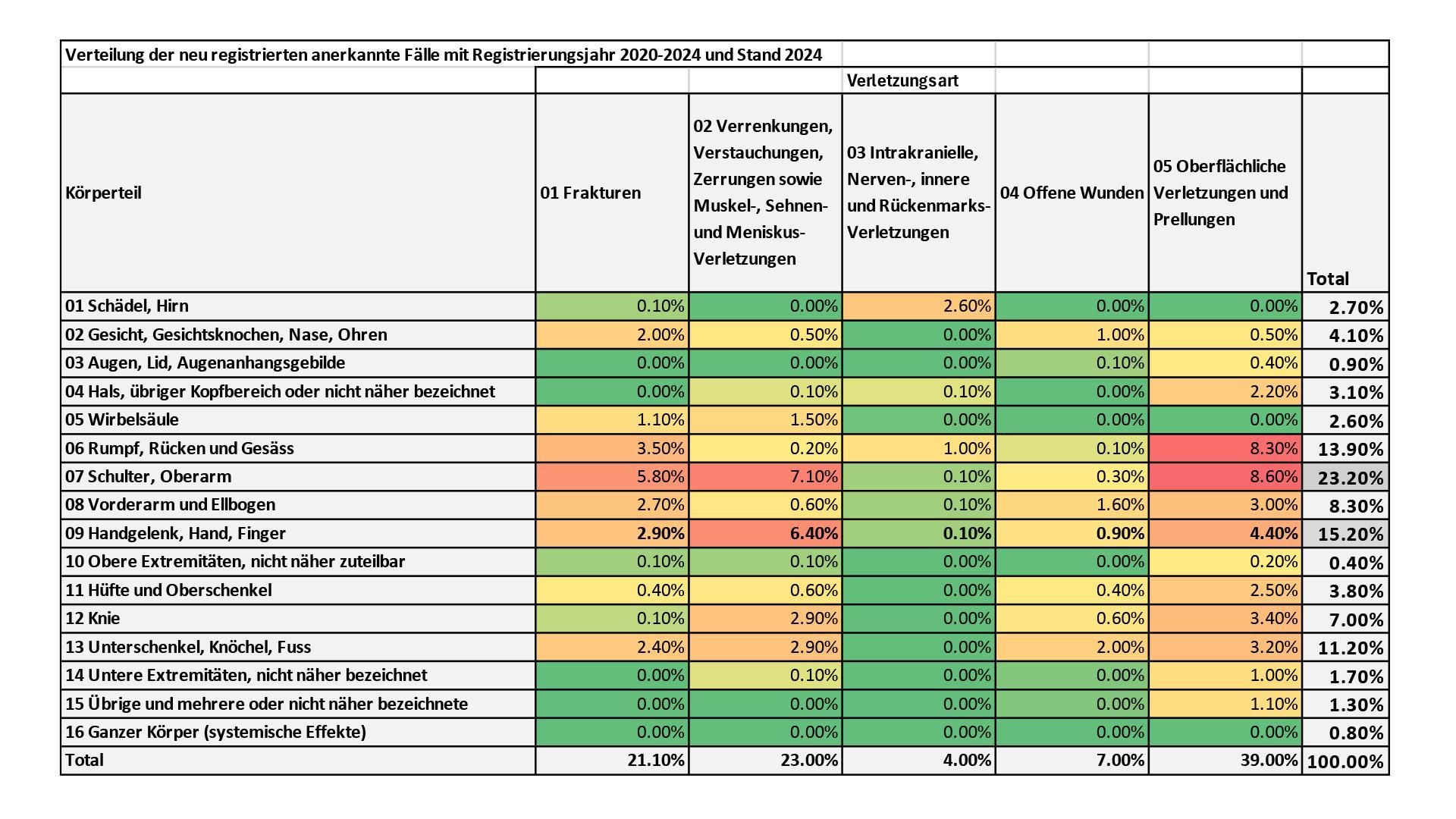
Suva statistics on mountain biking injuries show that only the upper arms and shoulders are affected more frequently than the wrists, hands, and fingers.
How common are thumb injuries among MTB racers?
I would be cautious here. I cannot derive a reliable figure specifically for the thumb from the available literature. There is strong evidence that hand and wrist injuries are common in mountain biking. However, one cannot reasonably conclude from this that, for example, one in ten racers will injure their thumb at some point. A study of 765 MTB-related emergency department visits and 1,079 individual injuries found numerous hand injuries, with the metacarpal bones and their joints being particularly frequently affected.
At the 2023 Downhill World Championships, 10.4 percent of the 230 elite riders examined sustained at least one injury within five days. However, this study also provides no basis for a specific incidence rate for thumb injuries.
Based on personal experience, I wouldn’t say that the thumb is the most commonly injured finger on the hand.
When a thumb injury occurs, are ligaments, tendons, or bones more likely to be affected?
I would classify typical relevant injuries into three groups:
· Ligament injuries, particularly the ulnar collateral ligament of the thumb’s metacarpophalangeal joint (“skier’s thumb”)
· Fractures, such as those of the thumb phalanges or the first metacarpal bone, including joint fractures
· Dislocations or joint injuries.
· Tendon injuries are also possible, but they are not the most common type of injury in a typical MTB crash.
Based on the currently available MTB data, it is not possible to reliably determine whether ligament injuries or fractures are more common among mountain bikers overall, because the studies usually do not report on the thumb separately.
Does decades of biking increase the risk of osteoarthritis in the thumb?
I currently see no convincing data to support the claim that intensive mountain biking is an independent risk factor for thumb osteoarthritis. This should be distinguished from acute injuries. A severely injured joint—such as one with a fracture or dislocation—can increase the long-term risk of post-traumatic osteoarthritis.
Chronic hand pain associated with cycling is well documented. A classic example, however, is not the thumb, but pressure-induced damage to the ulnar nerve in the hand, known as “handlebar palsy.”
Should recreational cyclists train their thumbs?
For a cyclist without symptoms, I wouldn’t make isolated strength training just for the thumb mandatory. It makes more sense to do comprehensive training of grip strength, the forearm, wrist, shoulder girdle, and core. Resistance to fatigue is just as important. A rider must still be able to control the handlebars even at the end of a long
descent without having to cling to them.
The situation is different after a thumb injury. In that case, mobility, strength, coordination, and stability of the thumb must be specifically incorporated into rehabilitation—tailored to the specific injury and, if necessary, combined with hand therapy or physical therapy.
What else can be done to prevent injuries?
Perhaps the most important factor is riding technique. Don’t grip the handlebars with maximum force; maintain an active position on the bike and absorb impacts through your arms and legs. In addition, ensure proper cockpit setup—including handlebar width and rotation, grip diameter, and the position and reach of the brake levers—as well as well-fitting gloves. Brake levers should be adjusted so that you can brake reliably with one or two fingers without unnecessarily losing your secure grip on the handlebars.
In the event of a fall, things get more complicated. The instinct to break your fall with your hand is extremely strong. At the same time, the thumb can be injured if the hand is still gripping the handlebars and the thumb is forcibly splayed or twisted. That’s why such injuries cannot be completely prevented.
How would you summarize the importance and vulnerability of the thumb for mountain bikers?
Biomechanically, the thumb is extremely important in mountain biking, but epidemiologically, it has not been identified as a particular “Achilles’ heel.” Rather, the hand and wrist are the most vulnerable parts. And serious injury to the thumb is not caused by the thousands of normal impacts during descents, but rather by an unfavorable force impulse during a fall.
Further content on this article



About the author: Stefan Michel
Note: This content has been automatically translated from German. Please report any incorrect translations.