

Nerd Alert! The EWS injury statistics

It goes without saying that enduro races are dangerous. Nevertheless, the statistics offer interesting insights: The Enduro Series counted a total of 2010 participants in the 2017 and 2018 seasons, 188 of whom injured themselves at least once. A good half of these injuries (57%) resulted in a forced break. The following comparison shows how much the racing situation increases the risk: 1000 hours of racing led to an average of 38 injuries, while 1000 hours of training on the race track only led to 3.6 injuries. Just under a third of mountain bikers were injured in the only EWS race in which they took part, and half of all recorded concussions involved such "one-time starters" - which does not mean, however, that they were unable to ride afterwards. The average time it took for riders to get back on their bikes was 12.3 days, with half of all injured riders back on the trails no later than five days after the accident.
The slower, the more dangerous
It is also interesting to see where the enduro racers fell: They suffered the most physical damage in a combination of steep, rocky or earthy sections where they were traveling at low speed. Almost 40 percent of those injured finished the race despite falling. 11 men and one woman suffered a concussion during an EWS race. Four of them rode to the end of the race afterwards. The story of Lorraine Truong shows just how great the risk of permanent damage is.
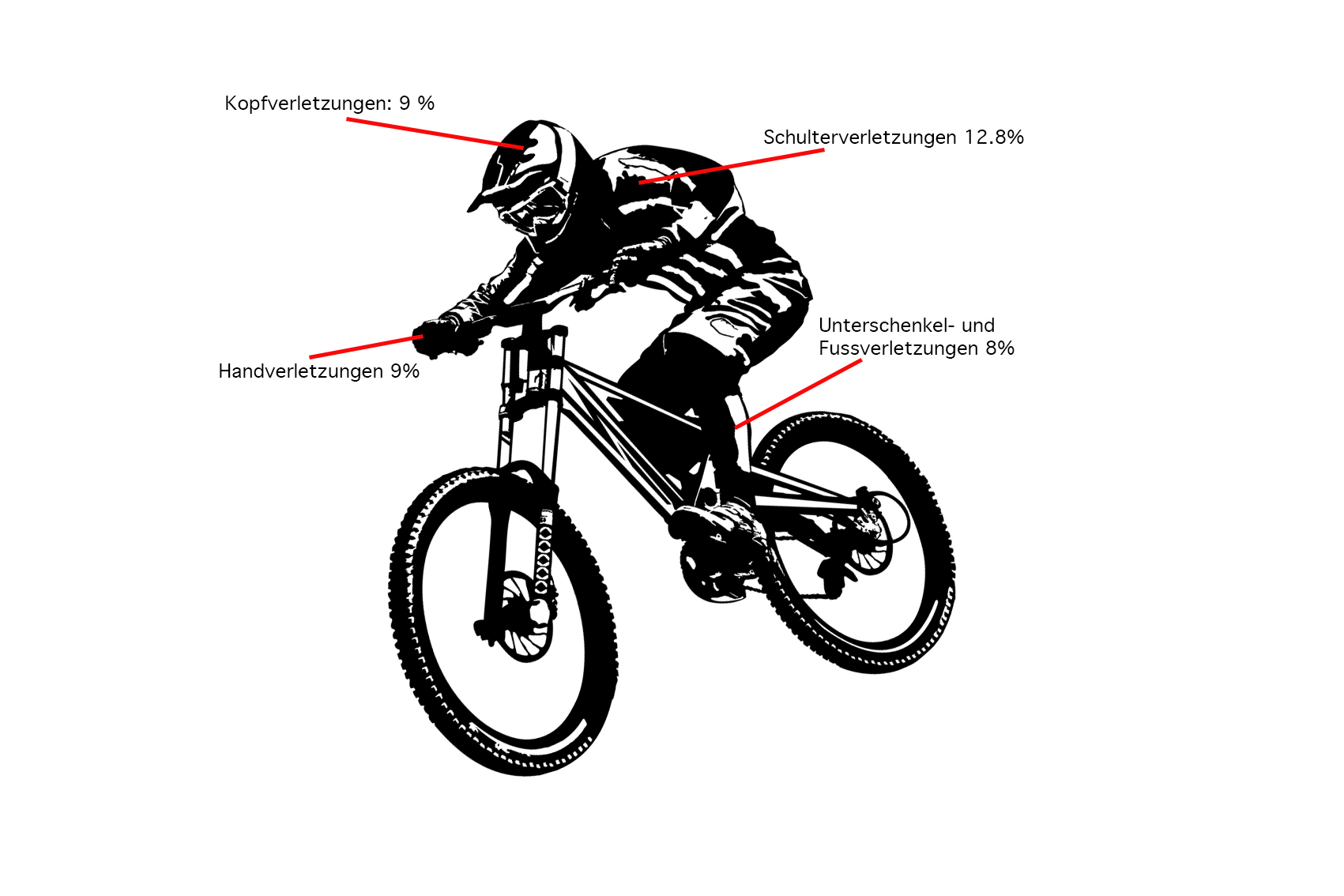
The most common injury suffered by enduro riders is to the shoulder, followed ex aequo by the head and hand, followed by the lower leg area. The most common injuries are abrasions and lacerations, followed by all types of bruises and, in third place, broken bones. This shows that minor injuries that did not result in a break from sport were also included in the statistics. Fractures resulted in the longest absence from cycling. Shoulder and collarbone fractures forced the EWS racers to take a total of 442 days off during the 2017 and 2018 seasons.
Finally, let's take a look at the differences between the genders: around 10 percent of all those who lost an EWS starting number were women. Of the 188 registered injuries, 24 were attributable to women, meaning that they suffered a disproportionately high number of injuries (12 percent), although according to the researchers, their injuries were significantly less severe than those of their colleagues (fewer injury days). According to the study, the U21 riders (19 people) and the Masters women (28) even remained completely injury-free over the two seasons.

Note: This content has been automatically translated from German. Please report any incorrect translations.