

How to mountain bike in sub-zero temperatures
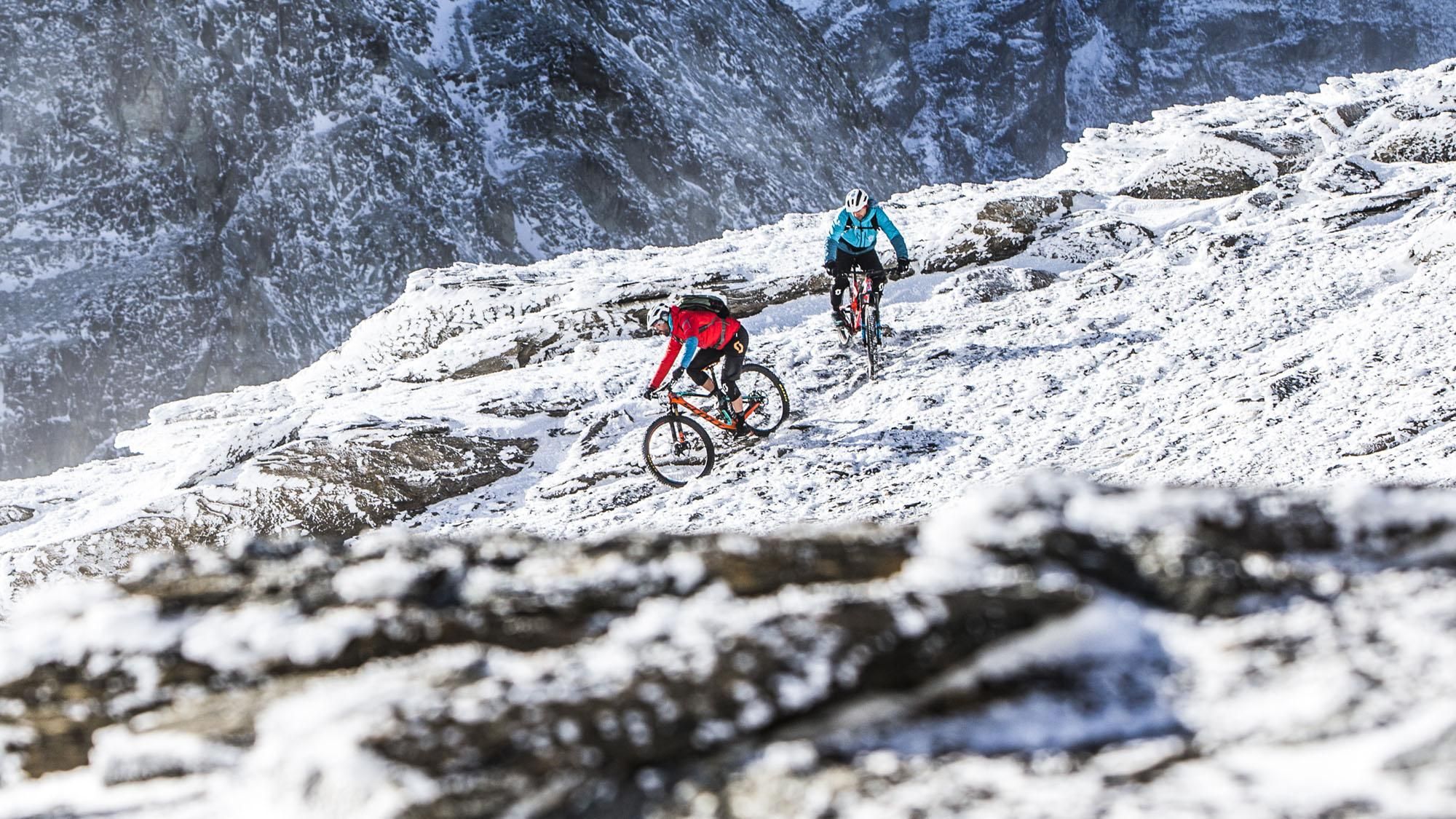
The super killer: salt
Salt is an aggressive contemporary, which is why after winter rides it's time to get rid of the salt and snow. Because even the highest quality components come to the limit with salt. Sooner or later, even the most beautiful Eagle or XTR chains will look lousy if the salt is given free rein. And this is how it works: After a salty ride, rinse the frame, wheels, brakes and drivetrain with tap water or fresh water from a watering can or pet bottle. However, this procedure is only recommended if it is possible to place the bike in a dry, warm room afterwards. The water should be able to evaporate after cleaning. If this does not happen, the gear cables or other cables with sheaths such as the dropper post remote can freeze. But the warm room is a bit of a dilemma: if you move the bike from the freezing cold into a warm living room, condensation can form. In other words: normal bike cellar temperatures are tiptop.
Blow out and lubricate
The gear cables, which run in outer sleeves, have a problem in sub-zero temperatures. Water or condensation tends to collect in the outer sheaths - and logically this freezes at sub-zero temperatures. And the cable no longer bounces. This home remedy has proven its worth: Pull the cable out of the sheath, blow out the sheath with compressed air and spray a Brunox-style lubricant into the sheath. This helps reliably because all the water is displaced and nothing can freeze anymore.
E-mountain bike: off to the warmth
Batteries don't like the cold. If an e-bike is left outside for weeks or months at temperatures around freezing point, the frost eats away at the battery capacity. E-bike batteries prefer temperatures between 10 and 20 degrees. So move the bike itself, or at least the battery, into this temperature range when the bike is not in use. The battery will thank you with a longer service life and higher capacity.
And if the e-mountain bike was in a cool place before the ride: start slowly or select a low support level until the battery core is above zero degrees after a few minutes and can be charged. Another tip: Do not charge a very cold battery immediately. First allow it to warm up to 10 to 20 degrees and then connect it to the power supply. If frozen battery cells are exposed to strong charging currents, the cells may be damaged.The suspension
Seals contract in the cold and the oils in the damping and lubrication system become more viscous. As a result, the suspension technology on the damper and fork reacts more slowly. You can try using a lower air pressure to get a better response. If you often ride in sub-zero temperatures, you can have the fork or shock tuned with winter oil.
Low pressure
If you are riding on snow and ice, you should deflate your tires. A hard-pumped tire may feel good quickly on normal roads, but grip and traction are best with low pressure on winter slopes. In the age of fat and plus bikes, the width of the rollers and the recommended pressures already provide plenty of grip. And if you want to retrofit other tire widths for winter, spike tire manufacturers such as Schwalbe, Nokian or Continental have the tools for the cold.
The bike lock
The bike lock can freeze in icy temperatures. A pragmatic tip for this problem: If the lock opening is facing downwards, no water can get in and freeze. Otherwise, simply rattle the lock with a lighter until the key goes in. Or warm the key slightly before inserting it. Door lock de-icer also works, of course. Or a splash of lubricant can also help prevent freezing.
And otherwise?
If you leave your bike outside, it's a good idea to shift into a medium gear before parking the bike. Because if the gears freeze and stop working, a gear that is too light or too heavy is even more annoying than the frozen gears themselves...
Further content on this article
Note: This content has been automatically translated from German. Please report any incorrect translations.