

National coach Edi Telser: "Switzerland has a problem with young talent

What factors made the triple victory of the Swiss female mountain bikers in Tokyo possible? We were prepared down to the last detail, with plans for different course conditions. Because we have built up a relationship of trust between the riders and the staff over the years, we were able to make the necessary decisions, for example to change the tires again at the last moment because the course was more slippery than expected. The years of driving technique training also paid off.
In contrast to many others, the Swiss women went out on the track again with their bikes. That could also have unsettled them.
That's true and we saw a few crashes on the inspection. But better a slip-up before the race than in the first corner.
Sure, you can't beat the result. Expectations are always high, that's nothing new for me and I know how realistic it is to repeat such a result. My job is to get the maximum out of every athlete. Nothing has changed in that respect.
What does the brilliant result mean for the three athletes?
It confirms to all three of them that they can perform on the day of a major event. This is particularly important for Jolanda, who has already suffered a few disappointments in Olympic and World Championship races. Now she knows that she can do it, and that gives her confidence for the future.
What has changed for you since Tokyo?
I am approached and asked more often than before, whether at coach training courses or in public. My opinion is sought more often than before Tokyo. Being recognized and approached by strangers is something new for me.
Yes, I was contacted several times, mostly by professional teams. But a move was out of the question for me. We have a good team, there are exciting and interesting projects for the future.
Has anything changed in your role at Swiss Cycling after the Olympic Games?
Yes, I am now head coach for all endurance disciplines at Swiss Cycling: for the women and men, road and cross country. I will also remain the national women's coach. The competitive sports area is growing: when I took up my position as national coach of the women's mountain bikers, it was a 30 percent job. Now we are two coaches with full-time positions, and the women also have their own riding technique coach.
What role does Paris 2024 play in your work with the athletes?
We coaches are already looking into it. We have received pictures of the hill on which the track is being built and are looking around for possible accommodation. But in our work with the athletes, we're trying not to talk about Paris just yet. The qualification phase will be intense enough.
Most of the time, the athletes are on the road with their World Cup teams. How much influence can you have?
I'm at almost every World Cup race and I inspect the course with most of the national squad riders and record videos, which I also make available to the teams. We also have several training camps, even during the season. I stay in close contact with the athletes throughout the year. The big teams look after their athletes more comprehensively. The smaller ones are happy that we from the association support them.
The World Cup season wasn't bad. They were often close to the podium and only didn't finish at the top because of small mistakes. Jolanda was also injured. In 2020, our riders were top early on, but not much was possible in September. In 2021, we've built up their form differently. So they were in top form in the summer and fall.
However, the riders' teams are unlikely to be thrilled if their athletes are not yet in shape in the first half of the World Cup season.
We work with the teams to find the best way forward for each athlete. The teams are under pressure and have to deliver good results throughout the season. The big teams can spread this over more riders than the smaller ones. But one thing is clear to everyone: The focus is on the individual athletes. Each individual must have the conditions under which they can perform at their best.
What is your philosophy as a coach?
For me, the focus is on developing the athletes mentally and physically. Everyone has their own story, and as coaches we have to respond to this. Mountain biking is an individual sport, but athletes can benefit from each other as a team. Incidentally, this is the biggest difference to my work for brand teams. Back then, I selected riders who strengthened each other. Now I'm assigned the best in the country and have to find out how everyone can benefit from the group dynamic based on their character.
Who has what role in the national team?
I'll just say this much: everyone plays their part and it works well.
How long will little Switzerland be able to stay at the top now that more and more nations are bringing top riders to the front? We really do have a problem with young talent. At the moment, almost half of all licensed female elite riders are in the national team. We would need three to four times as many licensed junior riders as we have. In Italy, every single region has as many female riders as the whole of Switzerland.
What are you doing about it?
We are working on spreading the grassroots. We also need the clubs for this. The structures are there, but we need more led training sessions at club level.
As long as Switzerland has female riders at the top of the world who the youngsters can look up to, it will work without them.
So far, we've managed to maintain our lead. We work extremely hard with the few female riders we have. The others admire us for how much we achieve with our narrow base.
Is the lead in danger?
As long as we have world-class riders, we'll get the maximum out of it. But if we don't succeed in broadening the base, it will be difficult for us to remain at the top of the world rankings.
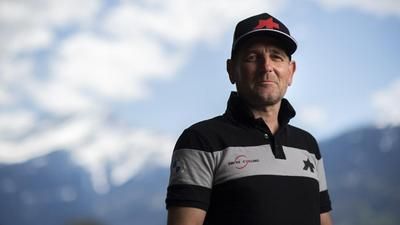
Edi Telser (47) grew up at the foot of the Stelvio Pass and rode and skied himself until he was a young adult. After managing the Colnago team and training Eva Lechner, he became the Swiss national coach for the women's cross-country team. Telser also coaches Marlene Reusser, the Olympic time trial silver medallist. In 2021, the South Tyrolean won Swiss Coach of the Year at the Sports Awards.
Further content on this article
Note: This content has been automatically translated from German. Please report any incorrect translations.