

Repair it! Patagonia opens "United Repair Center" in Amsterdam
In this way, they counteract the negative effects of the textile industry. In addition, the URC offers employment opportunities and training, especially for people who have difficulty finding a job. This should further increase the social impact of the URC. The Amsterdam Economic Board brought the parties involved together. A consortium of Dutch investors focused on social impact is supporting the project.
Thami Schweichler, Managing Director and co-founder of Makers Unite, says: "The clothing industry is at the beginning of a new era in which repairs and other new services will have more impact. We are reaching out to the garment industry now because something urgently needs to be done. For us, the URC is a unique opportunity to create valuable jobs and we think it makes sense to do this with people who are currently struggling to find a job."Repair as a solution for a responsible textile industry
The URC aims to encourage both brands and consumers to repair clothing. As an attractive alternative to buying new, repairing clothes extends their lifespan and thus reduces their environmental footprint. With 300,000 repairs per year, the repair center could avoid an average of almost 1,000,000 kilograms of textile waste. In addition to Patagonia, the Dutch clothing brand Scotch & Soda has also joined the URC.
Willem Swager, Director of Finance & Operations at Patagonia EMEA, says: "The textile industry needs a structural change. That's why Patagonia is calling on brands to promote the reuse and longer wear of clothing through repair and recycling. It needs to become the norm for more brands to offer this as a service and consider it part of their normal business."
Industry with impact
In the last 20 years, Europeans have bought 40 percent more clothes on average. This means that the textile industry is now responsible for ten percent of global CO2 emissions. If this trend continues, global water consumption (79 billion cubic meters per year), CO2 emissions (1,715 million tons per year) and waste production (92 billion kilos per year) will increase by more than 50 percent by 2030 compared to 2015 and even double by 2050. As a repair extends the useful life of an item of clothing, it has a direct positive effect on climate and resource protection. For example, if an item of clothing is worn for nine months longer, the CO2 emissions of this product are reduced by 27 percent, water consumption by 33 percent and the amount of waste by 22 percent.
How the URC works
1. consumers own a product from a URC member brand
.
2. over time, the product becomes in need of repair due to use.
3. consumers then contact the affected brand, which ensures that the product reaches the URC.
4. the product is repaired by the URC.
5. the product is returned to the consumer by the URC and can be worn again for a long time.
Training as a garment manufacturer
From September 2022, the URC, in collaboration with House of Denim, will open the "United Repair Center" Academy for people who have difficulty finding a job. During the program, they will be trained to become certified garment manufacturers and will immediately have the opportunity to work with major brands. The academy aims to train at least 300 employees in the coming years.
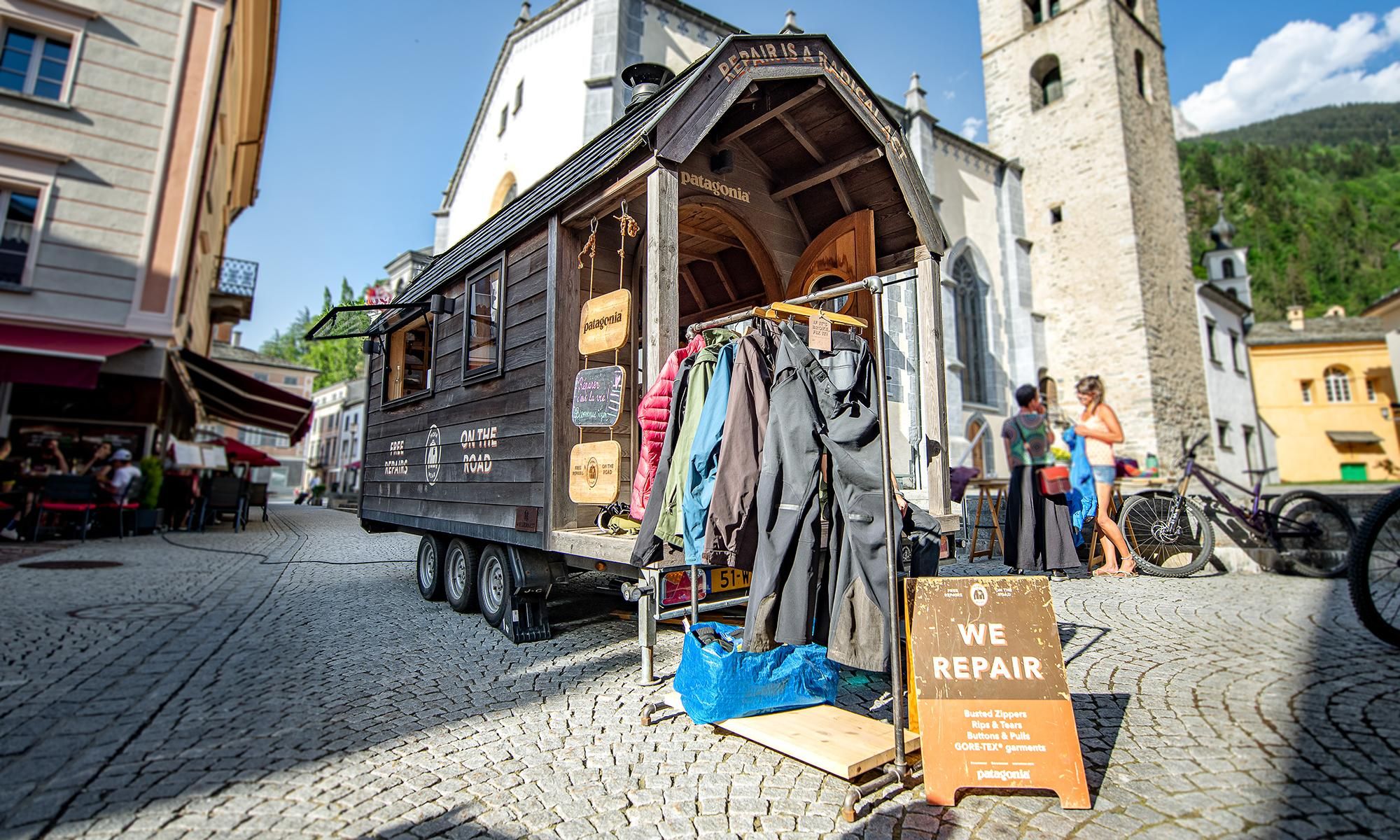
Worn Wear Repair Tour
Repairs have been part of Patagonia's business since the 1970s. With Worn Wear, Patagonia is committed to a new model of production, consumption and ownership of clothing and takes responsibility for its products throughout their life cycle.
Note: This content has been automatically translated from German. Please report any incorrect translations.