

Test: Bold Unplugged - Battle of the wheel sizes


"Unplugged" is more than just a product name, it's a statement. At a time when the entire bike industry is focusing on e-mountainbikes, Bold is making a statement and positioning itself as a brand that focuses on "classic" bikes.
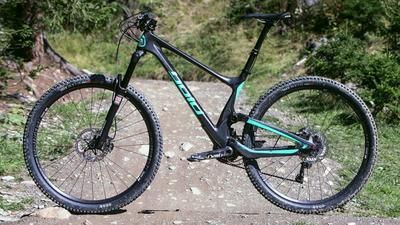
The new model is the logical continuation of the existing model range. After the "Linkin Trail" with 130 and the LT version with 150 millimetres of suspension travel, the Unplugged offers 164 millimetres at the rear. One of the highlights of the frame are the geometry adjustment options. Thanks to so-called flip chips, the bike can be ridden in four different variants. The bottom bracket can be adjusted by up to 20 millimetres and the chainstays by up to 11 millimetres. A headset from Newmen is also fitted, which allows the steering angle to be adjusted by 1.5 degrees. However, the whole thing is not just a gimmick, it has a concept. The Unplugged is designed for the currently common wheel sizes 27.5 as well as 27.5-Plus and 29 inch. Depending on the size and tire dimension, Bold recommends a different basic setting, which can be fine-tuned according to personal preferences. This makes it possible to use the bike with "small" wheels as a playful and moderate all-rounder or to build a thoroughbred enduro racing bike with the "big wheels". It has the familiar Bold advantages of a torsionally rigid frame - thanks to short rocker links - and the internal shock absorber. What is new, however, is that most of the common air shocks can be used, including those with an external reservoir.
Equipment
The Unplugged is available in numerous equipment variants and can be individually configured on the manufacturer's website. For once, the equipment is secondary for the test Instead of a classic ride bike test, this time it's primarily about the handling of the bike with different wheel sizes and the geometry adjustment. We also tested the bike with two different suspension systems. On the one hand with the DTSwiss products "F 535 One" at the front and "R 535 O.D.L." at the rear, as well as with the Rockshox combo "Lyrik RCT3" and the "Super Deluxe" shock.
The battle of wheel sizes and setups
Some bike tests are more fun than others, and the Bold Unplugged test was a highlight. Three bikes with different setups were available for direct comparison:
- Bike 2 with 29-inch wheels, shorter wheelbase, steep head angle, DT Swiss suspension
- Bike 3 with 27.5-inch wheels, short wheelbase, steep head angle, Rock Shox suspension
During the test, the geometries were repeatedly adjusted on the trail in order to feel the changes immediately. At the end of the day, we rode Bike 3 with an extended wheelbase and slack head angle, as this combination was the most fun.
On the flat
The steep seat angle ensures an ergonomic riding position, which translates into good propulsion. The suspension hardly bobs noticeably and the optional shock lockout is not required. This is where the 29er outperforms the smaller bike sizes.
Up the mountain
Hiking uphill on a bike designed for enduro racing is always a challenge. You usually have to expect compromises. Not so with the Unplugged. It climbs even the steepest ramps with ease. Thanks to the sensitive suspension (from both manufacturers), it also masters rough singletrack uphills in exemplary fashion. With the larger wheels, you have a tad more traction. Even the setup with the slackest steering angle doesn't result in any loss of climbing performance.
Downhill
This is where the bike's variants are most evident. The fact that Bold Cycles can design potent suspension is nothing new. But the Unplugged goes one better. It's impossible to master a descent without having a big grin on your face at the bottom and thinking "awesome!". Whether with the DT suspension or that of Rock Shox, if the suspension elements have been fine-tuned correctly, you can enjoy a mini-downhiller that is easy to swallow. The rear end literally sucks everything away and you thunder downhill calmly and with optimum control. The differences between the products are minimal and the results are on a par. Initially, the DT suspension was a little firmer, but after repeated fine-tuning, there was no longer any noticeable difference.
Wheel size, however, is where the differences become clear. The 29er version is the "swallow". No terrain seems too wild and the bike sticks to the ground even at borderline speeds. In technical terrain, it requires a little more physical effort than with the small wheels, but it steers more smoothly than many of its competitors.
We experimented the most with the geometry adjustment on the 27.5-inch bike. The changes are also more noticeable here than on the big brother. With moderate geometry, it rides like a trail bike on steroids. If you change it in the direction of "low, long, slack" - as is currently fashionable - you get a playful, yet smooth-running bike that invites you to romp around off-road.
Conclusion
A major advantage of the Bold Unplugged is that the flip chips are positioned at the rear by the rear wheel mount and therefore have no influence on the kinematics. The suspension works identically, regardless of which geometry option you choose. Whether you set it up as a playful 27.5 enduro bike or a 29er racing machine is up to you. Either way, the Unplugged is a downhill-oriented bike that also masters uphills with ease.
Recommendation
Thanks to the versatile geometry adjustment options and the potent suspension, the bike is suitable for all those who prioritize downhill riding but don't want to compromise on uphill performance. With the Unplugged, enduro racers have a bike that may enable them to improve their ranking in the next race. The Bold team riders have already achieved a few podium places with it.
Specifications
|
Manufacturer/distributor
Test report published in issue 01/2019 of Ride magazine
Further content on this article



Note: This content has been automatically translated from German. Please report any incorrect translations.