

The right bike size? The feel-good factor decides.
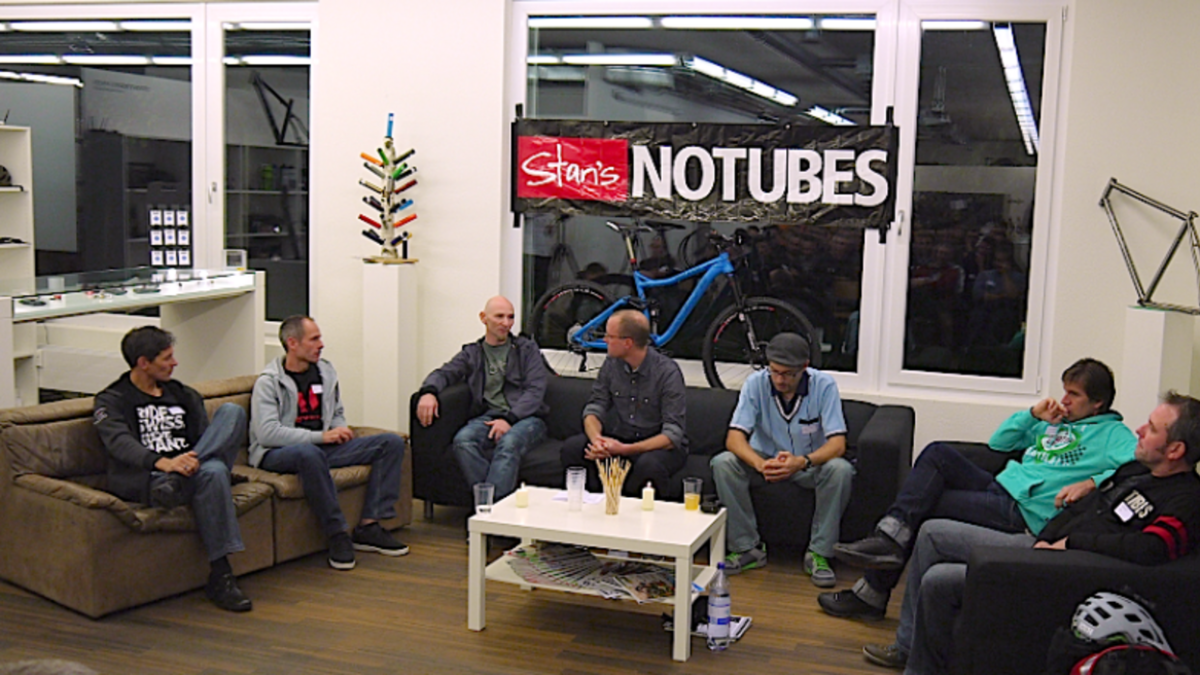
Stefan Gruber, Managing Director of Trail Supply AG, invited guests to the Transalpes Factory Store in Zwillikon on November 28 to explore the question: What is the wheel size of all things? Is 26 inches disappearing? Does bigger mean better with 29 inch? Is 27.5 inches or 650b just the average or the best size?
On the podium were Roland Abächerli (Giant), Thomas Weber (Devinci), Roman Studer (Specialized dealer), Laurens van Rooijen (freelance journalist) Thomas Frischknecht (Scott) and Stefan Gruber (wheel manufacturer and importer NoTubes) (picture from left to right). Thomas Giger, publisher of Ride Mountainbike Magazine, hosted the discussion. The guests were around 70 (almost exclusively male) industry representatives from specialist retailers, tourism, the press, manufacturers and the racing scene.
However, there were no patent recipes to be heard from the podium as to which wheel dimension was the right one. The experts were also far from unanimous - for example, there were controversial opinions as to whether a 29er is suitable as a base for a biker under 1.60 height. There was no clear answer to the question of what the future holds for 26-inch city bikes.
There was nevertheless a consensus of opinion: larger bikes make biking easier, especially on difficult terrain. According to the experts, 29er bikes give mountain bike beginners in particular great confidence on the trails. If you like it more lively and prefer tight, winding trails, you should opt for a smaller bike size if in doubt.But by the end of the discussion, everything was open again and reduced to an emotional component: The panelists emphasized that, ultimately, it's how comfortable you feel on the bike that makes the difference and it has to be tested which model offers this feeling - and this takes longer today than in the 26-inch era due to three wheel sizes.A selection of statements from the panel participants:
Roland Abächerli: 26-inch bikes will certainly not die out completely, but will remain the preserve of beginner mountain bikers. The 29ers have introduced the advantages of large wheels and paved the way for 650b.
Laurens von Rooijen: 26 inches will remain, but there will be no more innovations in this area.
Thomas Frischknecht: The manufacturers have to focus, three wheel sizes are not feasible. That's why 26 inches has been dropped.
Laurens von Rooijen: 27.5 inches is the happy medium to win over the skeptics. The 26-inch bike is dying out because it was bad-mouthed by the manufacturers' marketing in order to promote the 29ers.
Thomas Frischknecht: I rode 650b bikes with tubular tires at the 2004 Olympics in Athens. Tom Ritchey said that it wasn't the Collé tires that were the big advantage, but the larger wheel size.
Stefan Gruber: The 29er size dominates NoTubes sales. The trend has been reversed since April/May 2013, with NoTubes selling more 650b than 26-inch wheels in the OEM and aftermarket sector worldwide.Laurens von Rooijen: The number of 650b parts has risen so rapidly that OEM prices are now lower than for 26-inch parts.
Thomas Weber: 26-inch wheels will last the longest in the downhill segment, but 650b is also making inroads here. There are DH racers who struggled with the handling of 27.5 inches and have switched back to 26 inches.
Roman Studer: The three wheel sizes mean that the brands fade into the background. Mountain bikers don't discuss with their fellow athletes whether bike X or bike Y is the right one, but rather which wheel size fits.
Thomas Frischknecht: Tom Ritchey was already experimenting with 26-inch and 650b bikes when the mountain bike was still in its infancy. 26 inches became popular in mountain biking as BMX made the leap from 24 to 26 inches at the time, making more accessories available.
The panel discussion on video in full length:
Note: This content has been automatically translated from German. Please report any incorrect translations.