

The trail lobby in the National Council
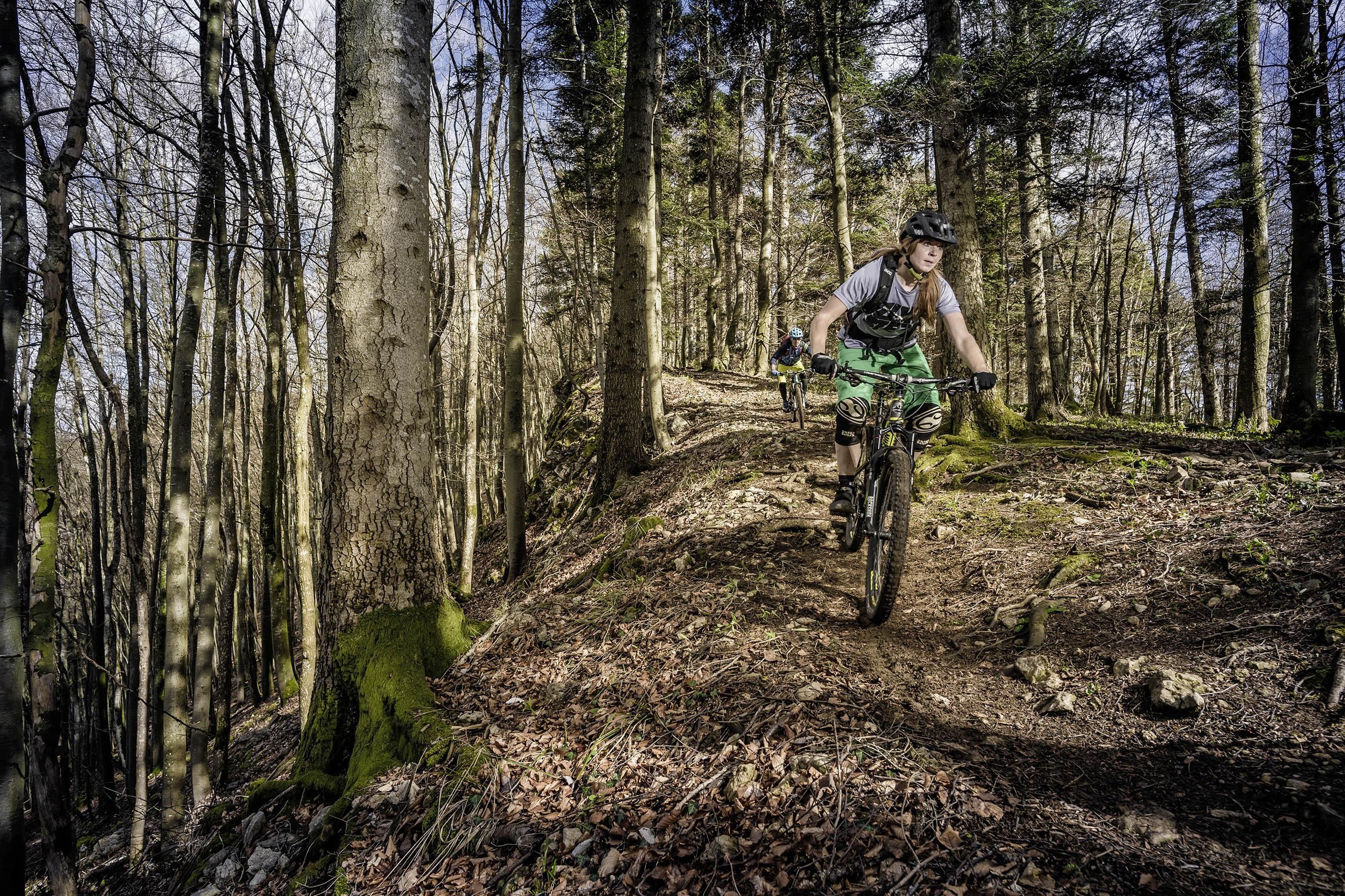
Trailnet.ch, Züritrails, Trail Friends, IG Mountainbike Zug, Verein FunPark etc. - various groups in Switzerland are committed to the cause of mountain bikers at local and regional level. Specifically, they want us mountain bikers to be allowed to ride not just on paved forest roads, but where it's really fun: on single trails.
So far, it has always been local bikers who have joined forces, some have developed from grassroots groups to professional regional organizations, others have remained small and connected to their home trails. IMBA Switzerland, however, starts at the top: The board includes representatives from Swiss Cycling, Pro Velo, velosuisse (importers and dealers), the Regional Directors' Conference, Arbeitsgemeinschaft Berggebiete and former Federal Councillor Adolf Ogi's "Freude herrscht" foundation. Regional biker groups such as trailnet.ch also have a seat on the steering committee.
"IMBA Switzerland gives the sport of mountain biking a voice at national level," explains President Thomas Egger. In his main job, the CSP National Councillor from Valais is Director of the Mountain Regions Working Group. The passionate mountain biker had already campaigned for the cycling initiative. In keeping with its approach of representing mountain bikers at federal level, IMBA Switzerland is based in Bern.
However, the organization not only aims to meet the needs of mountain bikers, but also to make greater use of the economic potential of this sport. Egger explains how IMBA Switzerland intends to achieve its goals in an interview with Ride (Ride issue 05-2019, detailed verson below).
Now you can ask yourself whether another lobby organization is needed for mountain bikers. Trail projects are always driven forward by local groups and better acceptance of mountain bikers cannot be decreed by the National Council. However, the effect should not be underestimated if bikers are no longer just perceived as mud-splattered daredevils, but also as tie-wearing experts who can explain the value of mountain biking for health promotion or the economy.
It is still relatively easy to impose bans and ban mountain bikers from unattractive field and forest paths. However, the legal situation of mountain biking in the Swiss countryside is not an issue in IMBA Switzerland's announcements. The organization does not seem to want to open this Pandora's box. It relies on the positive effects of the sport and the fact that its acceptance increases the more obvious its health and tourism-promoting effects become.
www.imbachweiz.ch
Interview with Thomas Egger, President of IMBA Switzerland
"We represent the interests of mountain bikers at national level"
You are professionally committed to the development of Swiss mountain regions. What significance does mountain biking have for you and for these regions?For more than thirty years, I have been enjoying the beautiful Valais mountain landscape on my mountain bike practically every free minute. For me, biking is relaxation and a balance to my job. For the mountain regions, mountain biking represents enormous potential for diversifying the tourist offer. With the boom in e-bikes, new customer segments can also be addressed.
Ski resorts and mountain railroads have been trying to increase their summer capacity utilization with mountain bikers for years. Are mountain areas without cable cars now also getting on board?
We need to get away from the one-sided focus on winter tourism in mountain regions. Mountain biking not only has potential in summer, but also in spring and well into the fall. In this way, we can develop our destinations into year-round tourism. However, not every destination will focus on bike tourism.
Mountain bikers are a very heterogeneous group. They often ride alone or in small groups. However, they are not organized in national associations. As a result, they have no voice at national level and cannot voice their concerns. We want to change this. We want to represent the interests of mountain bikers at national level. IMBA Switzerland will thus also become a point of contact for other organizations such as environmental associations. In this way, any conflicts of interest can be discussed and solutions sought.How do you want to achieve the goals? With IMBA Switzerland, we are committed to legal and sustainable access to needs-based infrastructure for amateur mountain bikers in Switzerland. This commitment is intended to ensure the development and promotion of sustainable infrastructures with the greatest possible protection of nature and the landscape. The responsible use of mountain bike infrastructures is promoted through educational work in the bike scene. With our activities, we also want to support the municipalities and regions in the development of mountain bike offers along the entire tourism value chain.Who is behind IMBA Switzerland?
Currently represented on the board are ProVelo Switzerland, Velosuisse, the "Freude herrscht" foundation, the Conference of Regional Tourism Directors in Switzerland, the Swiss Association for Mountain Regions SAB and the company Bikeplan as the initiator.
You represent the mountain regions, the board also includes specialist retailers and classic trail bike stakeholders - in short, a wide variety of interests. How can a common direction emerge from this?
We all have a common goal: we want to strengthen the sport of mountain biking and eliminate conflicts. We are also very actively seeking dialogue with other organizations such as Schweiz mobil. We don't want to compete with them, but rather complement them and achieve our goals together.
Associations such as Trailnet or Züritrails are anchored locally and regionally. They unite individual bikers and work with them to drive individual construction projects forward. IMBA Switzerland does not oversee any construction projects and will not take over the work of local associations, but will pave the way for them by influencing national decisions and supporting them with knowledge transfer.
Successful trail projects or the resolution of a conflict usually come from committed bikers on the ground. The IMBA is not rooted anywhere. What can it contribute to solving local problems? By processing and making knowledge available and networking the players. I am always amazed at how little exchange takes place between stakeholders across cantonal borders. Sometimes there is even a lack of exchange within a canton. This is where we want to build bridges and connect people.
The IMBA is expressly in favor of environmentally friendly cycling. However, environmental associations are often the opponents when it comes to new trails. How does that work? Only environmentally friendly trails are good trails and good trails are environmentally friendly. The experience of nature is the most important reason for mountain bikers to visit a trail. We want to protect what we love. The IMBA does not aim to create trails in all areas. Rather, it wants to ensure that trails are created in the right areas. A trail should be sustainable, i.e. make ecological and economic sense and promote social aspects.When and how will I, as a mountain biker, experience something that IMBA Switzerland has achieved for the first time?
You will see the first results as early as next year. IMBA Switzerland has drawn up a concrete implementation project which, among other things, involves developing a quality profile for tourist destinations that focus on mountain biking. We are working together with the Swiss Tourism Association on this.
What can mountain bikers do to make IMBA Switzerland's work easier?
They should behave correctly. Showing consideration is the top priority for me. Hikers and bikers are often on the same paths. I know from personal experience that a friendly smile and an equally friendly hello helps to prevent conflicts from arising in the first place. But if you ride like a half-madman through a marked wildlife reserve, you are not only damaging the fauna but also the reputation of biking as a whole and therefore all other bikers too.
IMBA: The world trail organization
The International Mountain Bicycling Association was founded in California in 1988 because more and more trails were being closed during the first mountain bike boom. In a nutshell, the purpose of the organization is to provide access to good trails for everyone. The organization achieves this through advocacy, but also by supporting specific trail projects, providing training in trail construction and maintenance and advising local organizations. The parent organization claims to be the most important contact for trails throughout the USA, which could well be the case given its size: in 2017, IMBA (USA) reported expenditure of 5.8 million dollars and 59 employees.
IMBA Europe, which was founded in the Netherlands in 2012, pursues the same goals. Essentially, it acts as an umbrella organization for various national groups that are committed to good and easily accessible bike trails in their countries. The IMBA's latest campaign is called "more trails close to home". IMBA Switzerland has also taken up this cause.
Note: This content has been automatically translated from German. Please report any incorrect translations.