

Unflat: Here comes the Nasa tire made of metal
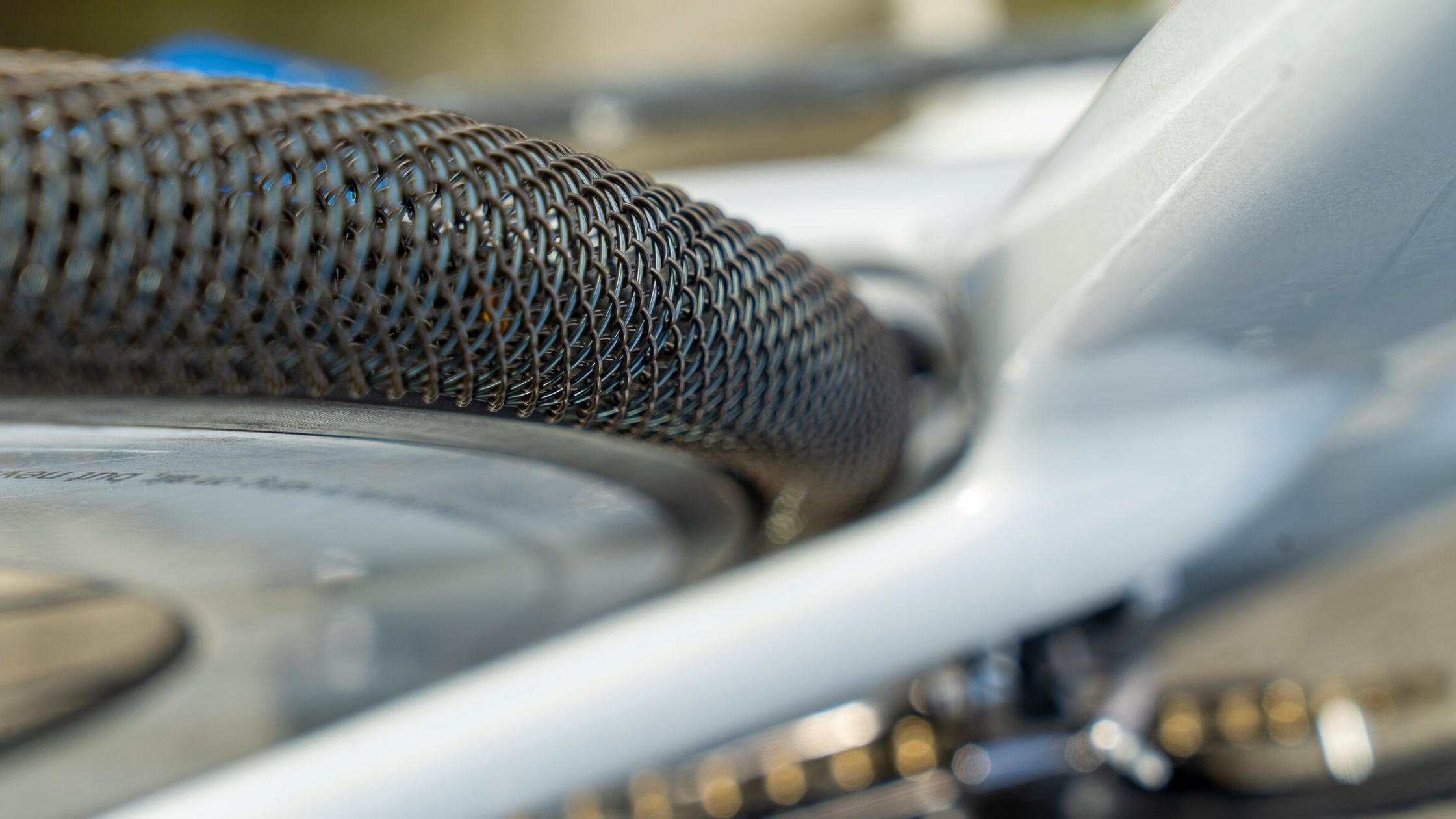
What is good enough for the Mars rover will surely be good enough for Earth, thought two NASA engineers. Of course, a flat tire on Mars would not only be difficult to repair, it would also look pathetic. The solution developed for future moon and Mars vehicles is a movable metal mesh that adapts to the ground like a rubber tire filled with air. The construction could also be described as interwoven springs that can be compressed and pulled apart, but always spring back to their original shape.
The company, which pragmatically calls itself The Smart Tire Company, was created as part of the spin-off program of the American space agency Nasa. The engineers adapt the principle to car, motorcycle and bicycle tires. None of their products have yet reached market maturity; the bicycle version called METL should be the first to do so. The partner for this development branch is the American bicycle manufacturer Felt.
There is great interest in the tire innovation, the crowdfunding campaign has so far raised over 800,000 dollars and with Nasa behind it, this is unlikely to be the only capital the company has at its disposal. Rubber tires wear out quickly and on bicycles they often leak. Those responsible at the Smart Tire Company are convinced that metal tires are much more durable. This reduces costs and reduces the mountains of worn tires that accumulate wherever cars, motorcycles and bicycles are used.What can the metal tire do?
So far, there are only pictures of road bikes with the METL tire. However, the prospect of developing such tires for mountain bikes is constantly being held out. From the mountain biker's point of view, two questions arise: How is the traction and grip of the metal tire? And how heavy is it? It's clear that if the METL can't keep up technically with the tried and tested rubber tires, it's out of the question for most mountain bikers. Sliding around on the trail is impractical at best and dangerous at worst. And hardly anyone will put up with a heavier tire just because it lasts longer. When asked, Brian Yennie from The Smart Tire Company explained that a rubber track was applied to the bicycle tires to improve traction. Rubber as a link between the ground and the bike is obviously not that easy to replace.
On the subject of weight, he says that the weight of a rubber tire will probably not be achieved, but as the tire does not require a tube, valve, sealant or other elements of conventional tires, it will certainly be able to keep up in terms of weight. In addition, the pump, repair kit and spare tube are no longer needed on the tour, which reduces the overall mass to be moved.
In the end, it depends on the riding characteristics whether the METL Bike Tire will be an alternative. One thing is certain: there is more than a century of development behind rubber tires. Even Mars technology won't catch up so quickly.
www.smarttirecompany.com
Note: This content has been automatically translated from German. Please report any incorrect translations.