

Why batteries explode - and what you can do about it
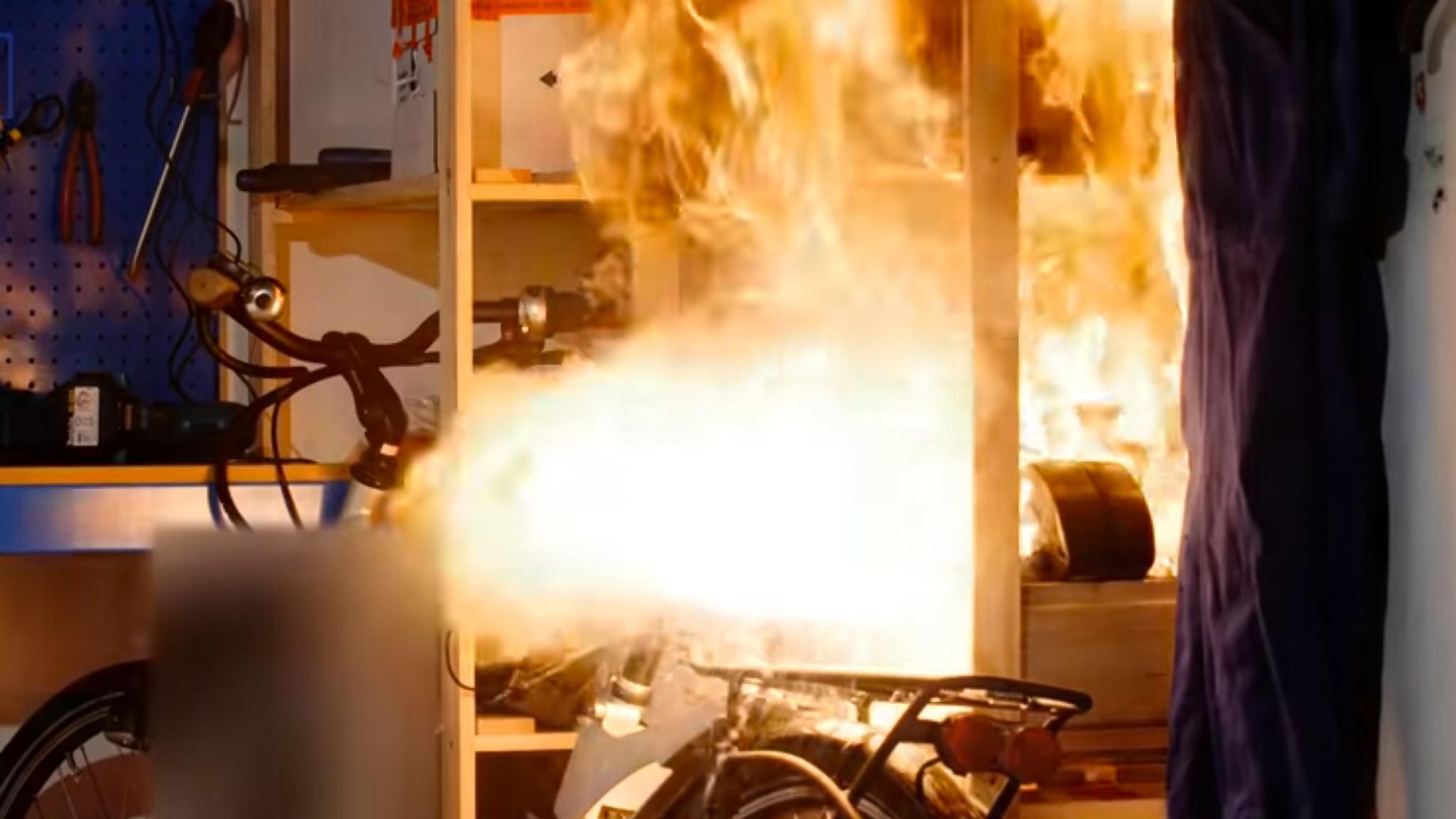
Lithium-ion batteries are used wherever as much electrical energy as possible needs to be stored in a small space and with a low weight: In smartphones and laptops, in electric cars and also in e-bikes. Lithium-ion batteries have the highest energy density of all rechargeable batteries, and in the worst-case scenario, this energy can be released in a violent combustion process. Thermal runaway is the technical term for battery cells which, as a result of a short circuit or overcharging, heat up in a chain reaction within fractions of a second to such an extent that they finally burst into a flash fire. There are often around 50 individual cells connected in e-bike batteries. If one catches fire, in most cases it ignites all the others.
But how great is the risk of a battery catching fire really? In risk assessment, a distinction is made between the probability of an undesirable event occurring and the expected damage. With billions of lithium-ion batteries in use and millions more being transported from production sites to stores and warehouses, very few of them catch fire. If the danger were greater, different rules would certainly apply to smartphones on airplanes than is currently the case.
But if a battery does catch fire, the damage can be considerable. The man in whose trouser pocket an e-cigarette battery went off suffered severe burns. However, it took a chain of unfortunate circumstances - a damaged battery and loose coins that caused the short circuit - to set the chain reaction in motion. The same applies to burning e-bike batteries. The proportion of exploding energy storage devices is negligible, but when it happens, it can be violent. This instructional film from arbeitsfilm.de shows just how violent, for example.
Danger number one: mechanical damage
What e-mountain bikers need to be aware of is that mechanical damage can also trigger an internal short circuit. Marcel Held, who deals with the reliability and safety of energy storage systems at Empa, warns: "If the battery is exposed and hits a sharp-edged stone, then the risk of thermal runaway is relatively high. If you hammer a nail into a battery, it happens immediately."
However, the critical reaction does not always occur immediately after the damage. It can be so small that the temperature builds up slowly over hours or even days until it reaches the critical value, at which point it happens at lightning speed. Held cites the example of an electric car that was towed away in an accident and whose battery died three days later. It becomes dangerous from a temperature of 60 degrees Celsius.
So what should you do if you have crashed your e-mountain bike? If the battery or the part of the frame surrounding it has been visibly damaged, then caution is advised (you should not continue riding with a crack in the frame anyway). Is it heating up or even leaking smoke? Then you should not get too close to it. If it has warmed up or blown up, then it is best to store the battery or the bike outdoors - but only without endangering yourself or others. It takes a few minutes for an e-bike battery to catch fire, producing large quantities of toxic smoke. If nothing else catches fire, the danger is then over.
Danger number two: heat from outside
Even strong sunlight can heat up a battery from the outside to such an extent that a chain reaction can be triggered inside. No specific cases are known. Held recommends not parking the e-bike in the blazing sun or, if not otherwise possible, covering the battery.
Danger number three: chargingOvercharging a battery or charging a completely discharged battery too quickly can cause it to burn out, according to experts. "The question is how intelligent the battery management system is," Held concludes. This system refers to the electronic control of charging and discharging the battery. If a battery is completely discharged and not recharged for months, a chemical reaction can occur inside it: Metal is deposited and dendrites, tiny needles, can form, which can trigger a short circuit. "An intelligent battery management system prevents the battery from being charged when it has reached a state of deep discharge," says Held, explaining one of the tasks of the BMS. If the completely empty battery is recharged after a winter in the cellar, this should be done in a non-flammable environment and checked from time to time to see whether it is getting hot or expanding. One option is to place it in a large clay plant pot while charging.
"Complete discharge as well as complete charging is a stressful situation for the battery," explains Held, "the battery ages faster and loses capacity more quickly." For this reason, the Tesla reports full charge when the battery is actually only 95 percent charged. Complete discharge can also be prevented by the BMS. "As a user, however, you usually don't know what limits have been programmed," explains the expert. As a rule of thumb, it is advisable to use the battery between 20 and 80 percent. "However, it also makes sense to fully charge occasionally, as this brings all cells back to the same level, which is not the case with partial charging."
Dangerous cheap batteries?
The final question is whether there are differences in quality, whether cheap batteries are more dangerous than expensive ones and whether renowned manufacturers also have higher-quality and safer batteries installed in their expensive models. "Yes, there are differences in quality. But you often can't tell from the outside whether a battery is of good quality or not. Good cells can be in a leaky housing or the BMS can be a tinkering." Marcel Held is currently investigating a series of burnt-out e-bike batteries whose housing was leaking. As strange as it sounds, water entering the battery can cause a fire by creating a short circuit.
There is a globally standardized test procedure that rechargeable batteries must undergo before they can be transported. This ensures that they survive transportation to the processor (e.g. the e-bike manufacturer) or end customer. Held's experience with batteries that are defective for various reasons shows that this test procedure does not eliminate all risks. However, it is just as important that all battery users follow the most important safety rules and take note of the warning signs.
Note: This content has been automatically translated from German. Please report any incorrect translations.