

Zurich University of Applied Sciences develops compostable helmet
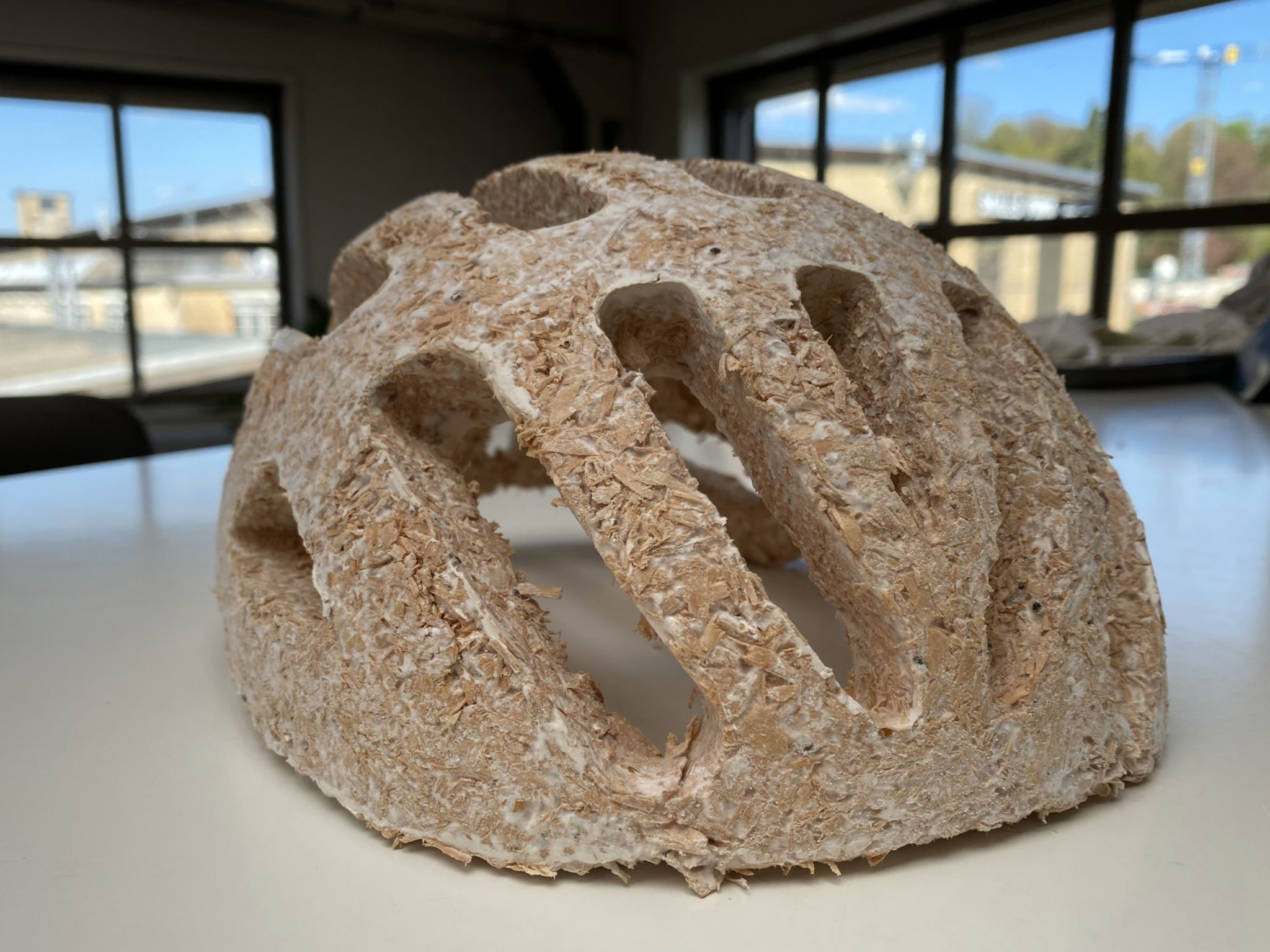
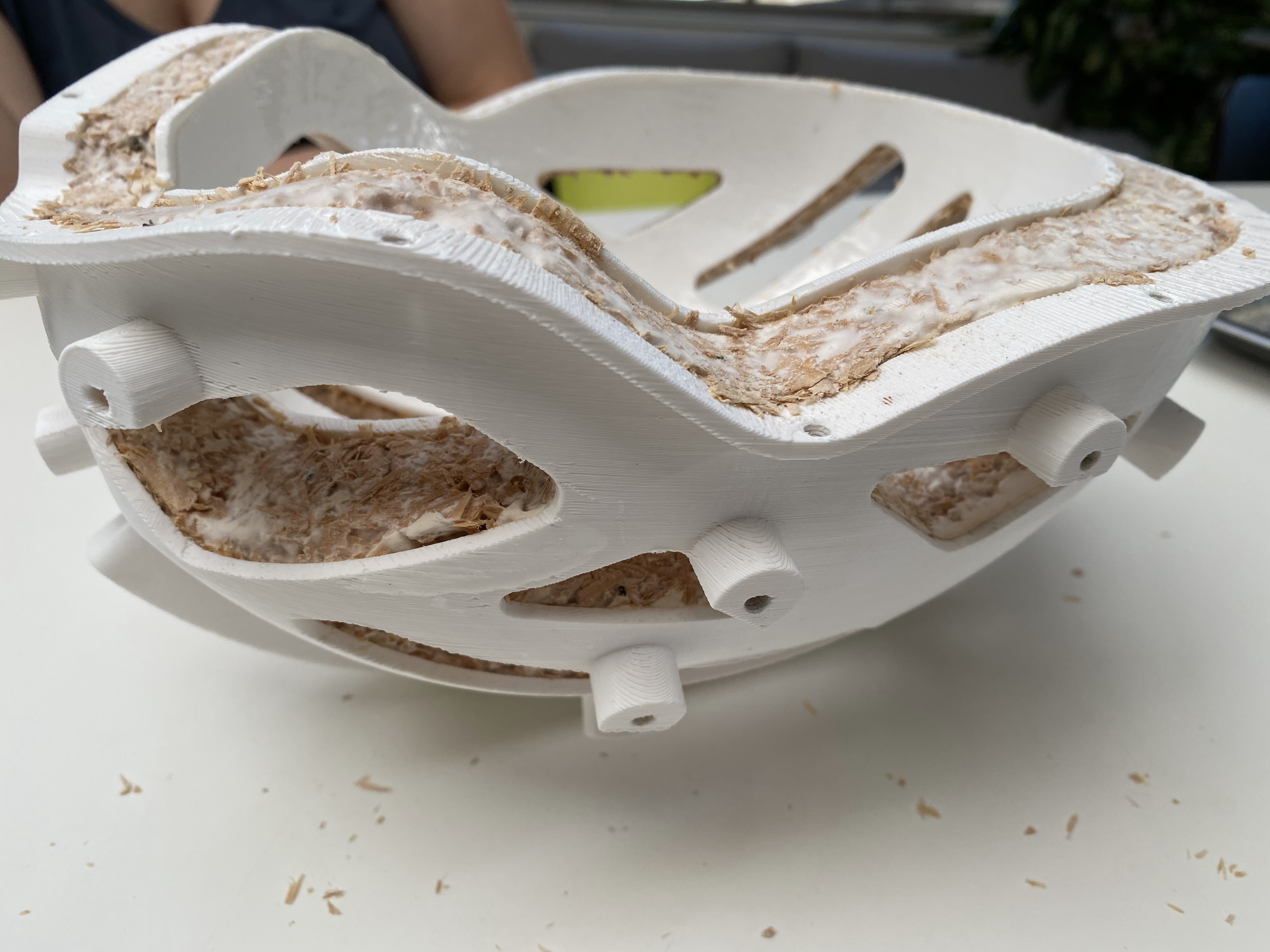
"We have a goal, but we are still at the beginning," Salome Berger qualifies right at the start. The recently published images of the recyclable and biodegradable bike helmet show initial tests of what is possible with the material chosen for the time being.
But right from the start! The Center for Product and Process Development at the Zurich University of Applied Sciences ZHAW wants to develop a "recyclable bicycle helmet". Because, according to a LinkedIn post, the helmets currently available can only be incinerated at the end of their service life.
The researchers chose mycelium as the material for the damping layer. The term originally refers to the network of threads that certain types of fungi form in the soil. In recent years, processes have been developed with which such fungal networks can be turned into building materials DE-CH;mso-fareast-language:EN-US;mso-bidi-language:AR-SA">can be cultivated. The mycelium, which is now to become the Velohelm, grows in a substrate and is pressed into a solid form after a certain period of time. "We still have to find out whether this material actually has the properties to guarantee the protective effect," says product designer Berger again. The published images show a helmet shell made of mycelium, but without a top layer. The end product will look less rustic, but will be just as compostable.
Renewable materials
DE-CH;mso-fareast-language:EN-US;mso-bidi-language:AR-SA">The material for this outer skin is Karuun - a veneer based on rattan (yes, the wicker furniture that was popular a few decades ago was made of rattan). A southern German start-up has developed the wood of the rattan palm into a versatile, sustainable material.
The aim of the project is to have a functional prototype by the end of 2021 that can either be completely recycled or is biodegradable. Eight ZHAW students and research assistants are working on this. Two start-ups are contributing knowledge and development capacity. "We are interested in developing the prototype to series maturity and are in talks with companies from the sports industry who can imagine bringing a sustainable bike helmet to market," explains Berger. She and the others involved are still working on the choice of materials. Only then will the functional and safety tests begin. "We're feeling our way forward," is how she describes the progress being made.Note: This content has been automatically translated from German. Please report any incorrect translations.