

1,000 pump tracks worldwide: Velosolutions Reaches a Milestone
As early as 2009, Velosolutions built the first paved pump track in Jenaz, Graubünden—at that time, it was still made of concrete. It soon became clear that asphalt was the better option. In 2012, the company built the first facility in Chur using the surface that would go on to delight communities in every corner of the world over the next 14 years. “I had no construction experience—we just went for it,” says Claudio in a recently aired SRF report. In the years since, Velosolutions has become a pioneer in asphalt pump tracks and has perfected the art of pump track construction.
Claudio describes the planning process to Ride as follows: “Our drafters give me a true-to-scale template of the terrain that I can draw on. I make a sketch, which they then convert into a technical drawing using Vectorworks. Since our drafters know exactly what I mean with my sketches, it hardly requires any further explanation.” When asked whether there are digital elements—curves, waves, jumps—from which a new pump track can be assembled like a building set, Claudio replies: “Yes, these elements exist, but only in my head or in the heads of the other designers.”
The track builders have also developed their own methods for assembling bumps, banked turns, tables, and other track features into a smooth-rolling pump track. Covering curved surfaces with asphalt that will then last for years is a technique that’s rarely used in road construction.
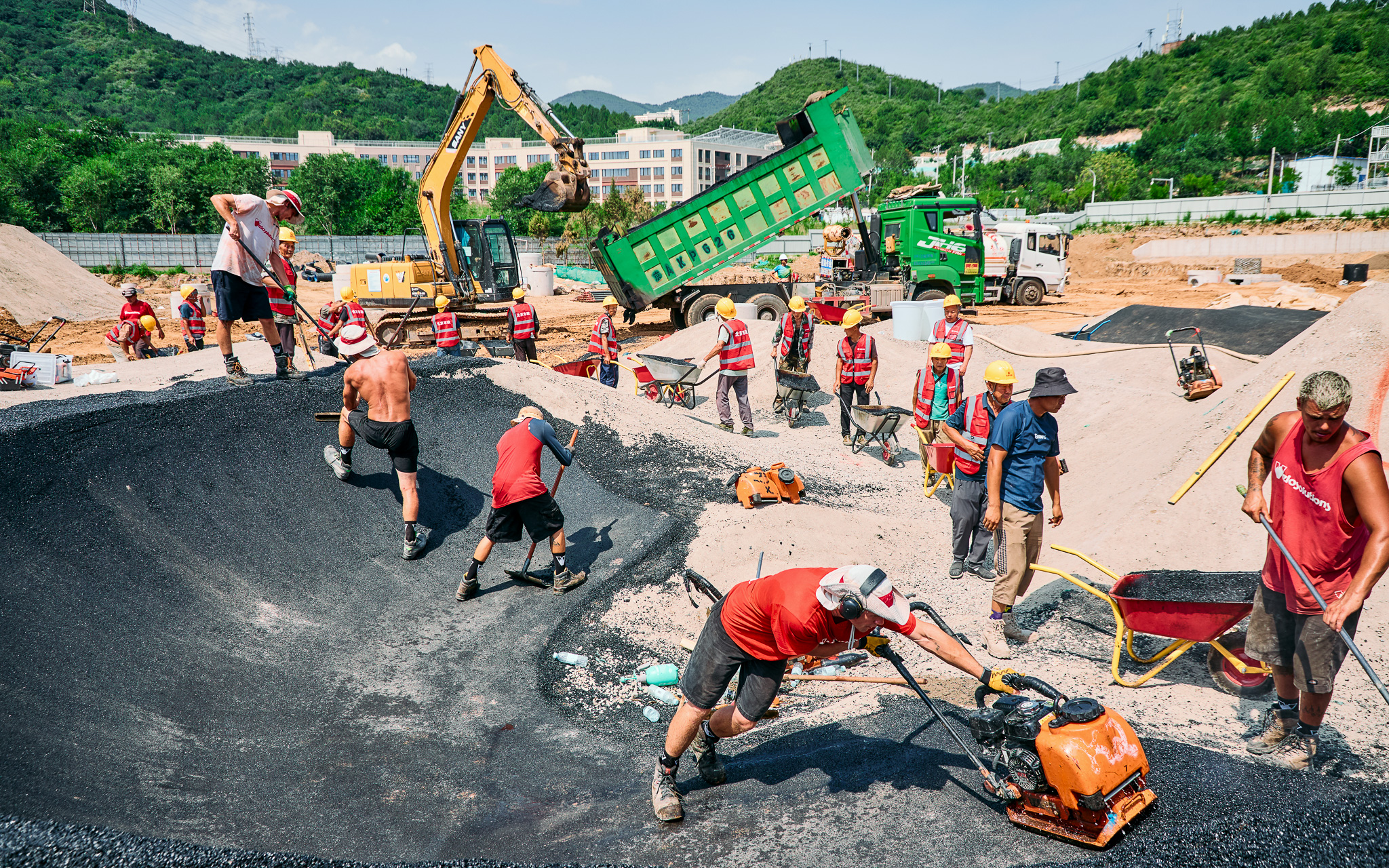
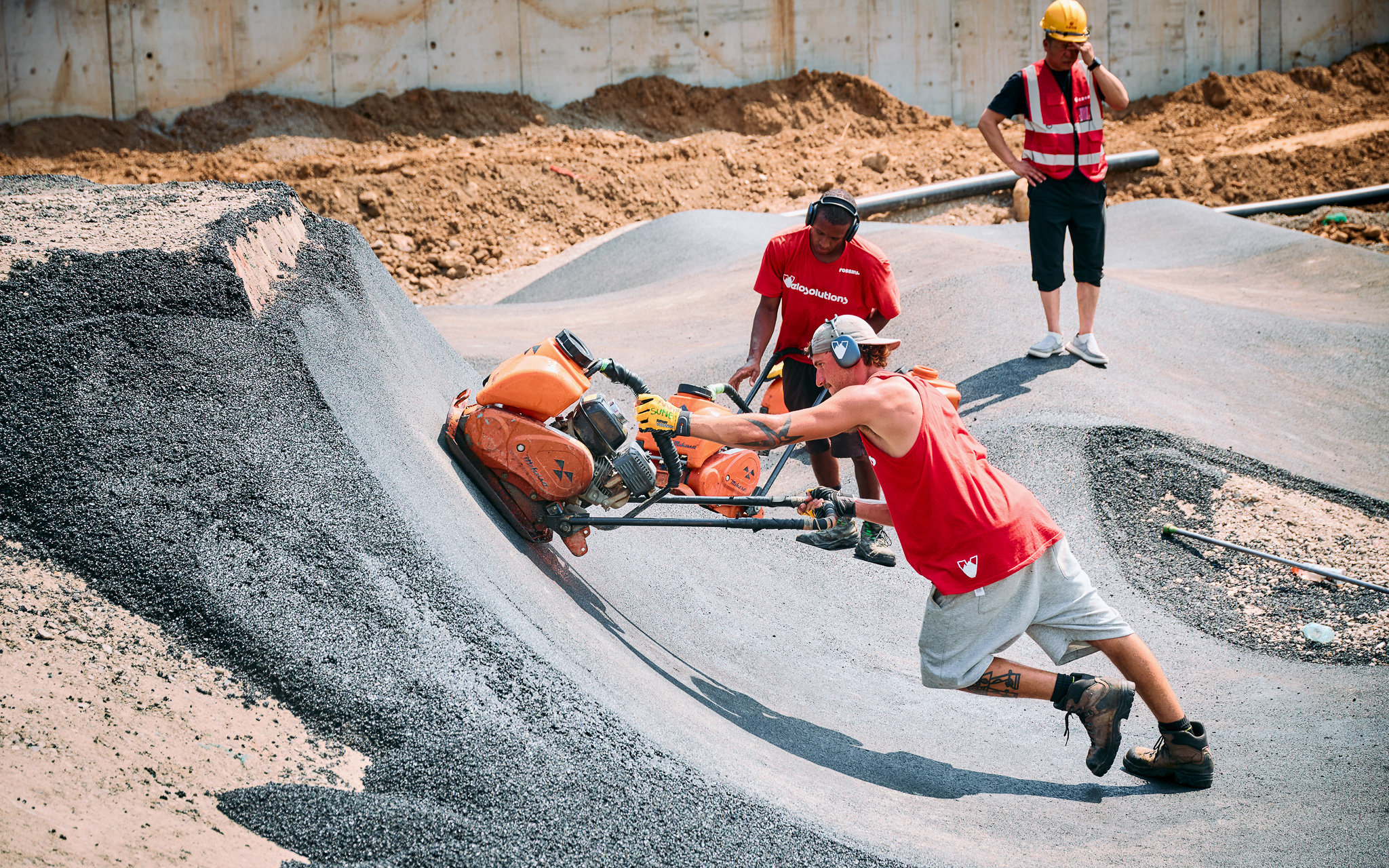

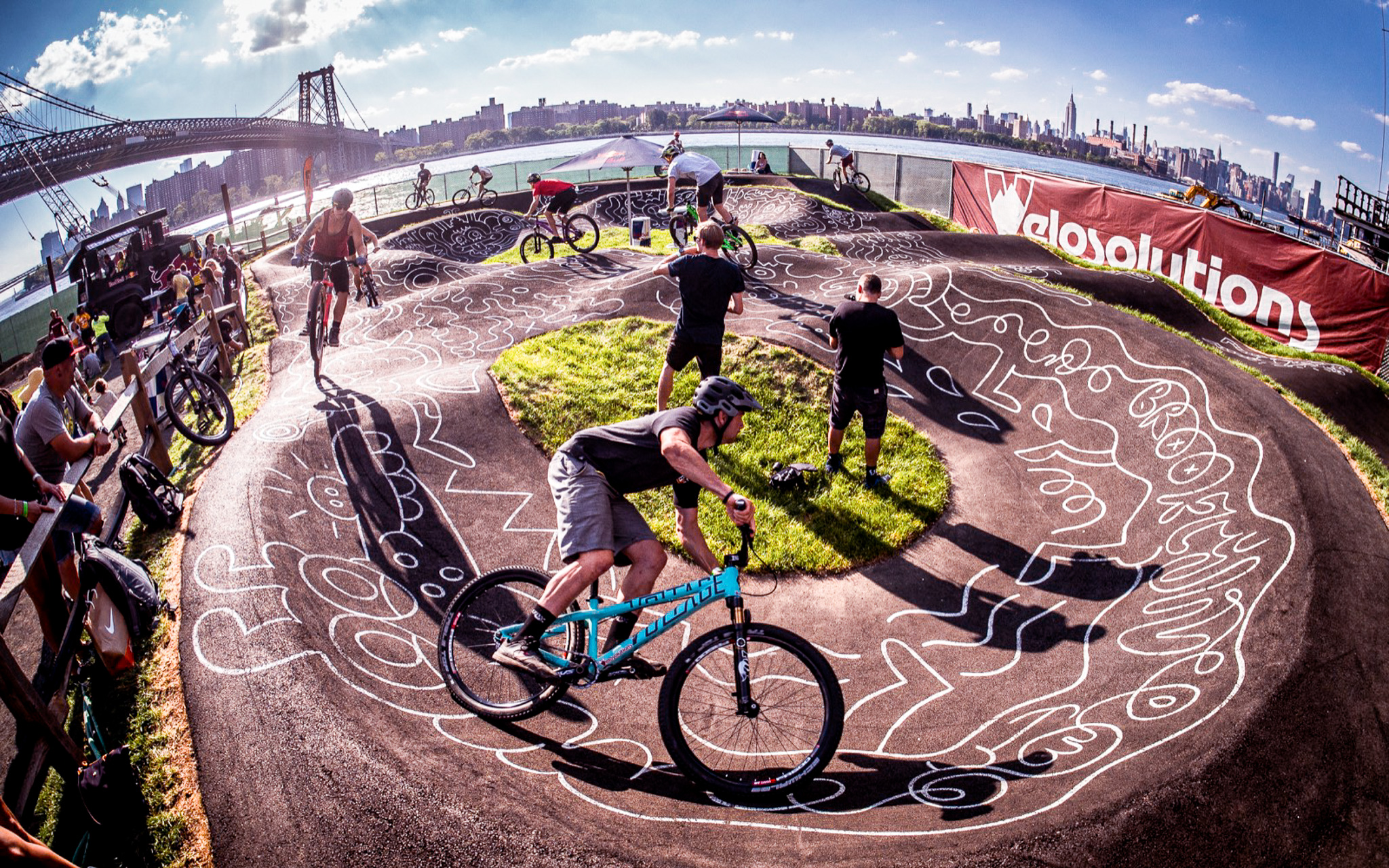
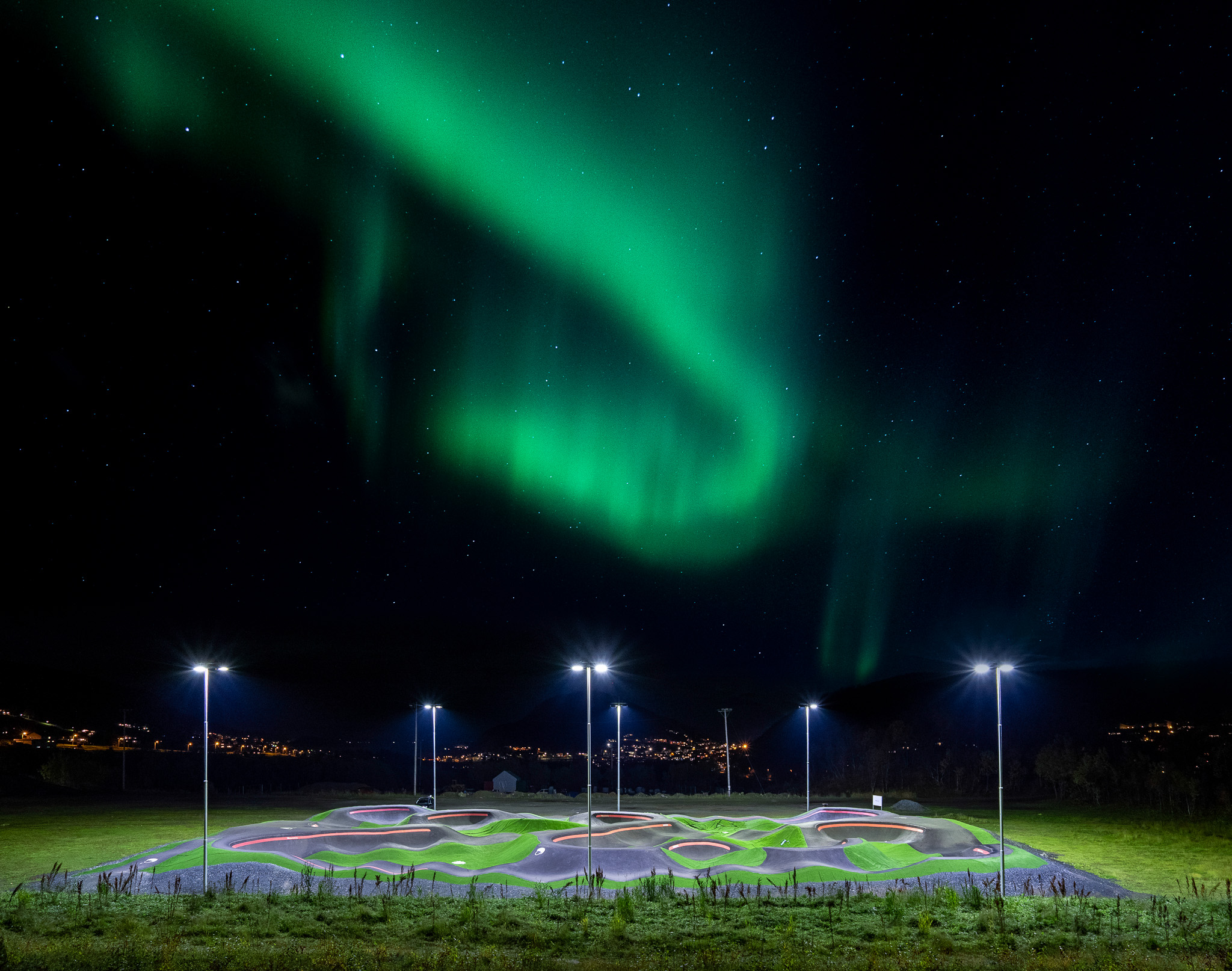
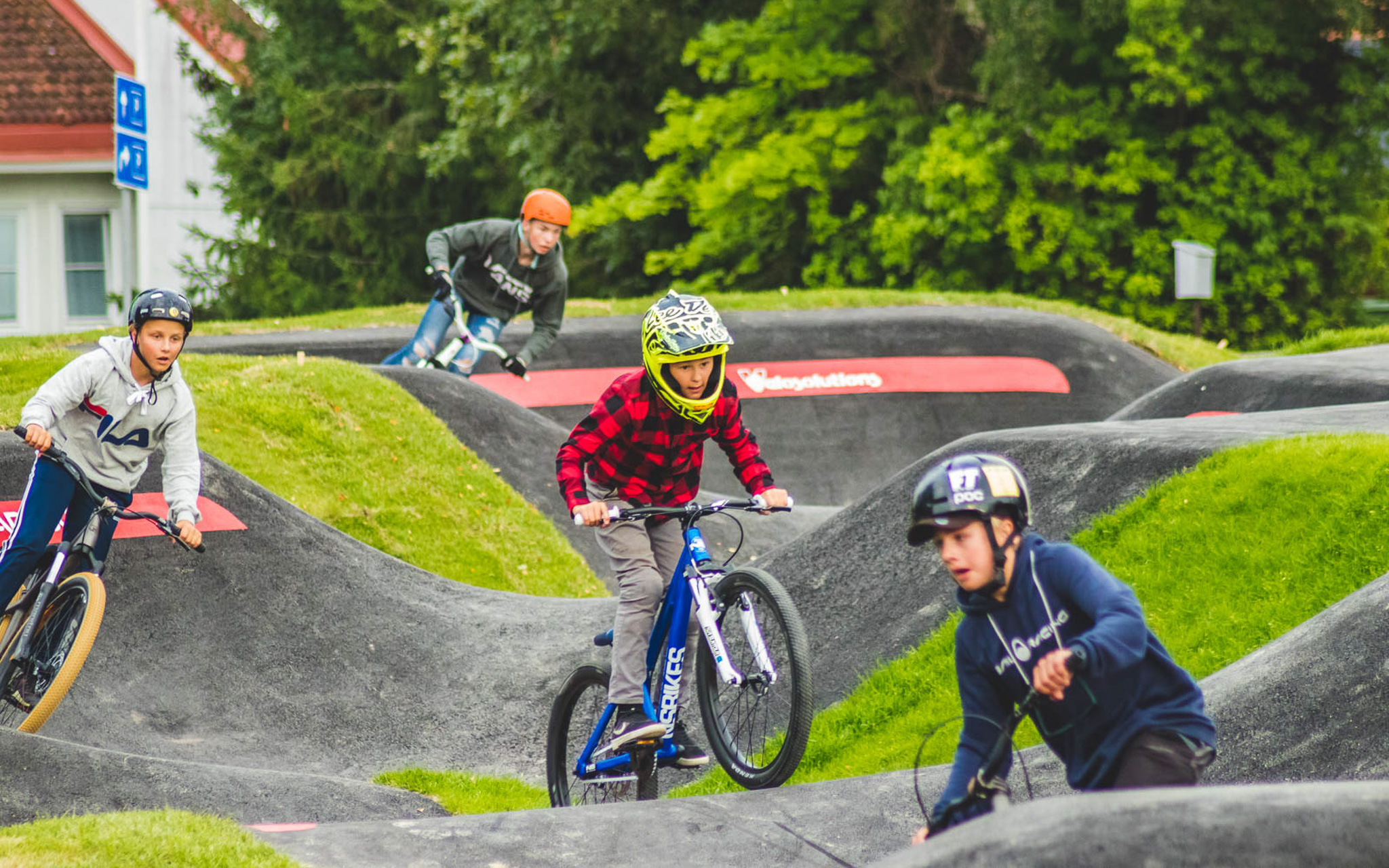
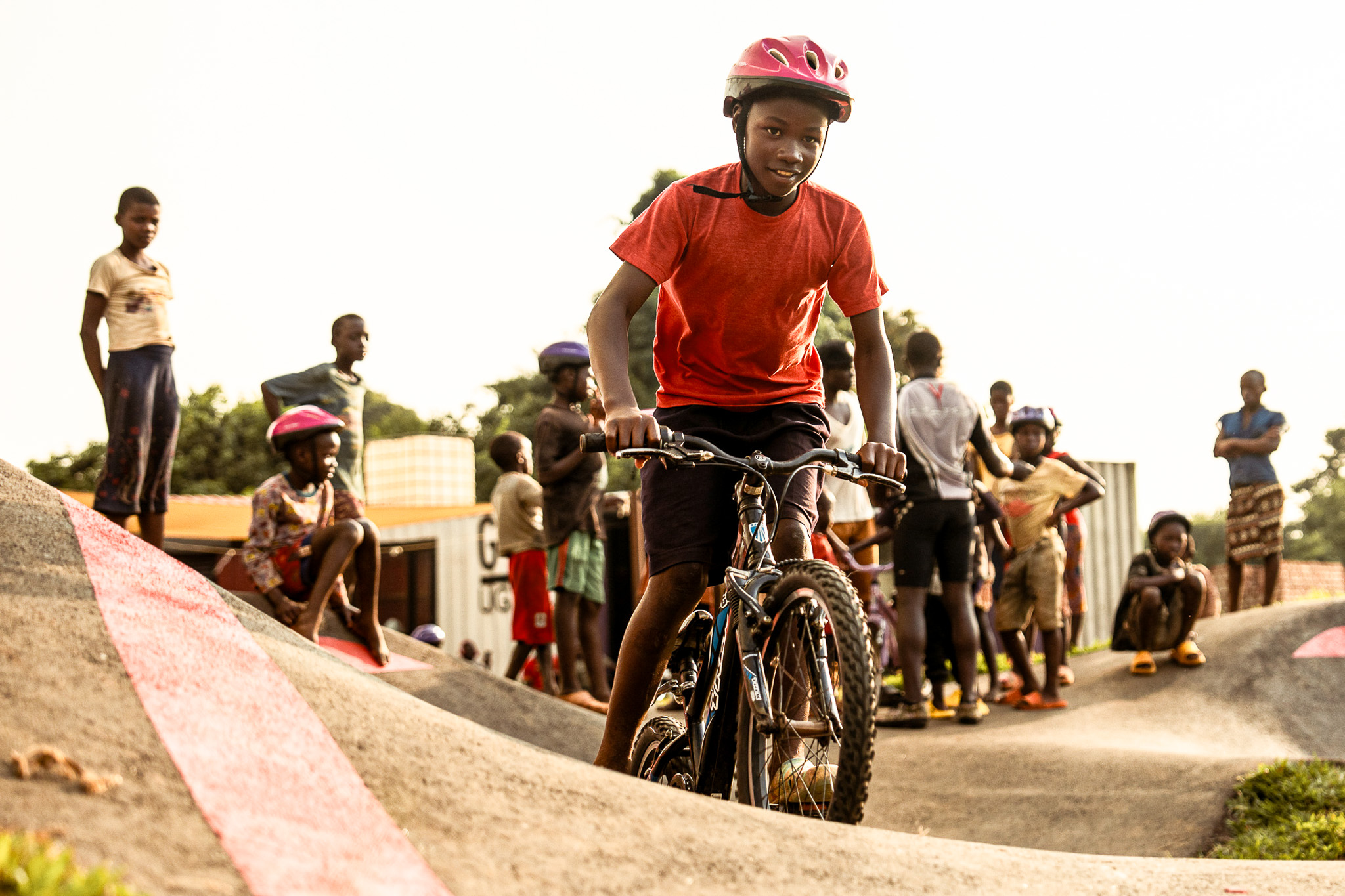
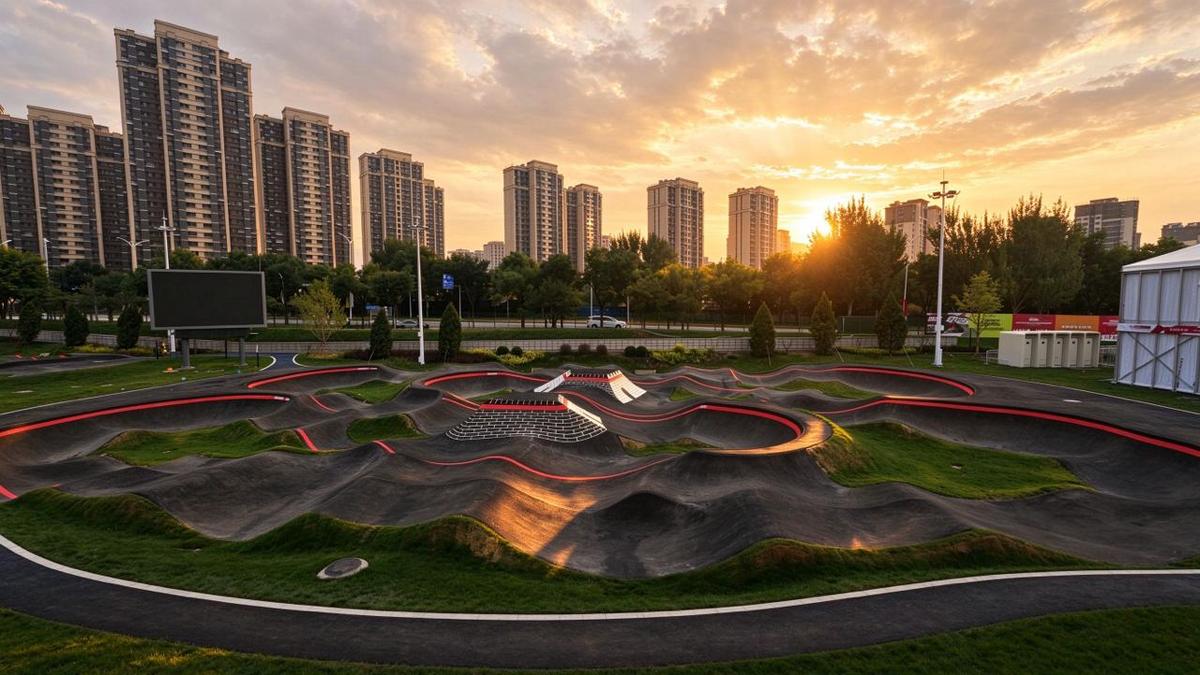
Despite all their experience, even the 1,000th pump track in Mentougou, a district of Beijing, was a major challenge. For one thing, Claudio and his team of strong men had to build the facility in nearly 40-degree heat and “what felt like 99 percent humidity.” Much of the work is still done by hand; the machines used sometimes require a great deal of physical effort to get them to the right spot to do their job.
On top of that, according to Claudio, there were confusing translations and peculiar rules, such as the one stipulating that in Beijing, trucks carrying asphalt are only allowed to ride at night, while the construction site could only operate during the day. This meant that the asphalt—which actually needs to be laid while hot—was delivered no later than 6 a.m., but the track builders weren’t allowed to start work until 8 a.m. By then, the asphalt was already almost hard, which made shaping it even more difficult. To make matters worse, the truck delivering the construction material would sink into the clay-like soil every day during the final few meters of its journey. An excavator would then pull it to the spot where it was needed. “Instead of just reinforcing the access road once and for all,” comments the man from Graubünden with a smile on his face.
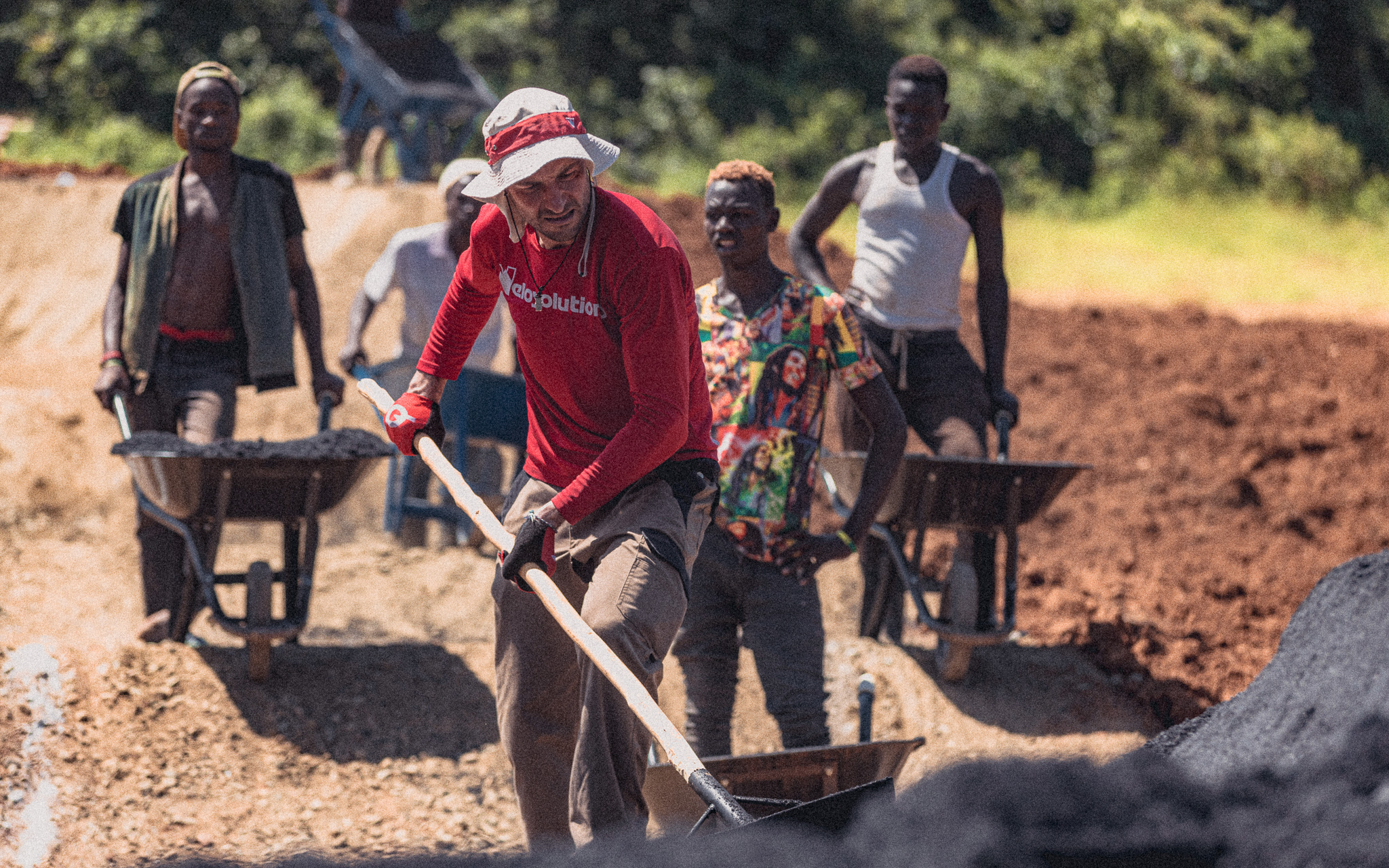
The fact that this project didn’t overwhelm him and his crew is likely also due to the fact that among the 999 pump tracks they’d built previously, there were some where the conditions were at least as difficult—whether in Thailand, Lesotho in Africa, Nepal, or Palestine and Israel.
The milestone reached in 2022 illustrates how Velosolutions’ demand and capacity have grown: After ten years, Velosolutions celebrated having completed 534 pump tracks. It took Claudio and his crew less than four years to build the next 466. Today, with branches in over 30 countries, the company builds around 180 pump tracks per year and works on up to 30 pump tracks simultaneously. For a handful of projects each year, Claudio rolls up his sleeves and helps out on the construction site.
“I can choose which project appeals to me the most. These are often those in our ‘Pump for Peace’ program or the pump track where the next World Championship will take place, as was just the case in Beijing.” Claudio emphasizes that, in principle, his presence isn’t necessary, but he also likes to be involved in projects with particularly tight deadlines so that it’s not just his workers who have to bear the brunt of the pressure.
At the same time, Claudio, the construction worker, runs a global construction company—from wherever he happens to be. And he seems to live a pretty balanced life doing so. In the SRF report, he says: “I just do what brings me the most joy. That’s it.”
Further content on this article


Note: This content has been automatically translated from German. Please report any incorrect translations.