

Beat the Benchmark: Hip Bags Put to the Test
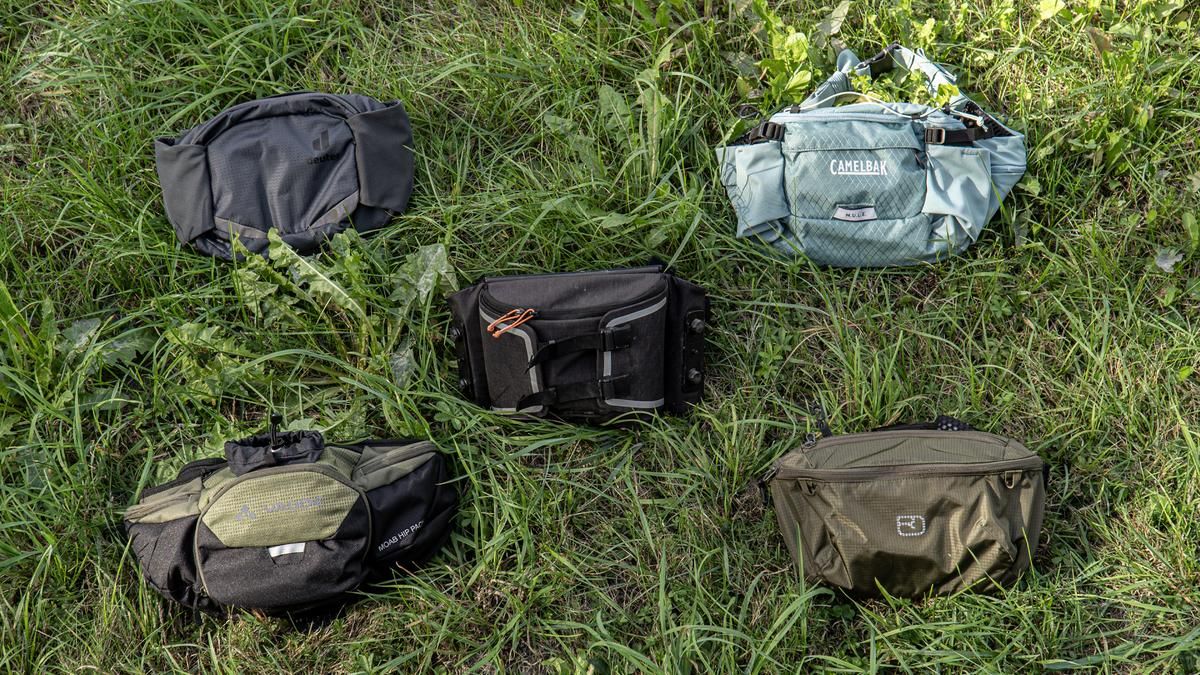
How the Test Was Conducted
Each product was worn individually on a long ride on a hot summer day. In addition, the hip bags had to withstand a direct comparison test. Fully loaded, they were put through their paces at short intervals on the same downhill-heavy test course, featuring frequent changes in direction, significant compression, and jumps.
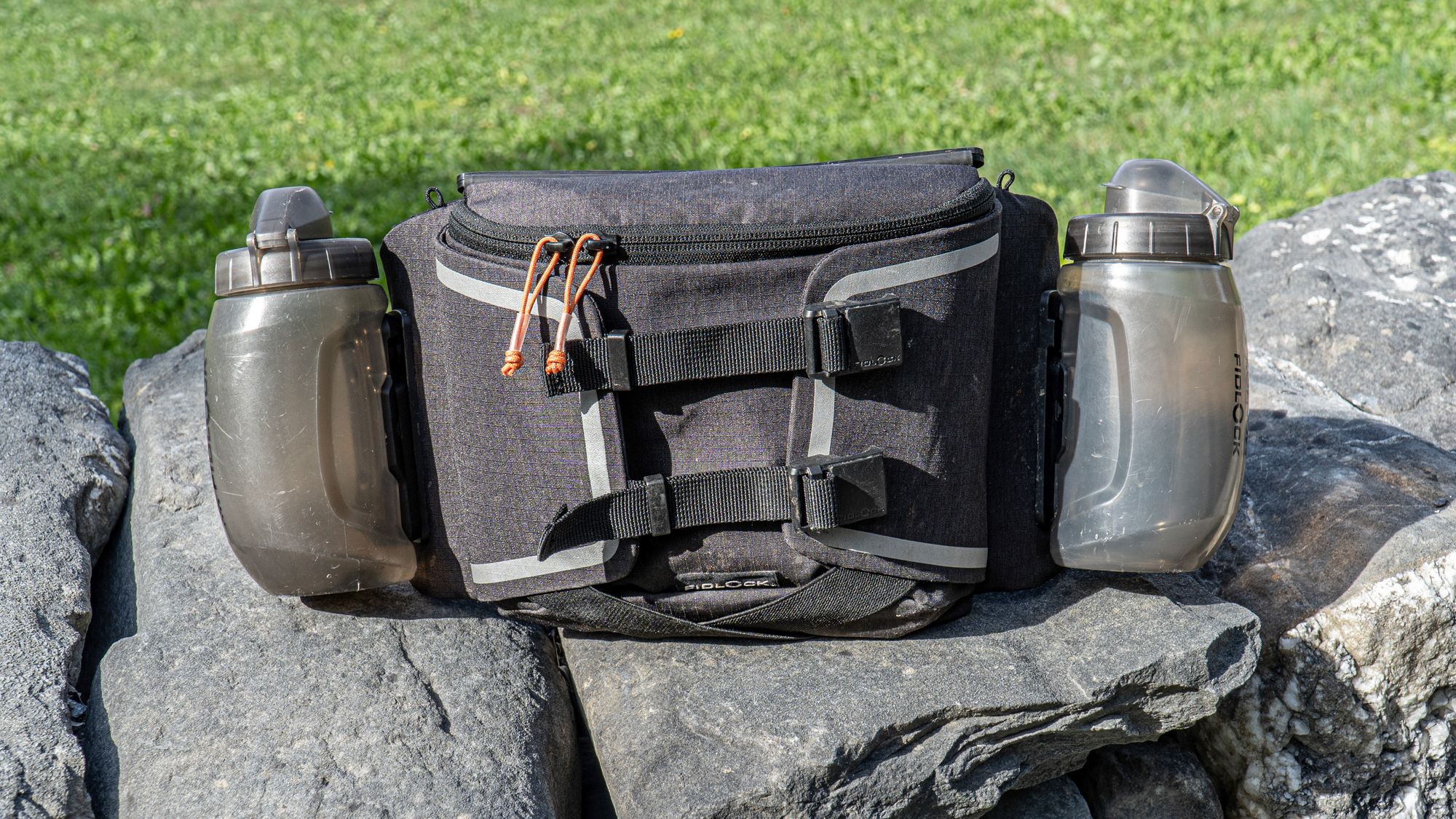
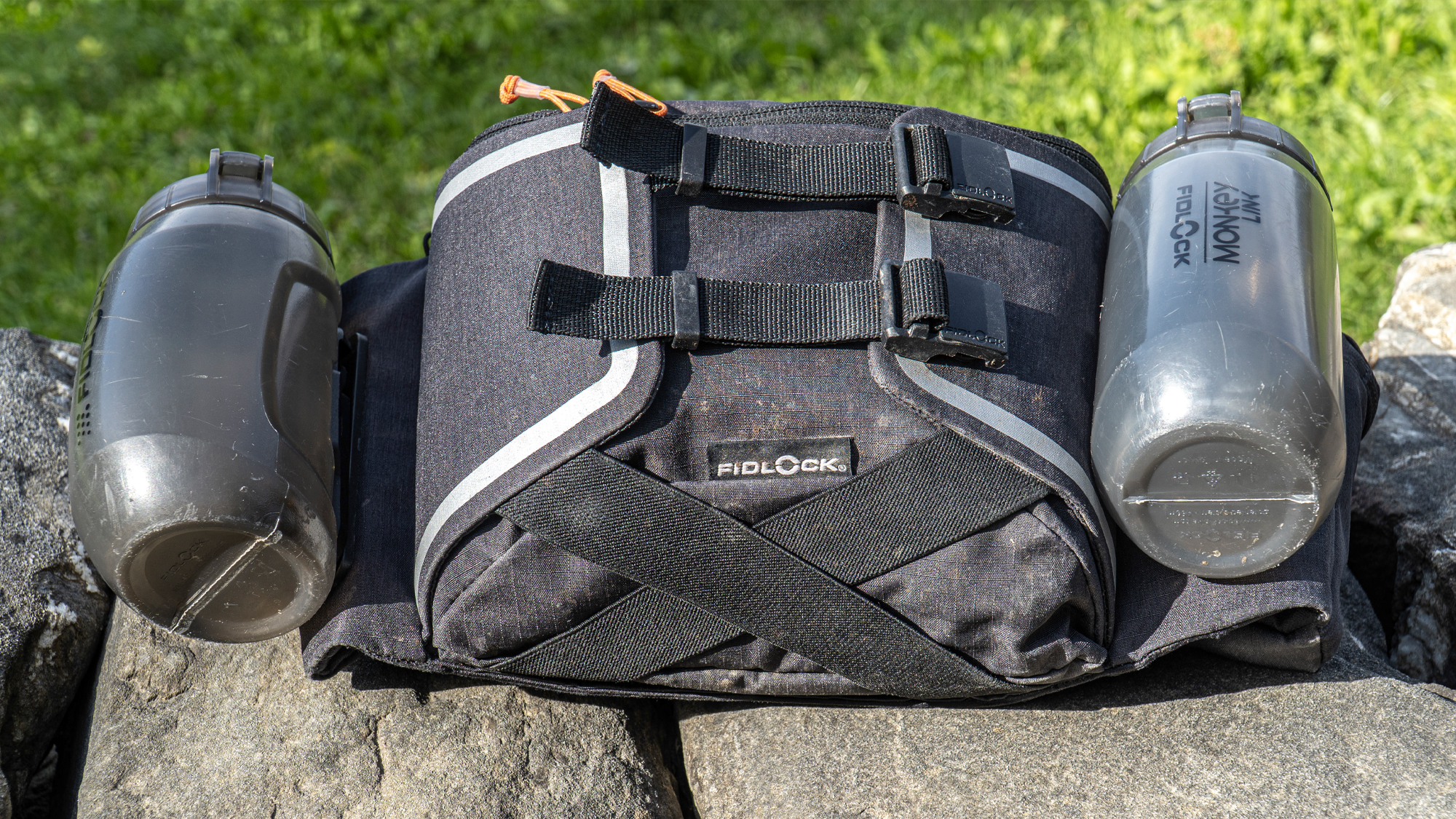
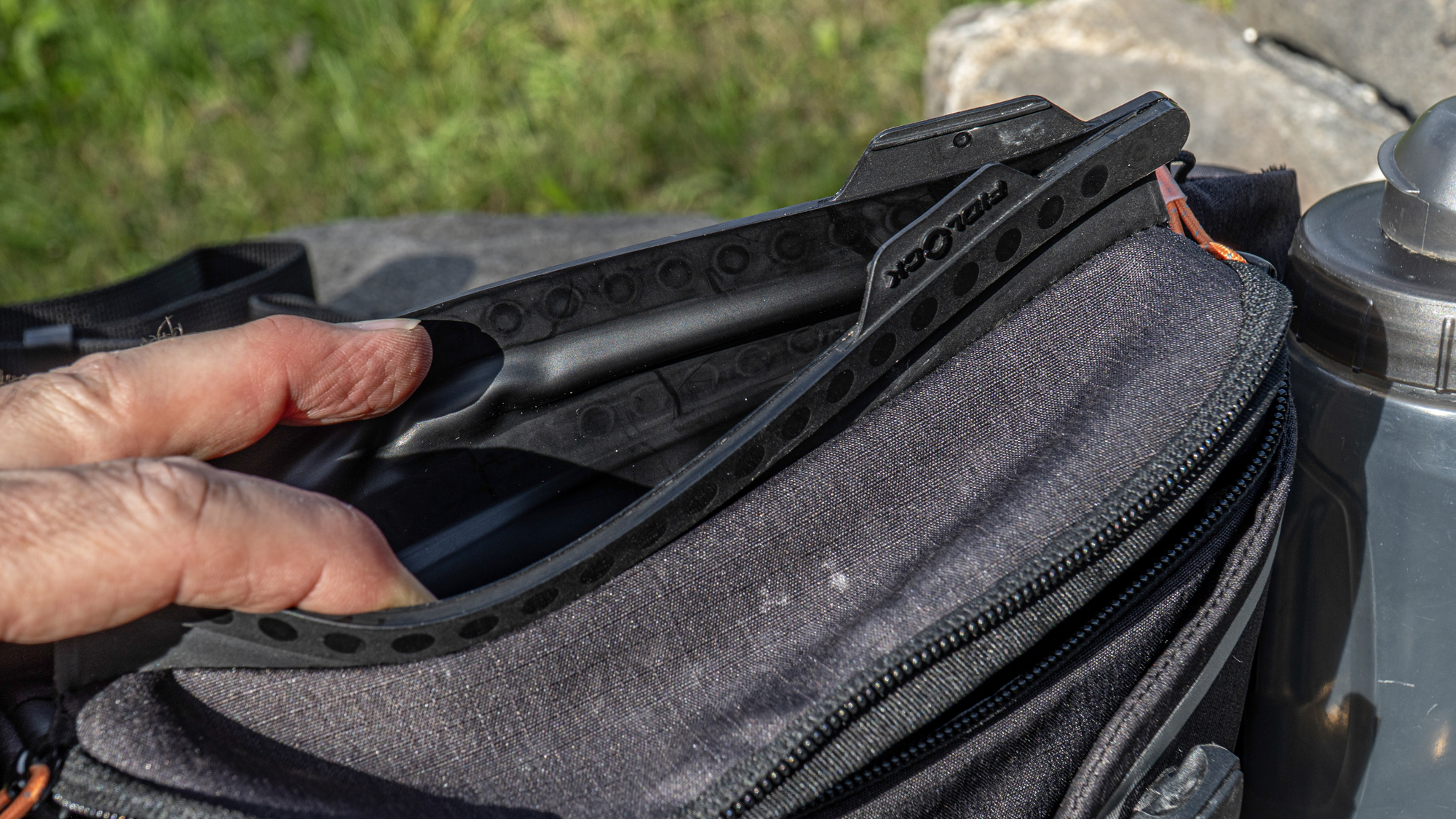
The Benchmark – Fidlock Hip Belt Double
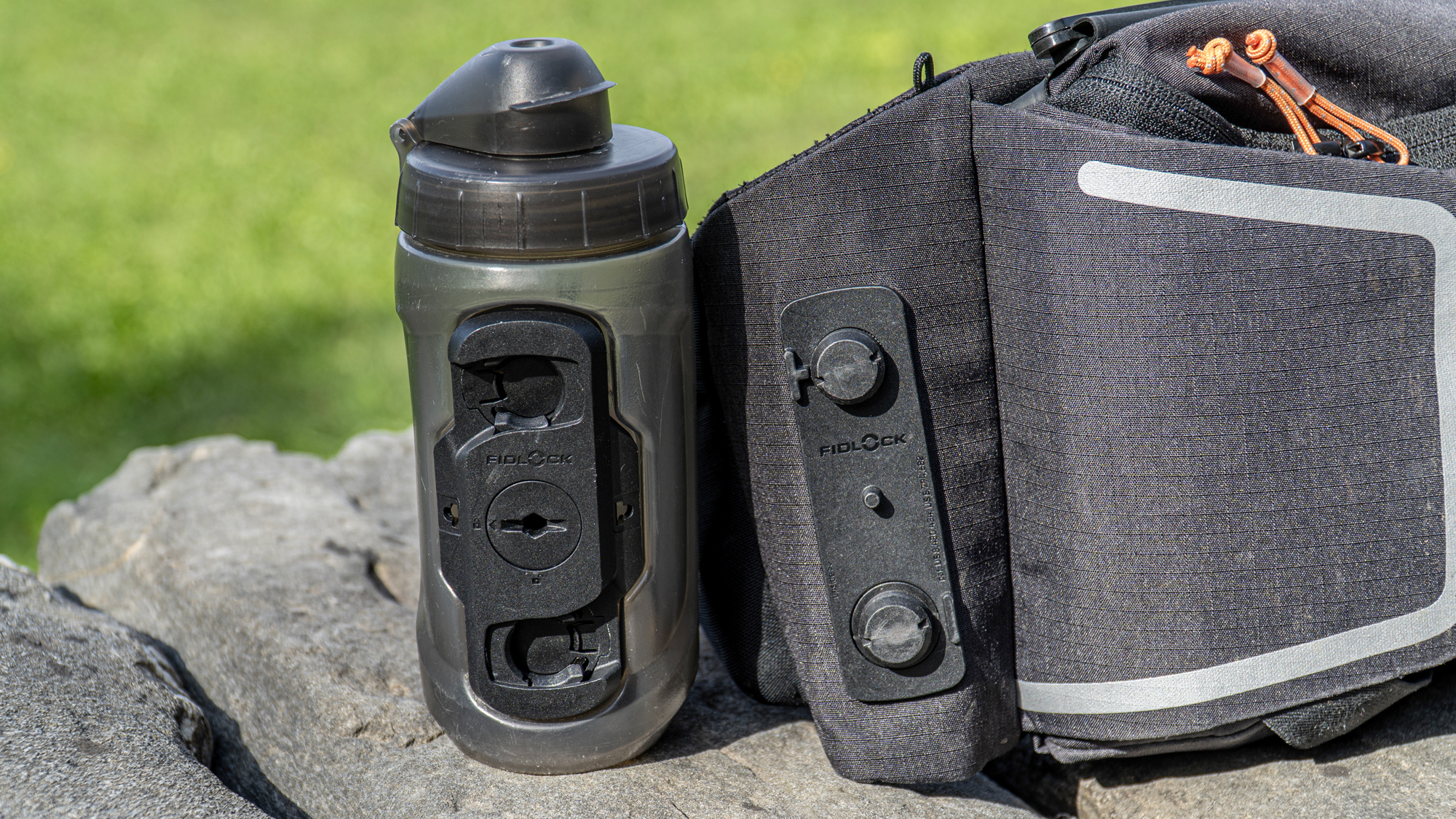
The only hip bag that can be equipped with the brand’s own magnetic Fidlock water bottles has proven itself in recent years, particularly in terms of superior stability. Furthermore, the roomy design offers a very large capacity. Additionally, no buckle presses against the stomach, as it is positioned on the side.
Facts
Capacity: 2.5 liters
Hydration system: 2 magnetic Fidlock Twist bottles, each with a volume of 460 milliliters
Weight: 540 grams
Strengths
- Excellent fit
- Forward-facing compression straps
- No annoying buckles in the abdominal area
- Intuitive and practical Fidlock magnetic closure on the waist belt
- Large storage capacity
- Well-organized compartments
- Waterproof document compartment
- External attachments for carrying protective gear or clothing
Weaknesses
- Heavy
- The left bottle cage is poorly designed; a “standard” Fidlock bottle falls out of the cage if you bump it with your arm—you need a bottle with a “Left Turn Connector”
- No carrying handle
- Comes with only one bottle instead of two
Price: CHF 160.00 / EUR 159.99
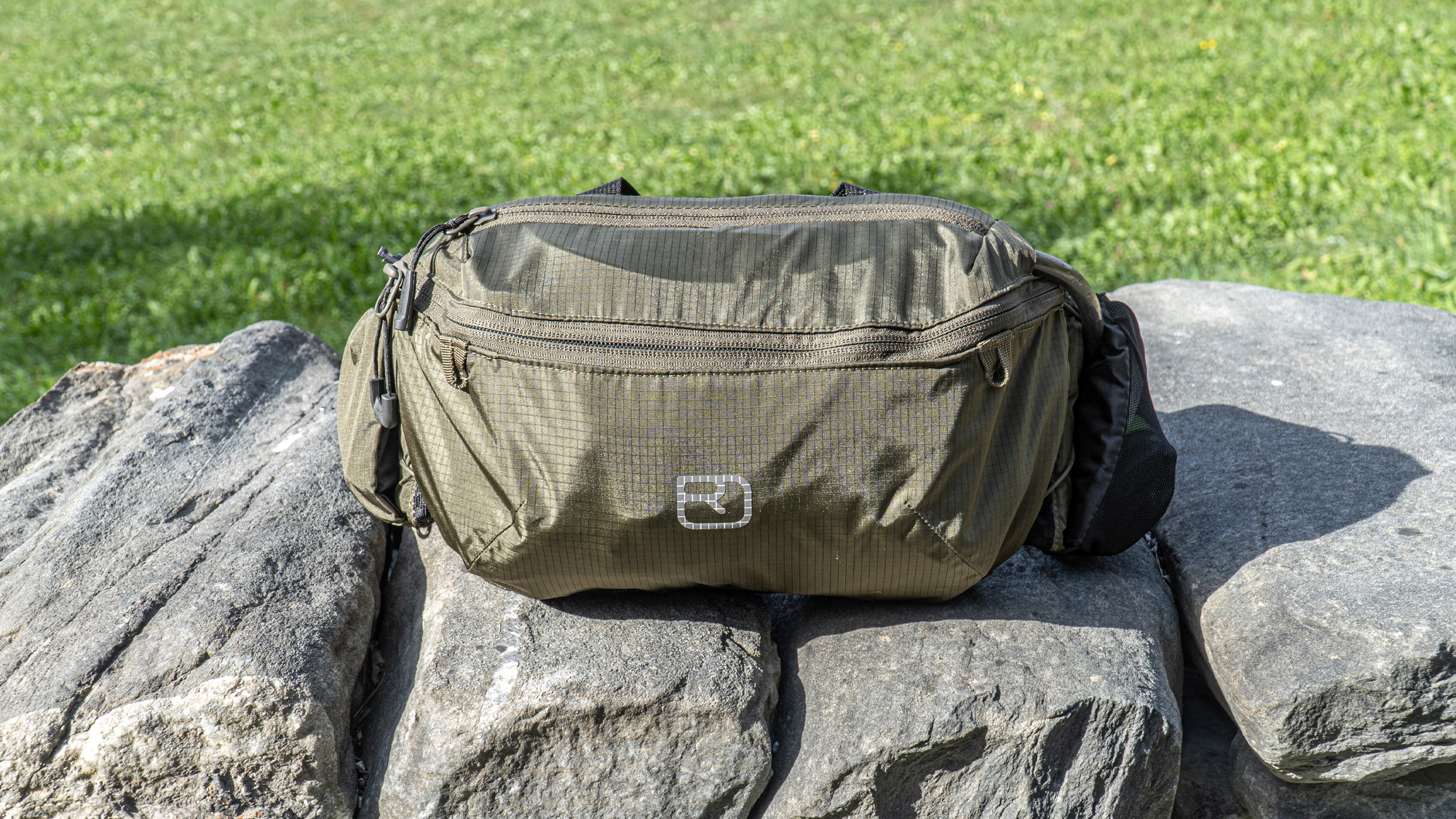
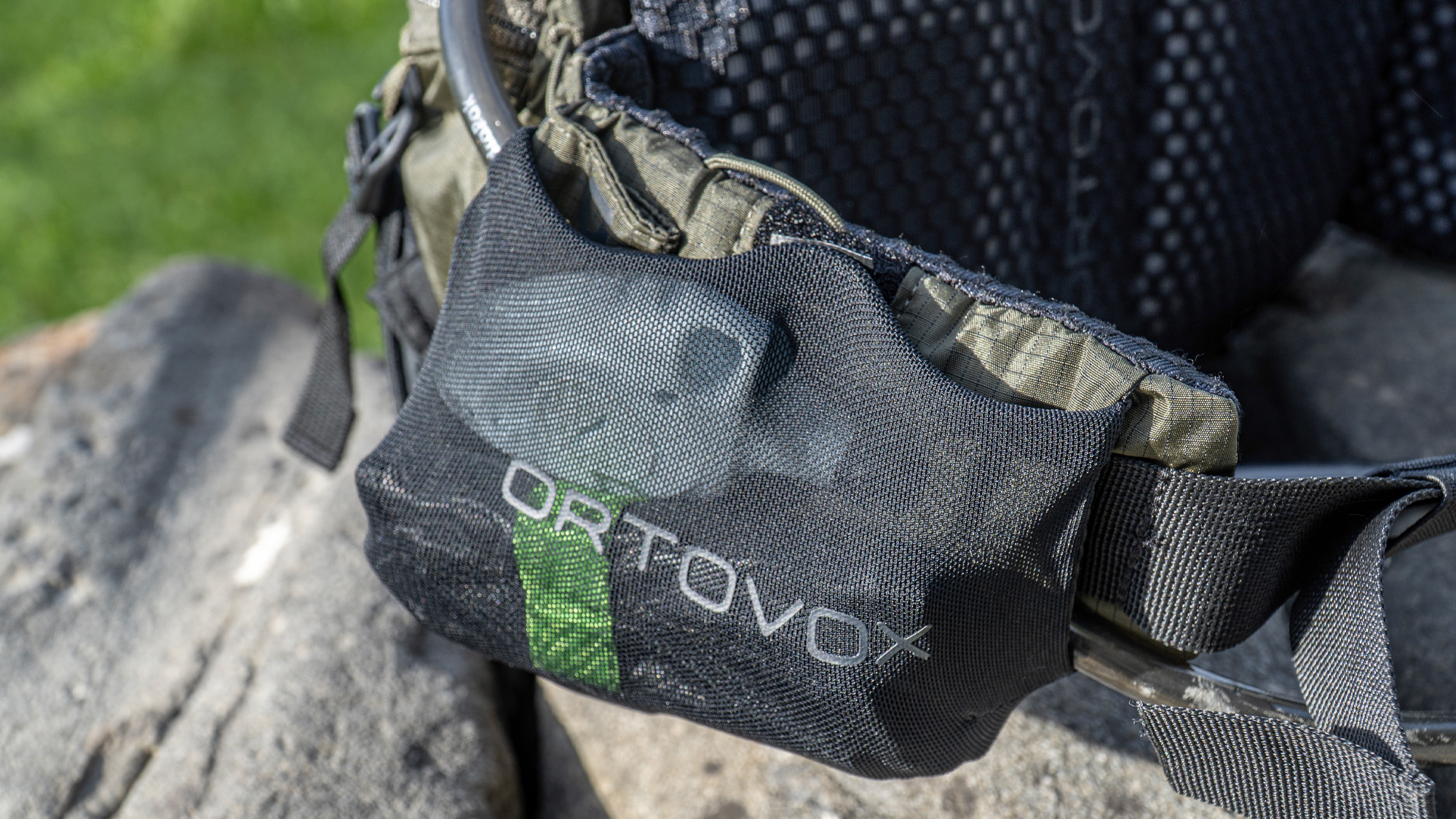
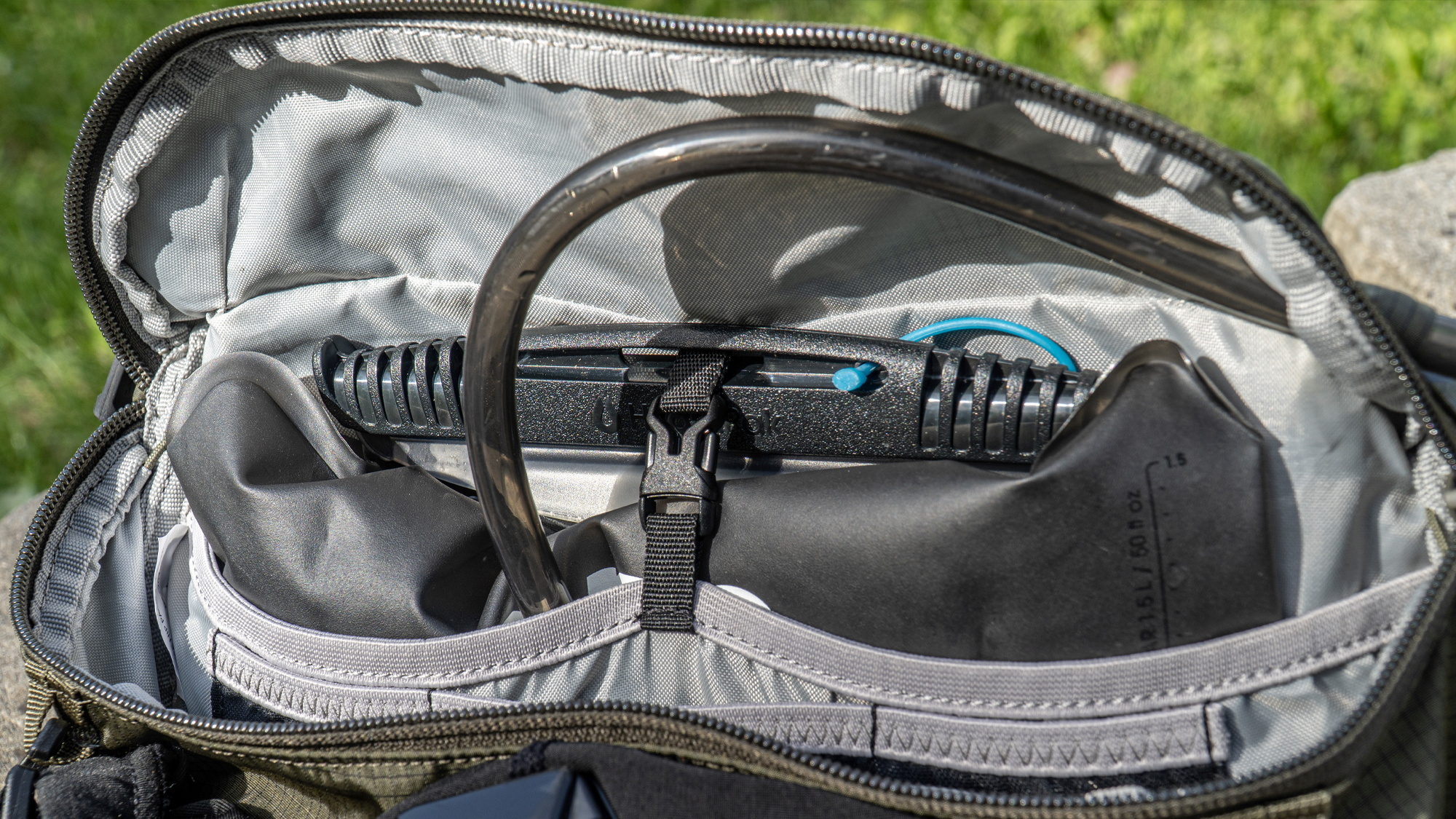
Ortovox Sequence 3
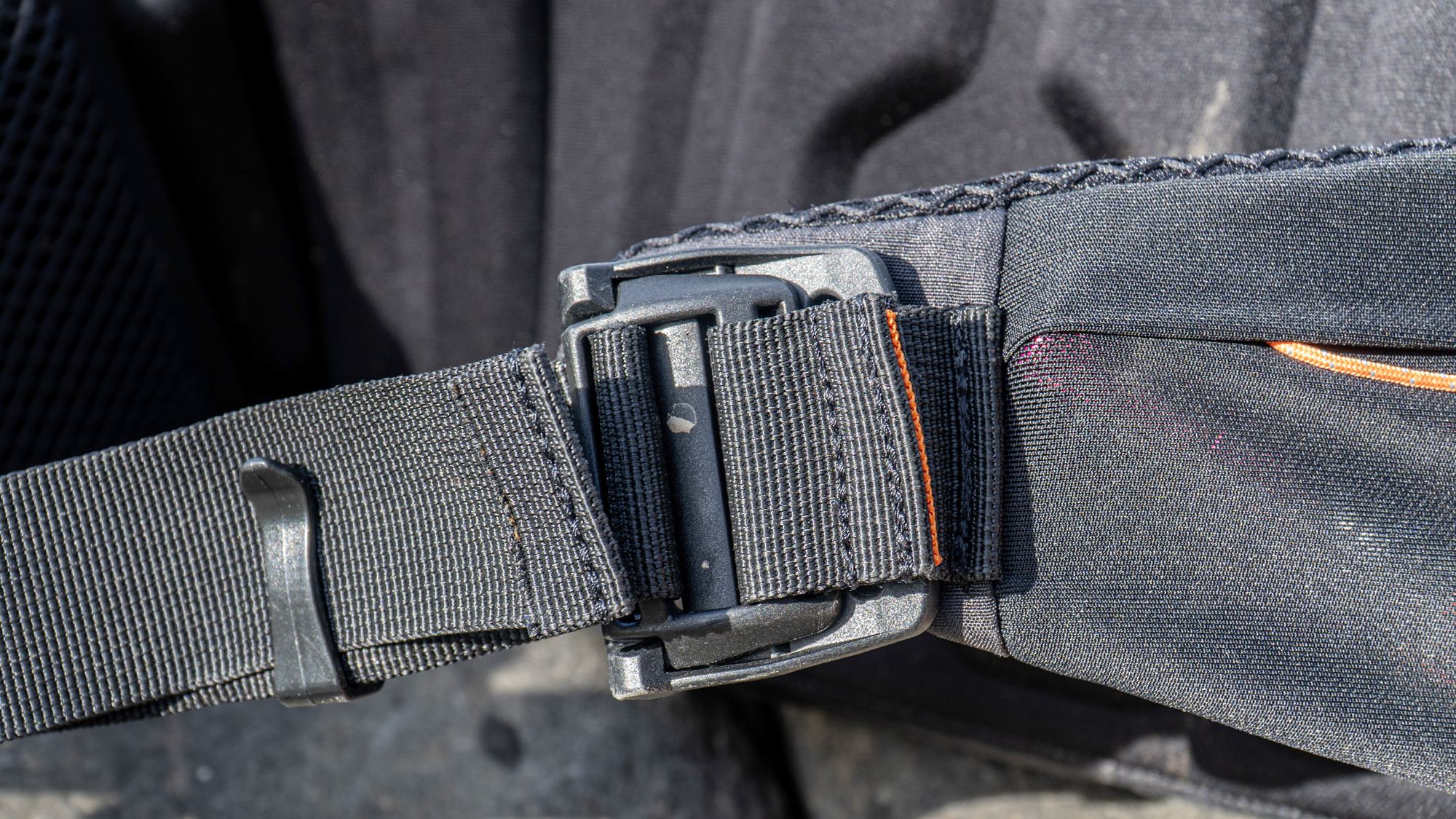
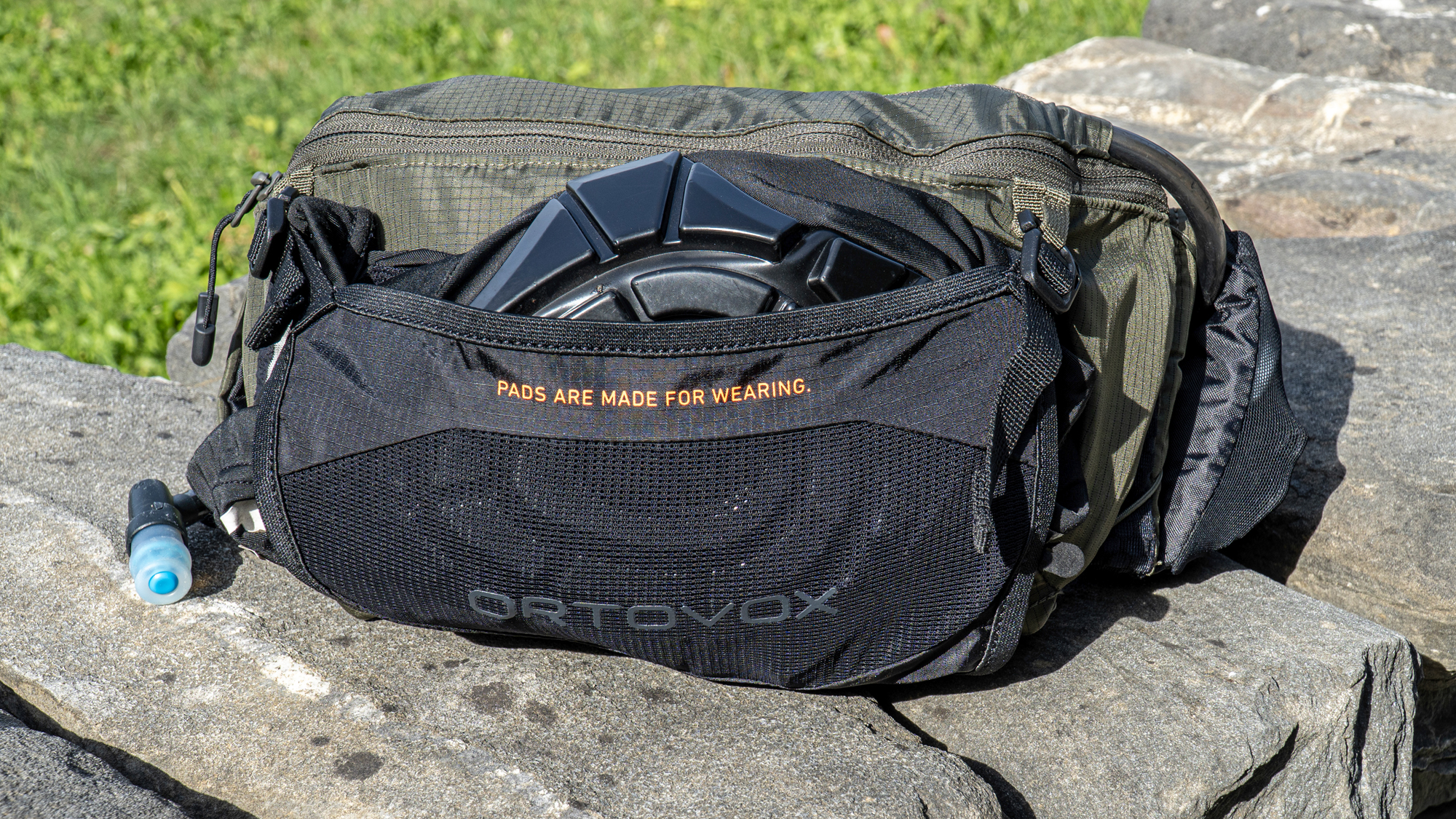
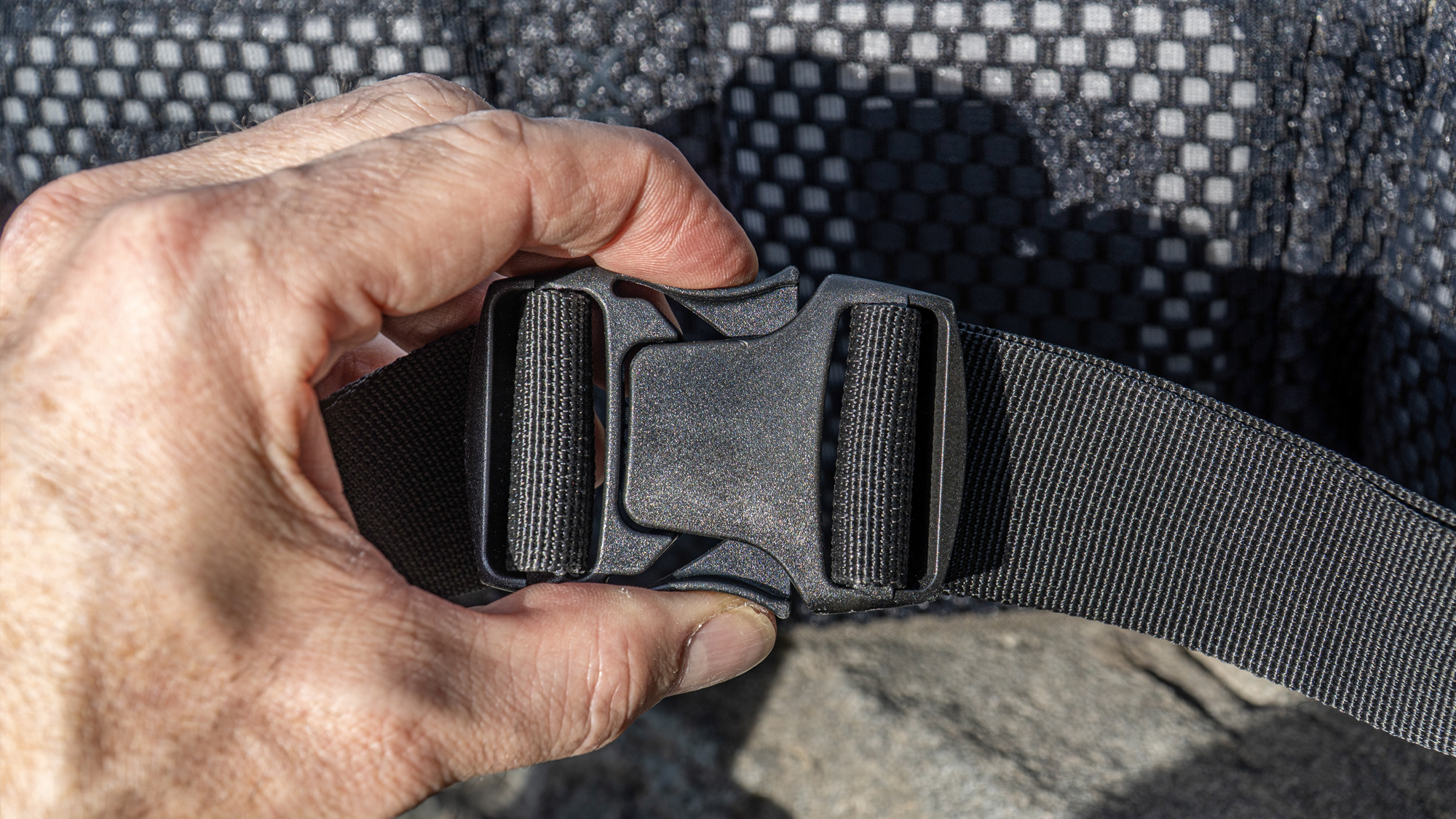
In terms of design, this is the simplest hip bag with a subtle look. Fit and comfort are average. The bulky buckle presses slightly against the stomach. If you overfill the hydration bladder, there isn’t much room left in the main compartment for anything else.
Facts
Capacity: 3 liters
Hydration system: Designed for a hydration bladder, plus two compartments for water bottles
Weight: 389 grams
Strengths
- Available in 3 colors
- Sunglasses holder
- Protector flap stowed in a zippered pocket
- Separate smartphone compartment on the back
- Easy-to-use strap buckle that prevents fingers from getting pinched
- Key lanyard in the side pocket
- Convenient carrying handle
Weaknesses
- Doesn’t come with a hydration bladder
- Very small Velcro closure on the side mesh pocket
- Opening for the hydration tube is a bit tight
- Magnetic tube holder not optimally designed
- Putting the water bottle back in while riding works only moderately well
- The main compartment has only a one-way zipper
Price: CHF 99.90 / EUR 100.00
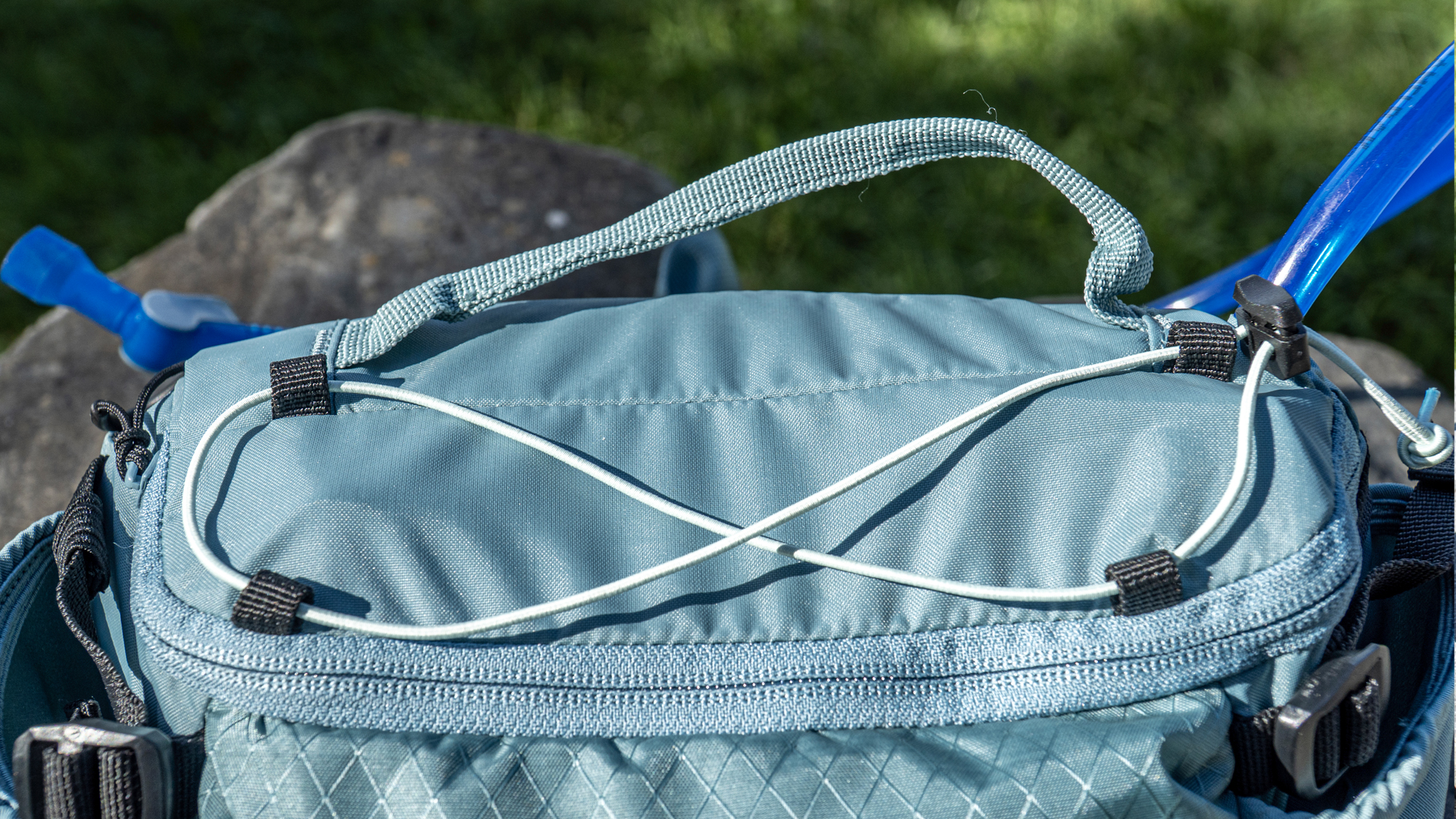
Camelbak M.U.L.E. 5
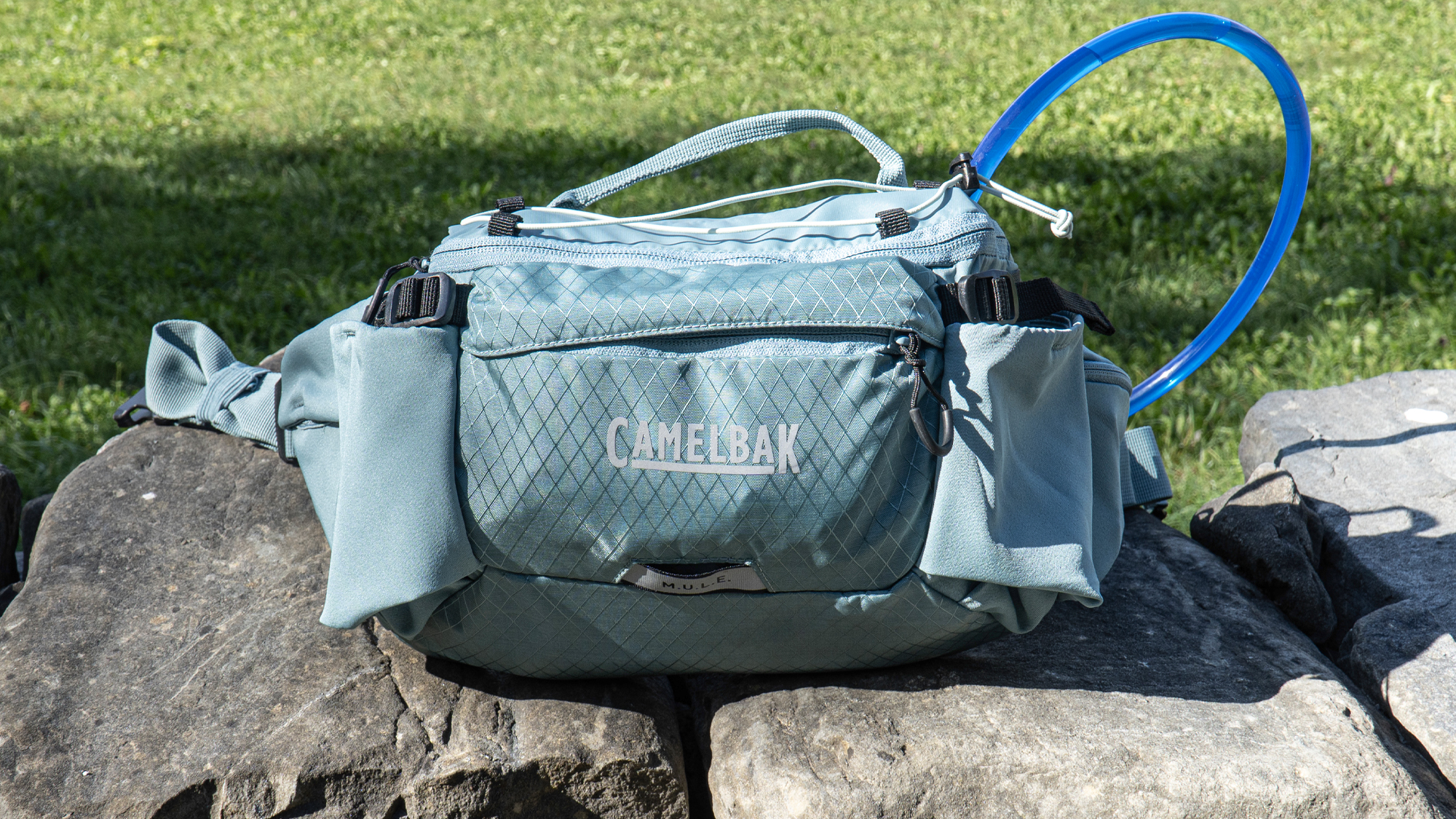
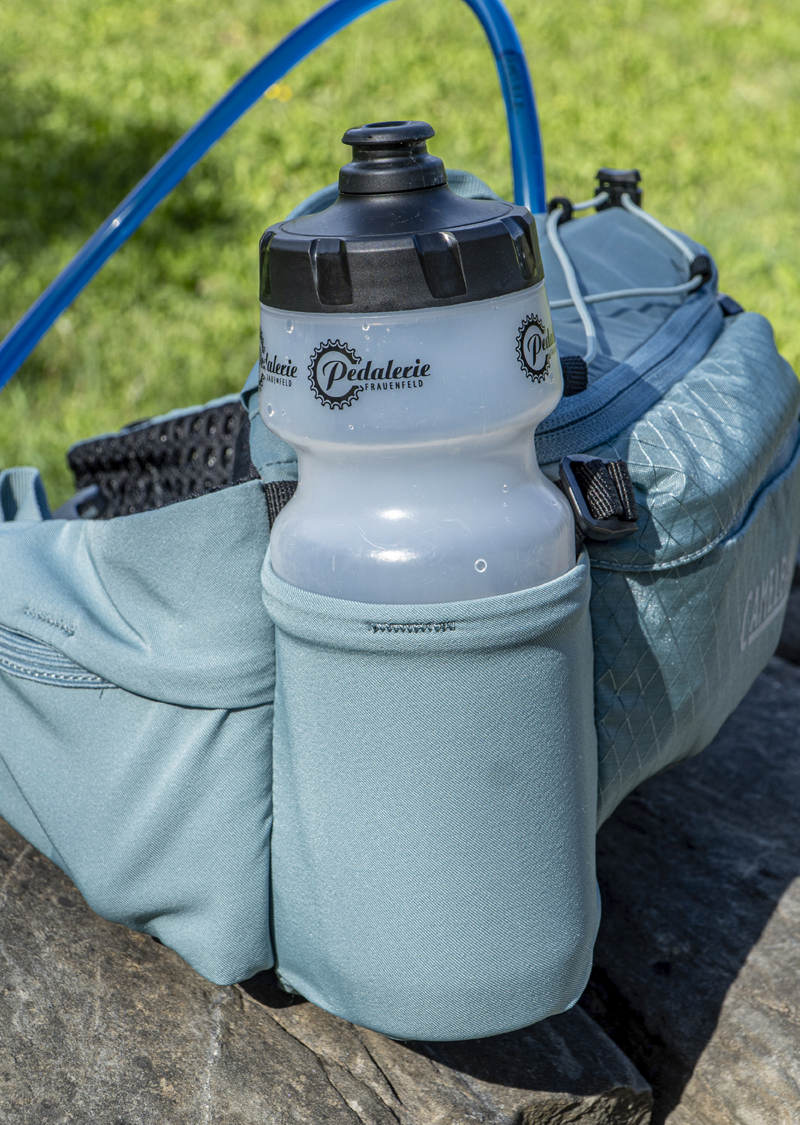
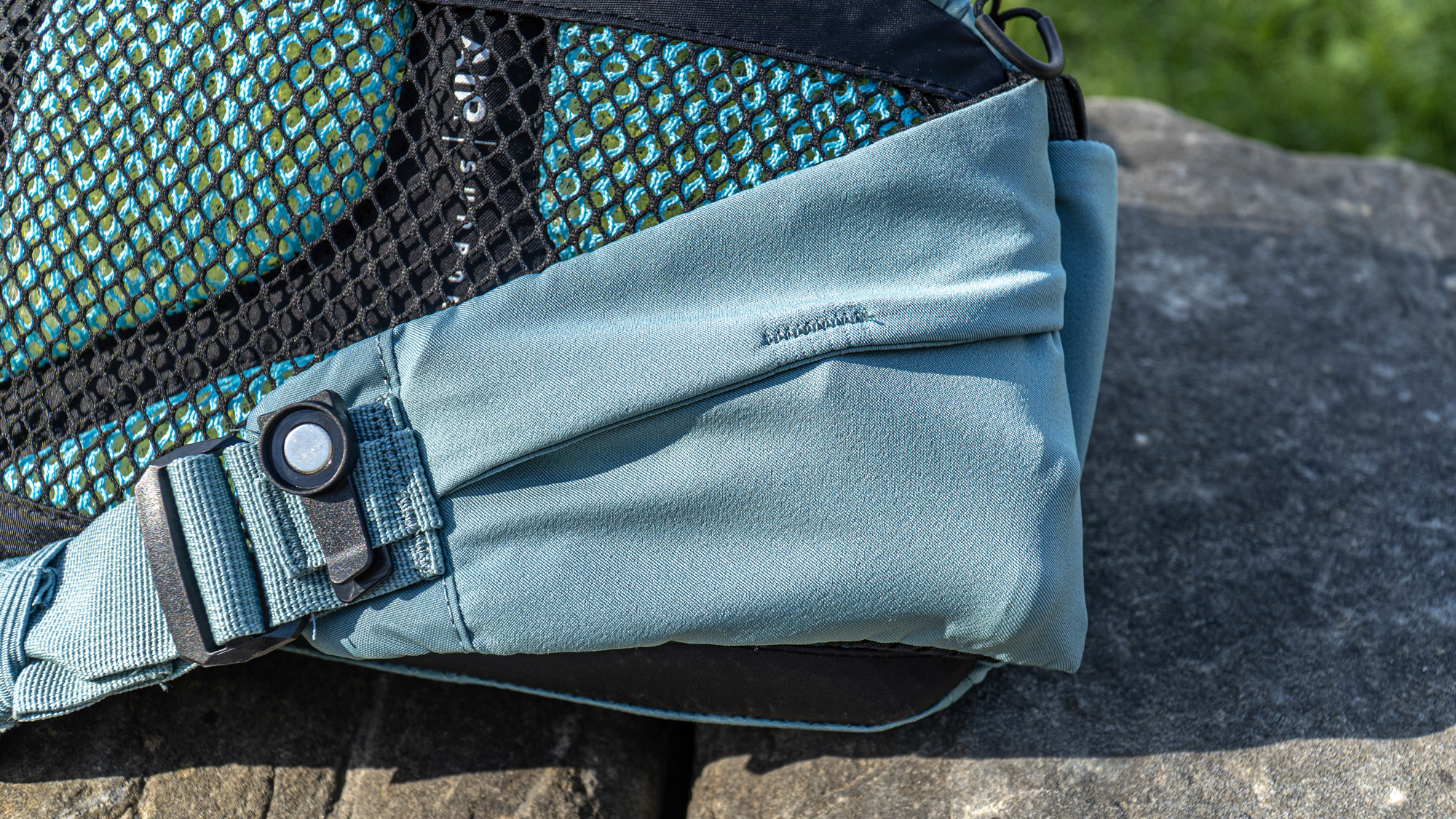
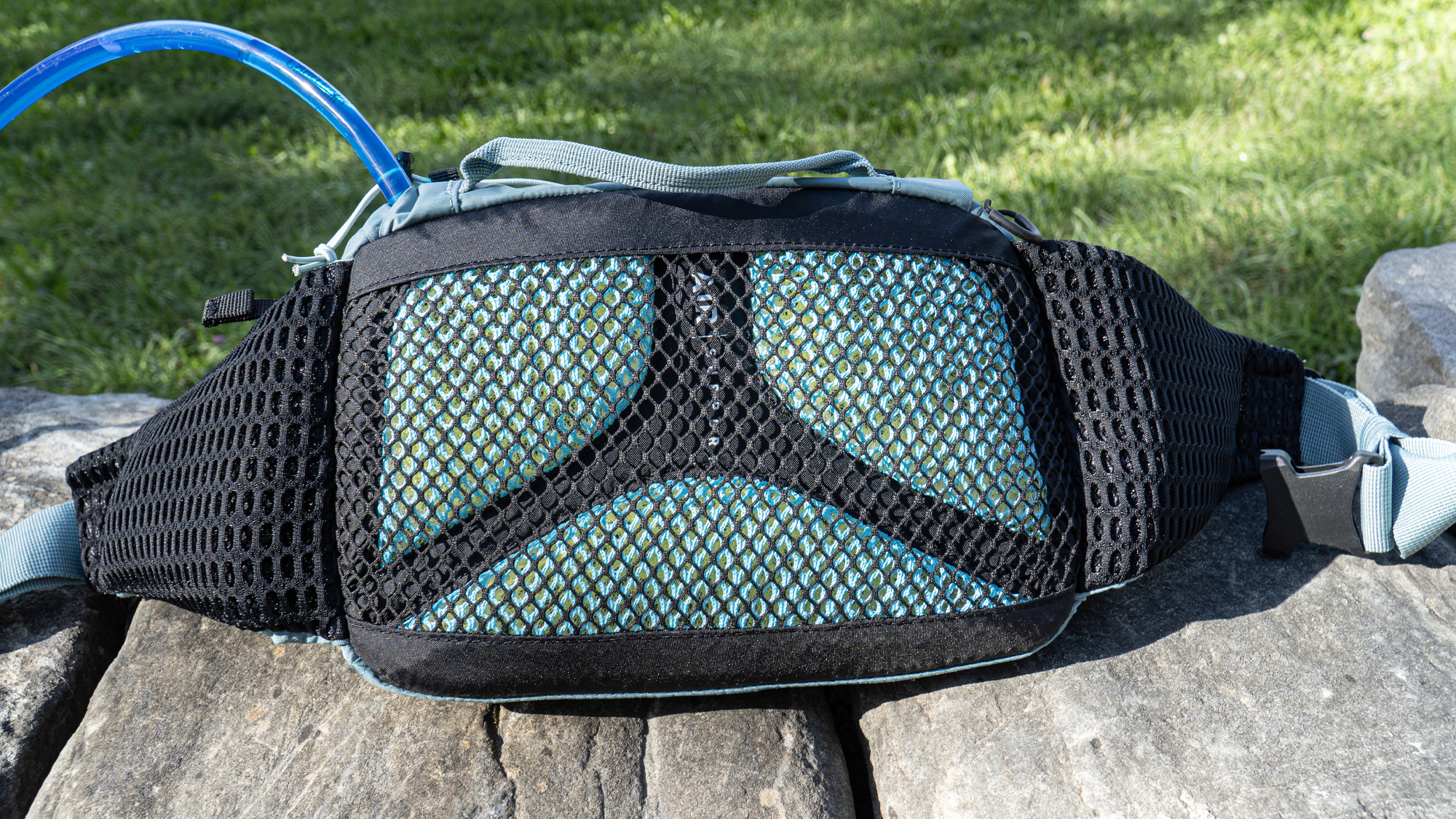
The hip bag fits snugly against the body, but the thin strap can dig in uncomfortably when fully loaded. The ideal bag for those who get thirsty: It holds two large water bottles and a hydration bladder. With a little practice, the water bottles can also be stowed away easily while riding.
Specs
Capacity: 3 liters
Hydration system: designed for a 1.5-liter hydration bladder, plus two compartments for water bottles
Weight: 354 grams
Strengths
- Available in 5 colors
- Convenient top-loading system, away from the dirt kicked up by the rear wheel
- Mount for a taillight
- Convenient carrying handle
- Well-ventilated back panel
- Good compartment organization
- Easily accessible key hook in the main compartment
Weaknesses
- Little storage space left when the hydration bladder is full
- Side pockets too small for large smartphones
- The main compartment has only a one-way zipper
Price: CHF 99.90 / EUR 99.99
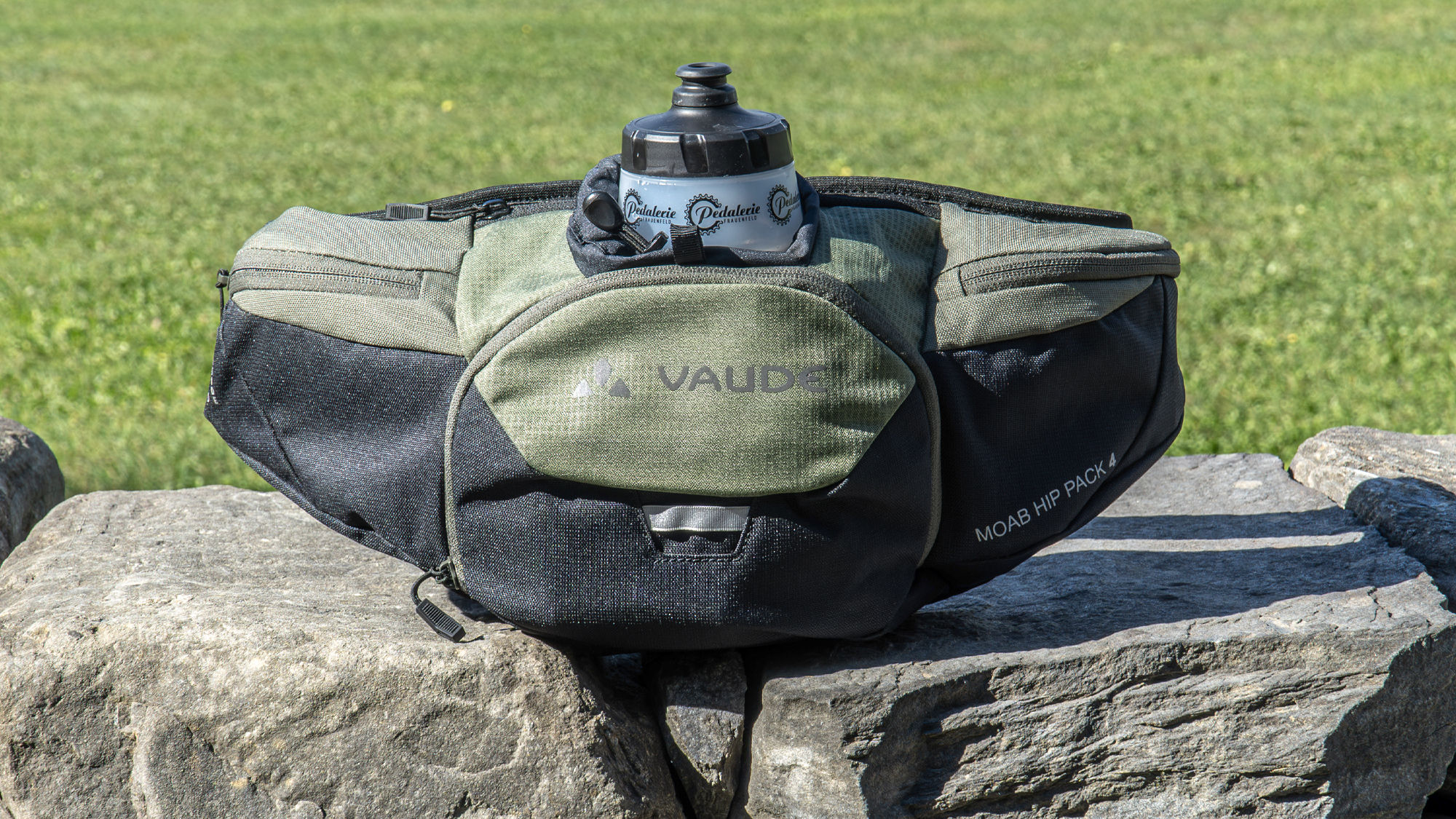
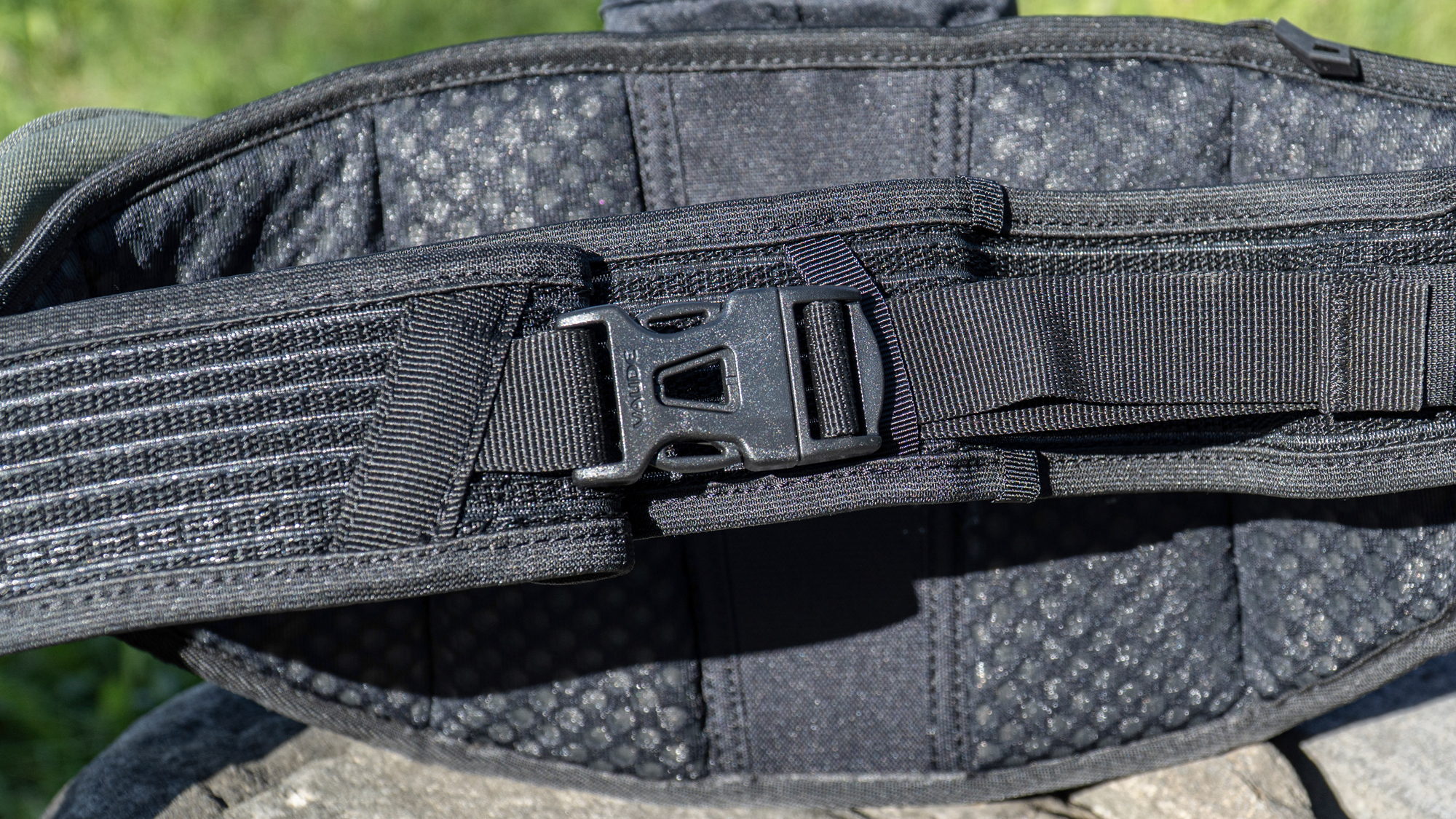
Vaude Moab Hip Pack 4
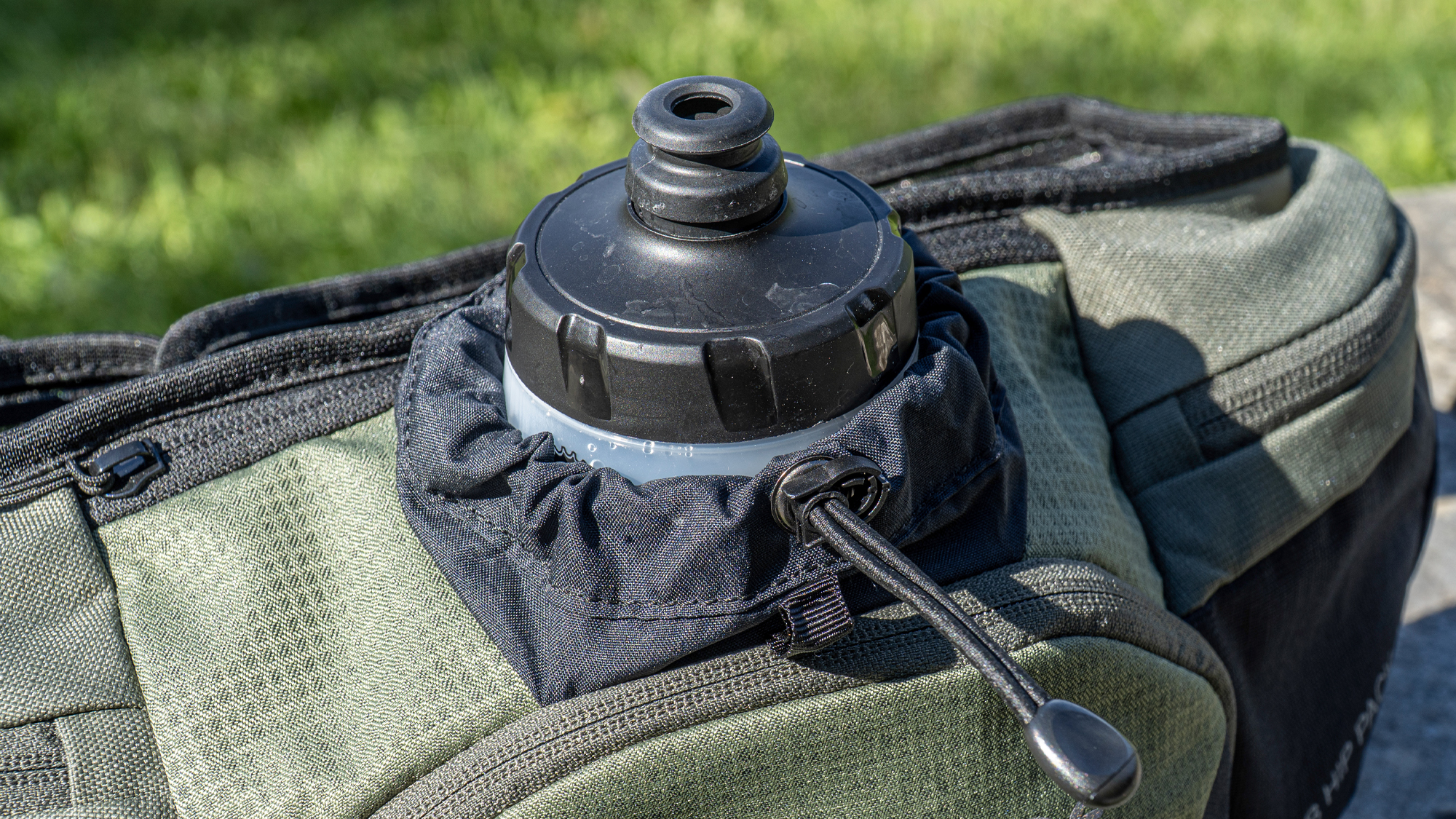
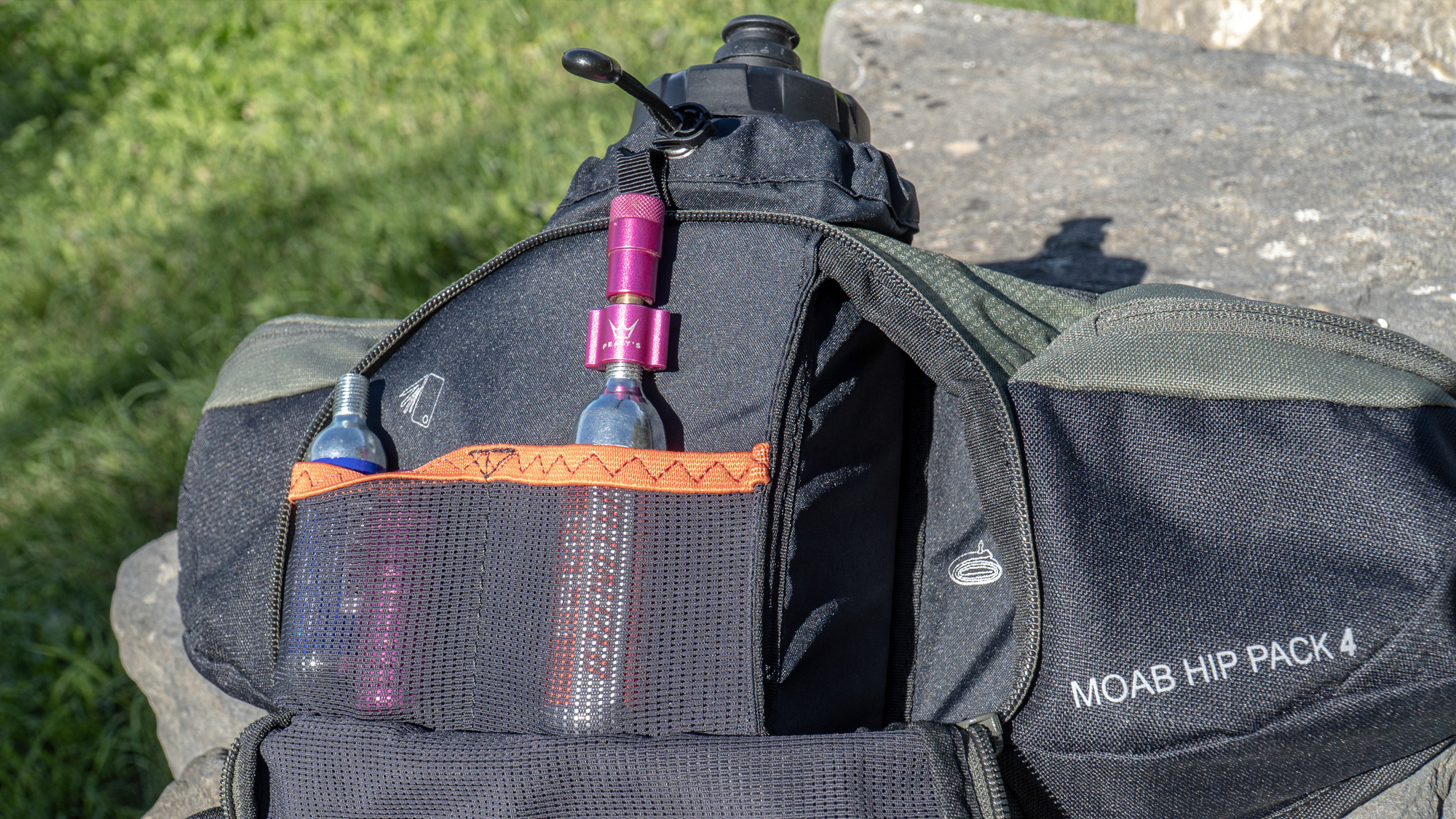
The Moab fits perfectly while riding, but can slip downward when inserting a water bottle. There’s a lot of tension on the side pockets, making it difficult to reach the contents. The compartment layout is very unusual due to the centrally located bottle holder.
Specs
Capacity: 4 liters
Hydration system: Holder for one water bottle
Weight: 395 grams
Strengths
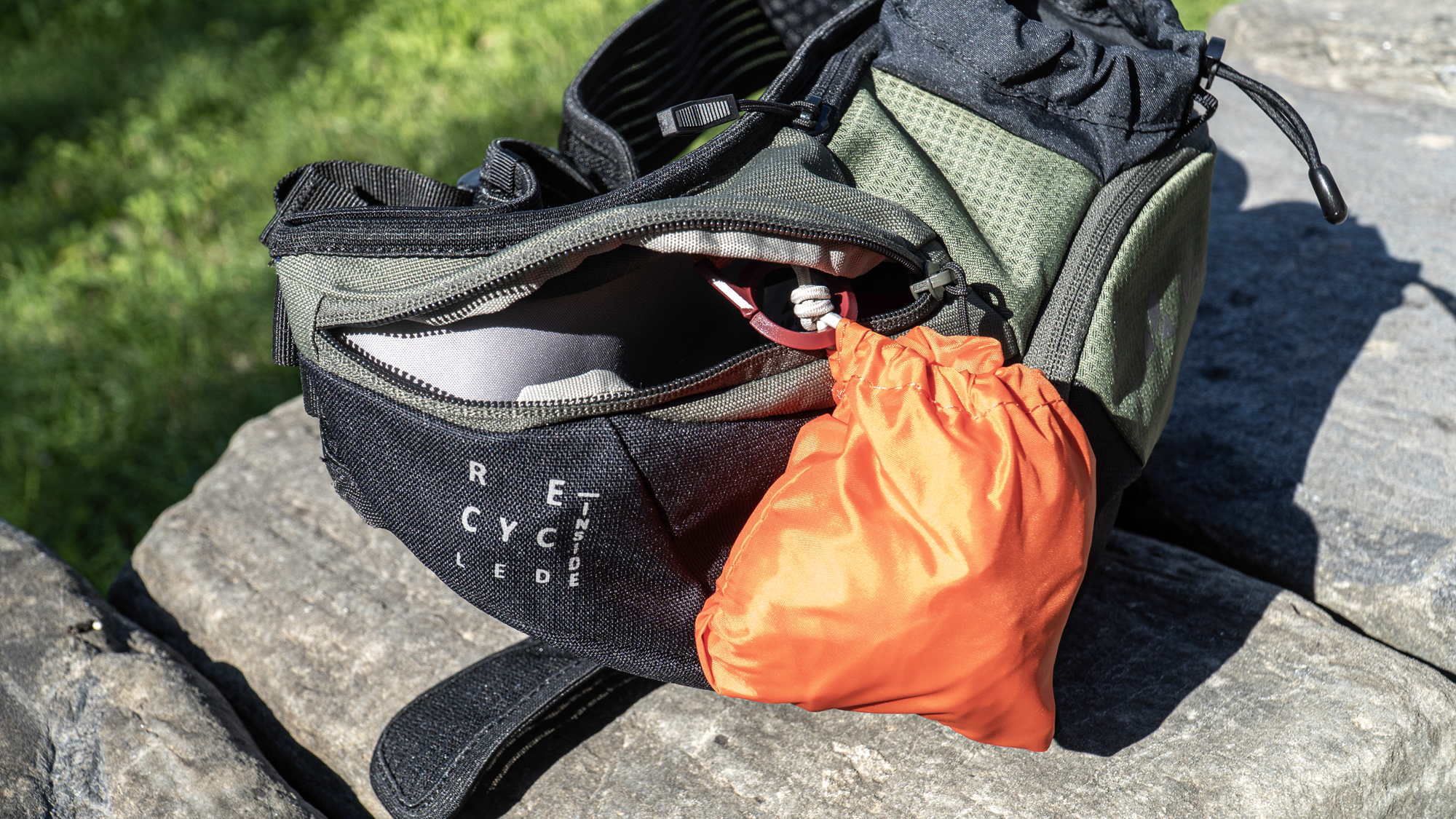
- Comes with a rain cover
- Separate smartphone compartment on the back
- Made from recycled polyester
- Rack for a taillight
- Large side pockets
Weaknesses
- Velcro strap is too long for slender people
- No space for a mini pump or floor pump
- The main compartment has only a one-way zipper
- Holds only one water bottle
Price: CHF 85.90 / EUR 80.00
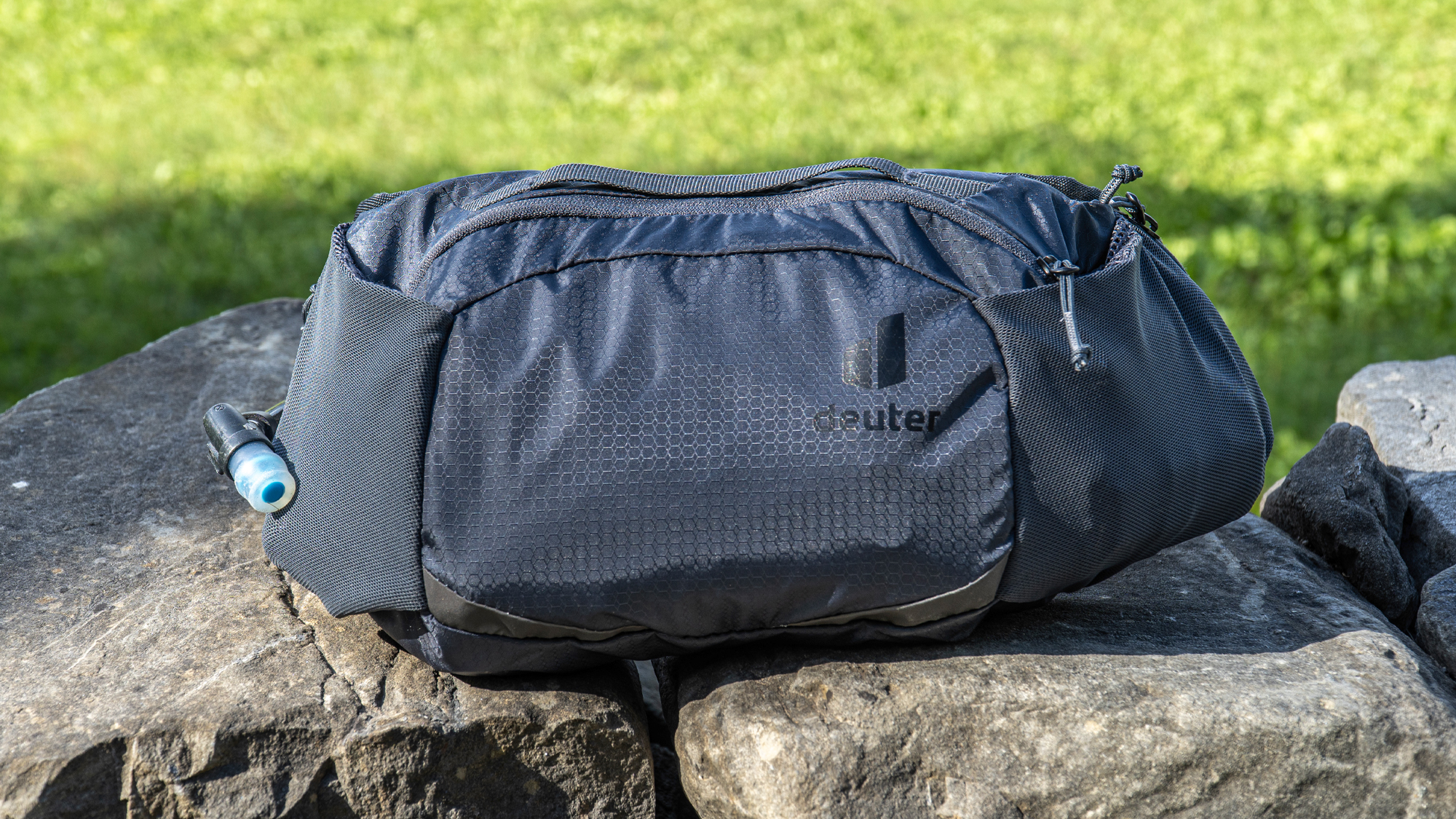
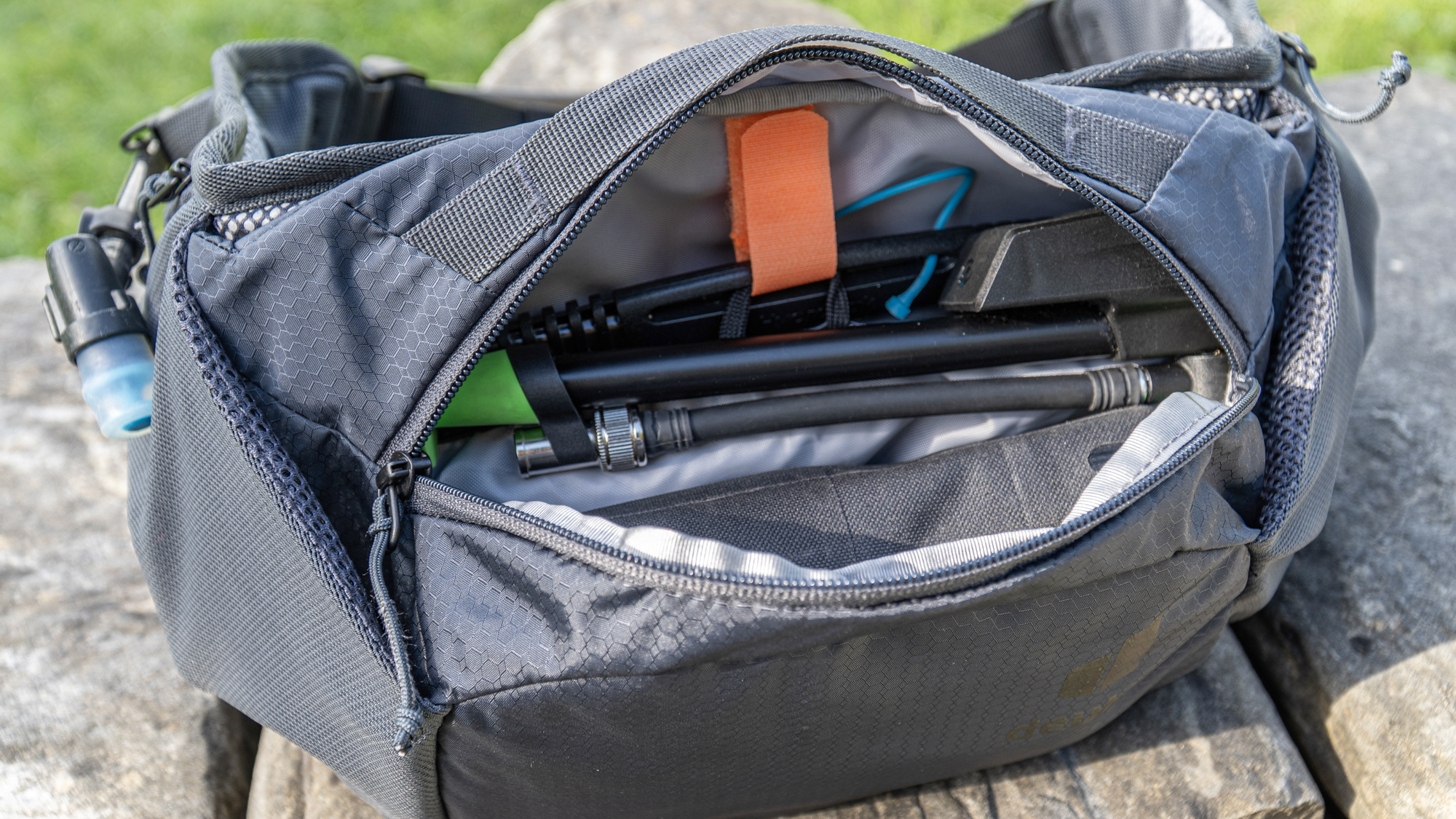
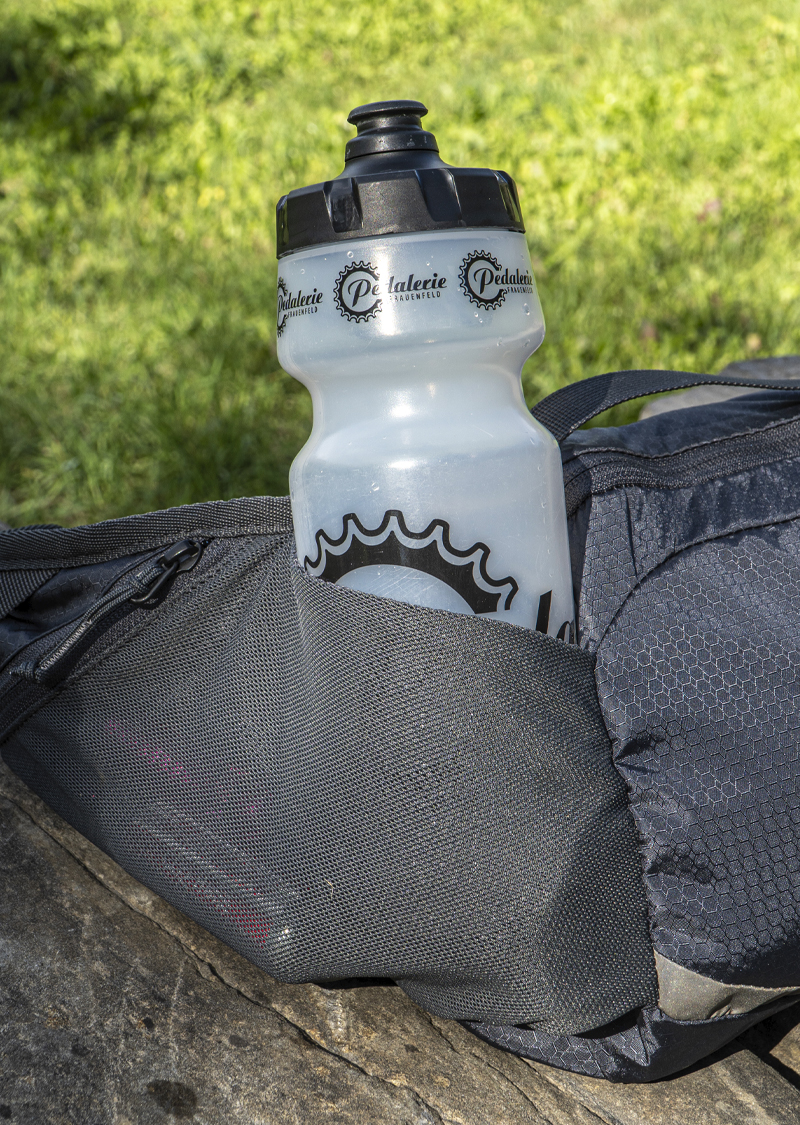
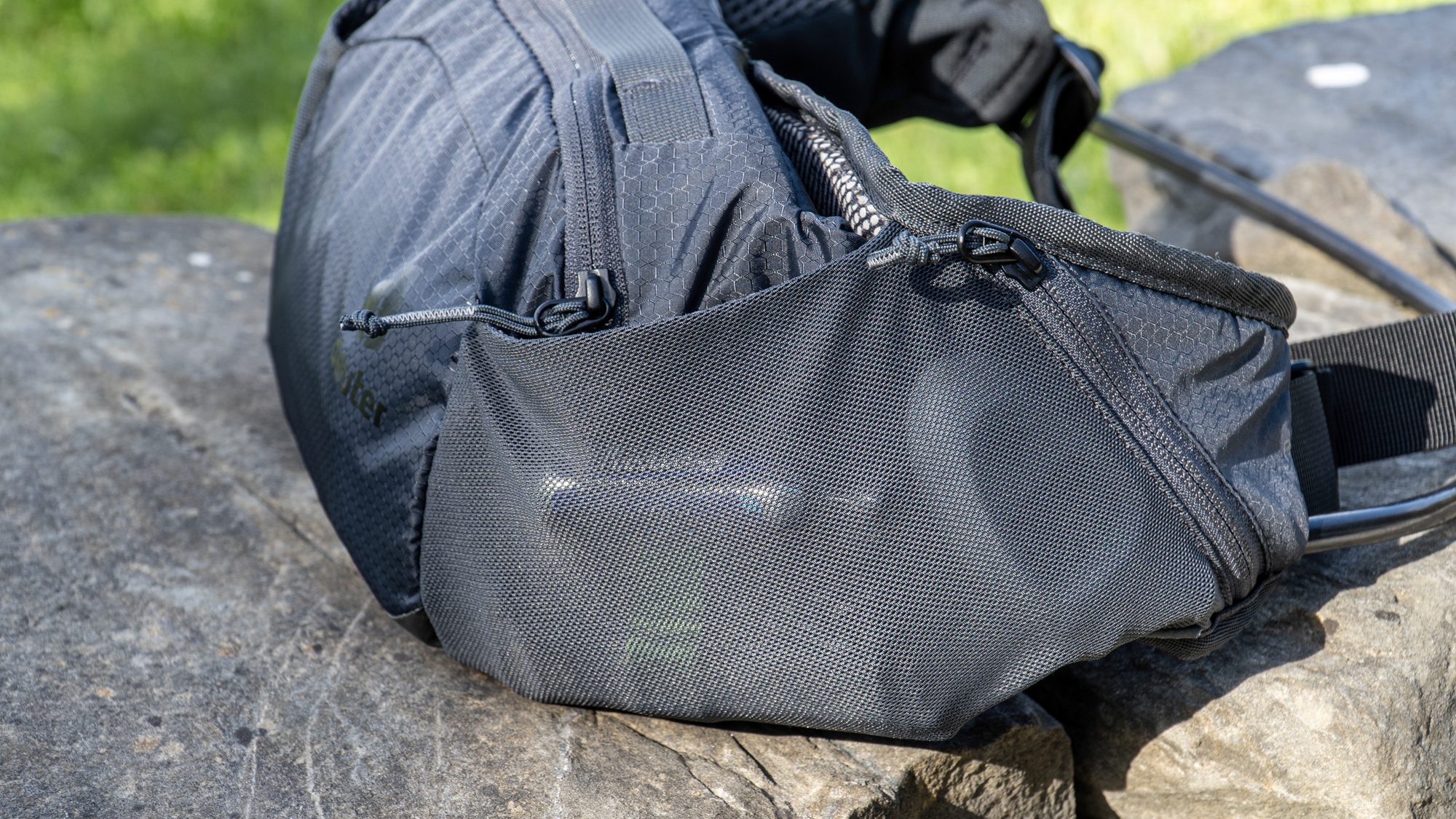
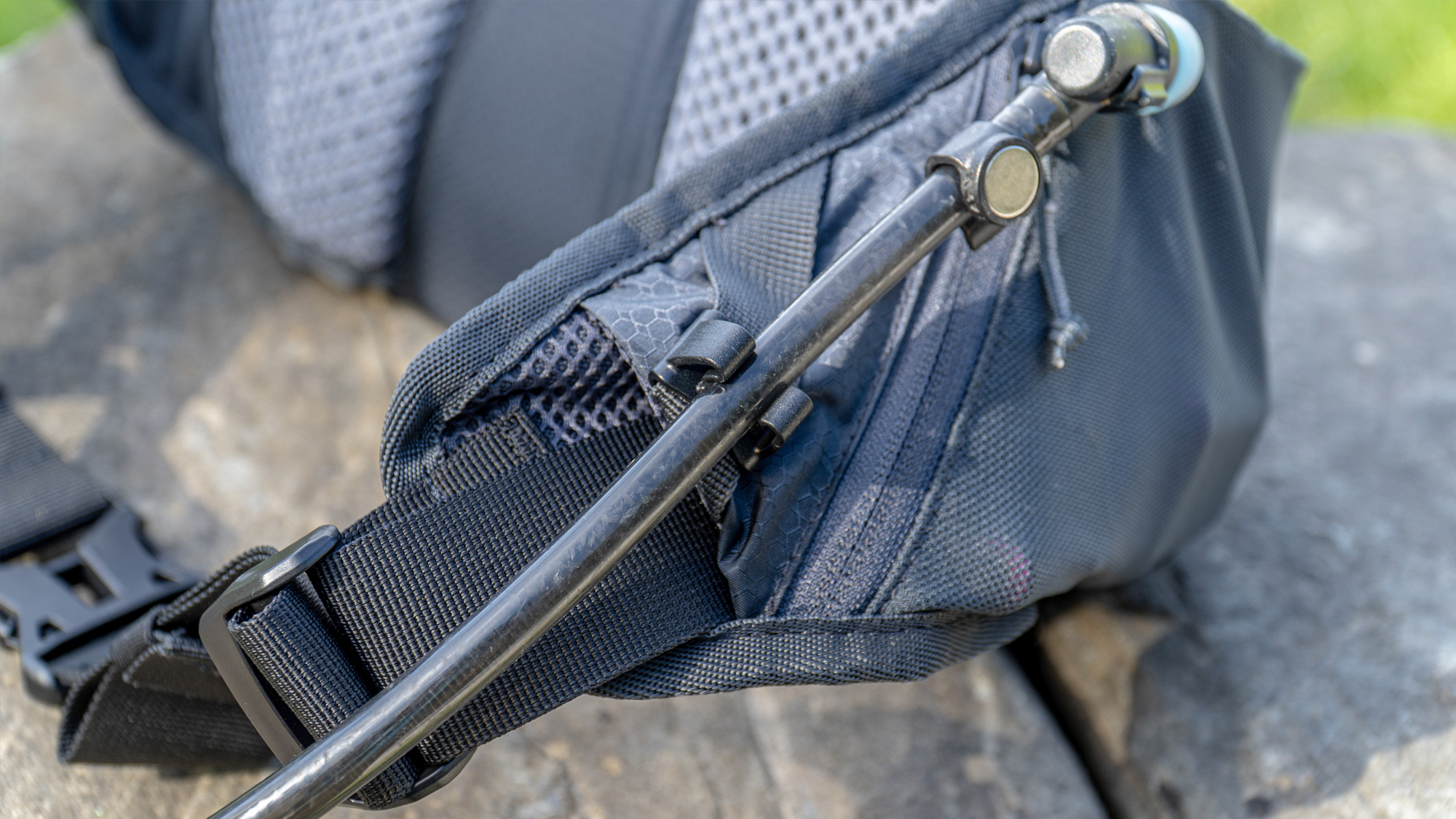
Deuter Pulse 3
The Pulse 3 is the lightest waist pack in the test. It can be conveniently tightened toward the front using compression straps and easily loosened again by tilting the strap guide. The Pulse fits well against the body and only shifts slightly when jumping.
Specs
Capacity: 3 liters
Hydration system: Designed for a hydration bladder, plus 2 compartments for water bottles
Weight: 324 grams
Strengths
- Available in 2 colors
- Forward-facing compression straps
- Large side pockets
- Well-designed hydration tube routing
- 100 percent recycled main material
- Convenient carrying handle
Weaknesses
- Does not come with a hydration bladder
- External mesh pockets only hold 0.5-liter water bottles
- The main compartment has only a one-way zipper
- No external attachment points for protective gear or jackets
Price: CHF 74.90 / EUR 70.00
Conclusion
The Fidlock hip bag remains the benchmark. None of the other bags fit as snugly and comfortably, and it also comes out on top when it comes to the closure and hip belt. The other four products are very similar in terms of comfort and differ primarily in their compartment organization, which is a matter of personal preference. All hip bags are very well made.
Further content on this article



About the author: Sacha Steiner
Note: This content has been automatically translated from German. Please report any incorrect translations.