

Cracking bike: This is where it comes from - and this is how it goes away. Part 1
Rule 1: The cracking is not coming from where you think it is
I have been working in bike workshops for 18 years and the customer's shoe usually pinches the hardest when the bike makes a cracking noise. The customer usually has an exact idea where the cause lies. Experience shows that they may or may not be right. This is because large-volume aluminum and carbon tube cross-sections function like loudspeakers that can amplify and transmit noise. It is therefore by no means promising to replace the bottom bracket and maintain the bearing seat when the customer says "The bottom bracket is cracking!". It can happen that the bike is completely unimpressed by this - and continues its cracking activity. That's why the motto for a cracking bike is "search until you find it" - and sometimes in places you wouldn't expect.
Critical point 1: Bottom bracket as a crime scene
In most cases, the bottom bracket is suspected to be the source of all evil. However, the external bearings and large-diameter crankshafts are quite durable nowadays. That's why other construction sites are also possible.
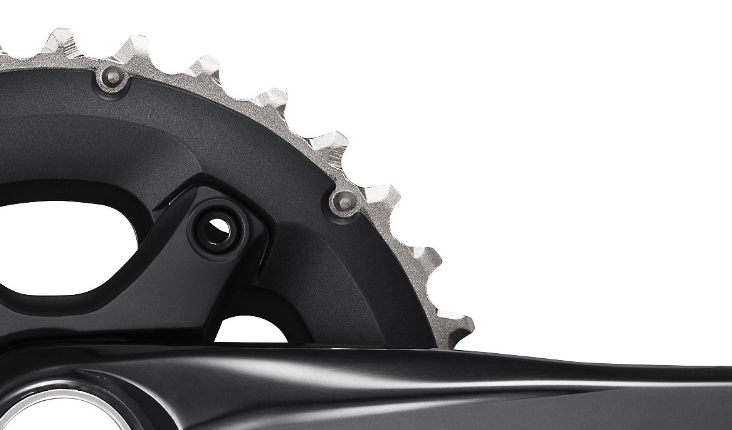
Critical point 2: The chainring bolting
It is worth using an Allen key or the Direct Mount fastening tool to check whether the chainring is firmly seated on the crank. And clean the seat of the chainring beforehand. If there is sand or a loose connection, the cracking is inevitable.
Critical point 3: The cassette
The cracking occurs when you pedal hard? Then remove the cassette from the body, clean the seat, grease it lightly and tighten it firmly. This can work wonders and calm the bike down.
Critical point 4: The dropout
The dropout - i.e. this thread with a metal appendage - brings the change to the frame. It is designed as a predetermined breaking point and is usually connected to the frame with just two small bolts. If the dropout is shaken loose and not firmly connected to the frame, it can cause a lively cracking noise. So remove the rear wheel and fix the derailleur hanger in place.
Critical point 5: The spoke tension
A good wheel is based on a homogeneous spoke tension that is as high as possible. If the spoke tension is out of balance due to an imbalance, it can crack. Checking and adjusting the spoke tension can calm the bike down.
Critical point 6: The boltsThere are many bolts and threads in a frame. It can happen that you check all of the above points - and the bike still cracks. Then you check the bolts on the bidon holder. Et voilà, one was loose and, in combination with a large-volume aluminum down tube and pedaling movements, has developed an impressive background noise.
Note: This content has been automatically translated from German. Please report any incorrect translations.