

E-mountain bikers are new guests with different needs
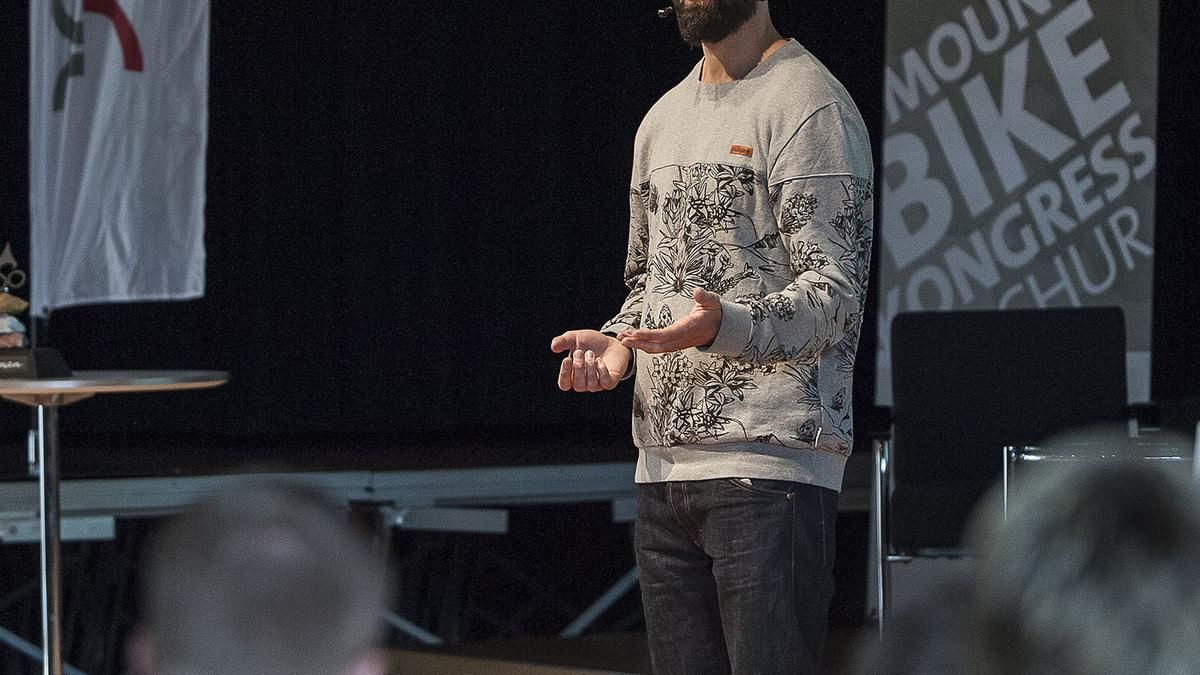
Darco Cazin, are you the Bernhard Russi of mountain biking?
No! (laughs). I'm not an Olympic champion, a top athlete or a particular standard-bearer of mountain biking. For the latter, I am perhaps a good advocate.
After all, you have already realized over 300 trail projects worldwide, developing bike destinations at home and abroad...
...that's right, when it comes to know-how, I'm perhaps already a Russi. But I don't do it alone, I do it with the Allegra Tourism team. We are leaders in our field.
Is mountain biking the new skiing?
Seen as a market, biking can certainly compete with skiing. However, it can neither compensate for nor replace the stagnating ski market.
Even if more mountain bikers were to come to the mountains?
The paradox is that so-called mountain bikes are mainly used around the cities and not enough in the mountains. There is a huge potential for added value, but we are still doing far too little to bring it to the mountains.
So the market is not yet saturated?
Not by a long shot. Mountain bikers, for example, hardly ever go on vacation. It would be nice if they didn't just do their laps at home, but if we could get them into the mountains. We have around 1400 ski resorts in the Alps, 150 of which are involved with mountain biking, but only around 35 do this seriously. But the topic can also be exciting for all the regions between the ski resorts. So we are only at the very beginning.
And how! Today, mountain biking is taken much more seriously. We used to be seen as freaks with our ideas and were dependent on individual exponents in tourism believing in our topic. Back then, our presentations took place in side rooms with poor projectors; today we have proper stages with sound systems. And the tourism and mountain railway directors are now involved right from the start, whereas in the past we were lucky if we were even allowed to present the topic to them in person.
So the time for explanations and persuasion is over?
People are aware of the potential of the mountain bike market. But today we have to explain the "how". You can't realize a project in a hurry. It needs a concept, a project, planning and implementation - it's anything but a quick fix.
... we also have three projects in South Tyrol and have recently implemented one in Japan and the United Emirates.
What exactly does your work consist of?
Sometimes the projects are very concrete, such as in South Tyrol, where we are currently building a trail around 800 meters long, sometimes they are very conceptual, such as in the canton of Fribourg, for which we are planning the entire MTB strategy and its implementation.
What do your projects cost?
Comprehensive projects start at 20,000 francs, we build trails in the six-figure range. Concepts like the one in Fribourg cost around 50,000 francs, Graubünden Bike invested 2.4 million francs over five years to develop the basics. There are places that spend several million on their trails, Sölden, for example, invests around 6 million euros in trail construction alone.
In contrast to skiing, biking is free. Who pays for all of this?
The trails are the main cost drivers, but the added value comes from the services. Hotels in particular benefit here with overnight stays, catering services, stores, tour guides and transportation services. There are different financing models. The trails can be financed via visitor taxes and taxes. Sölden, for example, has introduced an infrastructure euro for every overnight stay.
Simpler offers for more mountain bike guests.
And what next?
We always talk about the three pillars of trails, services and identity. From the guest's point of view, the trails and experiences in nature are central. The services offer comfort, and the identity of a region ensures that the biker feels at home in the local MTB culture. From the destination's point of view, it's different. Trails mean investment, the services are a gift, while the identity, a local MTB culture, is what makes the system sustainable in the first place.
So a good hiking trail network is not enough for bikers?
It all depends on the quality of the hiking trails, which vary greatly throughout Switzerland. You also have to offer bikers the opportunity to spend their money. If the hiking trails go past the outside of the village and end at the train station, people get on the train and off they go. In Pontresina, we have only made a small change to the route in this respect, but it makes a big difference. The path now leads through the middle of the village, past five inviting terraces, and thus also creates added value.
How do you see the relationship with the hikers?
They were on the mountain first and some feel very disturbed by bikers. The conflict between bikers and hikers is not as big as it is often made out to be. We have so many trails in Switzerland. The greatest potential for conflict is where baby carriages, walkers and bikers come together. When it comes to density stress, good planning is essential. It is also important to be aware of each other.
There are more and more older as well as younger mountain bikers. Who should the destinations appeal to?
Definitely not all of them together. The market is big enough that everyone can choose their own target group. I recommend that a destination specializes in one or two segments. Downhill, for example, is the smallest and most extreme market, but if you do it right, you can also generate added value with it.
What makes a good mountain bike hotel?
A mountain bike culture must be lived. The host must have access to this sport, which is even more important than customized services and a perfect infrastructure. A hotel must understand the mountain bike guest, must know where they come from, what they have just experienced and also that they can sometimes be wet or dirty. Washing facilities for bikes and clothes, a workshop and a lockable room for expensive bikes are among the basic requirements.
Let's talk about electrified mountain bikes, a trend that is on the rise. Who are the customers here?
The potential of e-mountain bikers is many times greater than that of conventional bikers, with more women and families. The average e-mountain biker is in their mid-40s, and the trend is downwards. Their income is above average, because you have to be able to afford a bike costing a few thousand francs.
What are e-mountain bikers looking for
?
They are looking for nature experiences, in a community and time-optimized. The e-mountain biker is a new guest with different needs. The social component in particular is much more pronounced for them. After all, the e-MTB makes it possible for young and old, children and parents, well-trained and unathletic people to be out and about together.
Are there any current figures on the trend? How many people ride e-MTBs?
It is not known how many are on the road. But in 2016, one in six new MTBs sold in Switzerland was electrified, in 2017 one in four. Today, e-MTBs are still in the minority, but the market is growing extremely quickly. It is exciting to see that many people are buying a full-suspension e-MTB with very wide tires, even though they don't ride their bike in the mountains.
Do e-mountain bikers need different, longer routes?
It would be a big mistake to make the routes longer just because these bikers have a battery. The opposite is the case. These groups are looking for routes of one to two hours.
At an eMTB symposium, there was talk of a coming "tsunami". What does that mean? How will the e-MTB change tourism?
The potential is huge. My wishful thinking is that we will use the e-MTB to seize the opportunity that we missed with the mountain bike: namely to fascinate mountain bikers in a wider context for mountain vacations. I very much hope we will succeed. To do this, however, our offers need to become much, much simpler.
Will the mountain railroads become superfluous in the future?
Pure bike transporters without additional services will become obsolete in the future. With an e-MTB, you can ride outside of operating hours and sometimes even get up the mountain faster and more comfortably than by cable car. However, the e-MTB cannot keep up with a mountain railroad, which can quickly cover 400 meters of altitude in ski resorts.
About the person
Darco Cazin (40) is a native Romansh speaker and grew up in Val Müstair. He studied economics in Zurich and tourism in Barcelona for a year. When his mother took over a hotel in Val Müstair in 1999, Cazin discovered bike tourism and its great potential. In 2003, he founded the company Allegra Tourismus, which specializes in bike tourism. Among other things, the company developed the basics of bike tourism for the canton of Graubünden and worked with hotelleriesuisse to revise the national criteria for a bike hotel. Today, Allegra Tourism employs 21 people, and Cazin is a sought-after speaker at symposiums and conferences in Switzerland and abroad, as well as a PostBus ambassador. He lives in Pontresina with his wife and three children.
The interview with Darco Cazin was first published in the "Hotel Tourism Review" on June 14, 2018. The questions were asked by Natalia Godglück.Ride Congress in Davos
Darco Cazin is a regular speaker and visitor at the Ride Congress in Davos. Every year, top-class speakers present current topics and exciting projects relating to mountain bike tourism. The intention behind the event is to strengthen mountain biking as a sport and, above all, as a tourism factor and to promote the development of this popular and growing summer sport in the Alpine region. Active and interested parties are given a platform to share their experiences and build up a high-quality network. The next Ride Congress will take place on September 13 - 14, 2018 in Davos. The event is aimed at mountain bike tourism professionals, but is open to all interested parties and bike enthusiasts.
Further information at www.ride-kongress.ch
Suitable Ride Spotguides
Note: This content has been automatically translated from German. Please report any incorrect translations.