

First Ride: Rocky Mountain builds an e-mountain bike
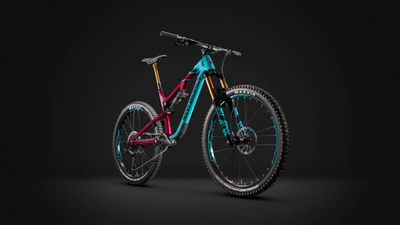
Recently, Rocky Mountain unveiled the new Altitude - and now comes the next, quite surprising coup: the Altitude Powerplay, an e-mountain bike, is rolling into the Canadian cult brand's portfolio. The Canadians are staying true to themselves and are by no means launching a me-too product. The trail bike with 160 millimetres of travel at the front and 150 millimetres at the rear is not equipped with a Bosch, Brose, Yamaha or Shimano motor. Rocky Mountain has developed its own motor, battery, handlebar controls and app for its entry into the motorized mountain bike business. Unlike many of its competitors, the developers have not fitted the Altitude Powerplay with plus-size tires. Instead, they have deliberately opted for 2.5 wide trail Maxxis Minion tires, which should give the bike more precise handling and less weight. If you still want to use plus-size tires, you can do so with 26x3.0-inch tires.
Our own in-house motor
The motor is designed as a mid-motor. With the special feature compared to Bosch & Co. that the bottom bracket is placed outside the motor. This is intended to prevent cracking noises and provide a larger selection of bottom brackets and cranks. The bike we tested was fitted with a Race Face Turbine crank with a press-fit bottom bracket. The crank has a standard cinch spider with a freewheel that allows the chain to move freely, making it possible to pedal backwards. If you remove the cover on the right-hand side of the motor (simply by means of three screws), you will see two chain guide rollers and a drive sprocket. In this way, the chain is driven and the pedaling force is increased; the pedaling force invested is measured by a type of spring that moves in front of a magnetic field sensor. The motor cover and the upper guide pulley impress with a little "plastic fantastic" charm, these two parts fall somewhat short of the high-quality workmanship and appearance of the frame.
How does the bike ride?
How does the "Altitude Powerplay" ride?
The result of this drive design is an additional force that engages extremely harmoniously, never pushes unexpectedly and starts the motor without delay even with small crank movements. One small disadvantage of this spontaneous, smooth and jolt-free pedal assistance: when stationary, if you keep your foot on the pedal, the motor lets you know with a quiet humming and jerking that it is ready to get going at any time. The bike also has a (low) cadence range in which the chain - which runs over two guide rollers, the chainring and the drive sprocket - makes a certain amount of noise. This is not dramatic, but as the motor itself runs extremely quietly, it is a pity that the chain creates this background noise in (rather rare) riding situations. If you increase the cadence to around 70 revolutions, the drive - and the running chain - is very quiet.
The geometry of the new Canadian development corresponds to that of a modern trial or enduro bike - and that's exactly how it rides: the "Altitude Powerplay" climbs well, always offers good traction and in the strongest support level and with around 80 newton meters of torque, even longer uphills melt into small hills. As soon as you turn downhill on the trail, the "Altitude Powerplay" shows its true colors: the bike sits firmly on the trail, it goes into a bunny hop playfully, it likes challenging terrain, the geometry and the capable suspension elements from Fox give the bike downhill qualities, where the rider is the limit rather than the bike.
Integrated battery
The engineers have consistently integrated the battery into the system. The battery, which has a capacity of 500 or 632 watt hours depending on the bike model, is fixed in the down tube. This means that the power pack cannot be removed in the blink of an eye, as this requires the motor to be removed. The battery operates at 48 volts, which means that an empty battery can be charged to 80 percent in around two hours. The system integration of the battery also leads to weight savings: it saves weight as the battery cover and lock are no longer required as the cells sit securely in the down tube. With the integrated battery, the frame is also significantly lighter to build and the product managers at Rocky Mountain also said succinctly that the bike looks much better with an integrated battery.
How is it operated?
The e-bike unit is controlled via a remote control located on the left-hand side of the handlebars. Three support levels can be selected with two buttons. The most powerful level offers a generous increase in pedal power - but without being too strong or overpowering. As the drive responds quickly to changes in pedal force and cadence, there is no feeling of being a mere passenger in any riding situation. On the contrary, the Altitude Powerplay conveys the feeling of a real mountain bike, it rides well-balanced and shows a lively rear end that willingly circles around tight hairpin bends. But back to the remote: it displays the battery status with four backlit bars and has a button for a push assist. The remote fulfills its function, but there is still room for improvement in terms of feel and appearance. The buttons are not exactly blessed with a defined click. Surprisingly, this remote falls somewhat short of Rocky Mountain's usual high build quality, but as mentioned, the device fulfills its function. To keep up with the high-quality look of the bike, a remote made of milled aluminum or carbon à la Race Face standard would be more suitable, for example.
Another option for controlling the drive is the "Ebikemotion" app, which runs on a smartphone, connects to the bike via Bluetooth and is available for Android and iOS. A USB port is discreetly concealed under the stem so that the smartphone does not run out of juice. The app can be used to customize the drive modes and display the range or battery level, for example. Or the heart rate, which is determined via the chest strap and Ant+, decides when which support mode is selected, i.e. a kind of heart-controlled automatic support. The app also offers a very mundane navigation function.Three models of the "Altitude Powerplay" are expected to be available from the end of June. The basic version "Carbon 50" comes with Rock Shox Yari suspension and deluxe shock, offers 500 watt hours of battery power and weighs 22.3 kg. The weight of the "Carbon 70" is identical, the suspension elements come from Fox (Fox 36 Float EVOL Grip Performance 160mm / Fox Float DPS EVOL Performance Elite) and the battery is a good portion more powerful with 632 watt hours. The top model "Carbon 90" is very light at 21.6kg thanks to the carbon cranks and rims and other high-quality parts, while the Fox 36 Float EVOL FIT4 Factory 160mm fork and the Fox Float DPS EVOL Factory shock are on board for the suspension elements.All three models shift with the 8-speed "EX1" e-bike drivetrain and brake with the "Guide RE" stoppers with 200mm rotors from Sram. The "Ride 9" geometry adjustment is always on board, which enables adjustments to the terrain and personal preferences - for example a chainstay length of 423 to 426 millimetres.
Conclusion: Rocky Mountain's "Altitude Powerplay" has a very clean and thoroughly independent look. Small weaknesses, or in other words room for improvement for further product generations, can be found in the look and feel of the remote, the look of the upper chain roller and the motor cover and the noise of the chain at low cadences. The riding characteristics and power development of the Canadian racer's power unit are not only beyond reproach, but are also a lot of fun to ride, even on rough enduro terrain. Looking at the geometry, the short chainstays stand out and the fact that the geometry points hardly differ from a non-motorized enduro bike despite the mid-motor and battery. The pedal assistance is harmonious and comes very close to the feeling of riding a "normal" mountain bike. The mid-motor is positioned low in the frame, giving the bike a harmonious center of gravity and this design with integrated battery also makes room for a bottle cage on the down tube. If you don't always want to ride with a hydration pack, you'll appreciate the fact that the "Altitude Powerplay" is suitable for a bottle cage.
It's refreshing that Rocky Mountain isn't just building another bike with the popular Bosch or Shimano mid-drive motors. The specification also goes its own way with 2.5 wide trail Maxxis Minion tires, and the deliberate omission of plus-size tires gives the Powerplay precise riding characteristics. At 22.1 kilograms, the tested model is also extremely competitive in terms of weight, especially considering the 632 watt-hour battery. For some loyal Rocky Mountain fans, the "Altitude Powerplay" is probably a challenge. It's like a paradigm shift when a core brand like Rocky Mountain launches an e-mountainbike on the market. Even if some traditionalists consider e-support unnecessary, here's a consolation: the "Altitude Powerplay" comes very close to the non-motorized "Altitude" in terms of handling - especially downhill.
Further content on this article
Note: This content has been automatically translated from German. Please report any incorrect translations.