

Flow trails are not ugly. Most of them are a compromise.
Here is the response from Ueli Guntli:
"What's this all about, I asked myself when I read the headline of Stefan's editorial. As a trail builder, I felt like I was being attacked head-on. After reading the text, one thing became clear to me. What Stefan considers beautiful, namely the trail that follows the relief like a decades-old footpath, is also what I like best. The bike route, which is squeezed into a narrow corridor and winds along a ski slope or forest road, doesn't make me happy either. But sometimes there's no other way.
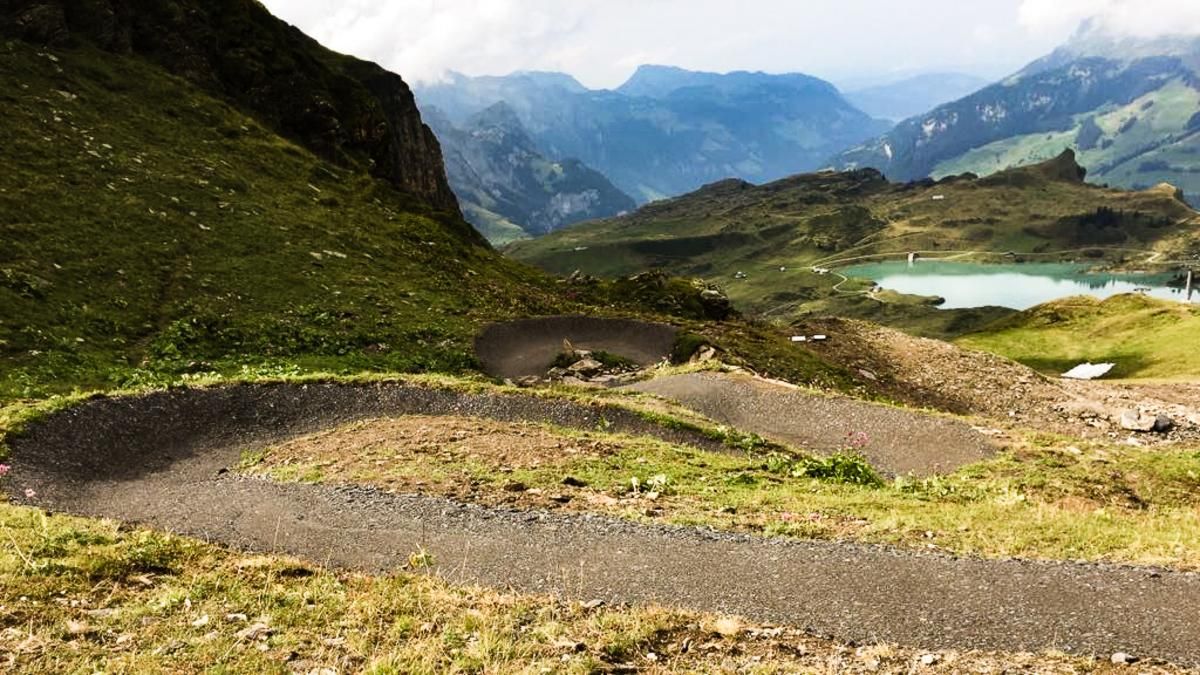
Once a first draft of a route is available, a landowner has an objection here, a nature conservation organization disagrees there, the wildlife authority doesn't want to see certain areas affected and so on and so forth. What remains is a corridor that often leaves out the most interesting terrain. In the worst case, the sector runs exactly in the fall line and becomes increasingly narrow towards the lower end, which is characteristic of alpine valleys. Because a trail must not be too steep - for safety reasons and above all to keep maintenance costs low - it rides down into the valley in this narrow corridor as a series of berms. This is what we trail builders call a cone puller. Even my eyes don't glaze over when I see a route like this."
"Personally, I'm convinced that it's the unusual, varied sections, in the forest, through a ravine, over special rock formations, past a viewpoint, that bikers remember and that motivate them to come back."
"But because we trail builders are dependent on orders and because the mountain bike infrastructure in general needs to be expanded, we build what is permitted by the regulations. We try to get the best out of the requirements: usually a compromise between the various demands of agriculture and alpine farming as well as restrictions from wildlife and nature conservation.What Stefan doesn't realize is that the hiking trails, which are perfectly integrated into the terrain, didn't always look like this either. A newly created footpath stands out, it is not yet the fine brown trail in the meadow, barely visible from the opposite slope. It will only grow over the years from both sides. The same happens with bike trails. Of course, berms have to be shaped again and again, waves and jumps have to be reshaped because of the high frequencies. The oldest flow trails in the Alps are still too young to have been integrated into the landscape by nature. But we would be amazed if we could see what a flow trail will look like in 20 years' time. Trails with botched, unnatural lines, in a narrow corridor with too much gradient for sustainable construction are probably still not aesthetically pleasing even after 20 years.
Are there flow trails that I find successful? There are. The Runca Trail in Laax - one of the oldest in Switzerland - or the Upper Tschoy Ride in Brandnertal are examples of trails that make use of the natural terrain suitable for trail building and therefore offer a varied riding experience. I also think the Fopettas Flow Trail in St. Moritz is very successful. It's only very short, but beautifully set in the forest landscape."
"If we give nature time to reclaim a little ground, then the one or other flow trail on the green meadow or in the sparse forest will also appear less dominant."
Note: This content has been automatically translated from German. Please report any incorrect translations.