

2-Year Test: Are Prescription Sports Sunglasses Worth It?
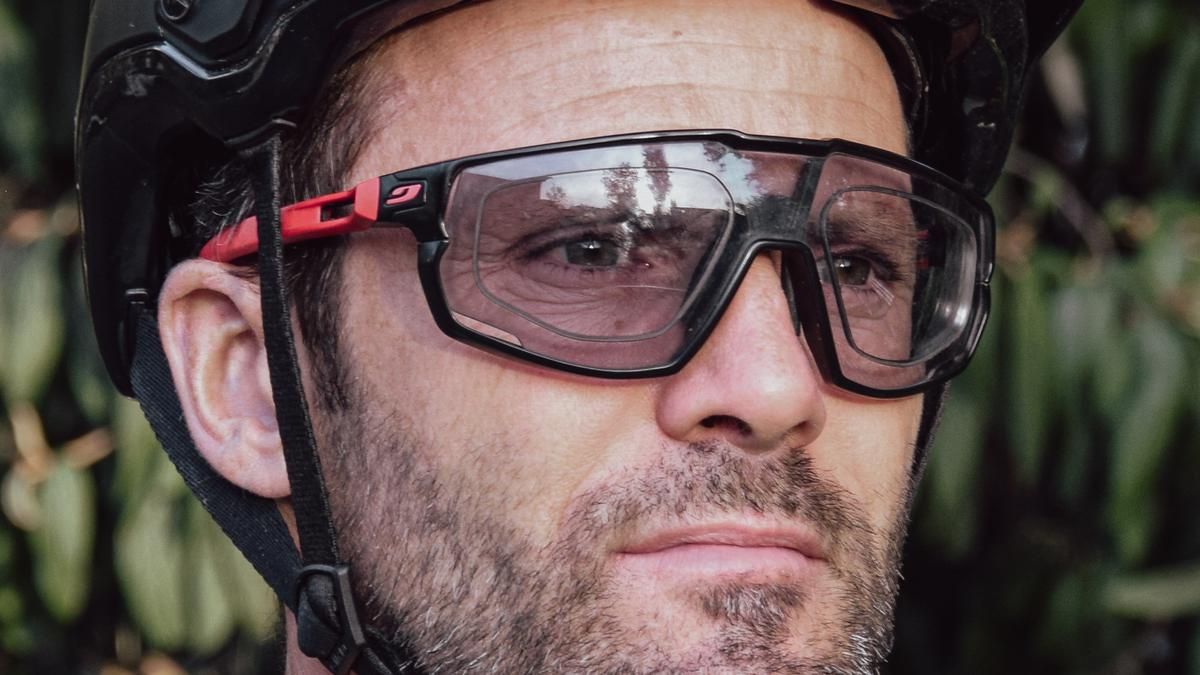
I’m nearsighted. Not severely—I’m not even required to wear glasses while driving. Still, I feel more comfortable wearing them, even when I’m biking. Otherwise, I’m a consistently inconsistent glasses-wearer. My biggest problem is at dusk and in the dark. That’s when my vision deteriorates rapidly.
Still, sports contact lenses are too much of a hassle for me. For years, prescription sports sunglasses seemed like the ideal solution. Especially a pair with photochromic lenses that I can also wear at night. There’s also the compromise of prescription clips that clip into sports sunglasses. But they have a reputation for fogging up even faster than regular glasses already do, because they sit so close to the eye. I haven’t tested this solution myself. It’s also clear that prescription clips are only available for certain eyewear models. It’s quite possible that there isn’t a compatible insert available for my favorite stylish pair of glasses.
I had my first “aha” moment when I did some research at an optical store. Prescription sports sunglasses don’t cost as much as expensive sunglasses—they cost two to three times as much. That actually makes sense, since they’re prescription glasses. After realizing this, I put the project on hold for even longer. The time was right for me when, due to a new job location, I was riding my road bike in the dark several times a week. The photochromic prescription glasses began to pay off.
At the budget optician’s, the Julbo Rush with prescription lenses ultimately cost around 650 francs. “Can’t go wrong,” I keep telling myself. Clipping them to my helmet now and then—convenient, but dangerous.
Every woman who wears glasses knows the routine at the optician’s. Except that after the eye exam, trying on different models, making a selection, and waiting for delivery, you aren’t handed a stylish designer pair—but rather a sporty plastic model. Just a pair of sports glasses.

You can tell the two years have taken their toll on the glass, but the glasses still serve their purpose.
The first panoramic view comes as a shock
That first panoramic view comes as a bit of a shock to me. “How bad is it?” asks the employee, who can tell I’m unsettled. Everything around me is curved, as if seen through a wide-angle lens. “That’s because of the more curved lenses and the different distance between the lenses and your eyes compared to regular glasses,” she explained. I’m confident my eyes will get used to it.
After two years and countless hours wearing the Julbo prescription glasses, I only notice the distortion sporadically now, after I’ve taken the glasses off and can see normally again. Julbo adds, upon request, that the different angle of the lenses relative to the eyes—compared to everyday glasses—is also responsible for the unique visual experience. However, this can be minimized through a perfect fit.
In daylight, I can’t say that my view of the trail and its finer details is noticeably clearer. What I appreciate most is that I can also see the chamois or ibex in the distance, which would blend into the surroundings for me without corrective lenses. On the other hand, I don’t notice the distortion of the lenses while mountain biking, which is likely because—especially when going downhill—I look strictly through the center of the lenses at the trail ahead and don’t roll my eyes to the side.
The Drawbacks
On tours, the glasses have one clear drawback for me: As a nearsighted person, I don’t need corrective lenses to read my watch, smartphone, or a map. As I’ve gotten older, I now have to take off my glasses whenever I want to make out a detail on the map. It’s inconvenient, but you get used to it. The solution would be progressive lenses, which would make the glasses even more expensive.
The glasses are also significantly heavier than regular sports glasses. On very rough trails, they sometimes slide forward on my face. A glasses strap would help with that, but I took it off right after trying it once. That’s because it prevents me from quickly sliding the glasses off my nose to read the digital map or the display on my watch. I’ve now mastered the art of pushing them back into place in the middle of all the jolting almost as well as the DH pros are at peeling the protective film off their goggles. It’s not ideal, but it works.
The adjustment process for prescription lenses is no different than for regular sunglasses. Rapidly changing light conditions—moving between open fields, forests, clearings, and back to dense tree canopies or shaded areas—can be a challenge. In particular, the lenses sometimes don’t lighten fast enough for me. On the other hand, the lenses darken much more than I need them to when the sky is cloudy or there’s fog. A specialist from Julbo explains the reason: The lenses don’t react to brightness or the intensity of light, but primarily to UV radiation. Less tinting in cloudy conditions would only be possible with lenses that darken less overall. That’s not a solution, not least because I also use the glasses in the snow. Another special feature: Car windows barely let any UV rays through, which is why these photochromic sunglasses aren’t suitable for driving. The lenses lighten up as soon as you get behind the wheel.
Conclusion: Positive, with some caveats
In summary: Given the countless hours spent in the saddle and in the snow (only going uphill there—I prefer to use goggles for the descent), the investment was worth it. I appreciate the prescription sports lenses the most at dusk and in the dark. In bright sunlight, the difference isn’t significant in my case. Constantly taking them off when I have to check the map frequently is annoying, as is them sliding down when things get bumpy. Still, as someone who’s only slightly nearsighted, these glasses are the right solution for me. And I haven’t lost the sports lenses yet either.
Further content on this article



About the author: Stefan Michel
Note: This content has been automatically translated from German. Please report any incorrect translations.