

Flyer CEO Simon Lehmann: "We're staying in Switzerland", part 1
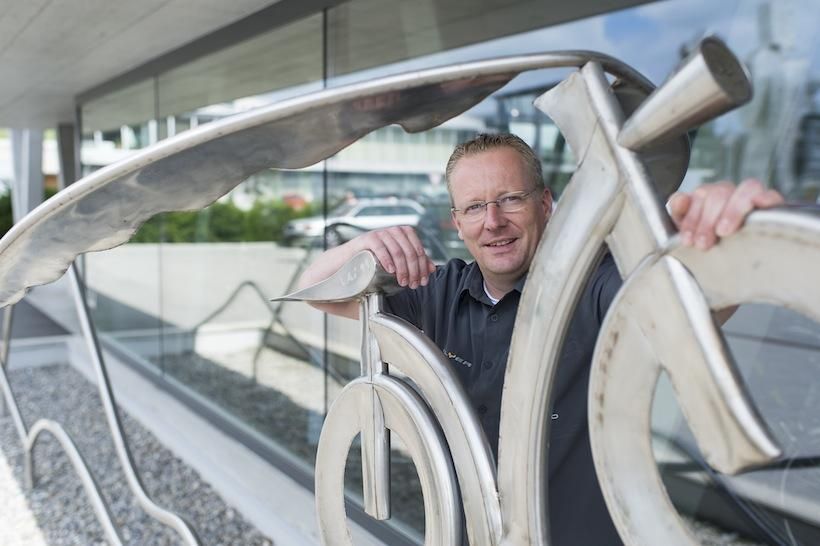
Mr. Lehmann, we postponed the first interview, you unexpectedly traveled to Asia. Where was the fire?
At Panasonic. And on fire is an exaggeration. It took a meeting because we have to stick to the development timeline for our relaunch, for our new technology.
What technology are you talking about?
We launched the Flyer Intelligent Technology - FIT for short - at Eurobike 2015. As we are now becoming a system integrator ourselves, we are dealing with very complex components from different suppliers. We are no longer working with just one system supplier as we did in the old Panasonic days. We work with a supplier for battery cells, we cooperate with a company for display and control technology. It's about battery design, we're working on motor design. And we are now incorporating the findings of the tests we have carried out into future products.
Flyer no longer buys a ready-made e-bike drive system. Instead, it directs the battery, motor, display and control system itself. How does this benefit your customers?
With our own integration technology, we have huge opportunities for the future. This is a quantum leap! We now have the ability to connect and control different components. We develop the bike control ECU, the Electronic Control Unit, ourselves. This allows us to determine how the battery talks to the motor and how it communicates with the display. This ECU opens up fields such as brake light, speed-dependent light intensity or the display of whether the side stand is folded down - just to name a few examples. Our own ECU makes us open to new developments and new components.
Which products do you use this FIT technology on?
Today on two bikes: the Uproc 7 E-Fully and the U-Series S-Pedelec. For the 2017 model year, we will be rolling out the technology further across the portfolio, particularly in the mountain bike and urban bike sector.
How did the 2015 season go for Flyer?
It's no secret: when I joined the company two years ago, it wasn't about a walk in the park. This is about repositioning, it's about a turnaround. In 2014, we were extremely well on the way to achieving this turnaround with a view to 2015.
And we achieved a great deal in 2015: The renewal of the portfolio with new technology and innovation with massive investments, we generated more turnover from our top of the line bikes and we reduced costs. At the same time, we also introduced SAP. That was a huge challenge in this transformation process.
Yes, then came the SNB decision on January 15 - with several questions and construction sites: If we buy in US dollars, then we have higher material costs. If we export three quarters of our products to the EU, we will have lower sales. We produce in Switzerland with high prices. We analyzed these scenarios and asked ourselves: What makes sense for the future?
So you have also scrutinized the Swiss location?
We thoroughly analyzed the Huttwil site as a company headquarters - and made no secret of it. We looked at the amount of cost reductions that could be realized by outsourcing production abroad.
Why did Switzerland win the race?
From a business point of view, the location is not the biggest cost factor. We don't want to give up on quality. We don't want to let go of the Swiss location and the Swiss label. The bottom line is that we have come to the clear conclusion that relocating production abroad makes no sense for Flyer.
It's the cost of materials. All market players were struggling with this, the prices for components are constantly rising.
How many bikes did Flyer sell in 2015?
Over 50,000 units.
How does this figure match your expectations?
We have achieved a precision landing.
What kind of growth have you set yourself for 2016?
We want to achieve seven percent more vehicles sold.
Note: This content has been automatically translated from German. Please report any incorrect translations.