

Hermida: "Schurter is a killer, Vogel is an anarchist
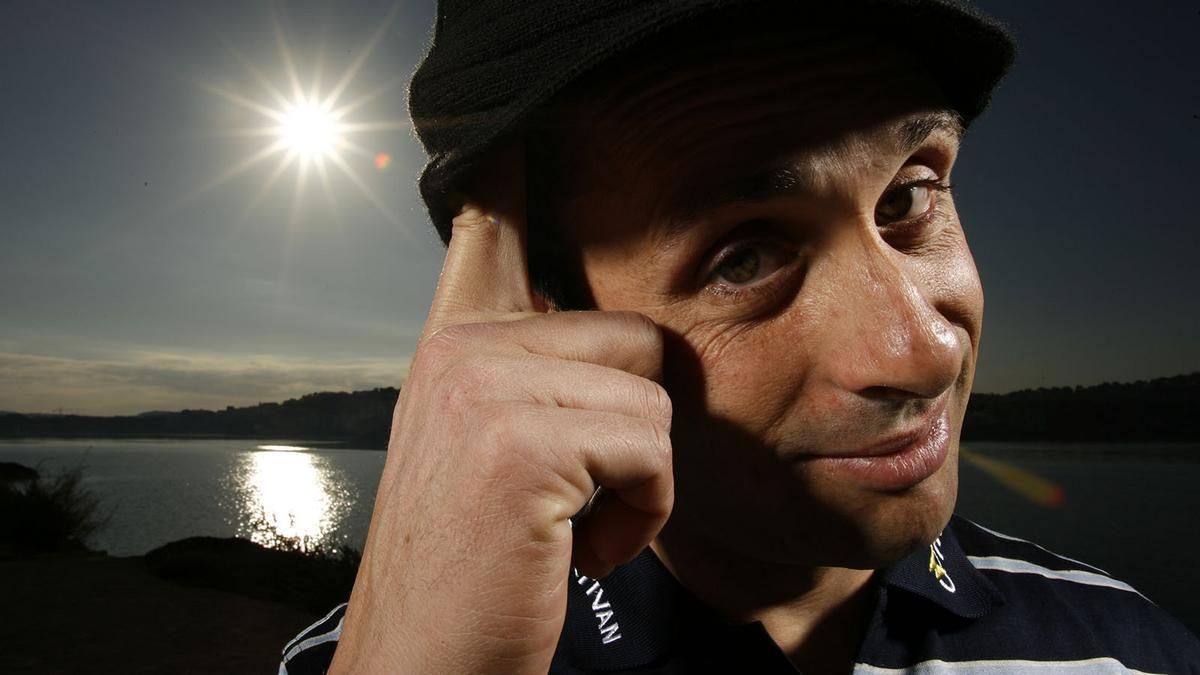
José, maybe these are your last days as world champion.
Maybe, maybe. It's almost a year and it feels like it was last week.
Are the emotions still present?
Yes, they are still there, for sure. That was a highlight in my life, in my sporting career. It was a very short year, for my opponents it was perhaps a long year, waiting for the next chance. Maybe it's my last days as world champion, or maybe it's the start of another year in the rainbow colors (grins). I have prepared myself for this week. My form has been good in the last few races, especially in Nove Mesto. In Val di Sole I was tired from training.
That wasn't a surprise for you?
No, it wasn't a surprise. It was part of the game. Of course I would have liked to have ridden onto the podium, but it was okay. I'm fourth in the overall standings. I'm thinking about the World Championship. Let's see how it goes.
Last year was the first time you focused specifically on the world championships.
Yes, my whole career I've been a driver who has delivered a stable performance throughout the season. And I had a lot of success. I used to be unwilling to sacrifice World Cups to become world champion. I was often strong at the World Cups, but two weeks later at the World Championships I was at my limit. In Canberra 2009, I learned a bit about how I have to do it to get both together. I was fourth back then. Last year I did the same, now I know how to do it, how to handle it. I was always good at the European Championships, I sacrificed that a bit. I used to be top at the European Championships and then got more and more tired. Now I'm in normal form at the European Championships and I'm building on that. Let's see if it works again.
Is this also a test for the Olympic Games in London?
You're more or less discovering my secret for the Olympic Games (laughs). My coach said last year that it might be a good system for the Olympics. My answer was: let me enjoy the title and we'll think about it in two years' time. But we're actually less than a year away from the Olympics now and the World Championships can really be a test for that.
You've now finished in the top five in the World Cup for the eleventh season in a row.
Yes, and in 2000 as an U23 rider I was eighth. In 2001 I was second, seven points behind Roland Green. Since then, I've always been on the podium.
But you've never won
No, often second behind Absalon, or behind Christoph Sauser. Third, fourth, fifth last year. This year I wanted to win. After Pietermaritzburg I was confident, but then I had a bad phase. In Dalby and Offenburg I didn't know what was going on. I had severe allergies. I felt tired. I trained more because I thought it was the form. I got even more tired because it was basically the allergy.
This can also happen to an experienced athlete like you?
Yes, allergies are part of it. Sometimes it's not so bad, but this year I suffered a lot. I also had other problems. In Offenburg I had a flat tire when I was in the leading group, in Dalby I pulled the rear derailleur. I wasn't in top form then, but in Offenburg it could have been enough for the podium. These two races cost me important points and we had to make a new decision.
That was the point when you changed your focus?
Yes. During this phase, we cut out the World Cup a little and concentrated on the World Championships.
Everyone is concentrating on the Olympic Games, not you?
Maybe this is the chance to win the overall World Cup when the others aren't paying so much attention. Seriously, 2012 will be a very tough World Cup because many riders still have to qualify for the Olympics.
Are you already qualified for the Olympics?
No. The qualification period starts in January and runs until April or May. We don't even have the criteria yet. It starts in January and then it starts. That's tough, even for me.
You will continue after 2012?
Yes, I think I still have three or four years left in me. I don't know at what level. But I think I have two or three years in my legs in cross-country.
You say cross-country. Are there any other options?
Yes. I could switch to marathons in the future, or ride other concepts. When I started cross-country, it was tough, but now it's even tougher. The races are shorter. Now there are young riders with the cross-country gene. They were born to be cross-country riders. They jump, they're explosive, they're technically good, they're real cross-country riders. That's good for our sport. It's tough now, especially in Switzerland. In Val di Sole, seven Swiss riders were in the top ten. It's no longer just about the fact that they can't send six riders to the Olympics instead of three. It's already about them not being allowed to send twelve riders to the World Championships.
The Swiss dominance in the men's event, what do you think is the reason for this?
It's like the Austrians in alpine skiing or the Germans in the biathlon. People have such a high level that the juniors come in at a level that is one step higher than in the other countries. A junior from Switzerland is like an U23 rider in Spain. That's how it is. One step higher. The Racer Bikes Cup and people like Andi Seeli and Thomas Frischknecht have certainly contributed a lot to this. Besides, they haven't lost the stars. The great Swiss didn't go abroad to ride. They were there for the youngsters, they could ride against the old guys. Flückiger, Schurter and so on, they could ride against Frischknecht or Sauser. The system is well organized. The funny thing is that the Swiss federation has no money. So success is not a question of money. It's about passion and philosophy. I also say of myself that I come from the Frischknecht school.
You're from the Frischknecht school? What do you mean?
My reference was always Thomas Frischknecht. If you look at my races, you'll see that I'm better in bad weather. That's not typical for a Spaniard. In a way, Frischknecht was my mirror that I looked into. Okay, I don't walk like him (laughs). I didn't copy his gait, like Florian Vogel and Nino Schurter (laughs). No, seriously: I didn't copy him, but I adapted Frischi's riding style as best I could. And it's a successful style, it's "Frischi's School".
The Swiss are your main rivals, apart from Kulhavy and Absalon. Could you characterize them in one or two sentences? Nino Schurter, for example
.
Nino is an ice rider. He's a really nice guy, but he's very cool in the race. He is one hundred percent. He doesn't feel anything. He's a killer.
Florian Vogel?
Vogel is anarchic. He's "Frischi' School", but anarchic. He can do everything or nothing.
Julien Absalon?
He's a matador, like a torrero. He stabs at the last moment. He can suffer the whole race, but at the right moment he stabs and the race is over for you. He doesn't give you a second chance, he's a matador.
Jaroslav Kulhavy?
He's a next step in our sport. Many say he is too fast, but I am proud to have Kulhavy in our circle. He has brought a new level to our sport. Absalon has brought a new level. He introduced a high level for four years. Now Kulhavy is further away. I've never seen Absalon win races in this way, with this superiority. Right from the start. That's good for us.
But not good for you, right?
I've had my chances in the past and I still have them. You should never look down on your rivals. I think you have to respect them and you have to see them as an opportunity to improve yourself. Kulhavy has made a big step. But for me it's certainly positive. It's good for Specialized and for the Czech Republic. I'm really interested to see how he did. It's motivation for me.
What makes Kulhavy so strong?
I think the 29er is a stroke of luck for him. For his size, for his style, it's the perfect bike for him.
How would you describe his style?
His style is peculiar. He looks like he's riding slowly, but eventually he can shake you off the back wheel. He pedals very smoothly, with no movement in his upper body, but the pace is very high. He's not putting on a show, but he's fast. It's a strange style. If I had to make a comparison, I would compare him to Roger Federer. Elegance, no showman, no fuss. But in the end he wins the points. Kulhavy is a bit like Federer. Not like Nadal or Djokovic. No extra moves, just the bare minimum and winning at a high level.
What do you say about Christoph Sauser. He's been your rival for more than ten years.
Susi is a retro-style rider. Like me. He's a very smart guy, a calm rider, relaxed, lives in the mountains, Swiss-style. He is methodical, has a system and is very focused on what he does. On the bike, in training, in nutrition. A bit like me. We've been in the World Cup for 15 years now. He's still there. He has the ability to adapt again and again. It's funny, in 2008 he became world champion, then he slowed down and everyone thought Susi was turning to the marathon. But this year he came back in cross-country. That demands a lot of respect. He should be an example for many riders. When we started, the races were two and a half hours long, with laps of ten kilometers and more. Now we have World Cups with 1:25 hours. It's remarkable how you can achieve it with passion, adapting your body.
Your teammate Ralph Näf has to miss the World Cup. Do you miss him?
Yes, very much. He's an important part of my training, especially when I'm not at home. We are a good "duo infernale". For training, for the atmosphere, in the hotel. This year has been tough for him. When you have health problems and you don't know exactly what caused them, it's very bad for an athlete. After an accident, you know what you have and you know how long it will take to get back. But you live in a dark room and try to find something. You can find a lot, but you don't know what. I wish him that he can come back, not only because of the winning, but also because of the biking itself. We are in contact by phone and I know it's a difficult situation for him. I don't want to be selfish and have Ralph here, because my motivation is higher with him, because I have a better chance of becoming world champion with him.
You say Ralph is part of your results?
Yes, of course. The race is the big test, but before that I study a lot with Ralph. He is part of my success. Sure, I win the races alone and I lose them alone, but he's a part of Merida's success and a part of my success.
When you became world champion in Mont Sainte Anne in 2010, Julien Absalon came to the podium to congratulate you...
...yes, with his broken finger...
...and Nino Schurter spontaneously shouted "awesome" when he heard that you had become his successor. Is this recognition from your rivals something special for you?
It made me proud. You win the world championship for yourself. But when the bike community is happy for you, it shows a lot of respect. Afterwards, it was the most relaxed party for me. I only had one beer the whole night. I didn't have time to get to the bar because so many people were congratulating me.
In the spring, you said you were feeling the pressure of the rainbow jersey. Was that really what was weighing on you?
It was perhaps a spontaneous answer that I can no longer confirm. Sure, it causes a certain amount of pressure. You are also the ambassador of the sport and everyone wants to beat you. I think so, but it wasn't the reason for my performance, as I've already explained. Nevertheless, I gained respect for Absalon, who wore it for four years, or Gunn-Rita Dahle, who had it for a long time. I've had it for a year now and it's been an exciting, exhausting year. Because of the media, the traveling, but I look back on the year with a smile. I've enjoyed every second and maybe I can do it for another year.
A look ahead to the World Championship race on Saturday. The course isn't bad for you, is it?
No, it's not. I've never had a good result here, not even a podium, but I like this kind of course, up and down, the gravel climb where I can push, the technical parts. But Vogel, Absalon, Schurter, Stander, Kulhavy like it too.
Have you ever thought about the time after your career?
I have trained to become a directeur sportif. I can become a national coach or a team manager. It took two 15-day courses. You never know.
Can you imagine working as a coach?
I would love to be a coach. I think I could, because of my character, my language skills and my experience. In Spain, I was the spearhead. Before that, the Spanish bikers rode to the World Cups to avoid being lapped. I was more or less the first to fight for the top positions. I was also one of the first to ride internationally. I wanted to be part of the movie, not an extra but the main character. I showed the way for Spain. It would be nice to be able to share this experience with the youngsters.
With the boys in Spain or elsewhere?
It doesn't matter. I think I have enough opportunities to do the same in other countries. I would be proud to do it in Spain, but if I can pass on my knowledge to young people, then the national flag doesn't matter. Maybe that will be my job in the future. Maybe I'll take over from Andi Rottler as team boss at Multivan-Merida (laughs). But then I would be more of a dictator than Rottler. I smile a lot, but I'm a dictator (laughs even more).
You? Dictatorial? No one believes you.
I've always been fun. But I'm also often very serious about building up my form. You can't beat Kulhavy with a smile. You also have to be serious. For sure it doesn't make sense to be so angry. But in the races, I don't smile that much.
There were two situations in your career in which you also stopped smiling...
...with the affairs, you mean the two cases (laughs). That's true, but there were also other situations.
Insert: Hermida received a 14-day ban at the 2004 World Championships in Les Gets because his hematocrit level was above the permitted 50 percent. He was subsequently cleared of suspicion of doping and was granted a special permit for a naturally higher hematocrit value. In 2006, the Spanish federation withdrew him from the World Championships in New Zealand because he was allegedly on a list in the Fuentes doping affair. These allegations could not be confirmed. On the contrary. He won a lawsuit against the federation's superiors and was awarded damages.
Has that been forgotten in the meantime?
No, no, that's part of my biography. One day, when I write a book, it will be part of it. Maybe some people do a reset after bad experiences, they try to erase it. But I deal with these situations as a part of my life. Those were really negative moments and it was necessary to stay serious and deal with them. To be strong, to suffer, sure. But it was a test, a test for life. I learned a lot and in the end it's not like I erase it from my brain or don't want to talk about it. I'm always open to talk about it. I also make jokes about it.
What's the best joke about it?
I don't know. If you make a list for shopping at the supermarket, I always say, no, no, I don't need anything, I don't want to be on any list, none at all (laughs).
When you look at the current cross-country scene, do you think it's clean?
I think so. In sport, you can't measure how clean or dirty it is. That's sport and that's life. I am sometimes very critical of the media. They expect things from cyclists that normal society doesn't have. If you look around you, life is full of corruption, bombs, drugs and people breaking the rules. Cycling was probably a mirror of society in the past. Cycling is cleaner now.
The sport of cycling as a whole or mountain biking?
The sport of cycling. The training has changed. You've learned the hard way. With lots of controls. I had four controls last month, a footballer from FC Barcelona might have that in three years. Susi tweeted that he had four controls in six days. Four controls in six days in Val di Sole. If you do 8000 controls, you'll find more positive cases if you only do 1000. It's much cleaner than it was ten years ago, but it's probably dirtier than it was twenty years ago.
Note: This content has been automatically translated from German. Please report any incorrect translations.