

How harmful mountain biking is for nature - what studies say
The following list is based on this literature work by Ulrike Pröbstl-Haider, Claudia Hödl and Hubert Hasenauer: Ecological aspects of mountain biking in the forest. The author has supplemented them and summarized the findings of certain works differently.
John P. Wilson, Joseph P. Seney. Erosional Impact of Hikers, Horses, Motorcycles, and Off-Road Bicycles on Mountain Trails in Montana. 1994
Horse hooves and hiking boots remove more sediment from the ground than mountain bike tires and wheels of other off-road vehicles.
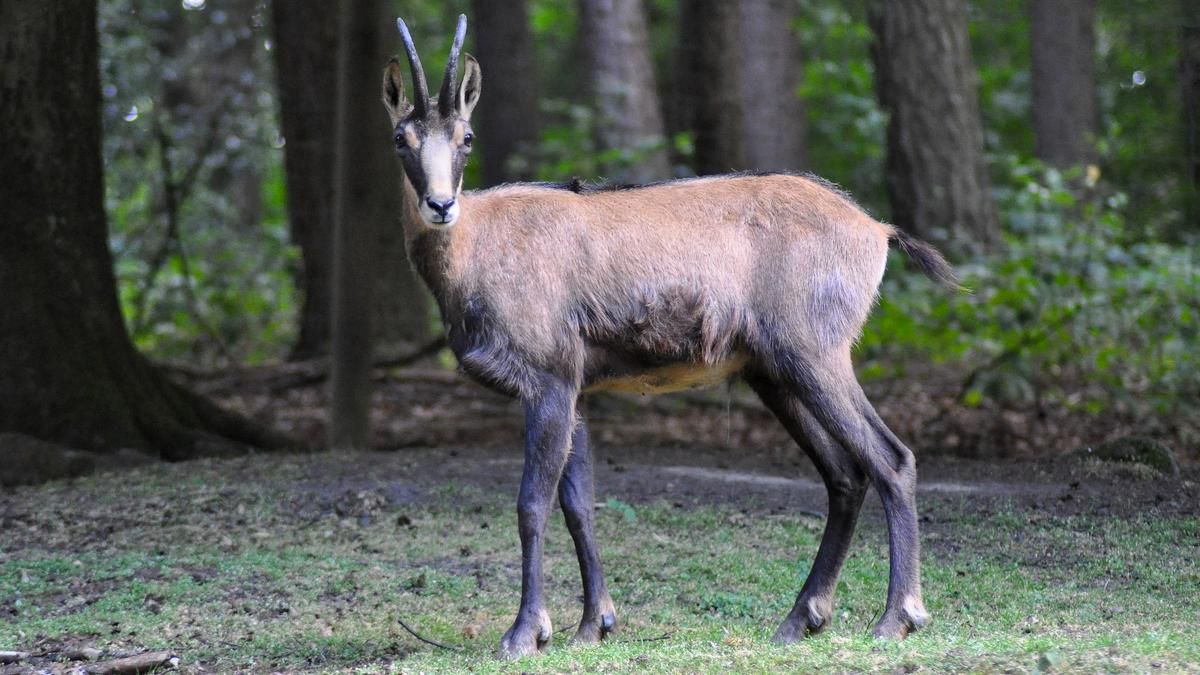
Hans Gander, Paul Ingold. Reactions of male alpine chamois Rupicapra r. rupicapra to hikers, joggers and mountain bikers. 1997
Experiments with chamois, hikers, joggers and mountain bikers on the Augstmatthorn show: Chamois flee from all three groups. In the late morning hours, however, they move further away from joggers and mountain bikers. Overall, the chamois react similarly to all three activities.
U. Goeft, J. Alder. Sustainable Mountain Biking: A Case Study from the Southwest of Western Australia. 2001
Erosion, soil compaction, widening of trails and damage to vegetation can occur, but can be avoided or minimized by appropriate location, design and management of trails. Damage to vegetation is limited to 2 meters around the trail.
C. M. Papouchis, F. J. Singer, W. B. Sloan. Responses of Desert Bighorn Sheep to Increased Human Recreation. 2001
Desert bighorn sheep are more likely to flee from hikers than from off-road motorized vehicles, followed by mountain bikers. Escape distance to mountain bikers and other vehicles about twice as great as to hikers. However, the reaction to hikers takes longer than that to vehicles and mountain bikers.
E. Thurston, R. J. Reader. Impacts of experimentally applied mountain biking and hiking on vegetation and soil of a deciduous forest. 2001
Experiments show that mountain biking and hiking have a similar impact on soil and vegetation.
Taylor, A.R. and Knight, R.L. Wildlife Responses to Recreation and Associated Visitor Perceptions. Ecological Applications, 13, 951-963. 2003
Luke Chiu, Lorne Kriwoken Managing Recreational Mountain Biking in Wellington Park, Tasmania, Australia. 2003
A study of the physical impact on the trail surface found no significant difference between the extent of impact caused by mountain bikers and hikers under the conditions tested. Greatest tread loss at the start of use, with rate of change reducing with increasing repetitions.
Audrey R. Taylor, Richard L. Knight. Wildlife Responses to Recreation and Associated Visitor Perceptions. 2003
Disturbance of American bison, mule deer and pronghorn: no significant differences in response and escape distance and flight distance between mountain bikers and hikers on trails. Responses are dependent on time of day and group size.
Shalene L. George, Kevin R. Crooks. Recreation and large mammal activity in an urban nature reserve. 2006
Recreational activities have an immediate and long-term impact on wildlife, and this impact can be particularly high in urban systems. No distinction between different activities.
J. L. Marion and N. Olive. Assessing and Understanding Trail Degradation: Results from Big South Fork National River and Recreational Area. 2006
The type of use has a much greater impact on trail degradation than the amount of use. Equestrian and off-road trails are significantly more degraded than hiking and biking trails.
Dave D. White et al. A Comparative Study of Impacts to Mountain Bike Trails in Five Common Ecological Regions of the Southwestern U.S. 2006
Mountain biking has a significant impact on trail width and depth (cut). Comparison between different regions in the USA and how wide and deep the trails are there.
Leslie Naylor, Michael Wisdom. Behavioral Responses of North American Elk to Recreational Activity. 2009
Wapiti (North Aerican Elk) respond similarly to the activities studied motorized off-road riding, mountain biking, hiking and horseback riding. They responded most strongly to off-road riding, followed by mountain biking, hiking and least strongly to horseback riding.
Craig Davis et al. Mountain Biking Trail Use Affects Reproductive Success of Nesting Golden-Cheeked Warblers. 2010
The cumulative effect of disturbance from mountain bike trail use on foraging and nesting behavior of golden-cheeked warblers appears to be minimal, but habitat fragmentation and modification by bike trails may reduce the quality of nesting habitat for the U.S. protected bird species.
Yu-Fai Leung. Assessing Technical Trail Features for Mountain Biking: Examples from Four Countries. In M. Reinmann et al, eds. Proceedings of the 7th International Conference on Monitoring and Management of Visitors in Recreational and Protected Areas. pp. 169-170.
The construction of obstacles on official bike trails - especially jumps - damages and removes natural vegetation. Root exposure (more so with aerial and ground obstacles than with traverses).
Catherine M. Pickering et al. Assessing the impacts of mountain biking and hiking on subalpine grassland in Australia using an experimental protocol. 2011
Soil compaction and increase in litter cover for both activities. Significant changes in soil density after 75 times biking
Immediately after biking greater compaction than compared to hiking, similar values after two weeks. Reduction in vegetation cover and proportion of herbs greater with mountain biking than with hiking. Reduction in species richness after 500 times of biking.
Emily M McLeod et al. Buses, cars, bicycles and walkers: the influence of the type of human transport on the flight responses of waterbirds. 2013
Two out of six waterbird species were more likely to flee from pedestrians than from cyclists. For one species the relationship was reversed and for three species there were no significant differences.
Mark Ballantyne et al. How formal and informal mountain biking trails result in the reduction, degradation and fragmentation of endangered urban forest remnants. 2016
The informal trail network grows faster and thus consumes and fragments more forest area. This reduces the amount of undisturbed space on which disturbance-sensitive species depend.
Evju et al. Effects of mountain biking versus hiking on trails under different environmental conditions. 2021
Hikers and mountain bikers cause little overall widening and deepening of trails. Increased trail use in wet areas is likely to lead to greater trail degradation, even more so if a large proportion of users are mountain bikers.
Further work with extensive literature review:
Mountain Biking: A Review of the Ecological Effects. Commissioned by Parks Canada - National Office. 2010
Recreational Activities in Nature. On behalf of the Federal Office for the Environment FOEN. 2018
Wie Boden, Flora und Fauna auf Mountainbiker reagieren - ein Überblick zum Stand der Forschung. Mountain Bike Tourism Forum Germany. 2018
The big report on the harmfulness of mountain biking can be found in Ride N°84.
Further content on this article

Note: This content has been automatically translated from German. Please report any incorrect translations.