

NRW Will Not Introduce a 3.5-Meter Rule After All
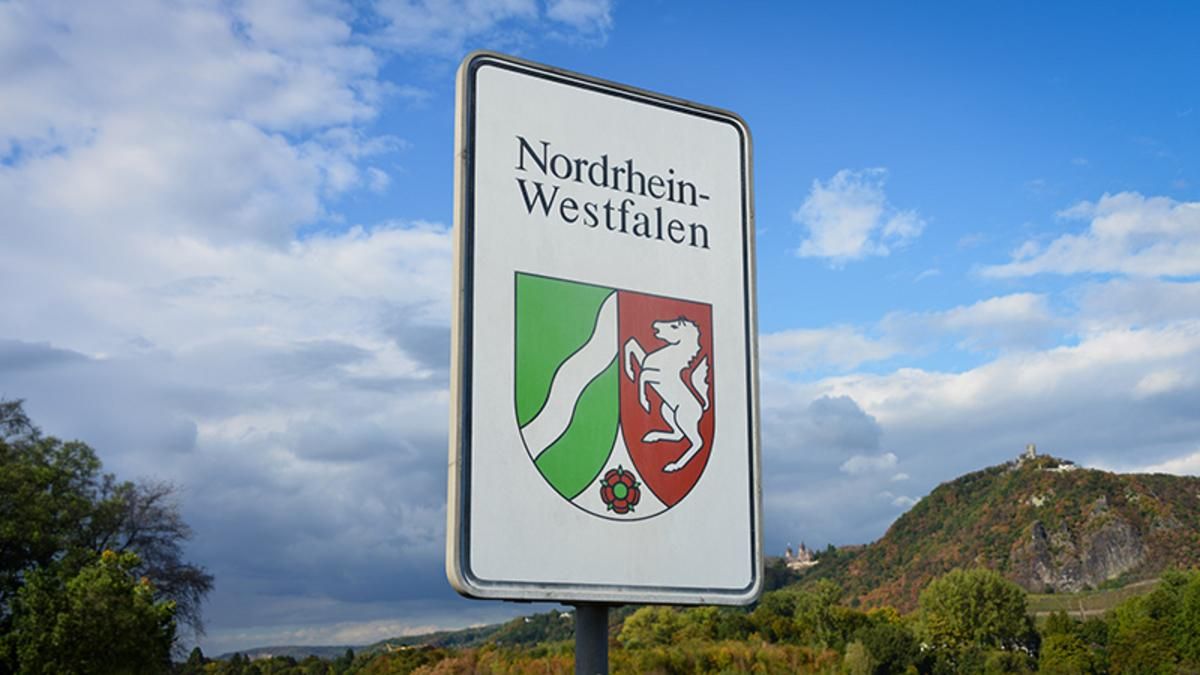
In early May, the state government of North Rhine-Westphalia sent shockwaves through the mountain biking community: the trigger was a draft of a new state forestry law. Hidden within the draft was a provision regarding the right of public access (§ 2, para. 1) that would have restricted cycling in the forest to roads, artificially paved or naturally solid forest management trails, and explicitly designated and approved bike trails.
The law defined “traffic routes” as paths that can be traveled on by two-track, non-off-road vehicles. In combination with the existing legal provision, this meant a minimum width of 3.5 meters. That would have been the end of trail biking in North Rhine-Westphalia. Not even Baden-Württemberg restricts trail biking to such an extent. At the same time, unauthorized trail construction (“wild shoveling”) was subject to fines of up to 50,000 euros—though this astronomical fine stemmed from nature conservation law, it further fueled the already tense atmosphere.
Neither the DIMB (German Mountain Bike Association) nor the mountain biking community had been given any advance warning. Consequently, the protest gained momentum rapidly: In addition to open letters to NRW Agriculture Minister Silke Gorißen, a broad protest coalition formed on social media and in podcasts to demand that the devastating provisions be revised.
Reason Returns to the Forest
The combined efforts of the associations and the community had an impact. The DIMB reports that in the revised and now available draft of the State Forestry Act, the ministry has removed the controversial restriction to wide trails. The 3.5-meter rule is off the table; there will be no fixed minimum width on which mountain bikers are permitted to ride.
As before, “established trails” may be ridden on by bicycles. The key passages: “Entering the forest for recreational purposes is permitted at one’s own risk, (…) Paragraph 1 applies mutatis mutandis to cycling and the use of mobility scooters on roads and established trails. Bicycles with an electric motor-assisted drive are also considered bicycles.” In the explanatory memorandum to the law, the government clarifies that cyclists must ensure that oncoming traffic can pass safely. Coexistence on the trails should be strengthened through mutual consideration rather than blanket bans. This is an intention that any reasonable mountain biker can endorse.
Female mountain bikers who enjoy riding in North Rhine-Westphalia can therefore breathe a sigh of relief. The singletrack trails in the Ruhr region, the Eifel, the Teutoburg Forest, the Sauerland, and whatever else these biking areas are called, will remain open. However, the DIMB still has reservations—or rather, would like to see an even more MTB-friendly wording of the law: “In our statement (the DIMB responded after the draft containing the 3.5-meter rule was published), we suggested using only the term ‘path’ instead of ‘fixed paths.’ In our view, adopting this wording from the Federal Forest Act—which permits cycling on trails—would have contributed to greater legal clarity for the general public.”
DIMB Criticizes the Term “Paved Path”
Of course, if all paths were simply permitted for cycling, that would be even more favorable for trail biking. However, the legal uncertainty that the DIMB criticizes would simply shift from the question of what constitutes a “permanent trail” to the question of what counts as a “trail.” Whether footpaths, wildlife crossings, and the like also constitute trails on which biking is permitted is a topic of recurring debate in Switzerland as well.
In any case, the DIMB intends to remain steadfast on this issue. The fact that the Federal Forest Act, which applies to all of Germany, refers only to “trails” without describing their construction is definitely a point in favor of the advocacy group and the community. The DIMB also points out how important organized representation of female mountain bikers is to keep the singletrack trails open in the federal states where they remain accessible today.
The new draft bill from the North Rhine-Westphalia state parliament
Further content on this article


About the author: Stefan Michel
Note: This content has been automatically translated from German. Please report any incorrect translations.