

Overlanding" : The discipline of the Rocky Mountain Sherpa
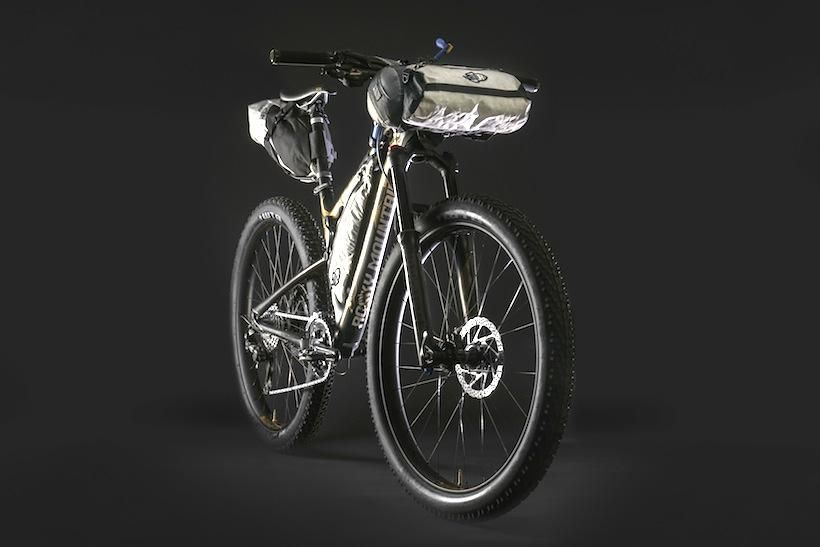
First spotted as a prototype at the Sea Otter Festival 2014, then shown at the Bike Days 2014 in Solothurn - and now ready as a production model: the Rocky Mountain Sherpa. The bike has 95 millimeters of travel at the rear, the front swallows up 120 millimeters, and the dropouts are fitted with 27.5 Plus wheels with a width of 2.8 inches. Manitou comes into play with the suspension elements, with a Magnum fork and a McLeod shock installed.

Element with new rear triangle
The heart of the Sherpa consists of the carbon main frame of the Element model, combined with a new wider rear triangle, which guarantees the functionality of the front derailleur even with the thickest tires.

Easy rollover
The cult manufacturer from North Vancouver says about the Sherpa: "The wide tread of the WTB 27.5+ x 2.8 Trailblazer tires gives the Sherpa the necessary stability and reliability on gravel, steppe sand and anything else that gets under your tires at full throttle and fully loaded. Added to this is a surprisingly low rolling resistance, paired with excellent rollover behavior."

Off the beaten track
Equipped with these features, Rocky Mountain believes the new bike is predestined for so-called "overlanding". This refers to bike tours that the rider undertakes with luggage and on rough terrain. The suspension elements are also designed to react sensitively to the additional weight of luggage. Examples cited include the search for old smugglers' trails in the Alps or riding along long-forgotten game trails in the Himalayas.

Why 27.5 Plus?
In the press release, Rocky Mountain gives an assessment of the range of use of the Sherpa's 27.5 Plus tires: "27.5+ wheels are neither 27.5s nor 29ers and are therefore no substitute for other wheel sizes. Our 'normal' bikes aren't going anywhere - no need to get excited. Despite all their advantages, they are slower and heavier than normal 29er systems on smoother surfaces. If you have ambitions of winning the next XC World Cup, 27.5+ is unlikely to be your friend. More volume also means a higher sidewall than conventional tires, which in turn has a negative impact on cornering stability. A Defender off-road vehicle is certainly not at the front on the race track - but shows its true capabilities when the going gets tough."

Note: This content has been automatically translated from German. Please report any incorrect translations.