

Schwalbe turns the tires upside down
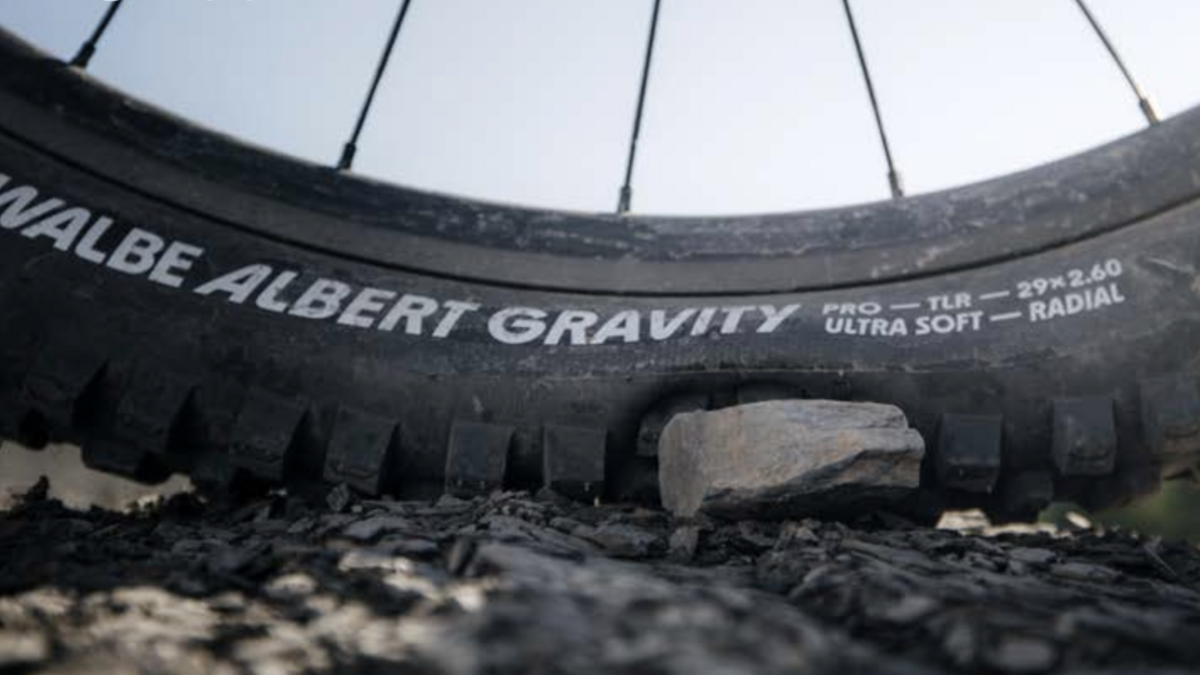
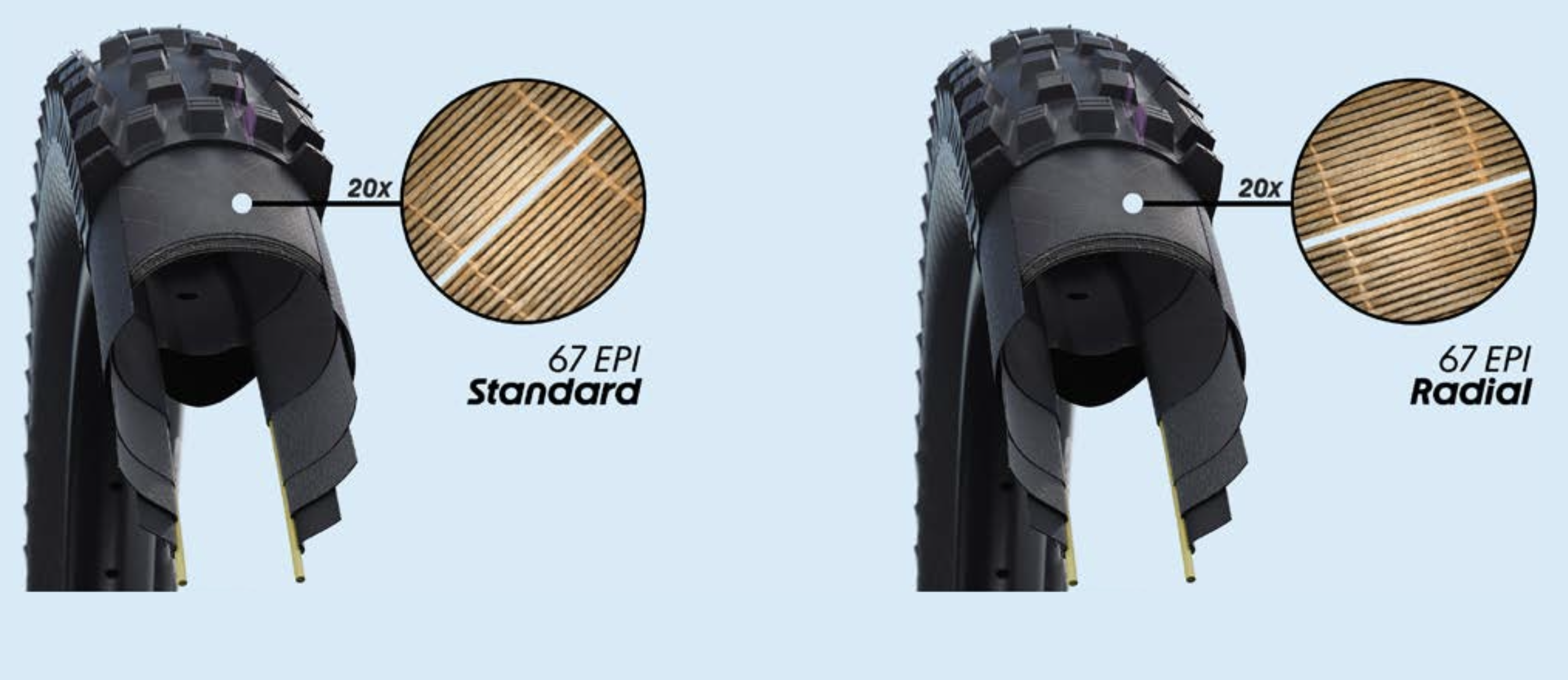
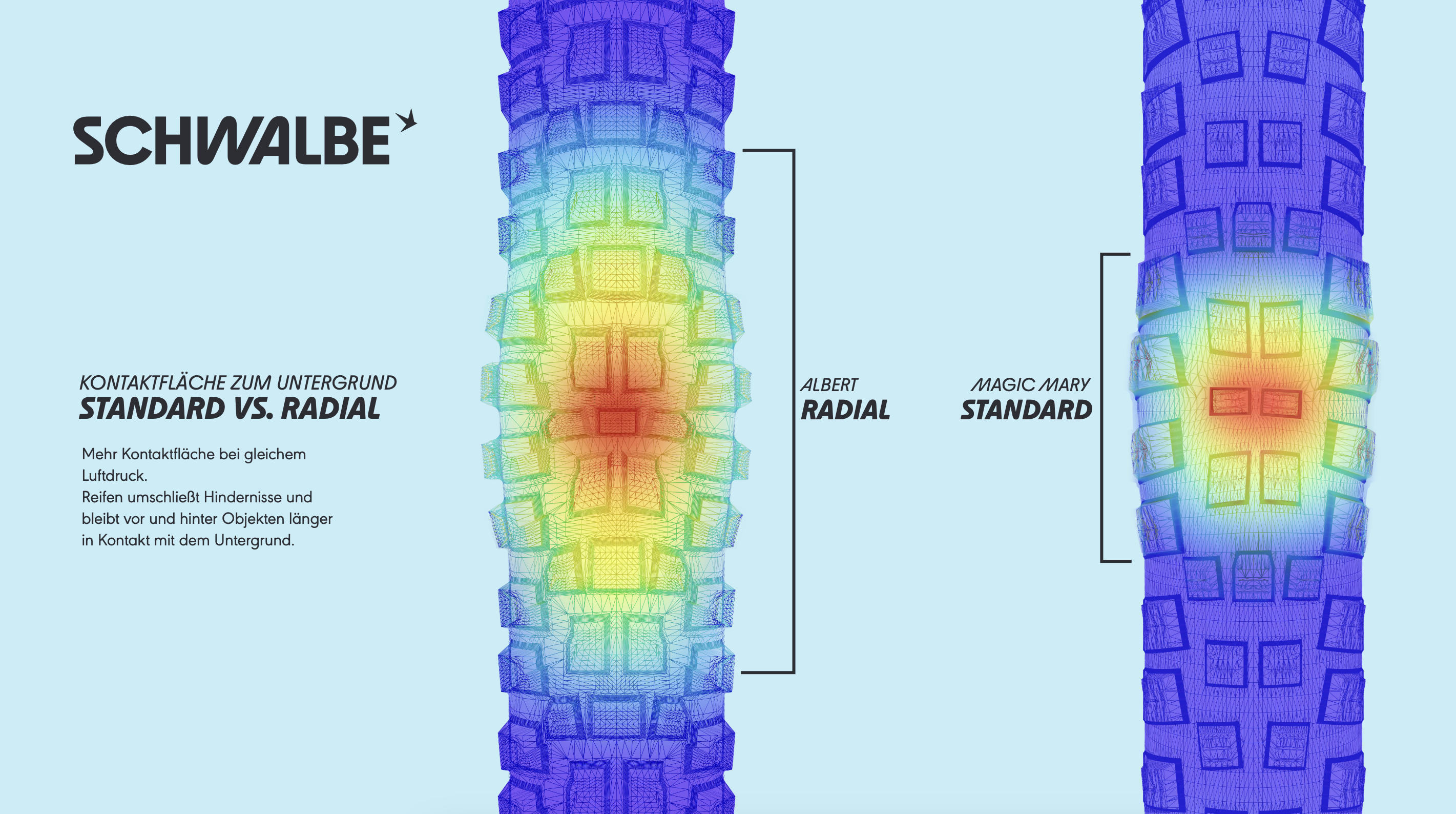
The arrangement primarily ensures that the carcass material overlaps shorter and with less tension. According to Schwalbe, this means that the tire deforms more selectively and can react much more flexibly and adaptably to bumps without sacrificing the safety factor. On the other hand, the radial tires offer approx. 30 percent more contact area than conventional tires at the same air pressure.
Even if the air pressure is increased by 50 percent, the contact area is still 15 percent larger and the tire retains its flexible properties. This means that the air pressure can be freely selected according to requirements - almost regardless of negative influences on suspension behavior and comfort: The increased contact area and more flexible response provide significantly more grip, more damping, more safety and more comfort. The tire absorbs impacts better and uses the suspension travel more effectively - it literally sucks itself into the ground. This applies to both mountain bikes and e-mountain bikes, which have significantly more traction on the ground with the two tires.
With all the superlatives mentioned, Schwalbe also has the environment in mind: With the exception of the Addis Ultra Soft rubber compound, the radial tires have been manufactured using recycled carbon black (rCB). The rCB is a direct product of the Schwalbe recycling system and replaces 100% fossil-based carbon black. In this way, 80% CO₂ equivalents are saved - without sacrificing the quality of the tires.
Further content on this article

Note: This content has been automatically translated from German. Please report any incorrect translations.