

Short track - just a UCI fart or a format with future prospects?
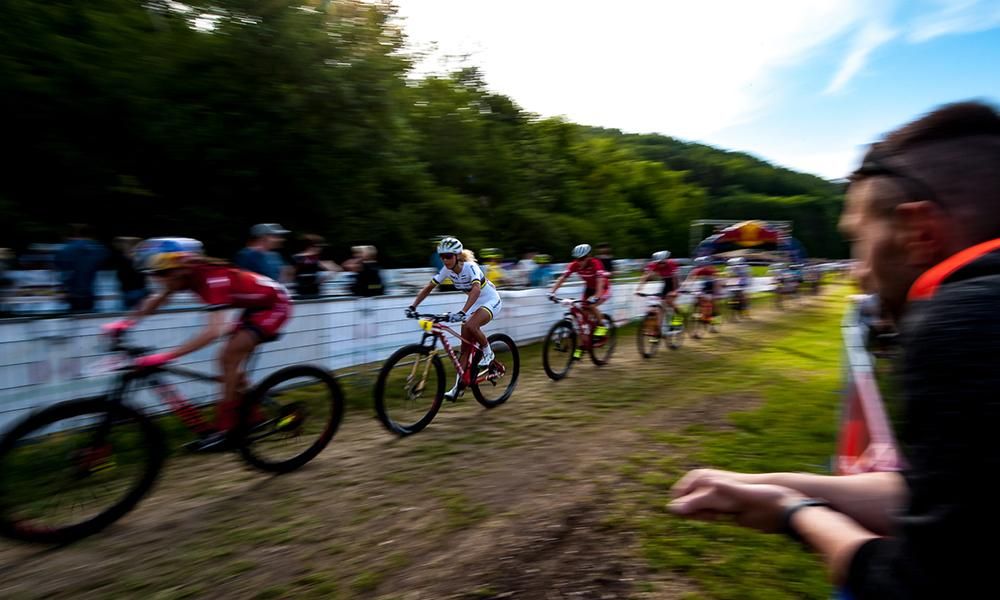
In contrast to the aforementioned race formats, which were stripped of their World Cup status by the UCI and have since eked out a miserable existence, the short track discipline has a slightly different status. The most important difference: it is not a single discipline in which specialization can develop again, but the world's best cross-country riders do not take part. Short Track is a must for every 40 riders.
These 40 athletes are made up as follows: The top 16 in the overall World Cup rankings and the top 24 from the world rankings who are not in the top 16. The short track race is decisive for the starting grid for the main race on Sunday. The fastest 16 will again line up in the first two rows of the grid, while the others will be lined up according to the UCI world rankings. This prevents top riders from having to start the race in 40th place in the event of a defect - as in the case of Nino Schurter.
However, short track is actually nothing new. In 2004, the first short races were held in the Swiss Cup on the eve of the main race. Short, painful and with an influence on the starting order in the main race. However, the races were then discontinued due to a lack of appeal. So, and now the UCI comes along and revives the frozen discipline? My initial opinion was that this is a very unimaginative attempt by the UCI to reinvent the sport with diligence and force.
25 minutes of suspense
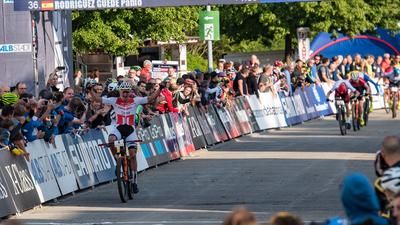
Enough explaining and snooping: I didn't really take the story seriously until after the first lap of the women's short race, but then it got exciting. There were battles for positions, breakaway attempts were started and the riders fought to catch up behind the main group, with or without success. What I hadn't expected was that in the end there was a real bunch sprint, as we know it from road cycling. The men's race is also extremely exciting, just with a different outcome. Mathieu Van der Poel rides a quasi cyclo-cross World Cup, tries to break the groups and in the end he rides out solo and wins the premiere. Two thrilling races and the best part - the women's race wasn't one percent less exciting than the men's - awesome! It was surprisingly good for a first time. So the UCI's "short fermented fart" could become an exciting addition to the main World Cup races, adding value to the sport.
"Too early for a final assessment"
My view, your view: I haven't been a racer for a long time, I hated the short races back then and now I tend to be euphoric. In conclusion, I therefore asked Linda Indergand and Mathias Flückiger for their opinions shortly after the races.
Linda Indergand: "I think it's a good and exciting thing. It's got everything: it's very fast, then very technical, very tactical, you always have to fight for positions, so it was exciting right to the end. But it's still too early to say whether short track has a future or not. That will become clear as the season progresses. For now, short track is exciting for the spectators as well as for us riders. It's also good that we have to compete here, so there's no more specialization like in Eliminator."
Mathias Flückiger: "Short track is certainly not a sprint discipline as some might have expected. Even if it is only 25 minutes long, this type of race is an endurance discipline. That also suited me in the end. What I didn't like here, however, was that it was ridden so aggressively - some riders knew nothing. And the scary thing was that they were the ones you would normally have a beer with. Racing or not, but respect should not be lost because of it! It's difficult to say whether the format has a future, but I liked it otherwise and it was certainly very exciting for the spectators. Nevertheless, cross country should always be in the foreground and short track should remain a side event that is attractive for spectators, TV and sponsors.
Further content on this article
Note: This content has been automatically translated from German. Please report any incorrect translations.