

Surviving in Race Mode: Nathalie Schneitter in Kyrgyzstan
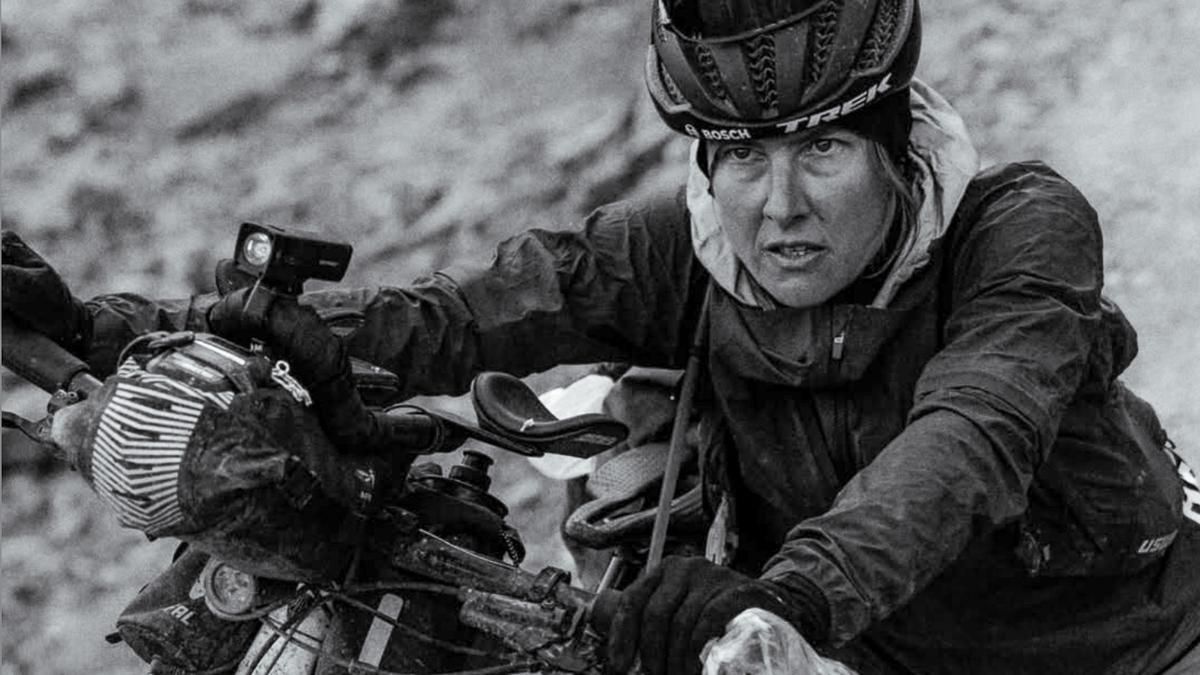
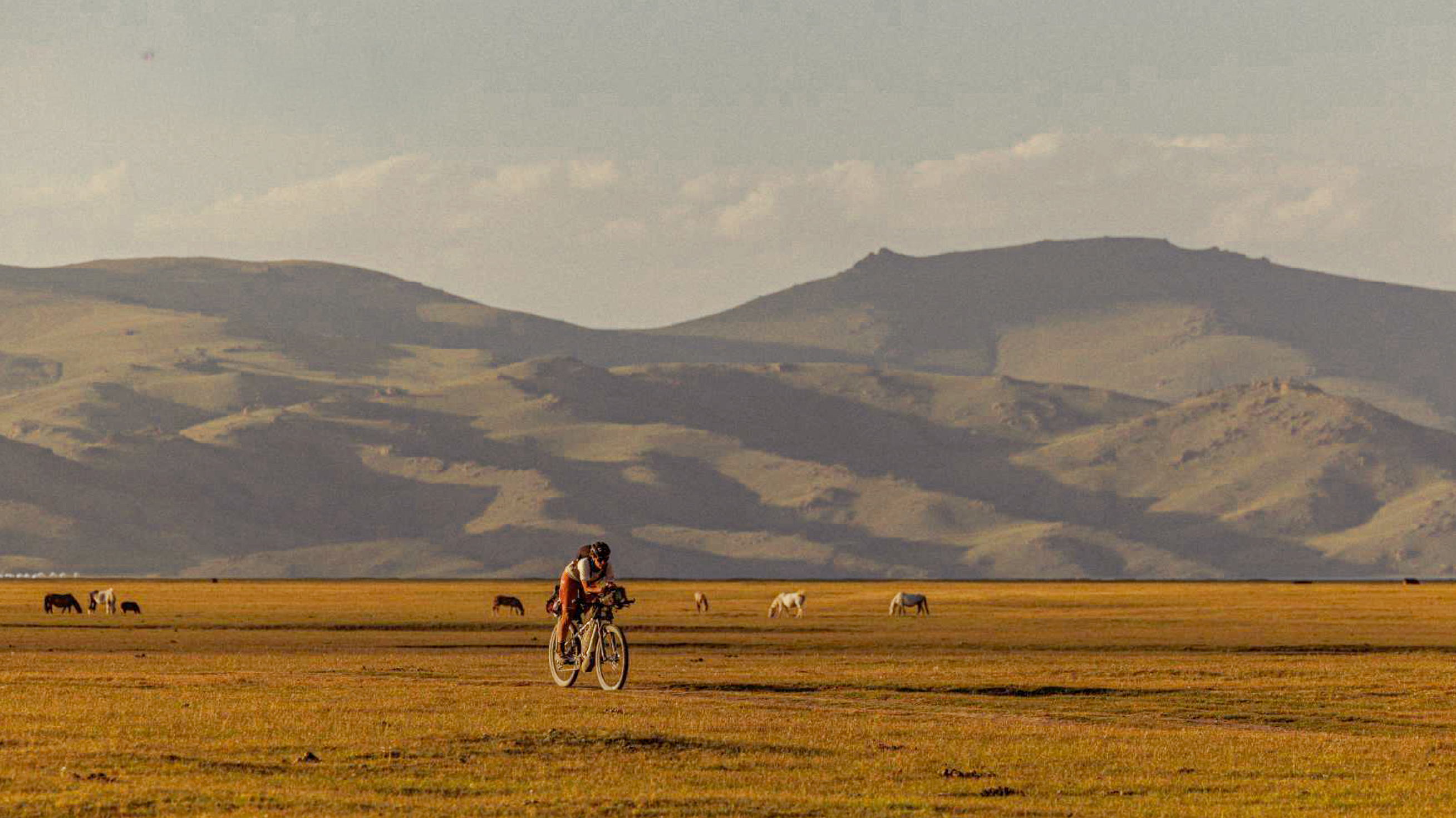
“Switching from e-bike racing to ultracycling is probably pretty rare,” says Nathalie Schneitter, putting her latest adventure into perspective. It’s called the Silk Road Mountain Race: 2,056 kilometers and 35,400 meters of elevation gain through Kyrgyzstan. Not much has changed on this stretch of the Silk Road since Marco Polo’s adventures.
The format: fixed route, unsupported, single-stage. For those not familiar with ultracycling terminology: The route is predetermined, individual support is not allowed, and there are no stages with breaks in between—only a single start at kilometer zero; from there, the race continues until the finish is reached or the competitor withdraws.
Nathalie Schneitter has gained some experience in ultracycling in recent years, having completed the Hope 1000 through Switzerland (1,000 kilometers, 31,000 meters of elevation gain) in a new record time, and in the ultra-gravel race Badlands in southern Spain (600 kilometers through the desert). But the Silk Road Mountain Race is in a league of its own.
Speed vs. Sleep
The elevation profile looks like the skyline of a medieval city with towers, battlements, and flagpoles. It’s one continuous up-and-down, from under 1,000 to nearly 4,000 meters, mostly on unpaved terrain. Only the GPX track shows the way; often, there’s no discernible path. In the low-lying steppe, temperatures rise above 30 degrees; in the mountains, they drop below zero.
“Cycling makes you happy,” is Nathalie’s mantra. In the Kyrgyz no-man’s-land, it’s put to the test. This is also because a significant portion of the route is unrideable—even for a top-tier athlete like this longtime World Cup rider, who, after her cross-country career, competed in enduro and e-cross-country races at the highest level.
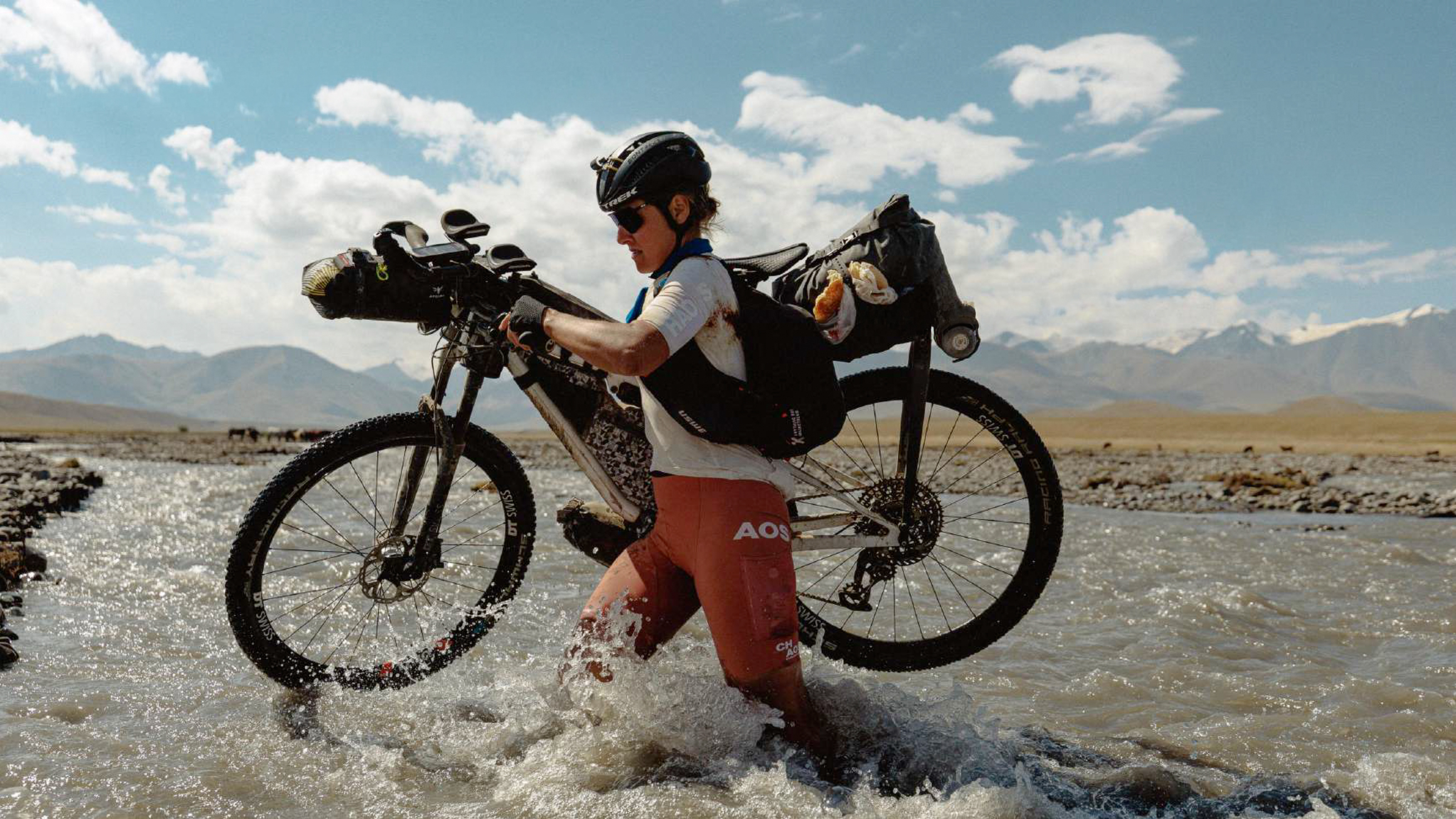
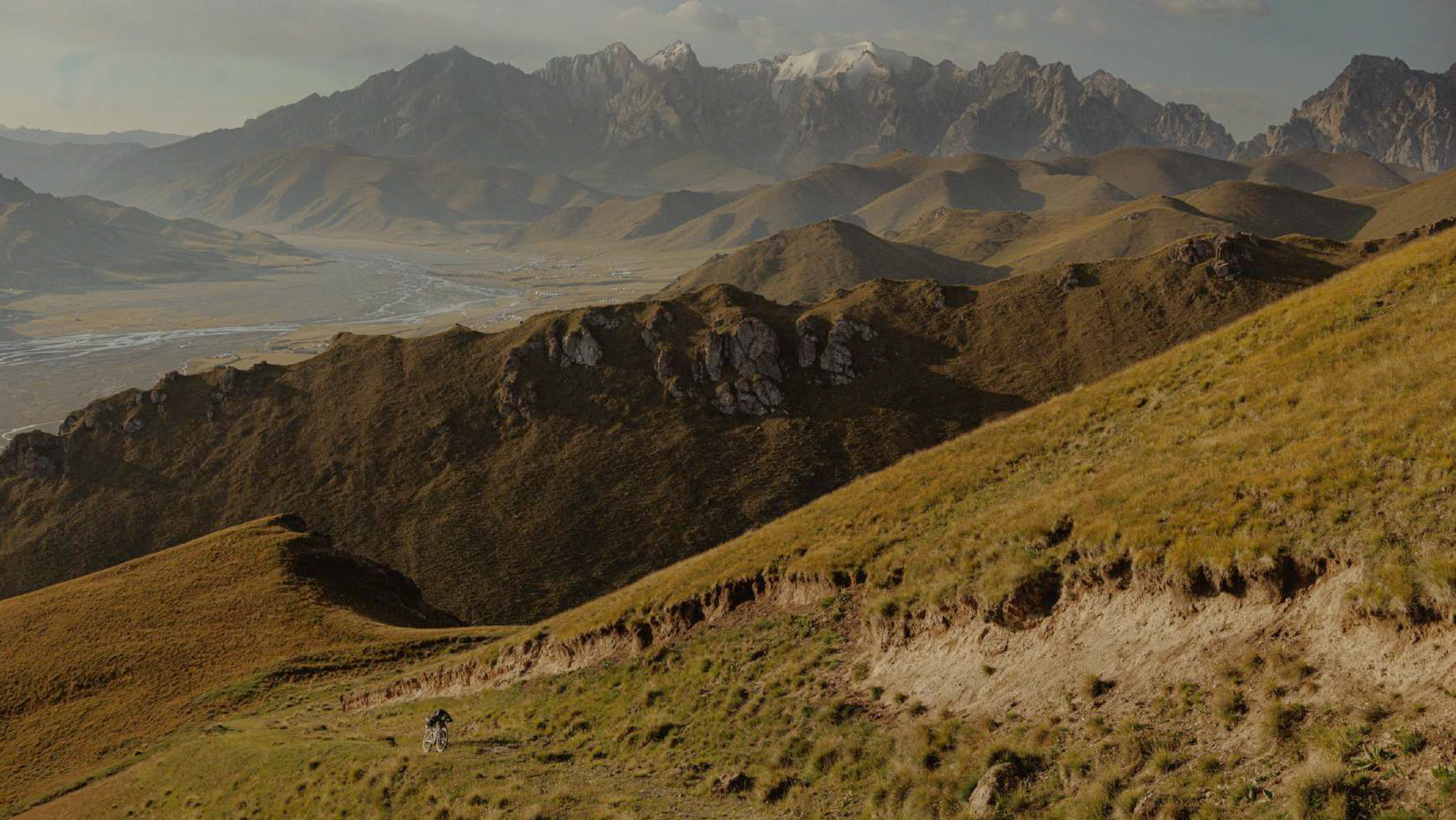
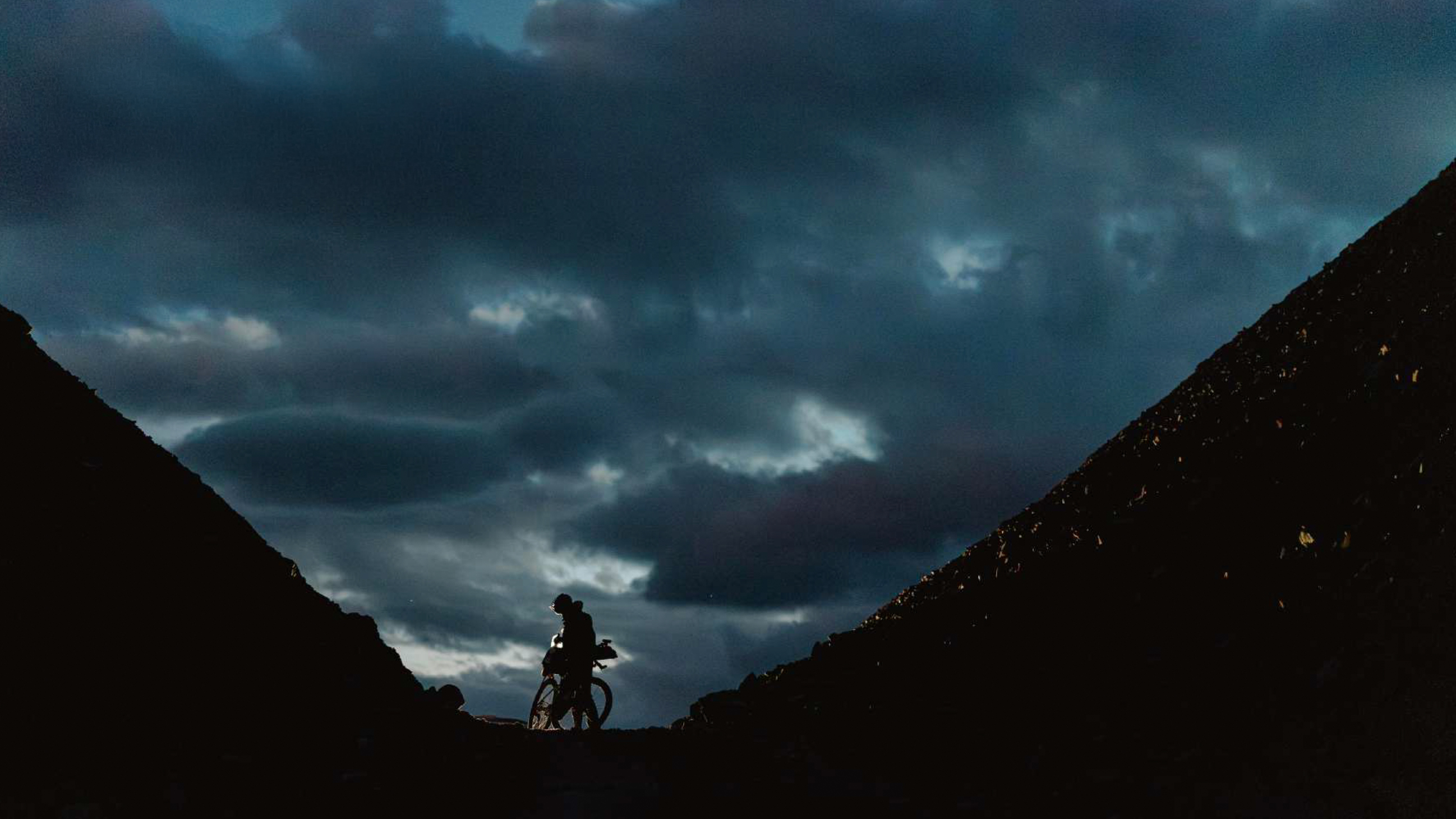
And even though certain situations in this race are life-threatening, she’s performing well in Race Mode, as she reports. She’s in the top 10 overall and battling a rival for the lead in the women’s rankings. “I rode a little faster, but she slept less,” she says, summarizing the neck-and-neck race. Specifically, Nathalie gets an average of four and a half hours of sleep per 24 hours, while her rival makes do with just three.
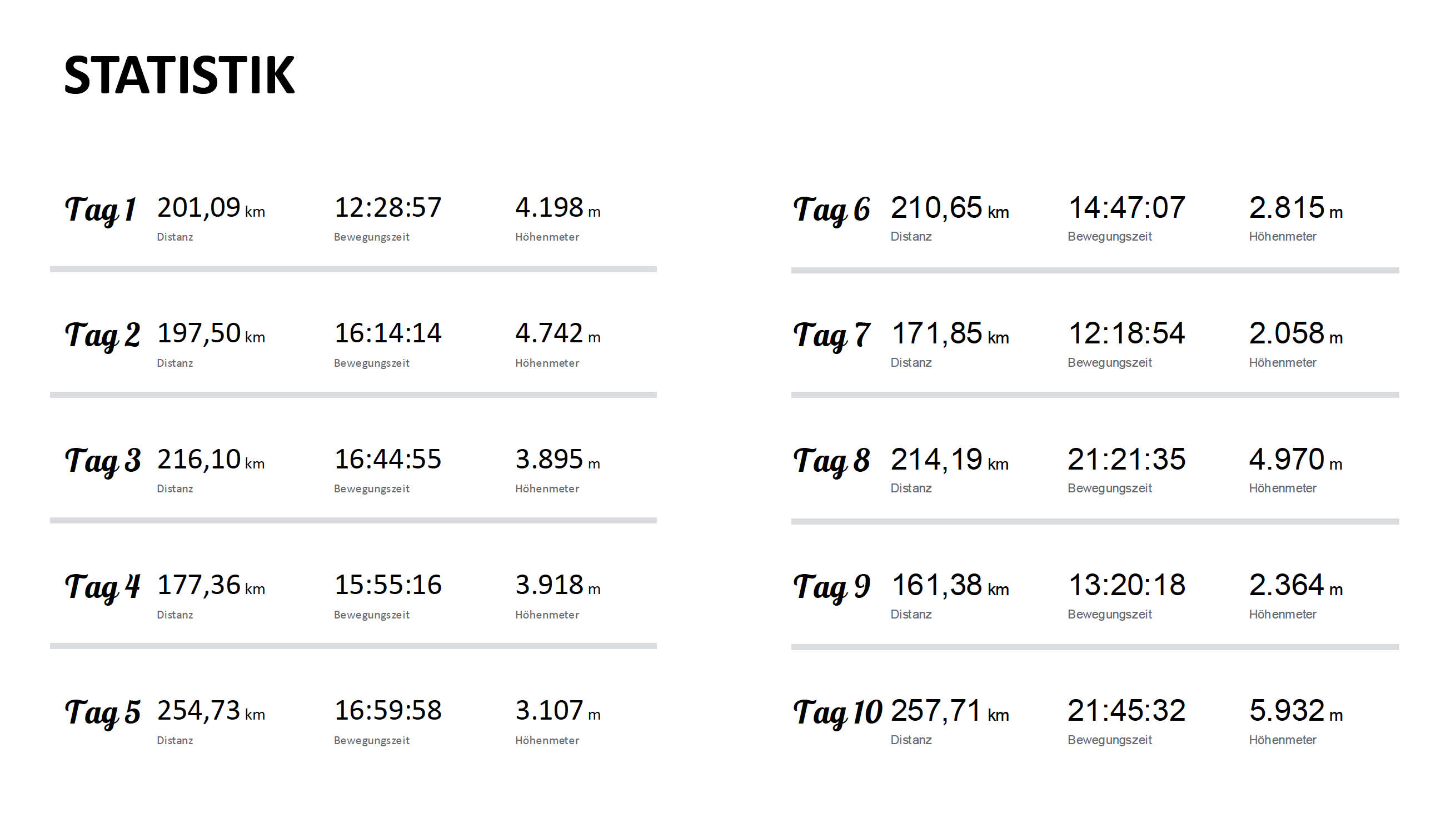
Nathalie is on the move for 17 to 21 hours a day, according to her Strava data. The rest of the time is spent finding food, sleeping, and a minimum of personal hygiene. She explains why she called it a day after just twelve and a half hours on the first day: “The start was at 9 a.m., and I prefer a sleep/ride rhythm that matches daylight hours. Riding through the first night wasn’t an option.”
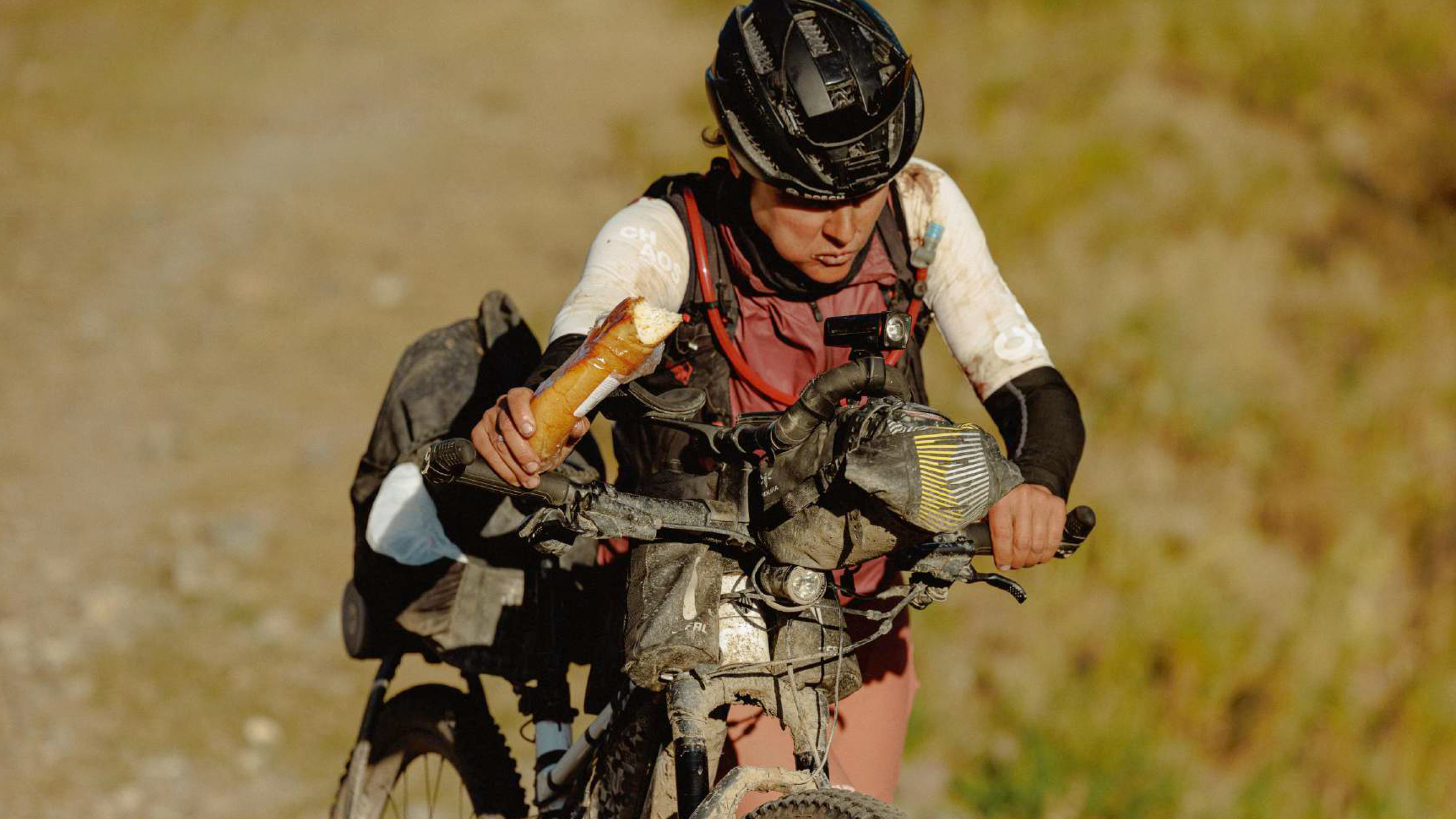
Most of her meals are eaten while riding. Support that’s available to all participants—such as staying overnight at a hotel or shopping at a grocery store—is permitted. But of course, no one has time to stay at a hotel, and there are only a handful of stores along the 2,000-kilometer route. On a 160-kilometer stretch with no places to get food, she ran out of provisions. “Three energy bars weren’t quite enough for that, as I found out,” she says. She makes plenty of mistakes over the 2,000 kilometers, but she keeps going regardless of what the terrain and nature throw her way.
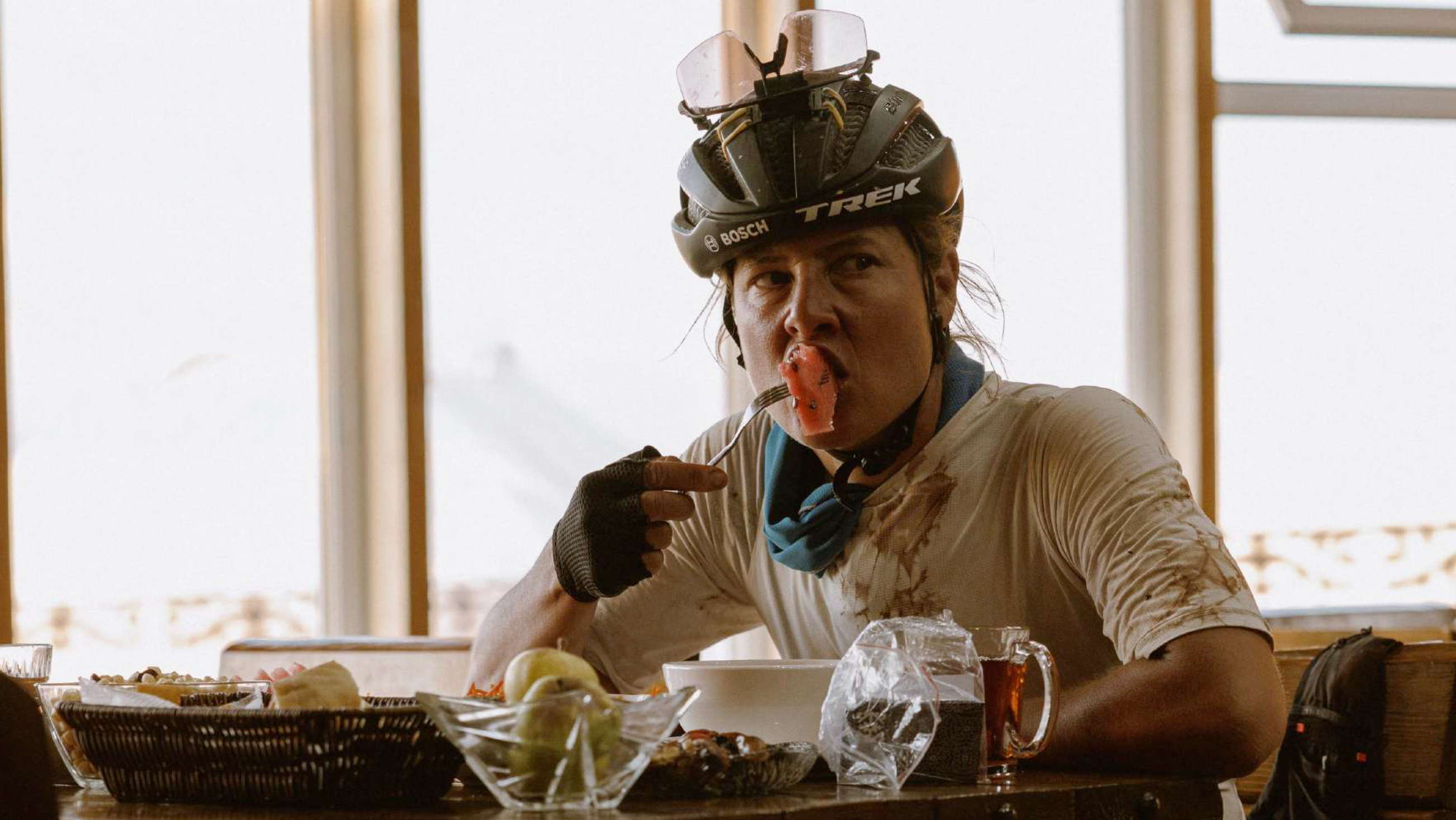
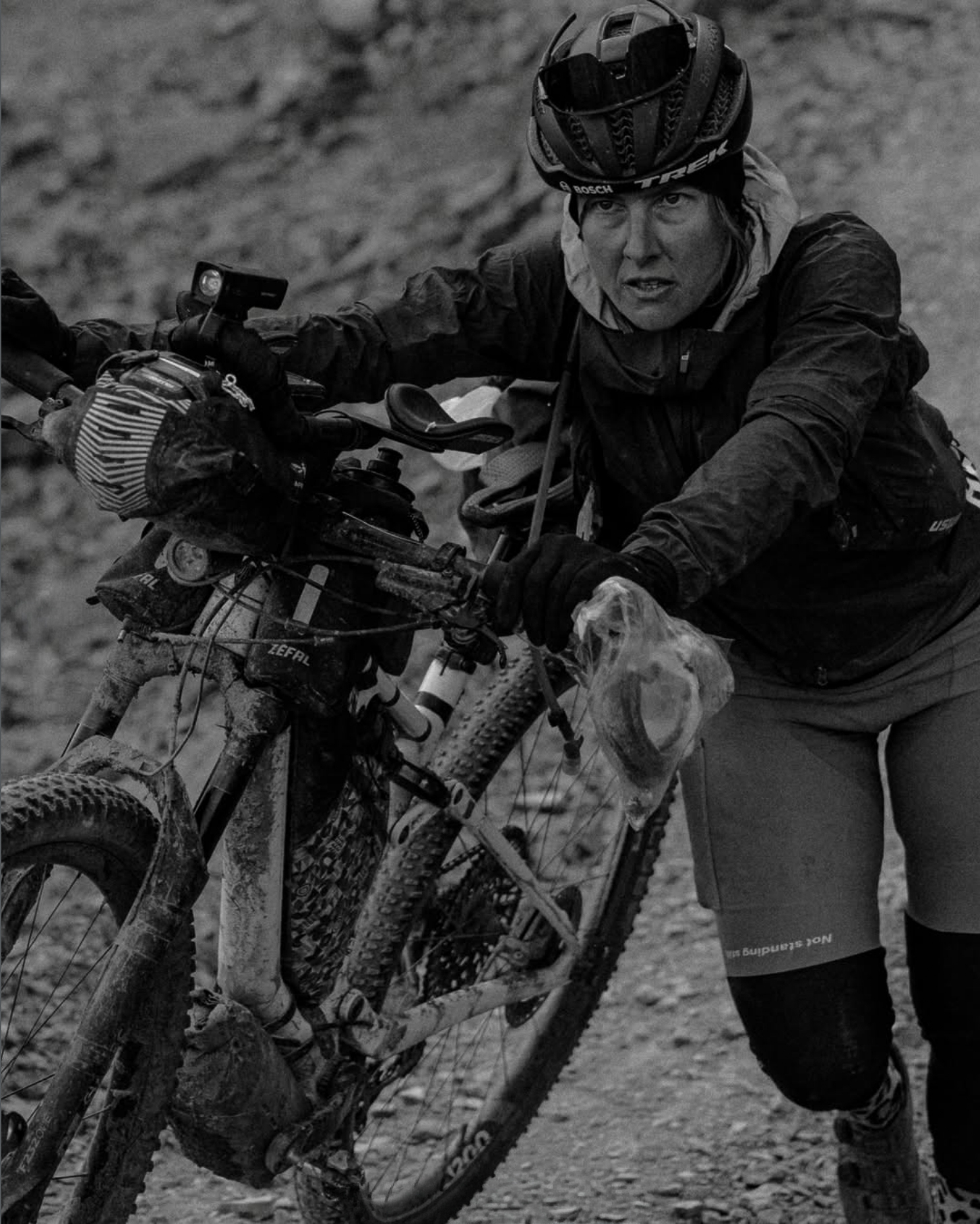
There are three checkpoints along the entire route. There, the organizer provided food and drinks. Nathalie’s activity data shows that she spent just 18 minutes at one of them. A photo shows her eating while wearing a helmet and bike gloves. Her comment: “For the first time in my life, my talent for eating a lot and eating fast has come in handy.” At the other two checkpoints, however, she spent about five and a half hours—sleeping, wolfing down two meals, taking a shower, changing into fresh clothes, completing the checkpoint paperwork, and restocking her supplies.
Give up? Impossible in the wilderness
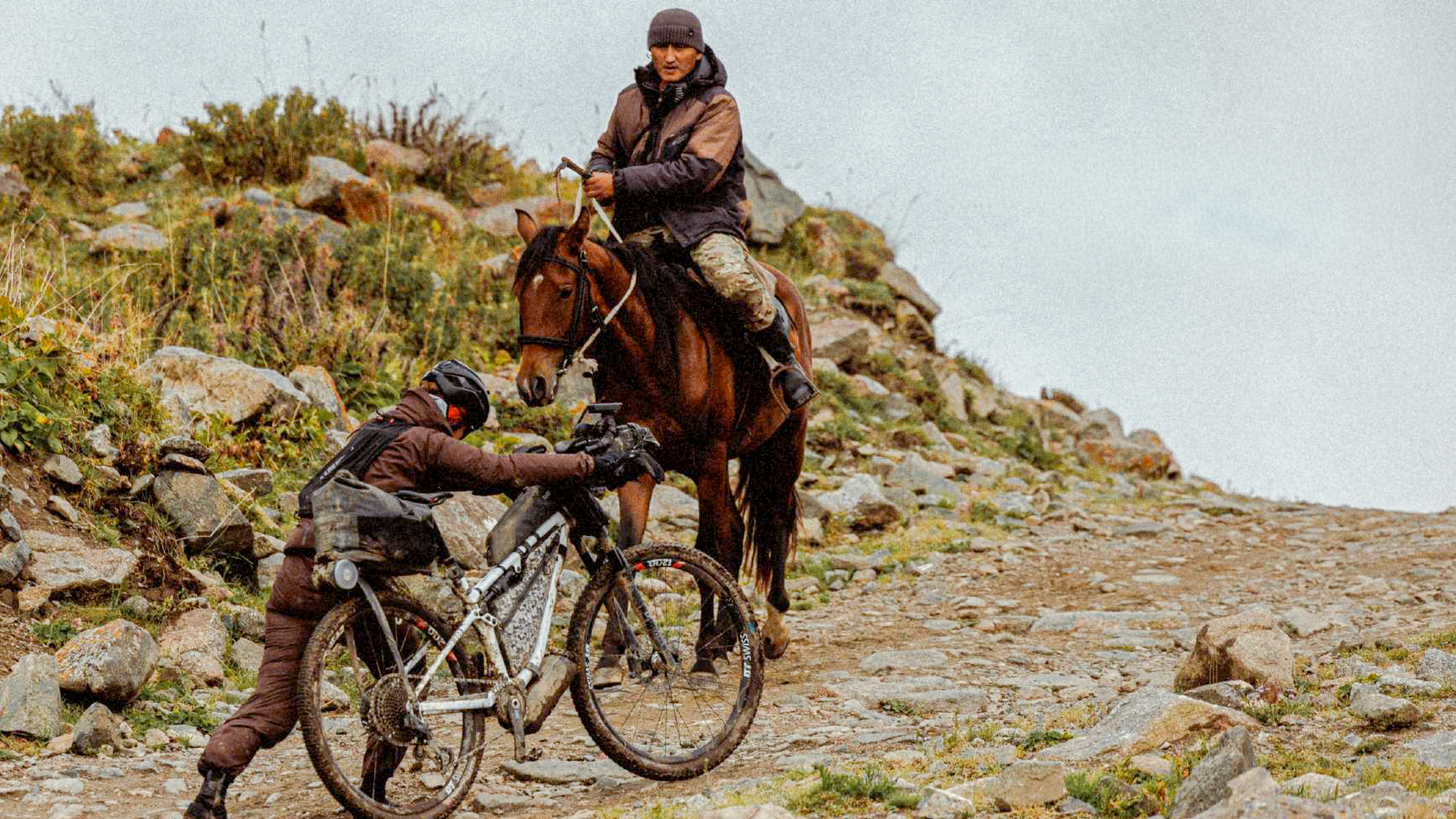
Nathalie’s feet are wet practically the entire race, partly because she has to wade through about 100 rivers. But the wetness is the least of her problems: “If you don’t hold the bike properly and give the water too much surface area to grip, it’ll just wash you away.” One of her teammates has to drop out of the race because of this. She injures her knee on debris floating in the current. Nathalie suffers from hypothermia once because, out of sheer exhaustion, she forgets to dress warmly before lying down in the snow by the side of the trail for a power nap. In her moments of clarity, she questions the meaning of it all and knows that, at that moment, she has no choice but to keep riding through the deserted wilderness.
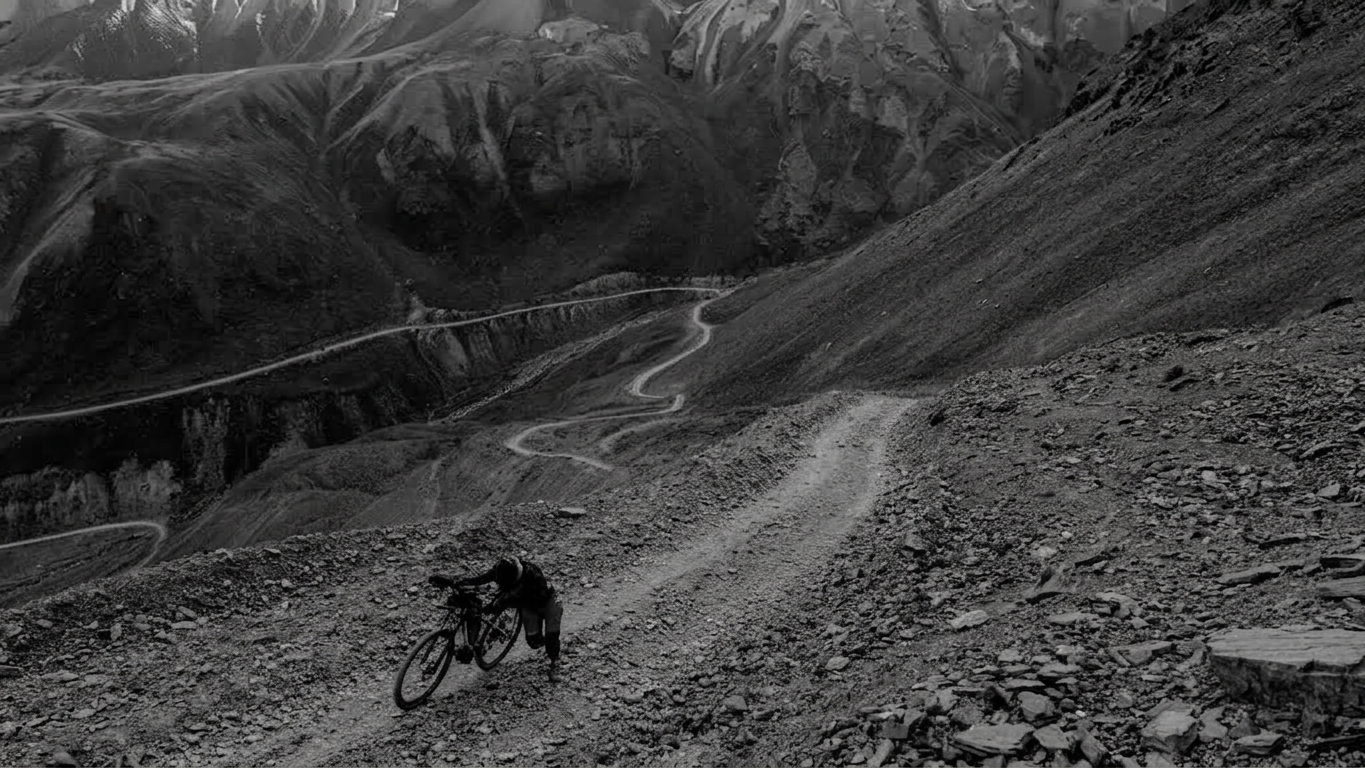
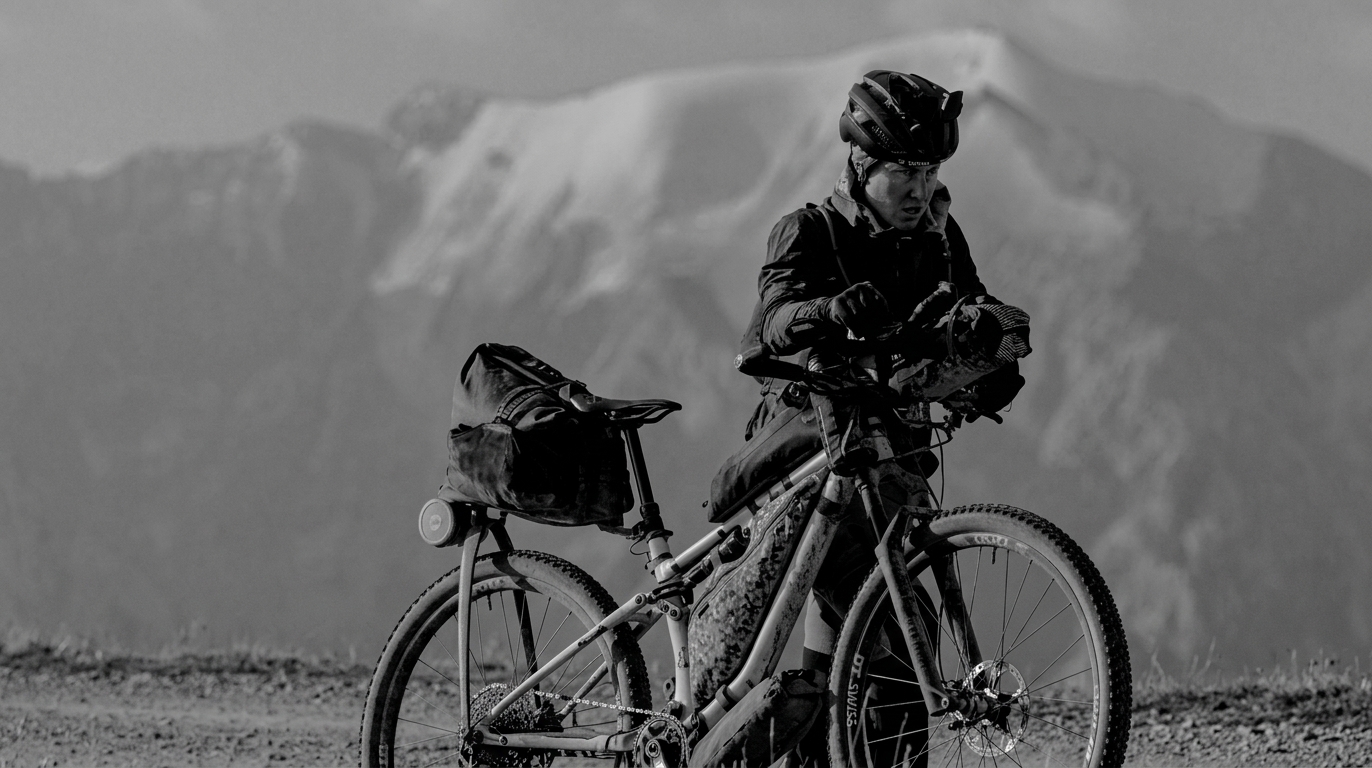
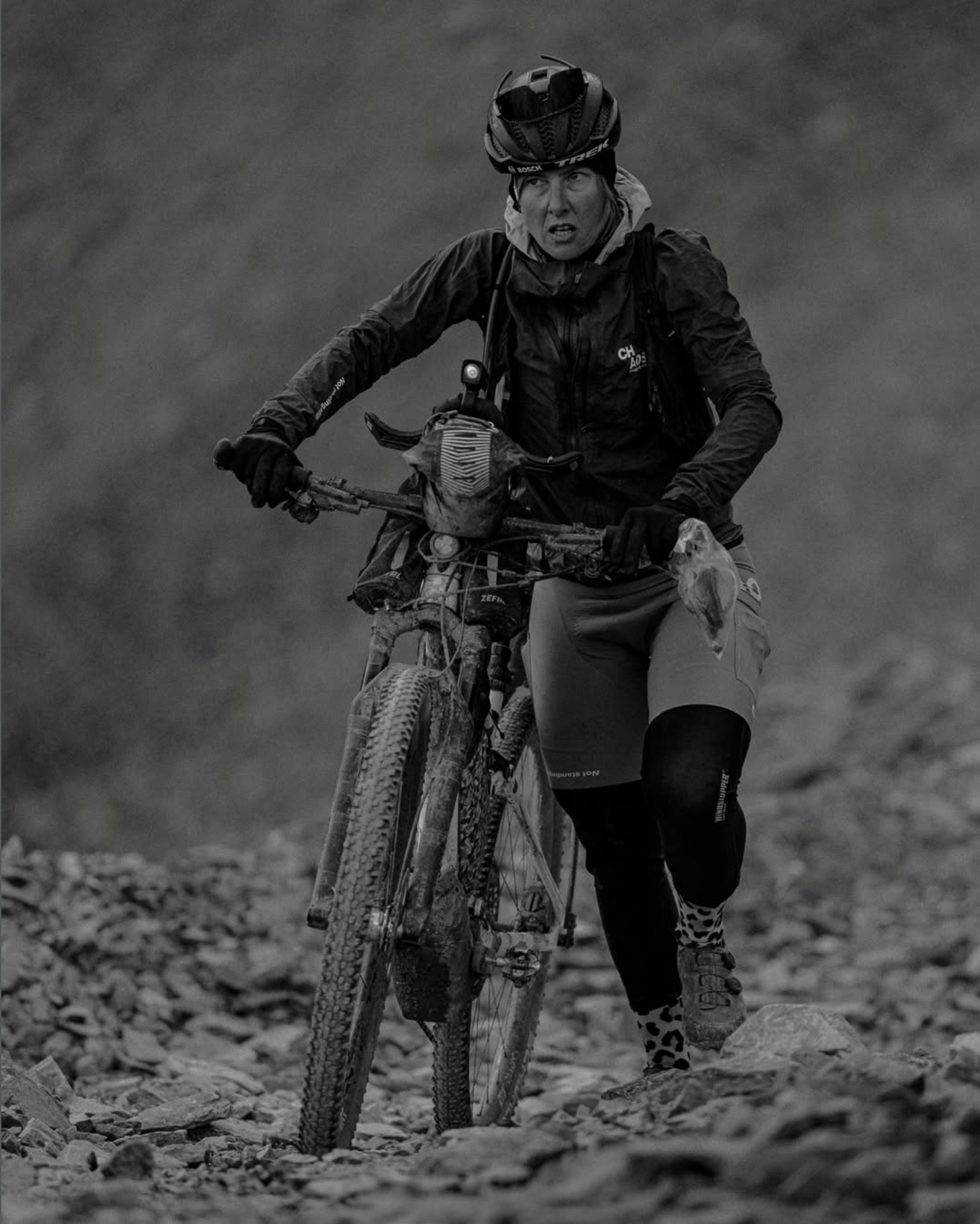
But the toughest hours weren’t the ones with her feet in the water—they were the ones spent pushing the bike. For seven hours, she hauls her bike up the impassable scree slope over the Ukok Pass, which greets her with a snowstorm. At two in the morning. She’s lucky that, unlike most of the other participants, she has a mini-tent with her and not just a bivy sack. So even in the blowing snow, she manages to get a few hours of sleep, while her competitors shiver in their plastic sleeping bags.
She covers the final 255 kilometers nonstop in about 22 hours. The euphoria of the approaching finish line—if one can consider a 255-kilometer distance “close”—gives her new strength, which she then uses up again, because this final section includes another 6,000 meters of elevation gain. By comparison: The queen stage of the 2026 Tour de France was 170 kilometers long and included 5,400 meters of elevation gain—on asphalt, not over gravel and scree. And without snow.
Somehow, Nathalie’s racing body still pushes forward meter by meter toward the finish line. She crosses the finish line in tenth place out of 230 men and women who started. And as the fastest woman. Her rival finishes just one spot behind her, but about 18 hours later.
Two and a half weeks later, she still can’t feel all her toes, but otherwise she says she’s recovered well, “even if I’m not exactly eager to start the next race right now.” This time, though, she’s had enough sleep to be able to get right back to work upon her return. The NZZ she recently told them that after previous ultracycling races, it took her two months to be able to concentrate again because of the extreme sleep deprivation she’d accumulated.
Further content on this article

Note: This content has been automatically translated from German. Please report any incorrect translations.