

What can the Trek Slash do in the 6th generation?
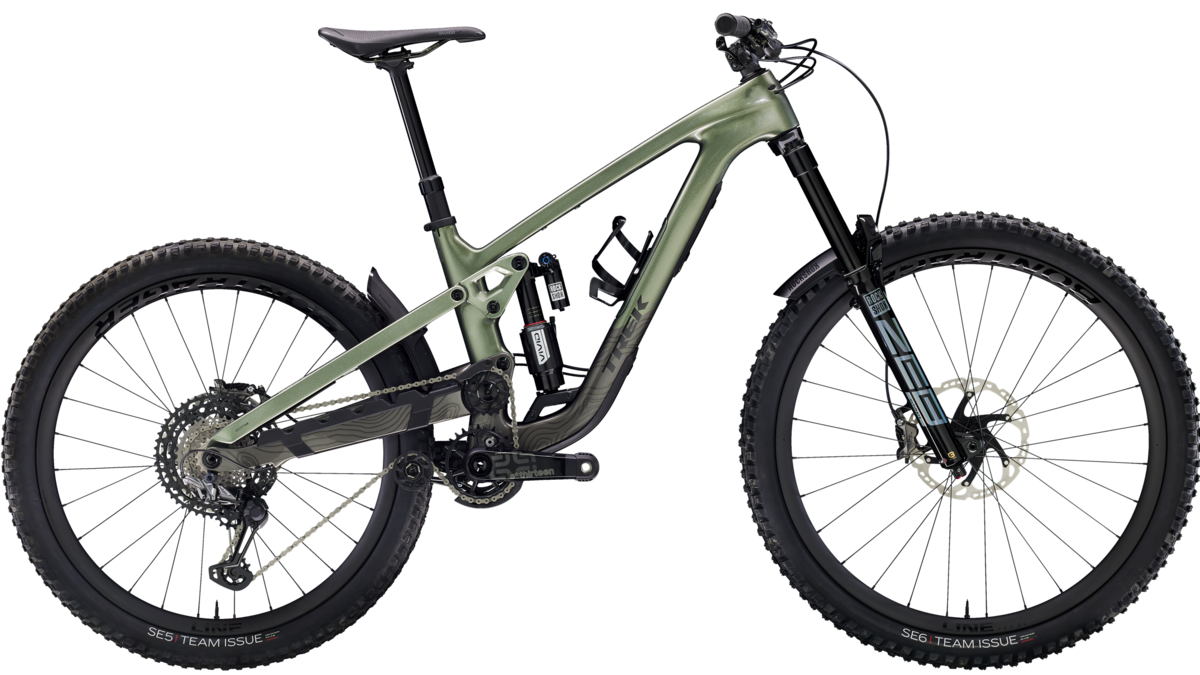
First of all, the suspension travel: with 170 millimeters front and rear, the new Trek Slash dispels any concerns about whether the terrain is too heavy. The US manufacturer also provides a classification: The Slash is designed for a 30 percent uphill focus, the remaining 70 percent the Bolide delivers as a downhill all-rounder. The new Slash is therefore more or less a downhill bike that can be pedaled uphill.
In comparison to its predecessor, not only has the rear suspension travel increased by 10 millimetres, but a High Pivot system is now also on board. The new rear triangle allows the axle to move backwards on impacts, making it more sensitive and easier to swallow. The high chain deflection is intended to efficiently decouple the suspension and the drive, so that pedal kickback is not an issue when the suspension is heavily compressed. The upper chain deflection roller with 19 teeth is also intended to ensure smooth running of the drivetrain.
The MX wheel scheme is also new, i.e. a 29er wheel at the front and a 27.5 wheel at the rear. Only in the smallest frame size is there no mix, here both wheels are in 27.5-inch format. If you miss a 29er rear wheel, you can also fit this, the frame can be adapted for this with an alternative lower shock mount.
With a steering angle of 63.5 degrees (adjustable with an optional headset), a seat tube angle of 77 degrees and a reach of 488 millimetres for the size large, the Slash covers the proportions of a modern enduro bike. Of course, there is also a small storage compartment on the down tube under the bidon holder, both on the aluminum and carbon models.


Suitable Ride Brandguides
Note: This content has been automatically translated from German. Please report any incorrect translations.