

Yes, it really happened: Biker caused forest fire with brake disk

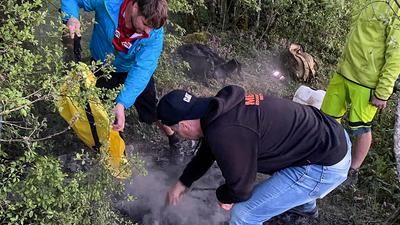
It happened back in March 2018 on the Muttersberg in Vorarlberg: a biker puts his bike down on a meadow. The brake discs are as hot as they sometimes get on descents. "A tuft of grass probably ignited due to the overheated brake disc," writes ORF cautiously. The cause of the fire is not finally clarified. The biker himself noticed the flames and tried to put them out. Without success, which is why he alerts the fire department. They put out the fire near a cable car support.
Brake discs can get up to 300 degrees hot. This is enough to ignite wilted plants. To spread to a forest, additional dryness is required, which can occur during heatwaves with low precipitation such as the current one.
However, a lot has to come together for a brake disk to ignite a forest. However, especially in the current conditions, it makes sense to position the bike so that the brake discs do not touch anything when taking a break on a descent. This is also advisable because discs can deform if they rest on anything - especially when they are red-hot.
This is why you shouldn't put water on the disc
It is well known that hydraulic disc brakes can lose braking power on long, steep descents because the brake fluid starts to boil. This is also a result of the heat from the disc, which is transferred to the brake calliper and into the brake line. In this situation, it is not a good idea to cool the brakes with water from a water bottle. Even if the hissing with a hint of physics lessons brings entertainment to the break. This cold shock can lead to deformation of the brake disc because it has expanded in the heat and thus contracts suddenly and unevenly.
An expert therefore recommends: Take a break on the descent and let the disc cool down due to the temperature of the surroundings - do not keep the brake pulled so that air can reach the pads, whose falling temperature is in turn transferred to the brake caliper and brake line. This also works with heat. If the brake disc is almost 300 degrees, even 30 degrees still has a cooling effect.
Releasing the brakes from time to time also helps on the descent, with the airflow acting as an additional cooler. The expert calls this interval braking. However, this is not possible everywhere. There are trails that are so steep that there is simply no other option than to keep pulling the levers. That's when you need to take a short break from the downhill rush, take a deep breath and enjoy the surroundings.
Sometimes you only then realize that your arms and hands are also overheating. This can also lead to brake failure. It has already happened to the writer, and ended in a cow wire.
Further content on this article


Note: This content has been automatically translated from German. Please report any incorrect translations.