

Blog: Marble, stone and iron break - but not my carbon frame
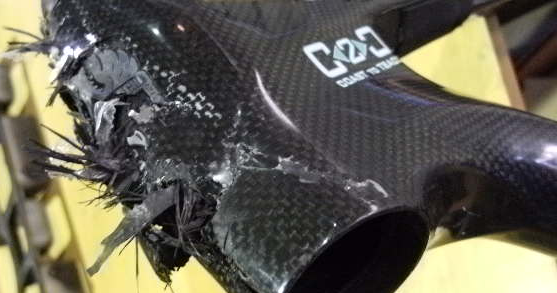
Low weight, high rigidity: carbon delivers on this promise, which is why the black material is highly coveted and loved in the bike industry. However, carbon parts can fail, i.e. break - although this is rare. Read on if you want to know which paths a carbon part can take in its life cycle.
Station A: Ripe for the dustbin
It was the legendary hot summer of 2000 and I proudly owned my first carbon Fully. The dream bike was light, fast and the brake levers were set so steeply that the top tube was even lighter after a fall with the handlebars folded over. Because a good chunk of it was missing. The filigree lock nut of the V-brake cable adjuster had gouged the top tube like a blunt scout dagger. The frame was ready for the scrap heap, I thought, and acted accordingly: I went to the municipal recycling company. I was told to throw the frame in the garbage can with the car tires. No sooner said than done. In the year 2000, there wasn't much going on with carbon recycling. Or maybe new tires were being produced that were refined with Fully fibres - nobody knows.
Plan B: To the tester
The down tube makes noises as if it has been shot at with scrap metal. However, the ammunition is rubble and the feeling of confidence that everything is durable is diminishing with every meter downhill. I sit down at the computer and use the search engine to find a testing laboratory. The lab sounds trustworthy and the frame is sent off. A few days later I get a PDF and the frame back. The inspector examined the frame using ultrasound and thermography. His verdict, which does not allow a clear interpretation: There is a typical indication of possible damage on the down tube... Clear indication measurable, which can possibly be explained by a stone chip impact... However, the material is very dense and there is no direct failure... Please keep an eye on the area...
OK, that's reassuring for the first time, even if the liability clause then clearly states that use of the frame is at your own risk.
Plan C: Just keep on riding
With plan B, I have a document (and a considerable amount less in my account) that tells me that I can continue to ride the frame. But there's another way: you simply continue to ride the frame as it is - without an inspection. This is perhaps the smartest, because it's the cheapest option. But perhaps also the stupidest idea, because the sudden death described at the beginning is then only in the background, but indelibly on my mind. That's why Plan C has only been a short-term option so far, usually replaced by Plan D.
Plan D: Simply replace
This method is not good for your wallet, but it is good for your feeling. The part plagued by a fall or stone chip is discarded and a new one is fitted. There are manufacturers who make it even easier to feel good - it's called crash replacement.
Plan E: repairing the ailing carbon fiber partCarbon parts can be repaired. This requires skilled hands and the right material. Do it yourself is not advisable. The author has no experience of carbon repairs on bikes. But one carbon repair was successful: the cracked carbon windsurf mast lasted quite a long time with numerous layers of gauze and two-component adhesive. But a windsurfing mast is not a seat post, handlebar or frame. Therefore: don't try this at home.
Station F: For recycling
Yes, carbon can be recycled today. A new frame is not made from a carbon frame. But the fibers are processed, then the bonding resin is burned. And then the recovered fibers are processed into a kind of fleece, which then reinforces buildings, for example. Veloplus attaches great importance to environmental protection and recycling - which is why the company also offers to take carbon parts and recycle them. In addition to Veloplus, bacteria are also currently being discussed for carbon recycling. These are supposed to nibble away the resin between the fibers and expose the valuable fibers.
Note: This content has been automatically translated from German. Please report any incorrect translations.