

Electric ticker: Rotwild, Conti & Shimano
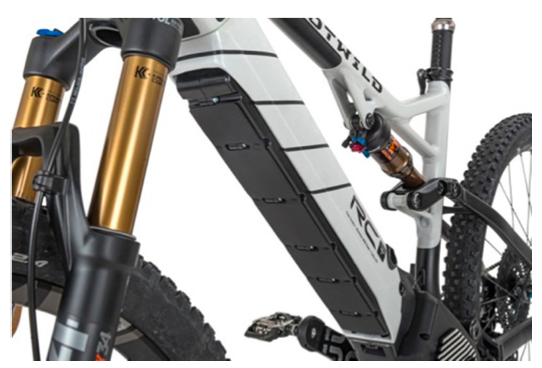
Rotwild: battery options and new motor
A removable battery with 660 Wh will also be available from Rotwild with the 2018 model year. Until now, the batteries were permanently installed on the Hessian bikes. This means that the battery can be charged both installed and removed. Particularly customer-friendly: The IPU.660.R battery is backwards-compatible for all Rotwild/Brose Hybrid models without restrictions, meaning that previous year's models can also benefit from this further development.
The motor is also new at Rotwild: the new Brose drive comes with an efficiency update and a new thermal design and should therefore ensure significantly improved performance. Specially optimized for sporty use, the Drive S motor offers more power (Ø 15% support at 60-90 cadence) and a better response in technical terrain, according to Rotwild. At the same time, the new Brose motor retains all the features of its predecessor: easy pedaling after locking thanks to the fully decoupled drive, individually adjustable support levels, quiet operation and compact integrated design.
Lots of excitement at Conti
Continental is also under power: the tire professional is expanding its portfolio with a new 48-volt electric drive with fully automatic continuously variable transmission for e-bikes.
The German technology company already started series production for the first 48-volt hybrid drive for the Renault Scénic and Grand Scénic models at the end of 2016 and is now transferring this expertise from the automotive sector to high-quality, innovative and robust e-bike products.
For the 2018 model year, city and trekking electric bikes will be equipped with the new Conti drive. Conti has not yet presented any specialized drives for motorized mountain bikes.
Shimano: New firmwareUsers of the SHIMANO STEPS mountain bike system (E8000) can look forward to new firmware that allows e-mountain bikers of all kinds to adapt the boost and trail mode to their individual preferences and riding style. The trail and boost modes can be operated in a high, medium or low setting. Three operating modes are available: Dynamic, Explorer and Custom.
In the factory-set Dynamic mode, the Boost mode (the highest support level of the Steps system) provides a high level of support power, while the dynamic or variable support power in Trail mode follows a curve that rises late in this mode, meaning that the rider initially receives relatively little support with little effort. In Eco mode, the setting remains at a low level of assistance, which is, however, completely sufficient for numerous areas of use and also significantly increases the range.
In the new Explorer mode, on the other hand, the Boost mode provides a medium level of support, while the variable support in Trail mode is designed in such a way that the system provides a slightly higher level of support even when the rider applies less force. Explorer also has a third mode, the fixed Eco mode. This operating mode is suitable for a variety of trail-heavy usage scenarios, foregoing maximum power for top speed in favor of riding fun, comfort and control in the medium speed range common on trails.
Custom mode: In custom mode, the user is free to choose between a high, medium and low setting for boost and trail mode. For example, the rider can program their system with a low power level for Boost and Trail to be more conservative and restrained, or with the "High" setting for both modes to be uncompromisingly tuned for performance.Intuitive and variable Trail mode: However, nothing has changed in the fact that Trail mode, unlike Eco and Boost, is dynamic, i.e. variable. Ever since the first firmware version, i.e. from the first delivery of the Steps E8000 systems, the system has not delivered a fixed percentage of the rider's input or pedaling power as output in Trail mode. Rather, the percentage of assistance that the system adds to the rider's physical performance increases with the level of this physical performance. In theory at least, this allows an almost seamless increase in assistance power from the lowest percentage level in the fixed Eco mode to the highest level and up to 70 Newton meters of torque in the fixed Boost mode, as the variable Trail mode covers almost the entire range between these two fixed levels. In practice, of course, this depends on the riding behavior and individual preferences of the rider. However, those who, as with classic mountain bikes, apply more and more power to the pedals as the route becomes more demanding or the climbs steeper, will receive increasingly more support from the drive in the SHIMANO E8000 system's Trail mode and therefore feel an almost seamless power delivery. With the future firmware update, the rider will now also be able to adjust the position and shape of the underlying power curves in three setting options.
Another special feature is that all these settings can now be made by the rider themselves. Even directly on the trail. The Bluetooth connection and E-Tube app for iOS and Android smartphones and tablets allow the Steps E8000 system to be adapted to the current conditions and individual preferences at any time.
Shimano: Chic windshield
Shimano is expanding the Steps lineup with new, E-bike-specific brake rotors. The new feature from Shimano includes a speed sensor (SM-DUE11) with a magnet, which is discreetly hidden behind the rear brake rotor and takes the visual integration on the E-bike to a higher level. Instead of being mounted on the spokes as before, the magnet will in future be mounted directly on the brake rotor and the Speedsenso will be mounted further back on the chainstay.
For this purpose, the SM-DUE11 is equipped with a correspondingly longer cable compared to the previous SM-DUE10 model. This positioning is made possible by two new rear brake rotors (RT-EM900 and RT-EM800) with a diameter of 160 mm or 180 mm. Both differ from the current SM-RT99 and SM-RT81 brake rotors only in that the modified spider design allows the magnet to be mounted. For this reason, the new brake rotors are only used on the rear wheel, while the corresponding counterpart from the previous lineup is mounted on the front wheel (RT-EM900/SM-RT99 or RT-EM800/SM-RT81). The result of this integration is not only a more appealing look, but also an increase in robustness and durability and therefore more reliable and precise data recording and transmission.


Note: This content has been automatically translated from German. Please report any incorrect translations.