

The new Sram Transmission in the first field report

The first realization after the test rides: Sram heralds a new era in mountain biking noise with the Transmission. Thanks to the Sram design, the rattling of the chain is a thing of the past because there is significantly less rotation when changing gears. How much a mountain bike used to rattle (annoyingly) on descents is only now becoming apparent when the sound is gone.
Ultra-fine shifting process
The improved shifting process blows the same horn - finer and quieter. The change to a different sprocket is so fine in phases that it is barely noticeable. The previous clacking noise when changing to the next gear ratio has almost completely disappeared. Even under high load, the shifting process is very smooth. In terms of precision, it is comparable to the previous AXS, but the shifting process takes a little longer because the change is no longer carried out from any sprocket. This is done via several channels that ride the chain. This makes the shifting process smoother but less random. In everyday trail riding, however, this slowdown is hardly noticeable and is only relevant if you are sprinting for victory at the next world championships.
The hobby mechanic's wet dream
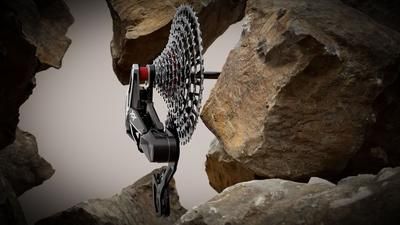
The real turning point, however, concerns the adjustment of the rear derailleur. There is no longer a single adjustment screw! To adjust it, you loosen the thru-axle, then the derailleur, ensure the correct chain tension by positioning it correctly and then tighten all the screws again. That's it. What sounds almost banal actually works. Thanks to Sram, the new way of adjusting the gears is like the wet dream of every amateur mechanic.
Bye, bye, derailleur hanger
The new technology means that the bike no longer has the infamous derailleur hanger that connected the derailleur to the frame. Originally intended as a predetermined breaking point, it was more of a spoilsport. Who hasn't cursed the fact that the gears no longer ran smoothly because of a slightly bent rear derailleur? And who hasn't had to abandon a tour because the thing broke? Sram has now dealt the deathblow to the naysayers because with electronic shifting this "predetermined breaking point" is simply no longer needed. With the new rear derailleurs, the predetermined breaking point is released in the event of lateral run-out and then returns to its position automatically. In other words: The forces that the derailleur hanger should absorb are now already absorbed by the electronic control unit. This aspect has been further improved with the transmission: The ultra-stable housing, effectively a frame extension, combined with a self-releasing cage robs the tiresome derailleur hanger of its raison d'être. Thank you Sram for this turning point!


Further content on this article
Note: This content has been automatically translated from German. Please report any incorrect translations.